
A trailer can make a one-day project a whole lot easier – until the load starts shifting, the lights quit working, or you find out the combination is heavier than your vehicle should tow. Arizona towing laws are there to keep those problems from becoming roadside hazards. If you are hauling a car, moving equipment, taking brush to the dump, or pulling materials to a jobsite around the Verde Valley, a few checks before leaving can save you time, money, and trouble.
This is practical information for everyday trailer users, not legal advice. Rules can change, and special situations may apply to commercial work, oversized loads, or private-property towing. When the stakes are high, confirm the current requirements with the Arizona Department of Transportation or the Arizona Motor Vehicle Division.
Arizona Towing Laws: The Basics for Trailer Users
Arizona treats the tow vehicle and trailer as one working combination. That means the truck, SUV, hitch, trailer, brakes, tires, lights, and cargo all matter. Having a strong enough tow vehicle does not make an overloaded or poorly connected trailer legal.
Start with weight. Every tow vehicle has a manufacturer-set towing capacity, payload limit, and gross combined weight rating. The trailer also has a gross vehicle weight rating, which is the most it is designed to weigh when loaded. Stay under all of those numbers. The lowest rating in the setup controls the job.
This is where people get caught off guard. A car hauler may be rated to carry a vehicle, but your truck still needs enough capacity for the loaded trailer’s tongue weight, passengers, fuel, tools, and anything in the bed. A trailer that is technically under its own rating can still overload the tow vehicle.
Arizona law also limits a vehicle towing a trailer to 65 mph. That limit applies even where the posted speed limit is higher. In real conditions, a safer speed may be lower. Wind on I-17, steep grades near Jerome, traffic, rain, and a heavy load all change how a trailer behaves.
Know the size limits before you load up
Most everyday trailers fit within Arizona’s general maximum dimensions, but it is still worth checking. Standard limits are generally 8 feet 6 inches wide, 13 feet 6 inches high, and 65 feet in combined vehicle-and-trailer length. Loads that extend beyond the trailer, such as lumber, pipes, or equipment, need extra attention. Depending on the overhang and the route, flags, lights, permits, or other requirements may apply.
Do not guess at height. A loaded utility trailer may look low enough until a piece of equipment, a lifted vehicle, or stacked material puts it close to a clearance problem. Measure from the ground to the highest point after the load is secured.
Hitching, Chains, and Brakes Are Not Optional Details
A proper hitch connection starts with matching parts. The ball size must match the trailer coupler, the ball mount must be rated for the load, and the coupler needs to be fully seated and latched. Cross the safety chains under the trailer tongue. That gives the tongue support if it comes off the ball instead of letting it strike the pavement.
Safety chains should have enough slack for turns, but not so much that they drag. Connect the breakaway cable directly to the tow vehicle, not to the safety chains. If a trailer with electric brakes separates from the vehicle, the breakaway system is designed to activate the trailer brakes.
Arizona generally requires brakes on trailers with a gross weight of 3,000 pounds or more. The brake system must be capable of stopping and holding the trailer, and trailers with electric brakes need a working controller in the tow vehicle. If you rent a trailer, ask how the brakes work before you pull away. A quick explanation in the driveway is much better than learning on a downhill grade.
Before every trip, check the coupler latch, chains, wiring plug, breakaway cable, tire condition, and lug nuts. Then test the brake lights, turn signals, running lights, and trailer brakes. This takes a few minutes and handles the issues that cause many preventable roadside stops.
Secure the Load Like It Has to Handle a Hard Stop
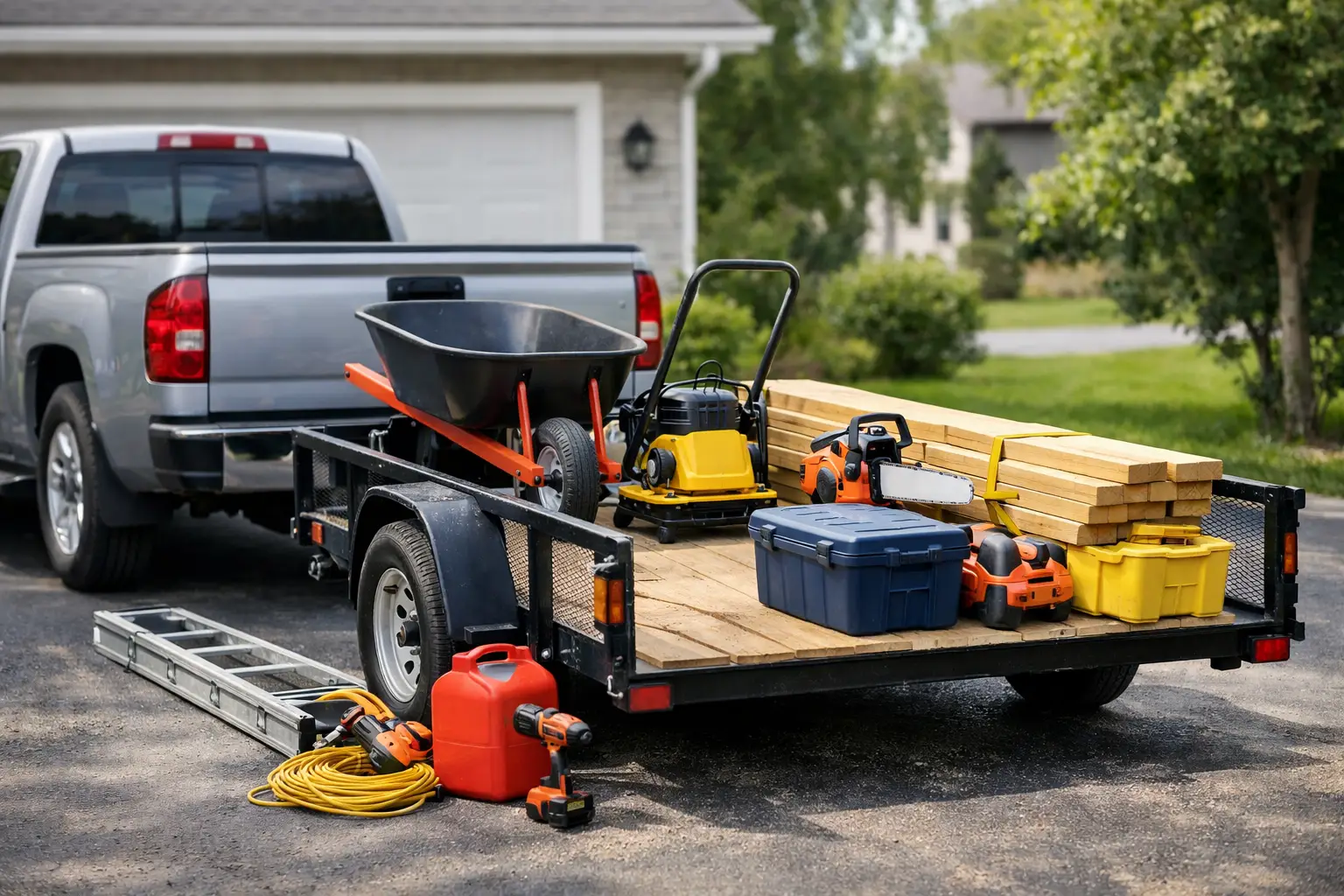
Arizona requires loads to be secured so they do not shift, leak, spill, blow off, or fall from a vehicle. That applies to a load of gravel as much as it does to a compact tractor or a classic car. A tarp may be needed for loose materials. A single light-duty strap is not enough for a heavy item with room to move.
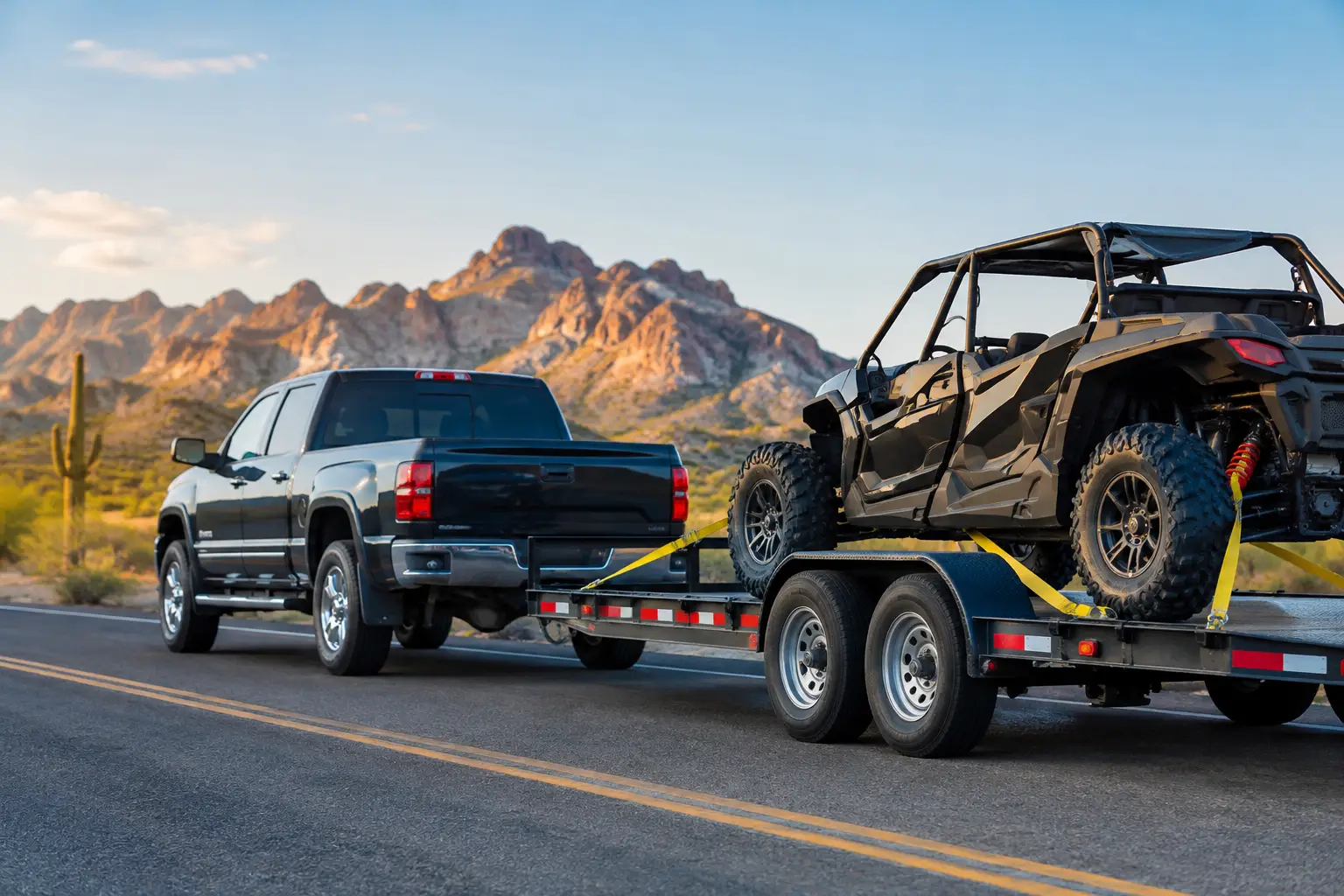
For vehicles and equipment, use properly rated tie-downs connected to solid tie-down points. Avoid wrapping straps around parts that can bend, move, or break. Wheel straps are often the right choice for cars because they hold the vehicle at the tires while allowing the suspension to do its job. Four-point securement is the standard practical approach for hauling a vehicle on an open car hauler.
Load balance matters just as much as the straps. Too little tongue weight can cause trailer sway. Too much tongue weight can overload the rear axle, hitch, or tires of the tow vehicle and make steering less responsive. A commonly used target is roughly 10% to 15% of the loaded trailer weight on the hitch, but the right number depends on the equipment and manufacturer limits.
Place heavier items low and centered over or slightly forward of the trailer axles. Do not pile everything at the very front just to create tongue weight. Once loaded, stop after the first few miles and inspect the straps, chains, and tires again. Loads settle. Straps can loosen. Catching that early is part of hauling responsibly.
Registration, Lights, and Plates Matter on Short Trips Too
A trailer used on public roads needs to be properly registered and display a valid Arizona license plate. The required lighting and reflectors depend on the trailer’s size and type, but working tail lights, brake lights, turn signals, and reflectors are basic expectations. Your tow vehicle’s lights alone do not cover a trailer that blocks them.
Check the wiring connection before leaving, especially after backing up or driving through rough ground. A loose plug can leave you without signals even though the trailer lights worked at pickup. Carrying a simple spare fuse, electrical adapter, and tire pressure gauge is a smart move for anyone who tows regularly.
For most personal trailer use, an ordinary Arizona driver license is enough. Commercial hauling, certain weight ratings, or interstate work can trigger different licensing and regulatory requirements. If you are towing for a business, hauling for pay, or operating a heavy combination, do not assume the rules for weekend hauling apply to you.
What About Private-Property Towing?
Arizona towing laws can also refer to vehicles removed from private property or taken after a breakdown. That is a different subject from pulling your own trailer. Private-property tows, abandoned vehicles, towing-company notices, storage fees, and vehicle release rules have their own requirements.
If your concern is that a vehicle was towed from an apartment complex, business lot, or roadside location, document the signs, location, date, and tow company information. Contact the tow company first to learn where the vehicle is stored and what is needed for release. Do not confuse those rules with the equipment rules that apply when you are towing your own load.
A Better Way to Start Every Haul
The right trailer makes legal, safe towing easier. A car hauler built for the vehicle you are moving is a better choice than trying to make a small utility trailer do work it was never meant to handle. The same goes for brakes, ramps, tie-down points, and load capacity.
At Monsoon Trailer Rental, the goal is simple: get the trailer that fits the job, understand how to hook it up, and get on the road without being soaked by high rates. Whether you are moving a vehicle, hauling equipment, or handling a home project, ask questions before booking if you are unsure about capacity or setup.
Before you head out, take one calm walk around the whole rig. Check the hitch, chains, lights, tires, load, and straps. That small habit is one of the best ways to protect your cargo, your vehicle, and everyone sharing the road with you.