
A refrigerator can look manageable sitting in a kitchen. Once it is on a trailer, it becomes a tall, heavy load that can shift fast, block your view, or put real strain on your tow vehicle. This guide to hauling appliances safely covers the work that happens before you leave the driveway: choosing the right equipment, loading with control, tying down the load correctly, and driving for the conditions.
Whether you are clearing out a rental, delivering equipment to a job site, or bringing home a used washer, the goal is simple: get there without damaged appliances, damaged vehicles, or anyone getting hurt.
Start With the Right Trailer and Tow Vehicle
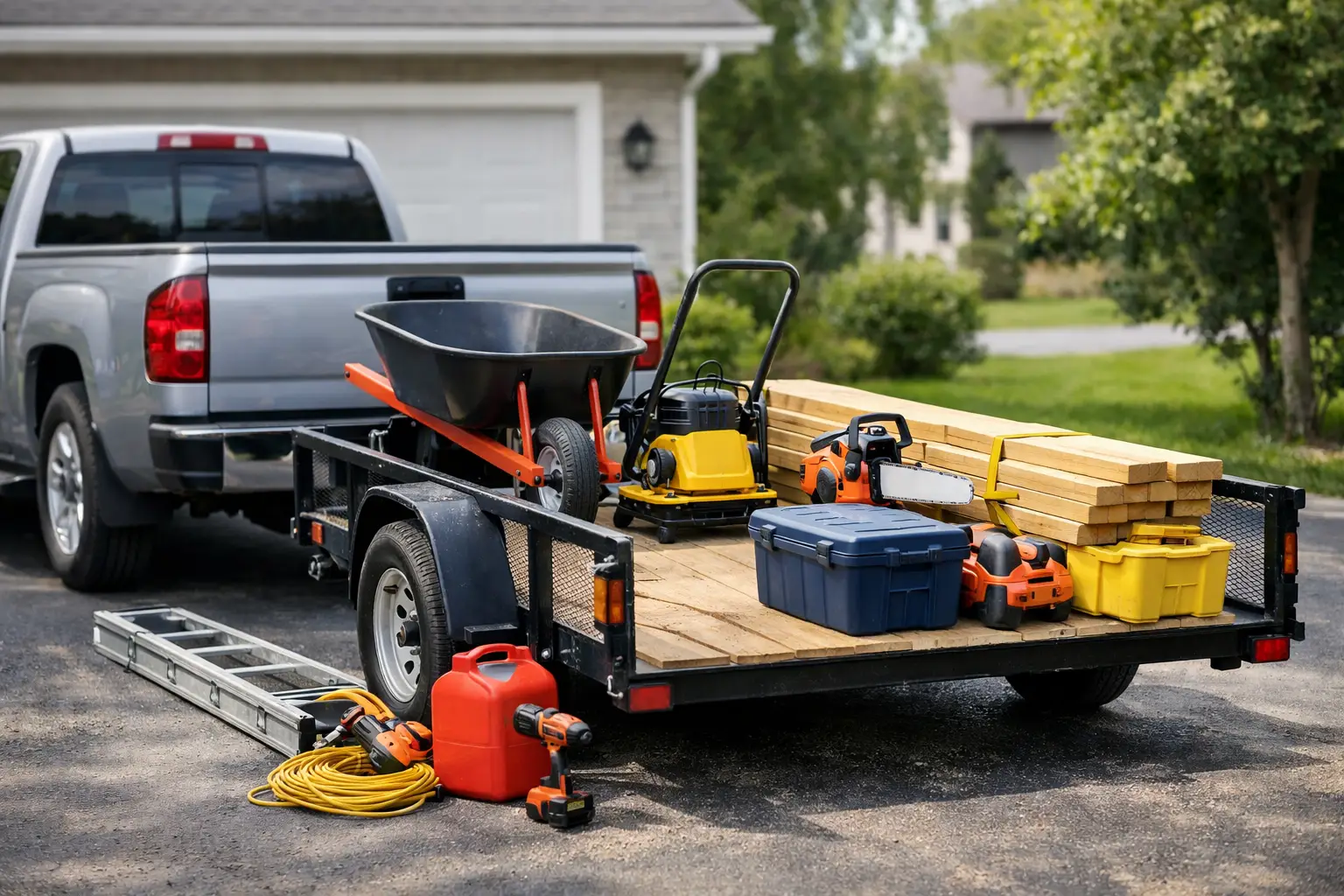
A pickup bed may work for one small appliance, but it is not always the safest choice. Full-size refrigerators, washers, dryers, ranges, and chest freezers are awkward even when their weight is within your truck’s payload rating. A trailer gives you more room to load, more tie-down points, and less need to stack appliances where they can tip into one another.
For most appliance moves, an open utility trailer with a low deck is a practical choice. A ramp makes loading easier, especially when using an appliance dolly. An enclosed trailer adds weather protection, but it also requires enough interior height and room to secure each unit without crowding it.
Check the trailer’s payload capacity, not just its overall size. Add up the weight of every appliance, dollies, moving pads, straps, and any other material you plan to carry. Then confirm that your vehicle’s towing capacity and hitch rating can handle the loaded trailer. The lowest-rated part of the setup sets the limit.
If you are unsure which trailer fits the job, ask before booking. A few minutes spent matching the trailer to the load beats trying to make an undersized setup work at the curb.
Prepare Every Appliance Before It Moves
Do not unplug an appliance and load it immediately. Preparation protects both the appliance and the people moving it.
Refrigerators and freezers need to be emptied, defrosted, cleaned, and dried ahead of time. Remove loose glass shelves, bins, and trays, or secure them inside so they cannot rattle around. Tape doors shut with appliance-safe tape or use a moving strap around the cabinet. Do not rely on the door seal alone.
Washers should be drained completely. If the manufacturer supplied transit bolts, install them before moving the unit. Those bolts keep the internal drum from bouncing and damaging suspension components. Secure the power cord and hoses to the back of the appliance so they cannot drag or snag.
For dryers, disconnect and secure the vent hose. With gas appliances, shut off the supply valve and have a qualified person disconnect and cap the gas line when needed. Never haul a unit with a gas connection still attached.
Ranges, dishwashers, and microwaves have removable racks, trays, and glass pieces that should be taken out or secured. Close and latch doors, then protect finished surfaces with moving blankets, cardboard corner guards, or both. Blankets prevent scratches, but they do not replace tie-down straps.
Load Heavy Appliances With Control
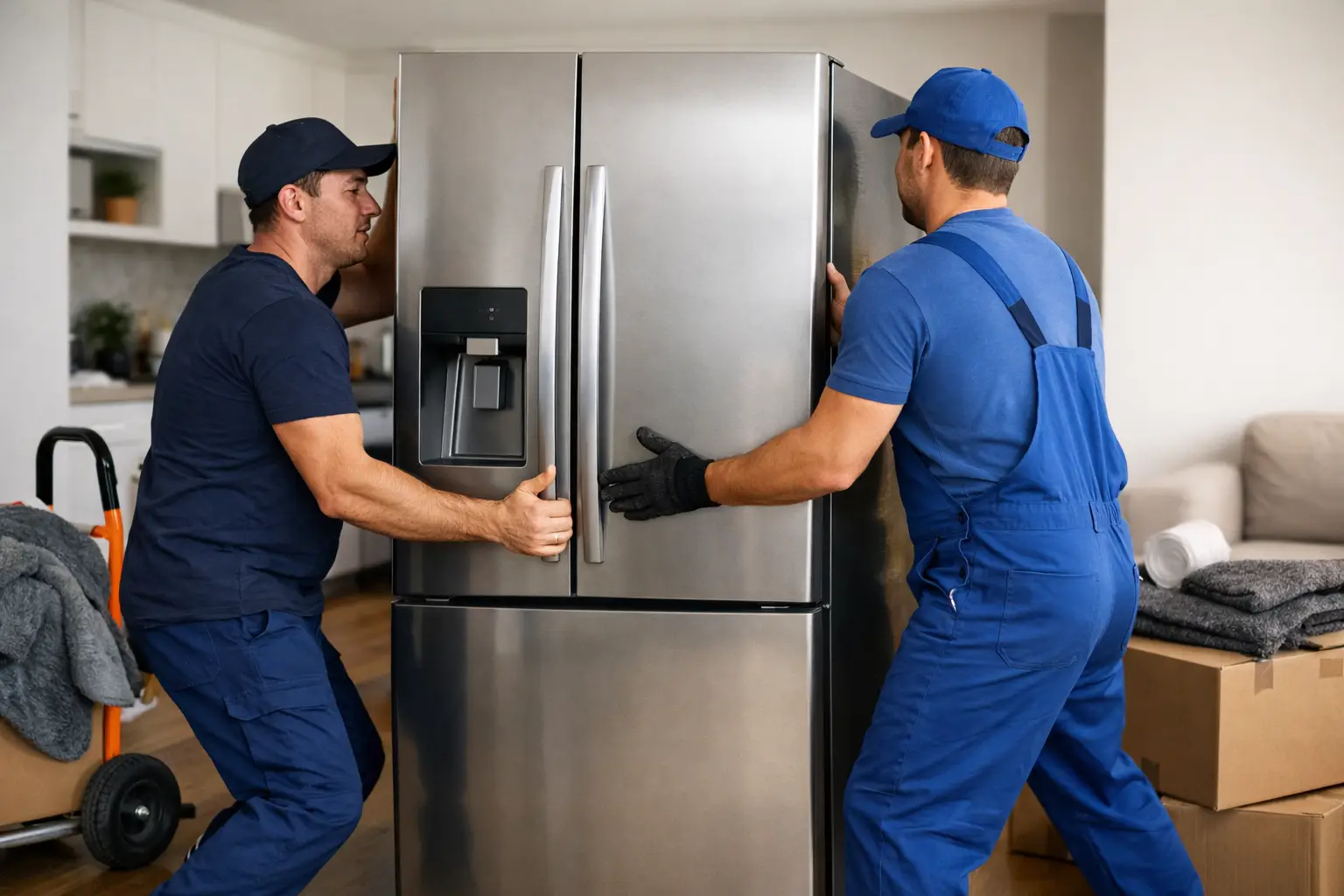
Moving appliances is usually a two-person job. A refrigerator or washer can weigh several hundred pounds, and its weight does not always sit where you expect. Wear closed-toe shoes and work gloves, clear the route from the house to the trailer, and keep kids and pets out of the loading area.
Use a rated appliance dolly with a built-in strap. Strap the appliance tightly to the dolly before tilting it back. Keep the load close to your body, move slowly, and let the wheels do the work. Do not try to catch a falling appliance. Step away and reset the move.
Keep Refrigerators Upright When Possible
Refrigerators and freezers should ride upright whenever possible. Tipping them on their side can allow compressor oil to move into the refrigerant lines. If a refrigerator must travel on its side, check the manufacturer’s instructions first and allow it to stand upright for several hours before plugging it in. In many cases, waiting 24 hours is the safer call.
Washers, dryers, and ranges are generally more forgiving, but upright transport is still best for stability and easier securement. An appliance that stands upright has a smaller footprint, so it must be tied down carefully.
Balance the Trailer Before You Strap It Down
Place the heaviest appliance slightly forward of the trailer axle, not all the way at the front and not behind the axle. This helps create proper tongue weight and reduces the chance of trailer sway. A trailer that is too light at the tongue can fishtail, especially on downhill grades, rough roads, or in crosswinds.
Keep the load centered from side to side. If you have several appliances, distribute their weight evenly. Avoid piling light items on top of appliances or wedging loose debris around them. Anything that can move should be tied down or removed.
Secure Appliances for the Road
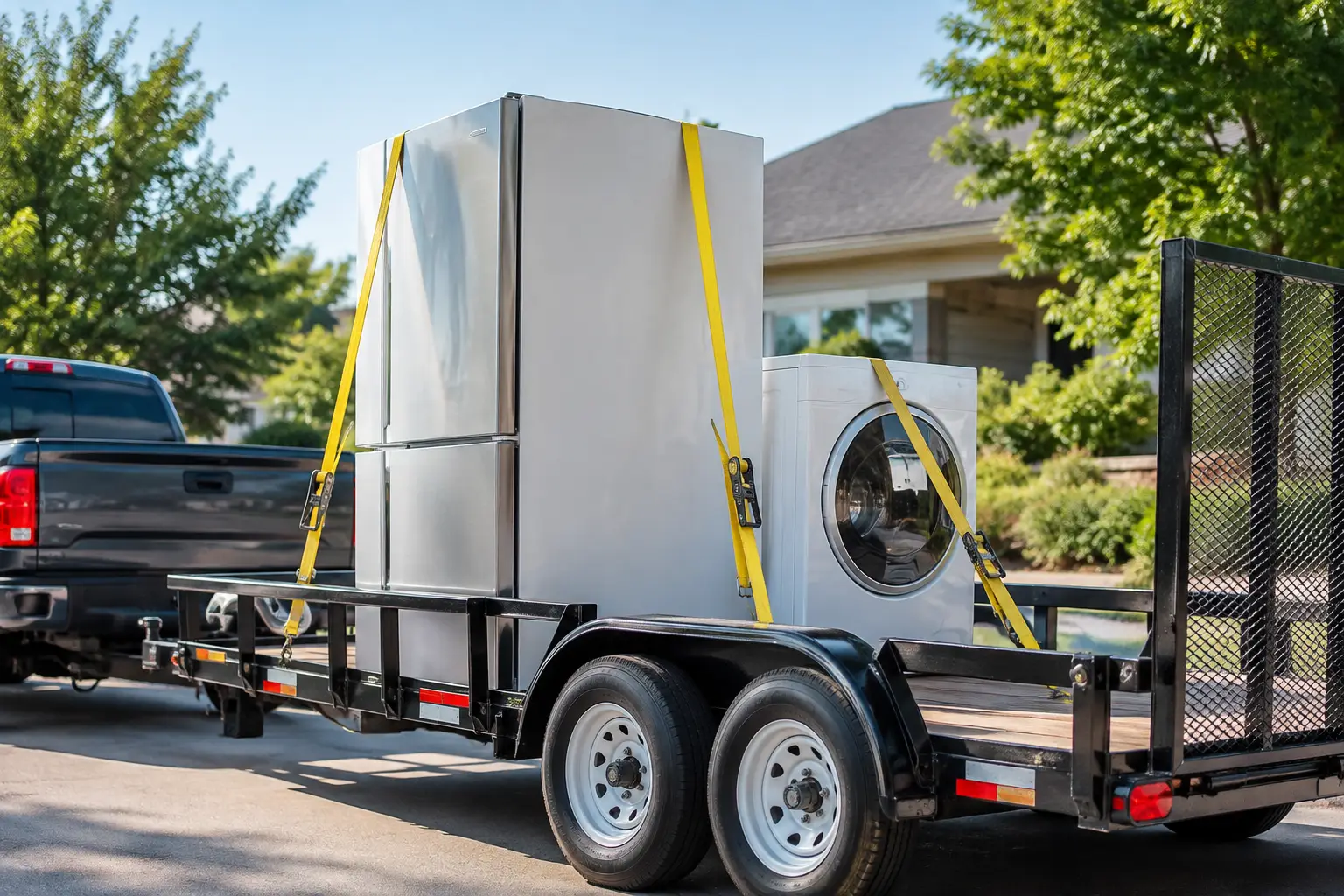
This is where many otherwise careful hauls go wrong. One strap across the front of an appliance is not enough. The appliance needs to be restrained from moving forward, backward, and side to side.
Use rated ratchet straps in good condition. Look for cuts, fraying, bent hooks, or damaged ratchets before you load. Run straps through solid trailer anchor points and around sturdy portions of the appliance. Avoid crushing control panels, door handles, water lines, or delicate trim.
A practical setup uses at least two straps per large appliance, pulling in opposing directions. For tall refrigerators or stacked loads, additional straps may be needed. Moving blankets can go between appliances to prevent rubbing, but do not use rope, bungee cords, or the blankets themselves as the main restraint.
After tightening the straps, push firmly on each appliance. It should not rock, slide, or lean. Then stop after the first few miles and recheck every strap. Loads settle as you drive, especially after turns, bumps, and elevation changes.
Drive Like You Have a Heavy Load Behind You
A loaded trailer does not stop, turn, or recover from a mistake as quickly as an empty vehicle. Give yourself extra room before braking, make wider turns, and keep your speed reasonable. Sudden steering inputs are one of the quickest ways to start trailer sway.
The roads around the Verde Valley can include grades, tight turns, uneven pavement, and changing weather. Use a lower gear on long descents when appropriate rather than riding the brakes. Watch your mirrors often, but do not stare at the trailer. Scan ahead so you can slow down gradually for traffic, lights, and turns.
Before pulling out, check that the coupler is locked, safety chains are crossed under the tongue, trailer lights work, the jack is fully raised, and the breakaway cable is connected correctly if the trailer has one. Make sure your load does not block trailer lights or extend beyond the trailer without the required marking.
Unload With the Same Care You Used Loading
Park on firm, level ground whenever you can. Set the tow vehicle’s parking brake, chock the trailer wheels if conditions call for it, and open the trailer or lower the ramp before releasing any straps. Keep at least one person controlling the appliance while another removes the securement.
Do not stand downhill from a load on a ramp. Guide appliances down slowly with the dolly, keeping them under control the entire way. Once the appliance is inside, let a refrigerator stand upright before powering it on if it was tipped during the move.
A good appliance haul is not about rushing through the loading process. It is about using a trailer that fits the job, securing the load like it will face a hard stop, and taking the road at a pace that keeps everyone safe. When you need dependable hauling equipment in the Verde Valley, choose a setup that gives you room to do the job right.