
A trailer can look fine when you pull out of the driveway and still develop a problem 20 miles later. A loose strap settles, a hub starts heating up, or a tire loses pressure after hitting rough pavement. This guide to roadside trailer checks is built for the moments between pickup and drop-off, when a quick look can keep a small issue from turning into a long day on the shoulder.
For Verde Valley drivers, roadside checks matter even more when you are hauling through summer heat, climbing grades, or taking winding roads toward Sedona, Jerome, or Camp Verde. You do not need to be a mechanic. You do need to know what normal looks like and when it is time to stop.
When to Pull Over for a Trailer Check
The best time for a roadside check is before anything feels wrong. Make your first stop after the first 10 to 15 miles, especially if you are hauling a car, equipment, landscaping material, or a loaded utility trailer. That first stretch gives straps, chains, couplers, and loads time to settle into place.
After that, check again at fuel stops, meal breaks, or every couple of hours on a longer run. If you hit a pothole, make a hard stop, travel over rough dirt roads, or notice a change in how the trailer handles, pull over somewhere safe and take another look.
Do not inspect a trailer on a narrow shoulder if traffic is moving close by. Find a parking lot, a wide turnout, or another stable area with room to walk around the rig. Set the parking brake on the tow vehicle, put it in park, and keep clear of traffic before you start checking anything.
Start With What You Can See and Hear
Walk one full circle around the trailer. This simple habit catches more problems than people expect. Look at the trailer from several steps back first. Does it sit level? Is one side lower than the other? Is the load leaning, shifting, or hanging beyond where it should?
Then get closer. Look for anything dragging: a safety chain, loose ratchet strap, wiring connector, ramp pin, or damaged fender. Listen, too. A metallic rattle, repeated clunk, tire rubbing sound, or sharp squeal can point to a problem that may not be obvious at a glance.
If you are hauling a vehicle, check that it is still centered on the deck and sitting where you loaded it. A car that has crept backward or sideways changes tongue weight and can make the trailer sway. With equipment or materials, make sure the heaviest weight remains low and balanced over the trailer axles rather than piled at the back.
Check Tires, Wheels, and Hubs
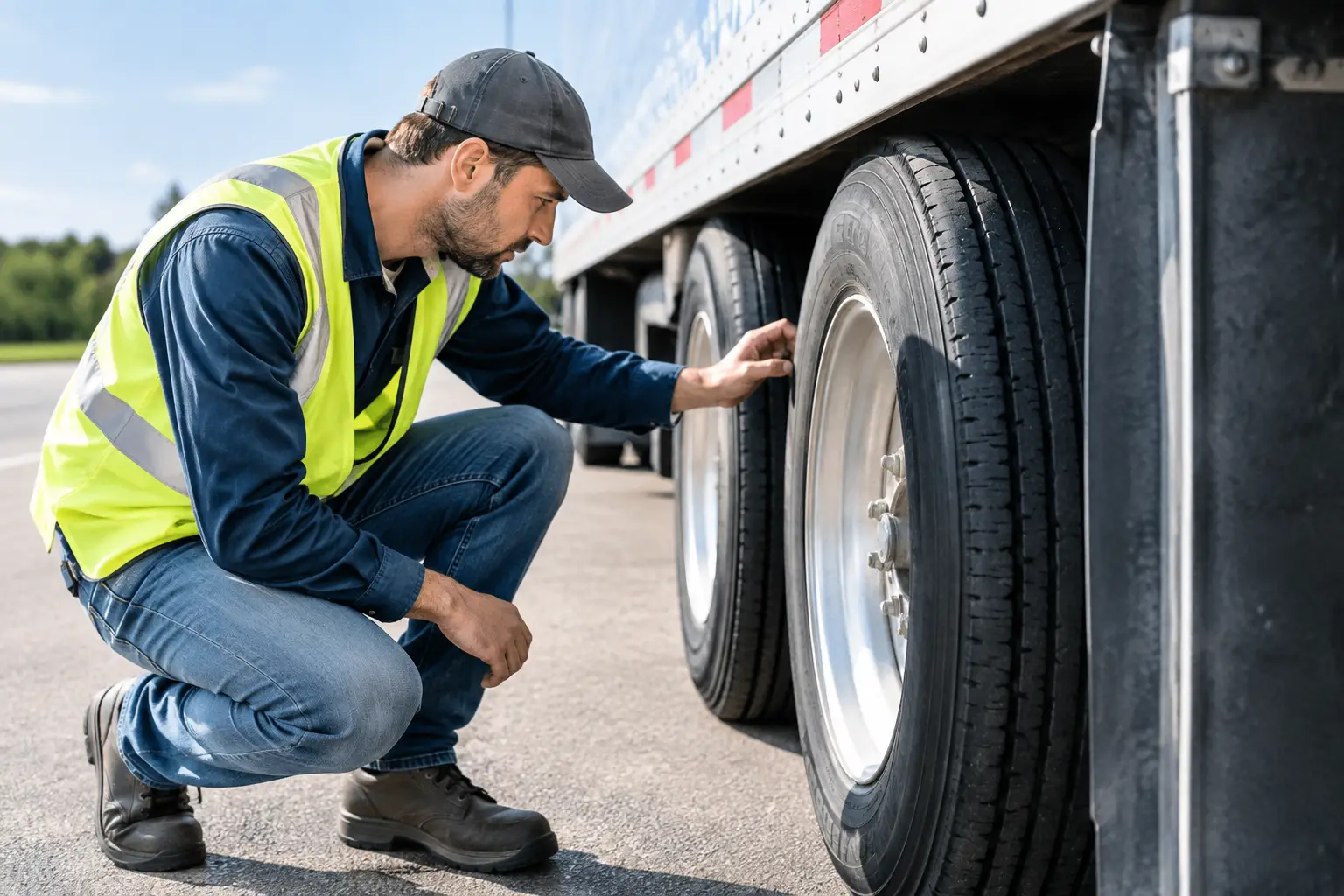
Tires take a beating, particularly on hot Arizona pavement. Look for low pressure, bulges, cuts, exposed cords, uneven wear, or a tire that appears flatter than the others. A low trailer tire is not something to limp along on. It heats up quickly under load and can fail without much warning.
Check the wheel area for fresh grease, leaking fluid, or dark residue around the hub. After driving, carefully hold the back of your hand near each hub without touching it right away. One hub that is much hotter than the others can signal a bearing or brake issue. Do not touch a hub that looks overheated. Let it cool and get help before continuing.
Also look at the lug nuts. Missing lug nuts, shiny metal around a lug hole, or a wheel that appears to wobble are stop-now issues. A wheel problem will not improve farther down the road.
Recheck the Hitch Connection
Your hitch is the connection that matters most. Make sure the coupler is still fully seated on the hitch ball and the latch is closed and secured. The safety chains should be attached to the tow vehicle, crossed underneath the coupler, and have enough room for turns without dragging on the ground.
Check the breakaway cable as well. It should be connected to the tow vehicle, not wrapped around the safety chains or hooked to the hitch ball. It needs enough slack for normal turns but should not drag. If your trailer uses electric brakes, confirm the trailer plug is firmly connected and the cable has not come loose.
A little road dust is normal. A shifted coupler, stretched chain, damaged connector, or broken latch is not. If the hitch setup does not look right, do not guess or try to improvise with rope, wire, or bungee cords.
A Practical Guide to Roadside Trailer Checks for Loads
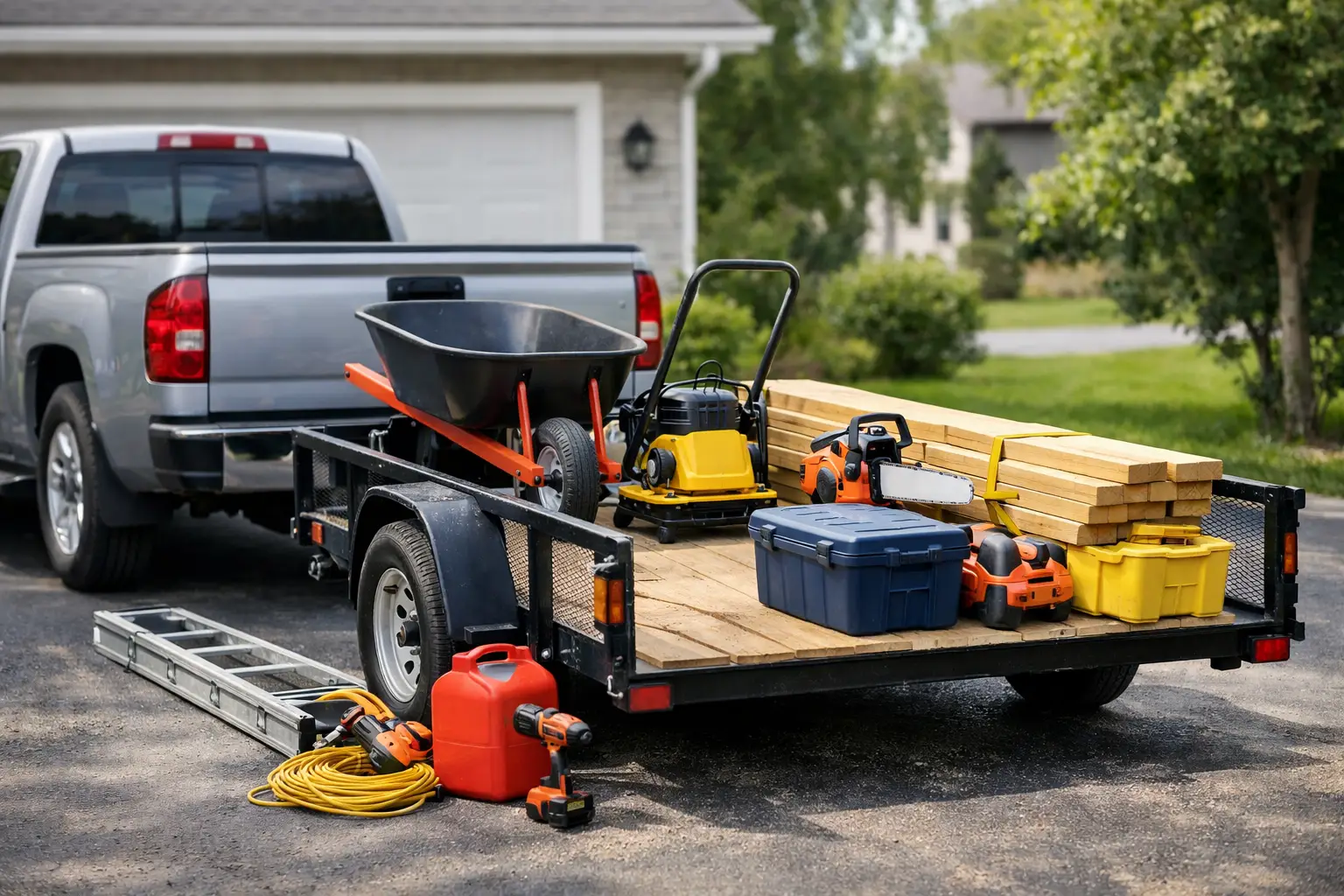
Loads change after the first few miles. Ratchet straps can loosen as tires settle into wheel chocks. Lumber can shift. Loose debris can move toward a gate. Even a properly loaded trailer needs a second look once it has seen the road.
Check that every tie-down is still tight, undamaged, and attached to a solid trailer anchor point. Straps should not be twisted, frayed, rubbing against sharp edges, or routed over hot exhaust components. Chains used for equipment should have their binders secured so they cannot vibrate open.
For a vehicle on a car hauler, inspect all wheel straps or chains, the parking brake, and the transmission position recommended for that vehicle. Avoid relying on a single strap or a vehicle’s parking brake alone. The trailer should carry the vehicle securely even when the road gets rough.
If you are hauling loose material, verify that the tailgate, sideboards, ramps, and any tarp are secured. A tarp is not just about keeping debris off the road. It can prevent lightweight material from lifting out at highway speed and becoming a hazard for the driver behind you.
Test Lights and Brakes at Every Major Stop
You may not notice a failed trailer light from the driver’s seat. At a stop, turn on your running lights and walk around the trailer. Check brake lights and turn signals when you have a passenger available, or use reflections in a window, parked vehicle, or other safe surface.
Pay attention to wiring that hangs low or is pinched between the coupler and tow vehicle. A loose plug can work fine on smooth road and disconnect after a few miles of bumps. If lights flicker, the plug may need to be reseated, or the vehicle’s connector may have a wiring issue.
With trailer brakes, notice how the rig feels during normal, gradual stops. If the trailer pushes the tow vehicle, pulls hard to one side, locks up, or feels unusually grabby, get off the road safely and investigate. Brake controller settings can need adjustment depending on trailer weight, but sudden changes in braking behavior should never be ignored.
Know the Signs That Mean Stop Hauling
Some issues can wait until you reach a safe parking area. Others mean the trip is over until the problem is handled. Stop and arrange assistance if you see any of the following:
- A flat, damaged, smoking, or severely overheated tire or hub
- A loose coupler, broken safety chain, disconnected breakaway cable, or damaged hitch component
- A load that has shifted significantly or tie-downs that will not stay tight
- A wheel wobble, missing lug nuts, or obvious axle or suspension damage
- Trailer brakes that lock, fail to engage, or pull the trailer hard to one side
This is where being practical beats being stubborn. A delayed delivery or project is frustrating. A lost wheel, damaged vehicle, or crash is far worse. If you rent a trailer, call the rental provider when you are unsure what you are seeing. A team that actually picks up the phone can help you decide whether the trailer is safe to move, needs an adjustment, or needs roadside support.
Make Each Stop Count
A roadside check does not need to take 20 minutes. Once you know the routine, it usually takes three to five. Walk around the trailer, inspect tires and hubs, confirm the hitch connection, check the load, and verify that nothing has come loose or started rubbing.
Take a photo of your load and tie-downs before leaving if you are new to hauling. It gives you a useful reference at your first stop, particularly when you are carrying a vehicle or an uneven load. You will quickly learn what looks normal for the trailer and what changed after the road got hold of it.
Whether you are moving a project vehicle, hauling tools to a job, or clearing out a property, a few minutes at a safe stop protects your equipment, your tow vehicle, and everyone sharing the road. When you rent from Monsoon Trailer Rental, ask questions before you leave the lot, then give the trailer the same attention out on the road that you gave the job itself.