

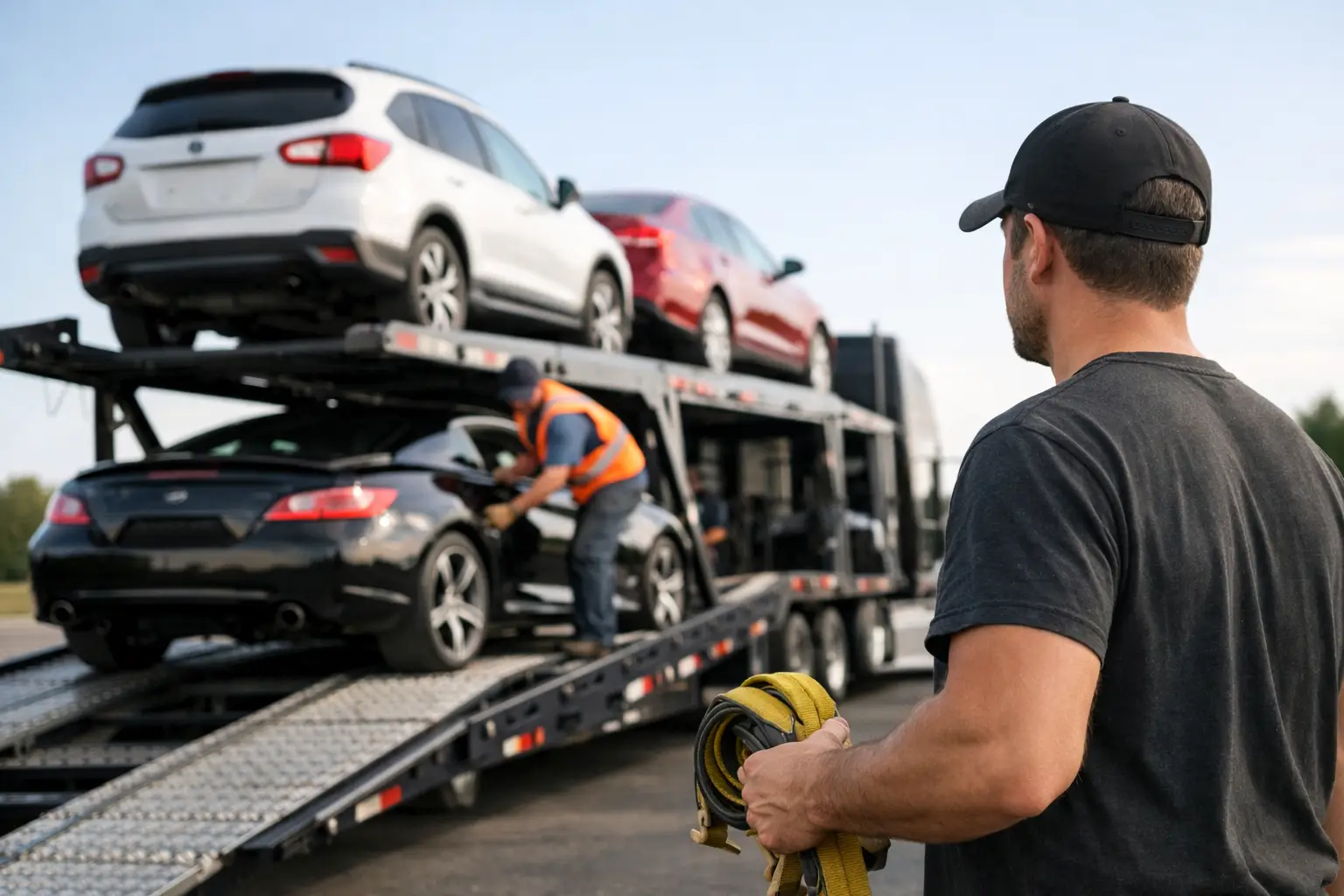
The first surprise for most renters is this: towing the trailer is usually the easy part. Loading the vehicle correctly, checking your tow setup, and knowing your limits are where first-timers either have a smooth day or a long one on the shoulder. This car hauler guide for first timers is built to help you get it right before you leave the lot.
If you are moving a project car, hauling a vehicle to a shop, or picking up something that no longer runs, a car hauler can save time and money. But it is not a job to wing. A little prep matters, especially in places like the Verde Valley where you may deal with grades, tighter roads, and changing weather in a single trip.
What a first-time renter needs to know first
A car hauler is not just a bigger utility trailer. It is built for a specific kind of load, and that means balance, weight, and tie-down points matter more than people expect. The trailer has to match the vehicle you are hauling, and your tow vehicle has to match both.
That is where many first-time problems start. People focus on whether the car fits on the deck, but forget to check towing capacity, hitch rating, brake connection, and total loaded weight. If your truck or SUV is close to its limit before the vehicle is even loaded, that is a red flag, not a maybe.
Before you book, know four numbers: your tow vehicle’s towing capacity, your hitch rating, the trailer’s weight, and the vehicle’s weight. If you do not know those numbers, stop there and get them. Guessing leads to overloaded axles, poor braking, and sway.
Choosing the right setup in this car hauler guide for first timers
The right setup depends on what you are hauling and how far you are going. A compact sedan and a full-size pickup are very different loads. So is a running vehicle compared with one that needs a winch or extra effort to position.
Start with the hauled vehicle’s curb weight and dimensions. Make sure the trailer deck length and width are enough for the wheelbase and track width, not just the bumper-to-bumper length. A vehicle can technically fit and still load poorly if the tire placement is wrong or the weight sits too far forward or back.
Then look at your tow vehicle. A half-ton truck may handle one car with no issue, while a midsize SUV may not. The question is not whether it can move the load in a parking lot. The question is whether it can pull, stop, and stay stable on hills, at traffic lights, and in crosswinds.
Brake controllers and trailer brakes also deserve attention. If the trailer is equipped with brakes, your tow vehicle needs to be ready for them. That extra control makes a real difference when traffic stacks up or the road drops off outside town.
Loading the vehicle the right way
Loading is where patience pays off. Park on level ground if possible. Chock the trailer wheels before loading, make sure ramps are secure, and take your time lining up the vehicle. A rushed load usually turns into a crooked one.
If the vehicle runs, drive it up slowly and have someone spot you if available. If it does not run, loading may require a winch or other equipment. Either way, the goal is the same: get the vehicle centered and positioned so you have proper tongue weight.
Too much weight at the rear of the trailer can cause sway. Too much on the tongue can overload the hitch and squat the rear of the tow vehicle. A good rule is that the load should place enough weight forward to keep the trailer stable without overloading the front section. Exact placement can vary by trailer and vehicle, which is why it helps to ask questions before you head out.
Once loaded, put the vehicle in park if it runs, set the parking brake if appropriate, and shut it down. If it is a non-running vehicle or one with mechanical issues, treat it like it could shift unless properly secured.
Tie-downs are not the place to cut corners
A vehicle on a trailer needs to be secured with the right straps or chains at the correct points. This is not the time for old ratchet straps from the garage unless they are rated for the load and in good condition. Frayed webbing, bent hooks, and worn hardware are all reasons to stop and replace gear.
Use the trailer’s designated tie-down points and secure the vehicle according to the trailer type and the vehicle’s frame or wheel positions. Wheel straps are common because they help hold the vehicle by the tires and allow the suspension to move naturally during transport. In other setups, axle straps or chains may be used, but they need to be matched to the load and attached properly.
After tightening everything down, do not assume you are done for the day. Check the straps again after the first few miles. Loads settle. Straps loosen. A five-minute recheck is a lot easier than dealing with a shifted vehicle later.
Driving a car hauler for the first time
The biggest adjustment is not speed. It is space. You need more room to accelerate, a lot more room to stop, and wider turns than usual. The trailer cuts corners tighter than your tow vehicle, so if you turn like you normally do, the trailer wheels may clip curbs, shoulders, or obstacles.
Drive slower than you think you need to, especially at first. Smooth inputs matter more than fast reactions. Sudden braking, sharp steering, and hard acceleration can upset the trailer and make a manageable setup feel unstable.
On downhill grades, use lower gears when needed and avoid riding the brakes. On uphill grades, expect slower climbs and give yourself room. If you hit wind or feel sway, do not jerk the wheel. Ease off the accelerator and let the combination settle.
Backing up is another skill that takes practice. If you are new to trailers, pick a quiet lot and spend a few minutes learning how the trailer responds. Small steering inputs work better than big ones. If you get crooked, pull forward and reset. There is no prize for fixing a bad angle in one shot.
Common first-timer mistakes
Most first-time issues are preventable. One is renting based on availability instead of fit. Just because a trailer is open does not mean it is the right one for your vehicle and tow rig.
Another is skipping the pre-trip check. Lights, tire pressure, coupler latch, safety chains, breakaway cable, straps, and ramps all need a once-over before you leave. It is basic stuff, but it is the stuff that keeps the trip basic.
People also underestimate trip planning. Fuel stops, parking, turnarounds, and road grades matter when you are towing. A route that is simple in a pickup alone can become awkward with a loaded trailer behind you.
And then there is overconfidence. If you have never towed before, a loaded car hauler is not the setup to treat casually. It does not mean you should avoid it. It means you should respect the job and ask questions when something is unclear.
Renting local can make the whole process easier
For first-timers, working with a local rental company often makes the experience simpler. You are more likely to get direct answers, practical advice, and a setup that fits the job instead of a one-size-fits-all recommendation. That matters when you are trying to move a vehicle safely, not just check a box on a reservation form.
If you are in Clarkdale, Cottonwood, Sedona, or nearby parts of the Verde Valley, it also helps to rent from people who understand the roads and the kinds of hauling jobs locals actually do. Monsoon Trailer Rental is built around that kind of straightforward service – dependable equipment, fair rates, and a team that actually picks up the phone.
Final checks before you pull out
Before you leave, walk the whole setup one more time. Make sure the coupler is locked, the safety chains are crossed and connected, the trailer plug is seated, the lights work, the ramps are stowed, and every strap is tight. Check mirrors and confirm you can see down both sides of the trailer.
Then give yourself a little extra time. The safest first trip is not the fastest one. If you stay within your vehicle’s limits, load carefully, and drive like you have a trailer behind you, you will already be ahead of most first-timers.
A car hauler is a practical tool, not a complicated one, but it rewards the people who slow down and do the basics right.
Pingback: Trailer Rental Guide for Beginners – Monsoon Trailer Rental LLC