
You usually find out what kind of rental company you picked when something goes sideways. Maybe the trailer hookup takes longer than expected, maybe you are not sure if your SUV can safely pull the load, or maybe you just need somebody to answer the phone and give you a straight answer. That is where local trailer rental vs big chains becomes a real-world decision, not just a price check.
If you are hauling a car, moving landscaping material, picking up equipment, or handling a home project, the trailer itself is only part of the deal. The rest comes down to availability, support, condition, pickup, and whether the company treats you like a reservation number or a customer with an actual job to get done.
Local trailer rental vs big chains: what really changes
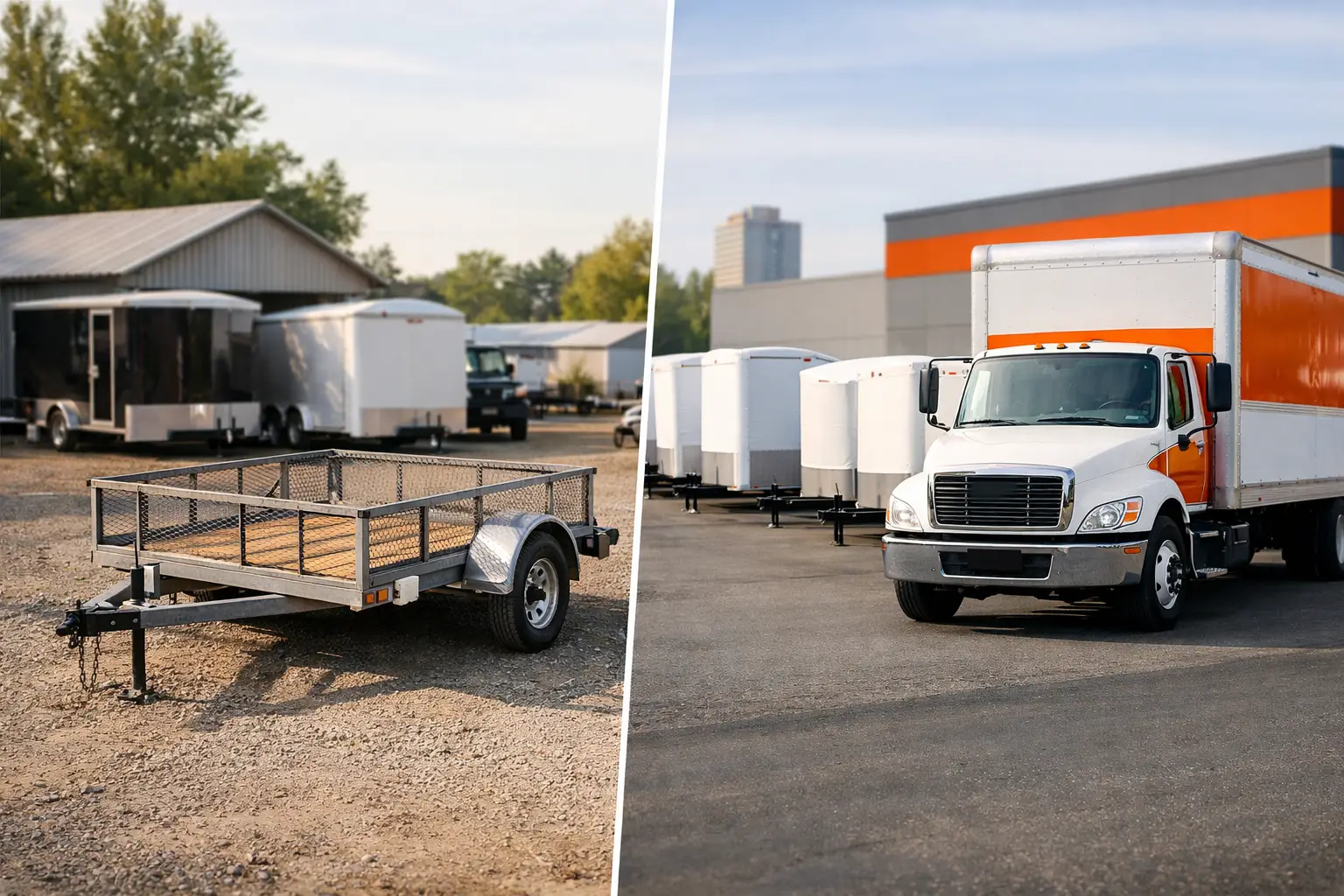
Big national rental chains have name recognition. That matters to some renters, especially if they are used to booking everything through large companies. In some cases, a chain can work fine for a basic, one-size-fits-all need. If all you care about is grabbing whatever is available and getting back on the road, a big company may seem like the easy choice.
But trailer rental is not quite the same as renting a standard car. Fit matters. Tongue weight matters. Brake setup matters. So does whether the trailer is right for hauling a vehicle, gravel, tools, debris, or equipment. The more specific your job is, the more useful local help becomes.
A local trailer rental business usually has a simpler process and a more direct line of communication. You are more likely to talk to somebody who actually knows the equipment, understands local roads and driving conditions, and can help match the trailer to your tow vehicle and load. That can save time, but it can also keep you from making a costly mistake.
Price is only one part of the cost
A lot of people start with the daily rate, which makes sense. Nobody wants to get soaked by high rates. But the advertised number is not always the number that matters most.
With big chains, pricing can look competitive up front and then change once fees, scheduling limits, mileage rules, or add-ons show up. Some customers are fine with that if they already know the system. Others get to checkout and realize the cheapest option was not really the cheapest option.
A local operation often wins on clarity. You can ask what you are paying for, what is included, and what kind of trailer makes the most sense before you commit. That does not mean every local company is automatically cheaper in every case. It means you are more likely to get a straightforward answer from the start.
That matters even more for short-term jobs. If you only need a trailer for a day to move a car, haul a side-by-side, or clean up after a yard project, simple pricing and easy pickup can be worth as much as a slightly lower base rate.
Service matters more when the job is not routine
If you rent trailers often, you may know exactly what you need. But plenty of customers do not. They know they need to haul something. They do not always know whether they need a utility trailer, a car hauler, ramps, tie-down points, or a certain load rating.
This is where big chains can feel rigid. Their systems are built for volume. That can mean standard processes, limited flexibility, and customer service that is handled by someone far removed from the equipment on site. If your question falls outside the usual script, getting a useful answer can take longer than it should.
Local rental companies tend to be better at the practical conversation. What are you hauling? What are you towing with? How far are you going? Are you loading a low-clearance vehicle? Do you need room for equipment or material that shifts during transport? Those are the kinds of questions that help you rent the right trailer the first time.
For first-time renters, that kind of support can lower the stress level fast. For experienced haulers, it can speed things up because you are dealing with people who know the difference between a quick local haul and a heavier-duty job.
Equipment condition is not a small detail
A trailer can look acceptable at a glance and still cause problems once you are on the road. Tire wear, lights, couplers, ramps, deck condition, and tie-down points all matter. When you are hauling a vehicle or a load with real weight behind it, dependable equipment is not a bonus. It is the whole point.
Large chains sometimes do a solid job with maintenance, but consistency can vary by location. One branch may be sharp and well-managed, while another feels rushed or overbooked. That is one drawback of scale. The brand name may be national, but the actual experience often depends on who is managing that specific yard.
A good local trailer rental company lives and dies by repeat business. In places like Cottonwood, Clarkdale, and the wider Verde Valley, word gets around fast. If equipment is not dependable, customers remember. If a company keeps its trailers in good shape and handles problems quickly, people remember that too.
That local accountability has value. It does not guarantee perfection, but it usually means the business has a stronger reason to stay on top of maintenance and customer follow-through.
Booking convenience is not just about doing it online
Big chains often promote convenience through online reservations, broad hours, and familiar booking systems. That can be useful, especially if you are making plans after hours and want to lock something in quickly.
But convenience is not only about clicking a button. It is also about what happens next. If the trailer you reserved is not actually the best fit, if the pickup process is slow, or if nobody can answer your questions before you arrive, the convenience starts to wear thin.
Local rental providers usually compete in a different way. They may offer simpler booking, faster response, and easier communication. For many customers, a team that actually picks up the phone is more convenient than a national call center and an automated confirmation email.
That is especially true when your schedule is tight. Contractors, landscapers, and homeowners working around delivery windows or job deadlines do not need extra friction. They need to know the trailer will be ready, the process will be clear, and the rental will not eat up half the day.
When a big chain might still make sense
There are situations where a large chain is a reasonable option. If you already know the exact trailer type, the location is convenient, and the pricing works out clearly, a chain may do the job just fine. Some renters prefer national brands simply because they are familiar with them.
If you are traveling far outside your local area or trying to coordinate with a broader route, a chain may also fit better depending on the logistics. The point is not that big companies are always wrong for the job. It is that they are not automatically the best option just because they are larger.
For hauling, the better question is simple: who is more likely to help you get the right trailer, at a fair price, with less hassle?
Why local trailer rental vs big chains often favors local service
For many customers, local trailer rental vs big chains comes down to trust. Can you get a direct answer? Can you talk to someone who knows the trailer inventory? Can you sort out towing questions before pickup instead of after a problem shows up?
Local businesses often do better here because they are built around real conversations, not just transactions. They know many renters are trying to solve a practical problem quickly. A car needs to be moved. A project needs material hauled. A machine needs to get to the jobsite. People are not looking for a polished script. They want clear help and dependable equipment.
That practical approach is why local rental tends to stand out in smaller communities and working areas like the Verde Valley. Customers want fair pricing, solid trailers, and support that feels close by because it is.
Monsoon Trailer Rental is built around that kind of service – straightforward booking, dependable hauling equipment, and real help when you need to get a job done without wasting time.
The better choice depends on the kind of haul
If your job is simple and a chain location happens to line up perfectly, that route may be fine. But if you care about responsive service, equipment fit, transparent pricing, and working with people who know the difference between a rough estimate and a safe setup, local is often the smarter call.
The trailer you rent should make the job easier, not add another layer of hassle. If you can work with a company that keeps it simple, gives you straight answers, and helps you leave the lot confident you have the right setup, that is usually money well spent.
Before you book, think beyond the logo. The best rental experience is the one that gets your haul done safely, affordably, and without a bunch of extra runaround.