
If you’re standing in a yard trying to decide between an open trailer vs enclosed trailer, you’re probably not looking for theory. You want the right trailer for the job, a fair price, and no surprises once you’re on the road. That choice usually comes down to what you’re hauling, how far you’re going, and how much protection you really need.
For a lot of folks in the Verde Valley, the answer is simpler than it looks. An open trailer is often the practical choice for equipment, landscaping material, ATVs, or a vehicle haul where weather and security are not major concerns. An enclosed trailer makes more sense when you need to protect cargo from rain, dust, road grime, or wandering eyes. Neither one is better across the board. It depends on the load and the day.
Open trailer vs enclosed trailer: what changes in real use
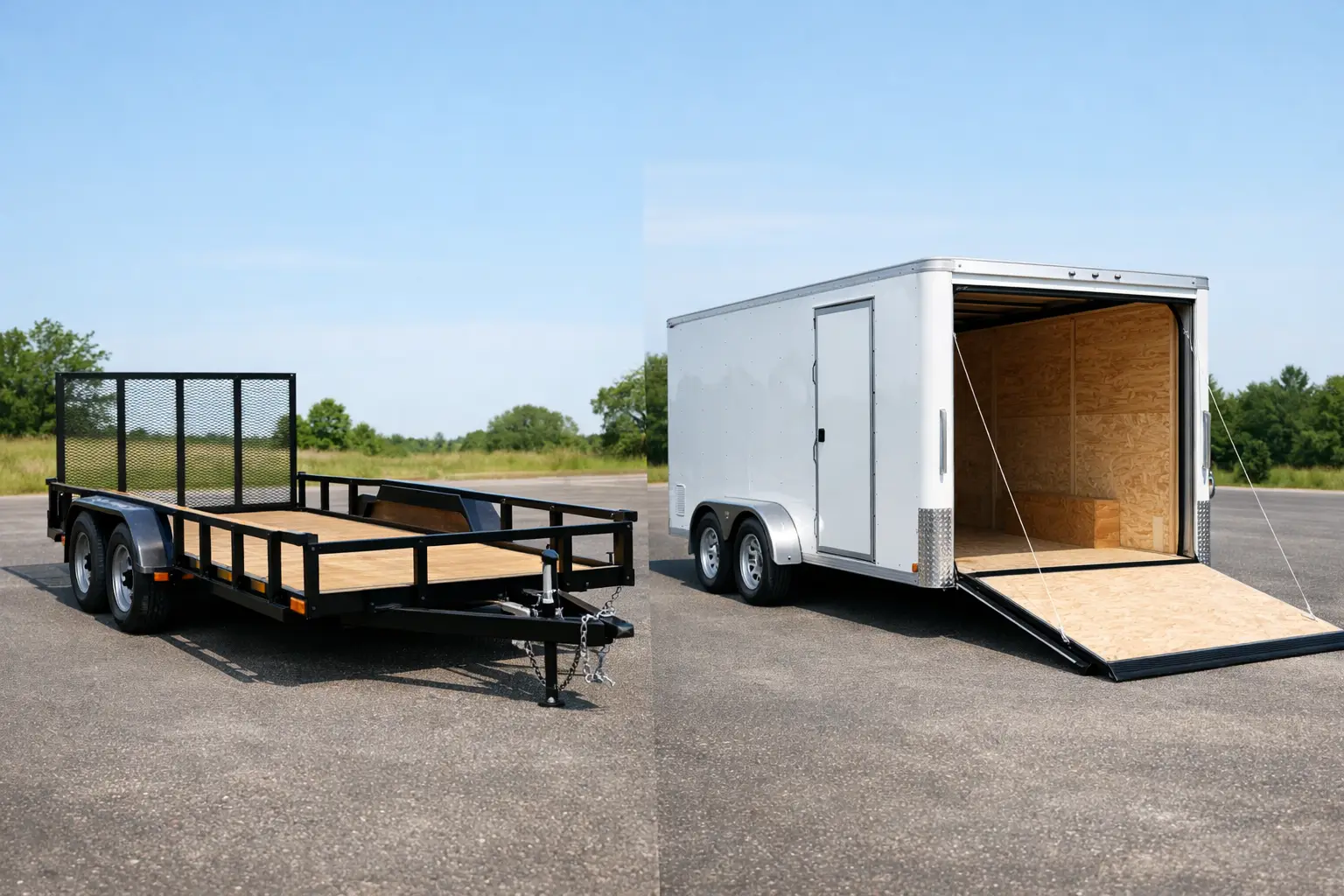
The biggest difference is exposure. An open trailer leaves your cargo out in the elements. An enclosed trailer surrounds it with walls and a roof. That sounds obvious, but it affects almost every part of the rental decision, from cost to loading to fuel use.
Open trailers are easier to load in many situations because you can access the cargo from the sides as well as the rear. If you’re moving a mower, small tractor, building materials, or a car, that flexibility helps. You can see tie-down points clearly, check your load quickly, and deal with awkward shapes without fighting trailer walls.
Enclosed trailers trade that open access for protection. If you’re moving tools, furniture, boxes, motorcycles, or anything that can be damaged by dust, weather, or theft, the enclosure matters. You also get a cleaner look and more privacy, which can be a big deal if you’re parked at a jobsite, hotel, or trailhead.
The catch is that enclosed trailers usually cost more to rent, can feel bulkier on the road, and may reduce visibility when backing or changing lanes. They also catch more wind, which can matter on longer drives or gusty Arizona days.
When an open trailer makes the most sense
For a lot of hauling jobs, open is the no-nonsense option. If the cargo is built to live outdoors, there’s not much reason to pay extra for walls and a roof.
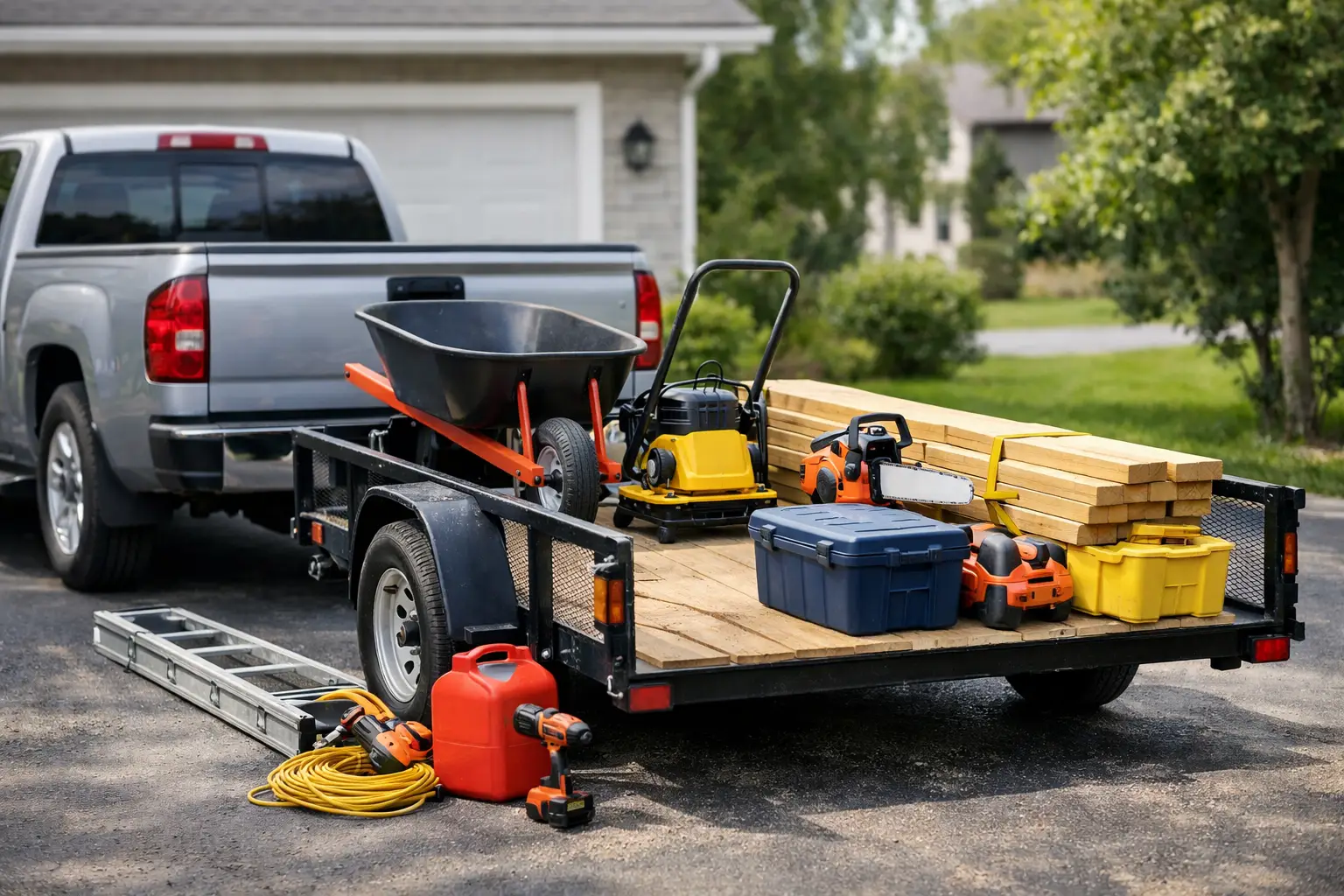
Yard waste, gravel, mulch, lumber, pallets, and many types of equipment ride just fine on an open trailer. The same goes for many vehicle moves. If you’re hauling a car from one part of the Verde Valley to another, or taking a side-by-side or ATV out for the weekend, open usually gets the job done without adding unnecessary cost.
Open trailers also tend to be lighter. That can make a difference if your tow vehicle is working near its limits. Less trailer weight can mean easier towing, simpler maneuvering, and in some cases a little less fuel burned. For renters who don’t tow every week, that lighter, more straightforward feel can reduce stress.
There is another practical advantage that gets overlooked. With an open trailer, it’s easier to inspect your load during a stop. You can walk around it, tighten straps, check tire placement, and make adjustments fast. If you’re hauling something like a skid steer, compact car, or landscaping equipment, that quick access is useful.
Still, open trailers are not forgiving if the weather turns or if your cargo should stay out of sight. Dust, sun, rain, and road debris are all part of the deal.
Best jobs for an open trailer
Open trailers are usually the better fit for equipment hauling, car hauling, landscaping jobs, construction material transport, and loads that are oversized or oddly shaped. They also make sense when you need to load by forklift from the side or when you expect to make frequent tie-down checks.
If the cargo can handle exposure and you want the most practical rental at the lowest cost, open is hard to beat.
When an enclosed trailer is worth it
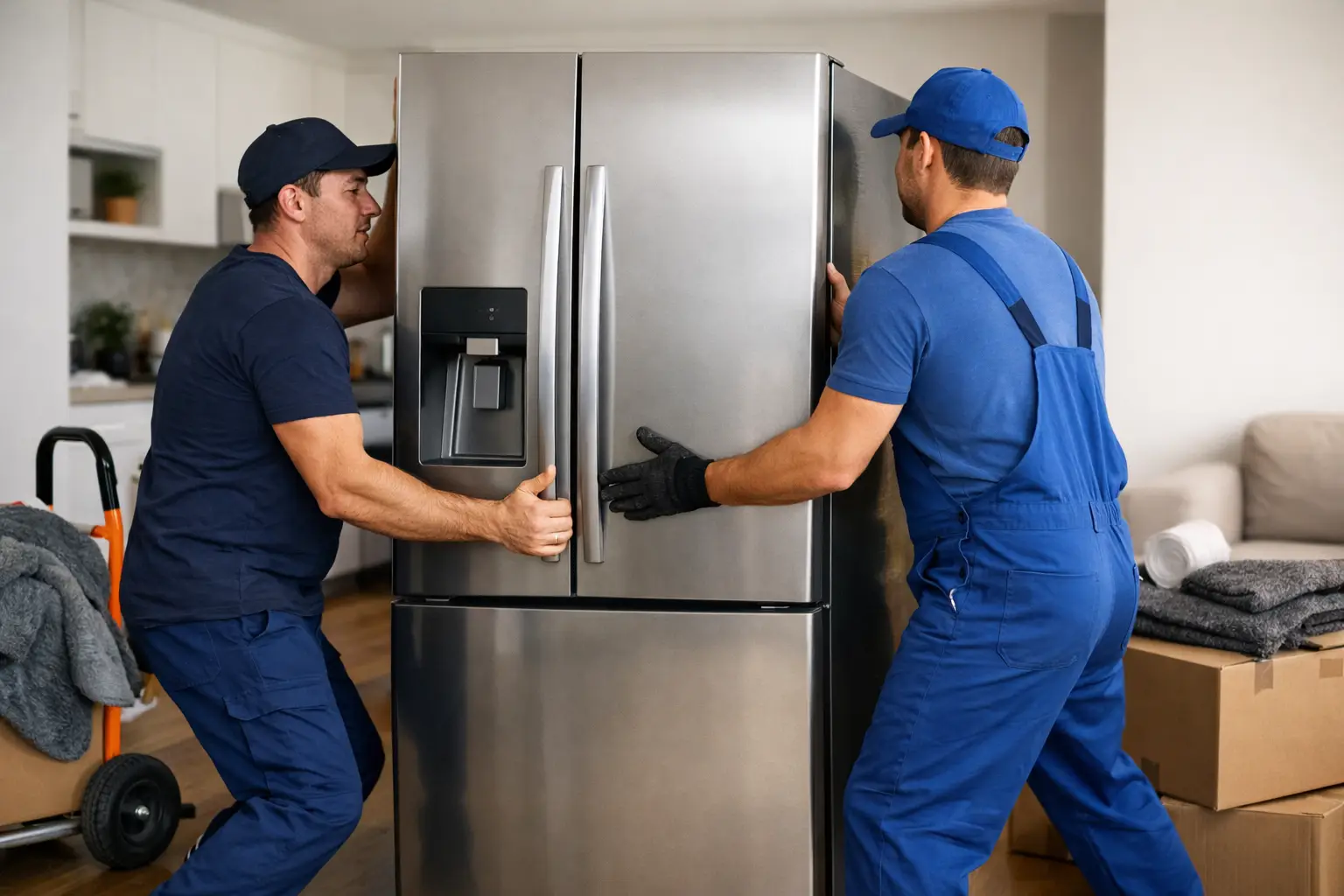
An enclosed trailer earns its keep when protection matters more than open access. If you’re moving furniture, appliances, boxes, tools, motorcycles, or anything with finish surfaces that can be scratched or dirtied, enclosed starts making a lot more sense.
Security is one of the biggest reasons people choose enclosed. A trailer full of visible tools or equipment can attract attention fast. An enclosed trailer keeps your cargo out of sight, and that alone can be worth the extra rental cost for contractors, vendors, and anyone carrying valuable gear.
Weather protection matters too. Even in Arizona, cargo can take a beating from dust, sudden rain, and highway grime. If you’re moving household items, event gear, retail inventory, or anything wrapped in cardboard, an enclosed trailer gives you a buffer that an open trailer simply can’t.
There is also a quality-of-haul factor. Some people just want their load to arrive cleaner, drier, and more secure. If you’re helping family move, transporting merchandise, or carrying equipment with a lot of loose parts, enclosed is often the safer call.
The trade-off is that enclosed trailers can be harder to load if the cargo is wide, tall, or awkward. Interior dimensions matter more. Weight matters more. And if you’re not used to towing, the added size can feel less forgiving in tight spaces.
Best jobs for an enclosed trailer
Enclosed trailers are a strong choice for household moves, contractor tools, motorcycles, event supplies, store inventory, and any cargo that needs privacy or weather protection. They also work well when you want to lock up the trailer between stops instead of unloading everything at once.
If your main concern is keeping cargo protected, enclosed usually justifies the extra expense.
Cost, towing, and convenience
Price is often where the decision gets real. In a straight open trailer vs enclosed trailer comparison, open trailers usually win on rental cost. They are simpler, lighter, and built for practical hauling without extra structure. If your load does not need protection, paying more for enclosed can feel unnecessary.
But the cheapest option is not always the lowest-cost option in practice. If you ruin furniture with weather, lose time covering everything with tarps, or worry about tools overnight, an enclosed trailer may save money in the long run.
Towing matters too. Open trailers generally feel easier for first-time renters because they are lighter and offer better sightlines around the trailer. Enclosed trailers can block rear visibility and react more to wind. That’s not a deal-breaker, but it does mean your tow vehicle, hitch setup, and comfort level matter more.
Convenience cuts both ways. Open trailers are easier for loading equipment and odd-shaped cargo. Enclosed trailers are easier when you want to pack, shut the door, and know everything is protected.
How to choose the right trailer for your job
Start with the cargo, not the trailer. Ask yourself a few plain questions. Does the load need protection from weather or dust? Would it be a problem if people could see what’s inside? Is the cargo easy to strap down in the open? Are you hauling something wider or taller than an enclosed trailer opening would comfortably allow?
Then think about distance and timing. A short local haul in clear weather is different from a full-day move with multiple stops. The longer the trip and the more variables involved, the more value an enclosed trailer can offer.
Your tow vehicle matters as well. Make sure it can handle the trailer weight plus cargo weight, not just one or the other. If you’re unsure, it’s worth asking before booking. A good rental experience starts with matching the trailer to both the load and the vehicle.
For many local renters, the simplest rule is this: if your cargo is rugged, oversized, or easy to secure, go open. If your cargo is valuable, weather-sensitive, or better kept out of sight, go enclosed.
One choice is not smarter than the other
People sometimes treat enclosed trailers like the premium option and open trailers like the basic one. That is not really how it works in day-to-day hauling. The smart choice is the trailer that fits the load without making the job harder or more expensive than it needs to be.
A landscaper hauling a mower and debris may be better off with open. A homeowner moving bedroom furniture may be better off with enclosed. Someone hauling a project car might choose open for easy loading, while someone hauling motorcycles may prefer enclosed for added security. Same road, different job.
If you’re not sure, it helps to talk it through with a local rental team that actually picks up the phone and asks what you’re hauling. Monsoon Trailer Rental works with customers who need practical answers, not a sales pitch, and that usually leads to the right trailer the first time.
The best trailer is the one that lets you finish the haul without extra cost, extra stress, or extra cleanup after you get home.