

You usually do not start by asking how much does trailer rental cost until you already have a job waiting – a load of gravel, a side-by-side to move, a car that needs hauling, or a dump run you cannot put off another weekend. The short answer is that trailer rental pricing can range from around $50 a day for a small utility trailer to $150 or more per day for larger or specialty trailers. But the real answer depends on what you are hauling, how long you need it, and whether the quote includes the extras.
How much does trailer rental cost by trailer type?
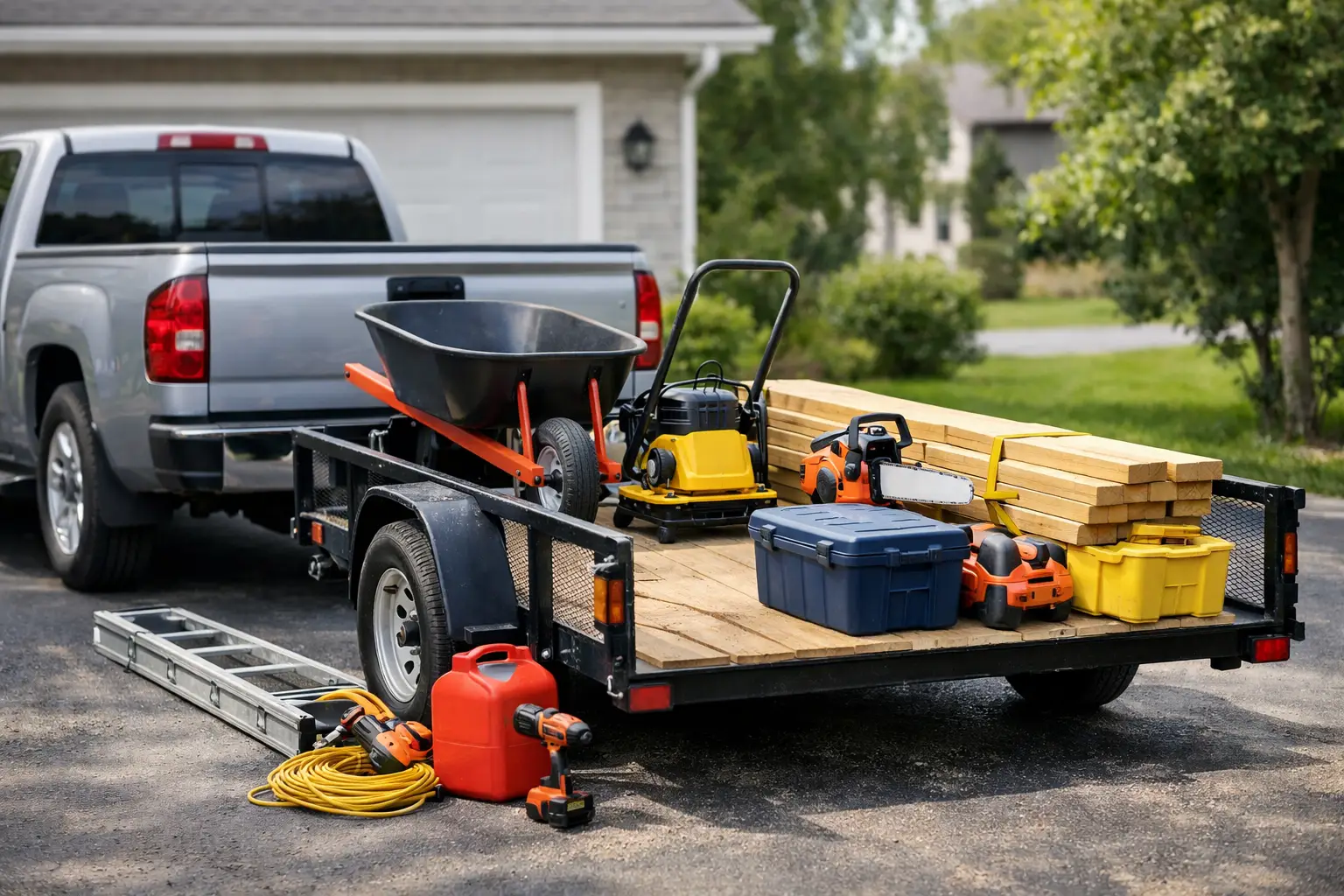
Trailer size and style do most of the heavy lifting when it comes to price. A basic utility trailer is usually the most affordable option because it is built for straightforward hauling – yard debris, furniture, tools, small equipment, or home project materials. In many markets, a small utility trailer may rent for roughly $50 to $75 per day, while larger utility trailers can run higher.
A dump trailer usually costs more because it does more. If you are hauling rock, dirt, roofing tear-off, or heavy jobsite debris, the hydraulic dump feature saves a lot of labor, and that convenience shows up in the daily rate. These rentals often land somewhere in the $100 to $150-plus range per day depending on size, capacity, and demand.
Car hauler rentals also tend to cost more than a basic utility trailer. They are built for a specific job, and they need the right weight rating, ramps, tie-down points, and dependable running gear. If you are moving a vehicle, project car, UTV, or small tractor, expect rates that often start around $100 a day and climb from there based on trailer size and setup.
Enclosed trailers can also sit on the higher end because they give you weather protection and security. For some renters, that is worth every dollar. For others, an open trailer handles the job just fine at a lower cost.
What changes the total trailer rental price?
Even when two trailers look similar on paper, the final cost can come out different. Duration is one of the biggest factors. A one-day rental usually has the highest per-day cost, while multi-day or weekend pricing can bring that daily average down. If you know your project will take two or three days, it is worth asking about package rates instead of assuming a day-by-day total.
Trailer capacity matters too. Heavier-duty axles, larger deck space, brakes, and specialized features all push the rate upward. That is not price padding – it is the cost of renting equipment built for tougher jobs.
Season and local demand can affect pricing as well. Around spring cleanup season, moving season, or busy weekends, certain trailer types may book faster. If you wait until the last minute, your cheapest option may already be gone.
Condition and service also matter more than people think. A trailer with working lights, solid tires, maintained brakes, and a team that actually answers the phone may cost a little more than the bare minimum quote. For most customers, that difference is worth it. Cheap only feels cheap until you lose time on the side of the road.
Daily, weekend, and weekly rates
A lot of renters focus only on the daily number, but that can be misleading. If you are doing a Saturday dump run and bringing the trailer right back, a daily rate makes sense. If you are handling a bigger cleanup, a remodel, or a vehicle move with some scheduling uncertainty, weekend or weekly pricing may be the better deal.
Weekend rates often make sense for homeowners because they match the way real projects happen. You pick up the trailer, knock out the work, and return it without trying to squeeze everything into a few rushed hours. Weekly rates are often the smartest choice for contractors, landscapers, and anyone juggling more than one job.
The best move is to match the rental period to the job, not just chase the lowest posted number. A cheaper one-day rate is not really cheaper if you end up paying extra because you ran out of time.
Fees that can catch people off guard
If you want a real answer to how much does trailer rental cost, you have to look past the base rate. This is where renters sometimes get surprised.
Late return fees are common. If the trailer is booked for the next customer and it comes back late, that causes a chain reaction. Some companies charge by the hour, while others move straight into another full-day charge.
There may also be charges tied to damage, excessive dirt or debris left in the trailer, or missing equipment. With specialty trailers, tie-downs, ramps, or accessories may be billed separately if they are not part of the standard rental.
Some providers require a deposit. That is not unusual. The key is knowing whether it is refundable, what could reduce it, and when it gets returned.
Mileage can come into play with certain rental setups, though many local trailer rentals are flat-rate for the rental term. It is always worth asking whether the quote is truly all-in or whether there are usage-based charges.
Choosing the right trailer saves money
A lot of people think the cheapest trailer is the one with the lowest rental rate. That is not always true.
If you rent too small, you may need to make extra trips, burn more fuel, and waste a full day. If you rent the wrong kind of trailer, loading becomes harder, unloading takes longer, and the job gets more frustrating than it needs to be. On the other hand, renting far more trailer than you need can mean paying for weight capacity and features you never use.
That is why a quick conversation with a local rental yard can make a difference. If you tell them what you are hauling, how much it weighs, and what vehicle you are towing with, they can usually point you toward the right fit. A straightforward recommendation often saves more money than bargain-shopping on the wrong equipment.
Towing vehicle matters too
Your trailer cost is only part of the picture. You also need a tow vehicle that can safely handle the trailer and load. If your hitch, brake controller, towing capacity, or wiring setup is not right, the cheapest trailer on the lot is still the wrong rental.
This especially matters with car haulers, dump trailers, and heavier utility trailers. A half-ton pickup may handle one setup just fine and struggle with another once the load is on. If you are not sure, ask before you book. That is a lot better than showing up and finding out your vehicle is not equipped for the trailer you reserved.
Is local trailer rental cheaper than big national providers?
Sometimes yes, and often in ways that do not show up on the first quote. Large chains may have broad availability, but they can also come with more rigid terms, more upsells, and less flexibility when your job changes. A local rental business is often better at matching you to the trailer you actually need instead of pushing you into whatever is left in the system.
That matters in places like Cottonwood, Clarkdale, Sedona, and the rest of the Verde Valley, where hauling jobs are often practical and time-sensitive. You want fair pricing, but you also want equipment that is ready to work and a real person you can reach if something comes up. That is part of the value, even if it is not a line item on the invoice.
What should you ask before renting?
Before you commit, ask for the full rate, the rental term, deposit details, and any possible extra charges. Confirm the trailer size, weight capacity, brake requirements, and whether your tow vehicle is a good match. If your job involves a vehicle move, ask whether the trailer is set up for that specific kind of load.
It also helps to ask what is included. Some renters assume ramps, spare tires, or tie-down points are standard on every trailer, and that is not always the case. A two-minute conversation upfront can prevent a wasted trip later.
For customers who want straightforward pricing without getting soaked by high rates, local providers like Monsoon Trailer Rental tend to make the process easier because the goal is simple – get you the right trailer for the job and get you back on the road.
If you are trying to budget for an upcoming haul, the smartest approach is not chasing the absolute lowest advertised number. It is finding the right trailer, with clear pricing, from people who make the job easier instead of harder.