
You do not want to find out the hard way that your SUV is overmatched after the trailer is loaded, the straps are tight, and you are already pointed uphill out of town. If you are asking, can my SUV tow a trailer, the right answer starts with your exact vehicle, your exact load, and a few numbers that matter more than guesswork.
A lot of drivers assume an SUV can tow just because it has a hitch receiver on the back. Sometimes that works out fine. Sometimes it leads to poor braking, rear-end sag, overheating, or a setup that is not legal or safe. The good news is that it is usually pretty easy to figure out what your SUV can handle before you book a trailer or haul a vehicle.
Can my SUV tow a trailer? Start with the tow rating
The first number to check is your SUV’s maximum tow rating. This is the manufacturer limit for how much trailer weight the vehicle can pull when it is properly equipped. You can usually find it in the owner’s manual, on the door sticker, or in the manufacturer’s towing guide for your model year and trim.
That last part matters. Two SUVs with the same model name can have very different ratings depending on engine, drivetrain, axle ratio, factory tow package, and whether they have transmission cooling or trailer brake wiring. A midsize SUV with a tow package may be rated for several thousand pounds more than the same SUV without one.
Do not rely on what a neighbor towed once or what a hitch installer told the previous owner. Go by the numbers for your exact vehicle.
The number people miss: payload
Tow rating gets most of the attention, but payload often decides the job. Payload is how much weight your SUV can carry inside the vehicle and on the hitch. That includes passengers, tools, coolers, cargo in the back, and trailer tongue weight.
Tongue weight is the downward force the trailer puts on the hitch ball. For most bumper-pull trailers, that is commonly around 10 to 15 percent of the loaded trailer weight. So if a loaded trailer weighs 4,000 pounds, you may have 400 to 600 pounds sitting on the hitch.
Now add two adults, a full tank of gas, some equipment in the cargo area, and suddenly the SUV may be at its payload limit even if the total trailer weight is technically under the tow rating.
That is where people get tripped up. They think, my SUV can tow 5,000 pounds, so I am good. Maybe. But if payload is tight, the real answer may be no.
Check the hitch and ball mount too
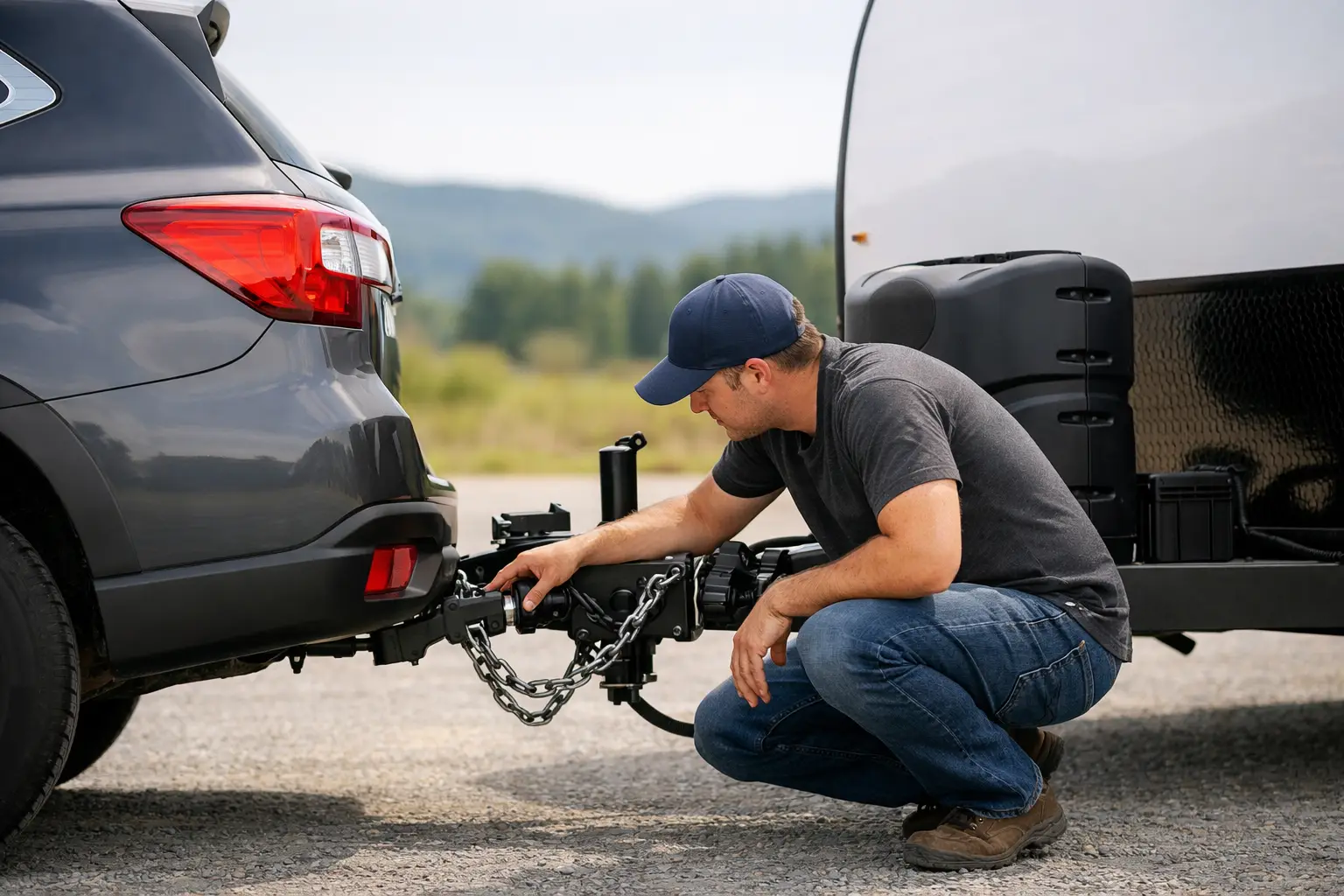
Your SUV is only part of the setup. The hitch receiver, ball mount, and hitch ball all have their own weight ratings. The lowest-rated part is the weak link.
A Class III hitch might be enough for one trailer and not enough for another, especially if tongue weight climbs. The hitch ball size also has to match the trailer coupler. If the coupler takes a 2-inch ball, do not try to make a 1-7/8 inch ball work. That is a fast way to create a dangerous situation.
Safety chains need to be the right size and crossed under the tongue. Trailer lights need to work. And if the trailer has electric brakes, your SUV may need a brake controller and the correct wiring connection.
Trailer brakes can change the answer
Many SUVs can tow a moderate trailer only if that trailer has its own brakes. Without trailer brakes, the legal or recommended towing limit is often much lower.
This matters even more in hilly areas and on roads where stop-and-go traffic shows up without much warning. If the trailer is heavy enough to push your SUV during braking, you need trailer brakes doing their share of the work.
A brake controller lets the SUV and trailer brake together in a controlled way. Without one, even a trailer that seems fine on flat ground can feel sketchy in a hard stop or a downhill stretch.
Loaded weight matters more than empty weight
One of the most common mistakes is using the trailer’s empty weight as the deciding number. Empty weight is just the trailer by itself. What matters is loaded trailer weight.
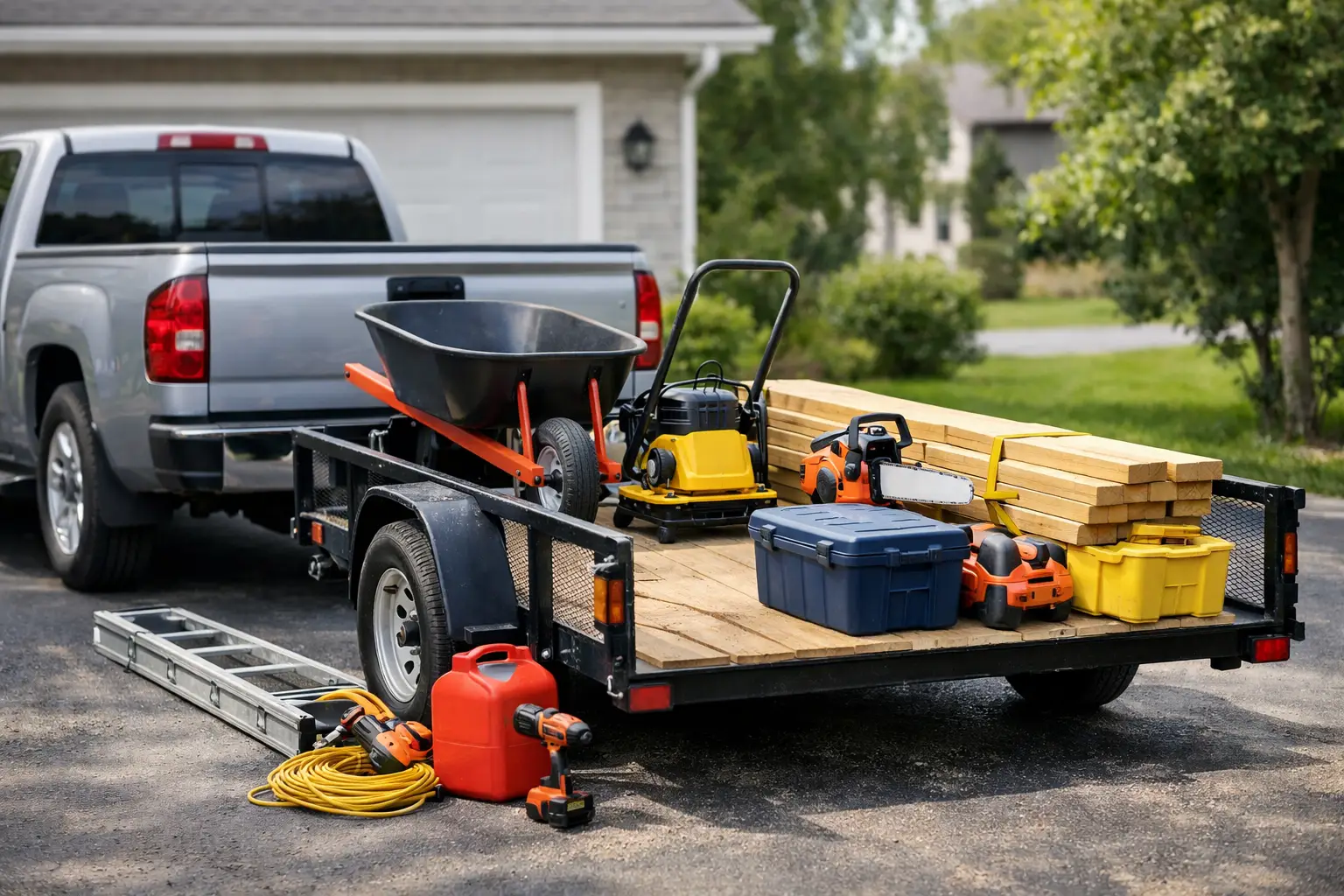
If you are hauling a side-by-side, building materials, landscaping equipment, or a vehicle, those pounds add up fast. Add spare tires, tie-downs, fuel, ramps, and a few “just in case” tools, and the real total can be much higher than expected.
A car hauler is a good example. The trailer itself may already be substantial, and then you are adding the full weight of the vehicle on top of that. Many crossovers and smaller SUVs are not a good fit for that kind of job, even if they look sturdy enough from the outside.
Can my SUV tow a trailer safely on Arizona roads?
Safe towing is not just about whether the SUV can move the load. It is about whether it can control it. Heat, grades, wind, and road speed all add stress.
In places like the Verde Valley, towing can go from easy to demanding pretty quickly. A setup that feels fine on a short flat drive across town may feel very different on a longer route with elevation changes, rough pavement, or afternoon heat. Engine power matters, but cooling, braking, wheelbase, suspension, and tire condition matter too.
Short-wheelbase SUVs can be more sensitive to trailer sway. Softer rear suspension can sag under tongue weight. Passenger-rated tires may not inspire confidence when the load gets close to the vehicle’s limits. None of that means the SUV cannot tow. It just means the margins matter.
A quick real-world way to figure it out
If you want a practical answer without getting lost in technical language, use this approach.
Find your SUV’s max tow rating and payload rating. Then estimate the trailer’s loaded weight, not its empty weight. Estimate tongue weight at 10 to 15 percent of loaded trailer weight. Add that tongue weight to the weight of people and gear inside the SUV. If either the tow rating or payload gets exceeded, the answer is no.
After that, confirm your hitch rating, ball size, wiring, and whether the trailer has brakes. If the setup is close to the limit on paper, treat that as a warning sign, not a green light. Close to the limit usually means less comfort, less braking margin, and less room for error.
When the answer is probably yes
Your SUV is likely a reasonable match if it has a factory tow package, the trailer’s loaded weight is comfortably under the tow rating, payload is still within limits after passengers and cargo, and the trailer has brakes when needed. A stable wheelbase, healthy tires, and working trailer lights help round out the picture.
This is where a lot of homeowners and small business owners do just fine with utility trailers, equipment trailers, or smaller enclosed trailers. The key word is comfortably. There should be margin left over.
When the answer is probably no
If you are already guessing on weights, if the rear of the SUV squats hard when hooked up, if you do not have trailer brake support for a heavier load, or if the numbers only work out when the SUV is empty except for the driver, you are probably pushing it.
The same goes for trying to tow a vehicle on a car hauler with a smaller SUV or crossover. That is a job where people often underestimate total weight. It is not just about whether the engine can pull away from a stoplight. It is about stopping, handling, and staying in control the whole trip.
If you are renting, ask before you hook up
A good local trailer rental company should ask what you are towing with, what you are hauling, and whether your vehicle is equipped correctly. That is not red tape. That is part of making sure you get the right trailer for the job.
At Monsoon Trailer Rental, that practical conversation matters because the right answer is not always the biggest trailer available. Sometimes it is a lighter trailer. Sometimes it is a different plan altogether. That is better than getting soaked by high rates for the wrong setup or wasting half a day trying to make an unsafe combination work.
If you are unsure, have your SUV’s year, make, model, engine, and tow package details ready. Know whether you have a 4-pin or 7-pin connector. Know your hitch class if possible. A few minutes of checking can save you a lot of trouble once the trailer is loaded.
The best towing setup is not the one that barely works. It is the one that feels steady, stops straight, and gets the job done without drama. If you are on the fence about your SUV, ask questions first and leave yourself some margin. That is how hauling stays simple.