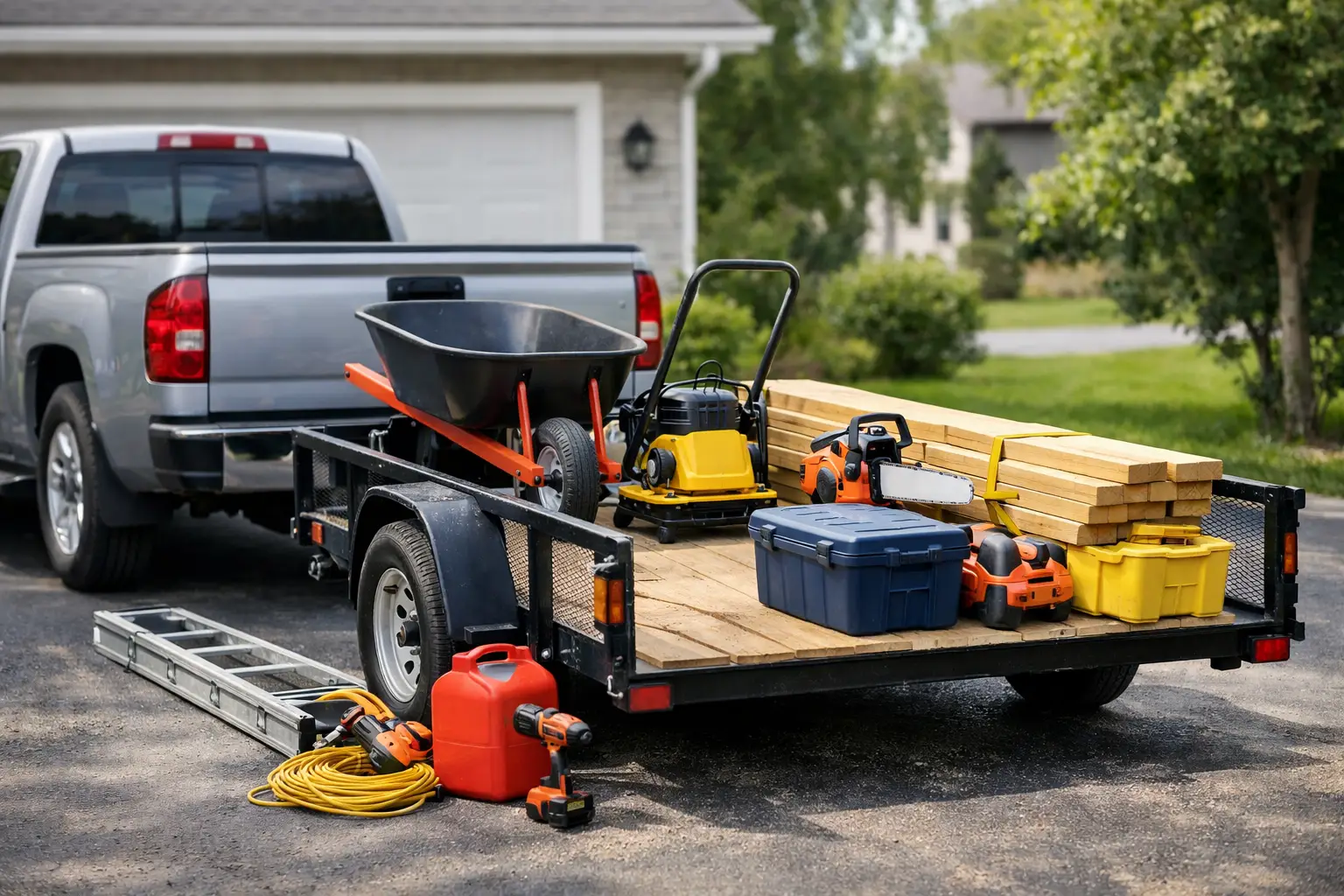

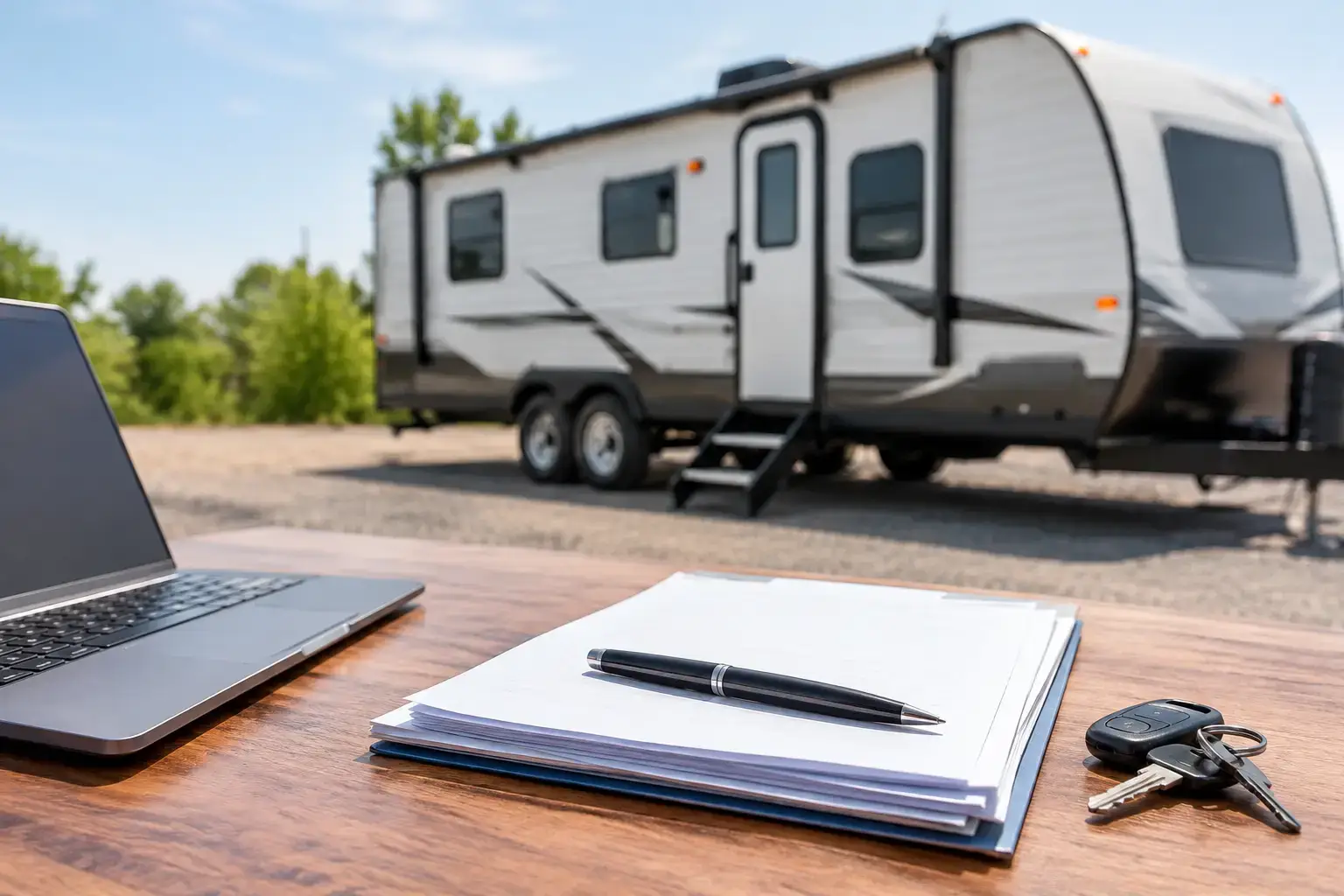
A trailer rental can save a weekend project, a vehicle move, or a landscaping job – but only if you can pick it up without a paperwork surprise. If you are asking what documents you need to rent a trailer, the short answer is a valid driver’s license, a way to pay, and the information needed to confirm that you and your tow vehicle are ready for the job.
Requirements can vary by rental company, trailer type, and insurance policy. A small utility trailer may be straightforward, while a car hauler carries more responsibility because of the vehicle weight and the load being transported. Having the right documents ready before your reservation keeps pickup quick and gives you time to focus on loading safely.
What documents do you need to rent a trailer?
For most trailer rentals, plan to bring or have access to these four items:
- A valid, current driver’s license
- A credit or debit card in the renter’s name
- Proof of auto insurance or insurance policy details, if requested
- Your tow vehicle information, including year, make, model, and hitch setup
That is the practical starting point. The person signing the rental agreement should generally be the same person whose license and payment card are being used. If someone else will be driving, ask ahead of time whether that driver also needs to be listed on the agreement or provide a copy of their license.
Do not rely on an expired license, a photo of a license that cannot be verified, or a payment card that belongs to a friend who will not be present. Those situations can slow down pickup or prevent a rental from being released. A little preparation is easier than rearranging a haul on moving day.
Your driver’s license is the first thing to check
A valid driver’s license confirms who is renting the trailer and whether the driver is legally able to operate the tow vehicle. For many standard utility trailers and car haulers, a regular Arizona driver’s license may be sufficient. Still, the right license depends on the combined weight of your truck, trailer, and cargo, along with applicable state rules.
This matters most when you are hauling heavy equipment, a loaded construction trailer, or a vehicle on a car hauler. Do not assume that because your truck can physically pull a load, every load is appropriate for your license, hitch, or vehicle rating. The trailer’s capacity is only one part of the equation.
Bring the physical license with you unless the rental provider has specifically confirmed another method. Make sure the name matches the reservation. If you recently moved or changed your name, it is worth calling before pickup so there are no avoidable questions at the counter or during a contactless handoff.
Age requirements may apply
Many rental businesses have a minimum renter age, and some set different conditions for younger drivers. If you are booking for an employee, a family member, or a helper who is under the usual rental age, verify the policy before you make plans around the trailer.
The renter also needs to be able to understand and sign the rental agreement. That agreement covers rental dates, equipment condition, return expectations, damage responsibility, and safe use requirements. Take a minute to read it. Straight answers up front are better than surprises after the job is done.
Bring the right payment method
Most rental providers require a payment card to complete the reservation and may place an authorization hold or collect a security deposit. The amount and payment options depend on the company, trailer value, rental length, and type of equipment.
Use a card in the renter’s name whenever possible. If your company is paying, ask whether the business cardholder, an authorized employee, or additional company information needs to be present. Small contractors often book jobs fast, but a quick confirmation can keep a crew from standing by while payment details get sorted out.
It also helps to confirm what is included in the quoted rate. Ask about rental duration, late returns, cleaning, damage, and any charges related to missing straps, ramps, or other supplied equipment. Fair pricing starts with knowing what you are agreeing to, not just seeing the daily rate.
Insurance information: know what your policy covers
Insurance is where trailer renters should slow down and ask a direct question. Your personal auto policy may provide some coverage while towing a rented trailer, but coverage can differ for the trailer itself, the cargo, damage to another vehicle, and liability from an accident. Commercial use can have different rules than personal use, too.
Have your insurance card or policy details available. A digital insurance card on your phone is often useful, but make sure you can access it even if you have poor service at the pickup location. If the trailer will be used for a business job, confirm that your business auto policy covers the work and the equipment you are hauling.
Do not assume that coverage for your pickup automatically covers every possible loss. For example, your vehicle policy may address liability but not damage to a rented trailer or the car loaded onto a hauler. The right answer depends on your insurer and policy. If there is any doubt, call your insurance agent before pickup rather than finding out after a problem.
Your tow vehicle details matter as much as paperwork
A rental provider needs to know that the vehicle pulling the trailer is a reasonable match. Be ready to provide the year, make, and model of your truck or SUV, along with its towing capacity if you know it. You may also be asked about the hitch receiver size, ball size, electrical connector, and brake controller.
This is not red tape. A trailer that is too large for the tow vehicle, connected with the wrong hitch ball, or loaded beyond its rated capacity is a real safety issue. It can affect stopping distance, steering, tire wear, trailer sway, and the ability to control the vehicle on a grade.
For a car hauler rental, share the vehicle being transported as well. The year, make, model, approximate weight, and ground clearance help determine whether the trailer and ramps are a good fit. A lowered car, a long-wheelbase truck, or an all-wheel-drive vehicle may need extra planning. You want the right trailer before you arrive with a vehicle that will not load correctly.
Check your hitch before pickup day
Look at your tow vehicle before you reserve, not five minutes before departure. Confirm that the receiver is installed, the hitch ball is the correct size and properly rated, safety chain connection points are available, and the trailer lights can plug in and work.
If you are unsure, take clear photos of your hitch and connector and ask for guidance when booking. This is especially useful for first-time renters in the Verde Valley who may be hauling from Cottonwood to Sedona, Camp Verde, or out of town over changing grades and road conditions. A properly matched setup makes the trip less stressful.
Documents are only part of a safe rental
Once your documents are squared away, plan for the load itself. Bring tie-down straps rated for what you are hauling, unless they are included and confirmed with the rental. Secure the load at multiple points, keep weight balanced over the trailer axles, and never exceed the lower of the trailer’s capacity, your vehicle’s tow rating, or your hitch rating.
Before leaving, inspect the trailer with the rental provider or follow the stated contactless pickup process carefully. Take photos of the trailer’s condition, check tires and lights, confirm that the coupler is latched and pinned, attach safety chains correctly, and test the brakes and turn signals. If something does not look right, say so before you pull away.
A good trailer rental should feel simple, not rushed. At Monsoon Trailer Rental, the goal is to help local customers get dependable equipment for the job without getting soaked by high rates or bounced through an impersonal process. Bring your license, payment method, insurance details, and tow vehicle information, then ask the questions that apply to your specific load. A few minutes of preparation can make pickup easy and help your haul finish the way it should: safely, on time, and without extra trouble.