

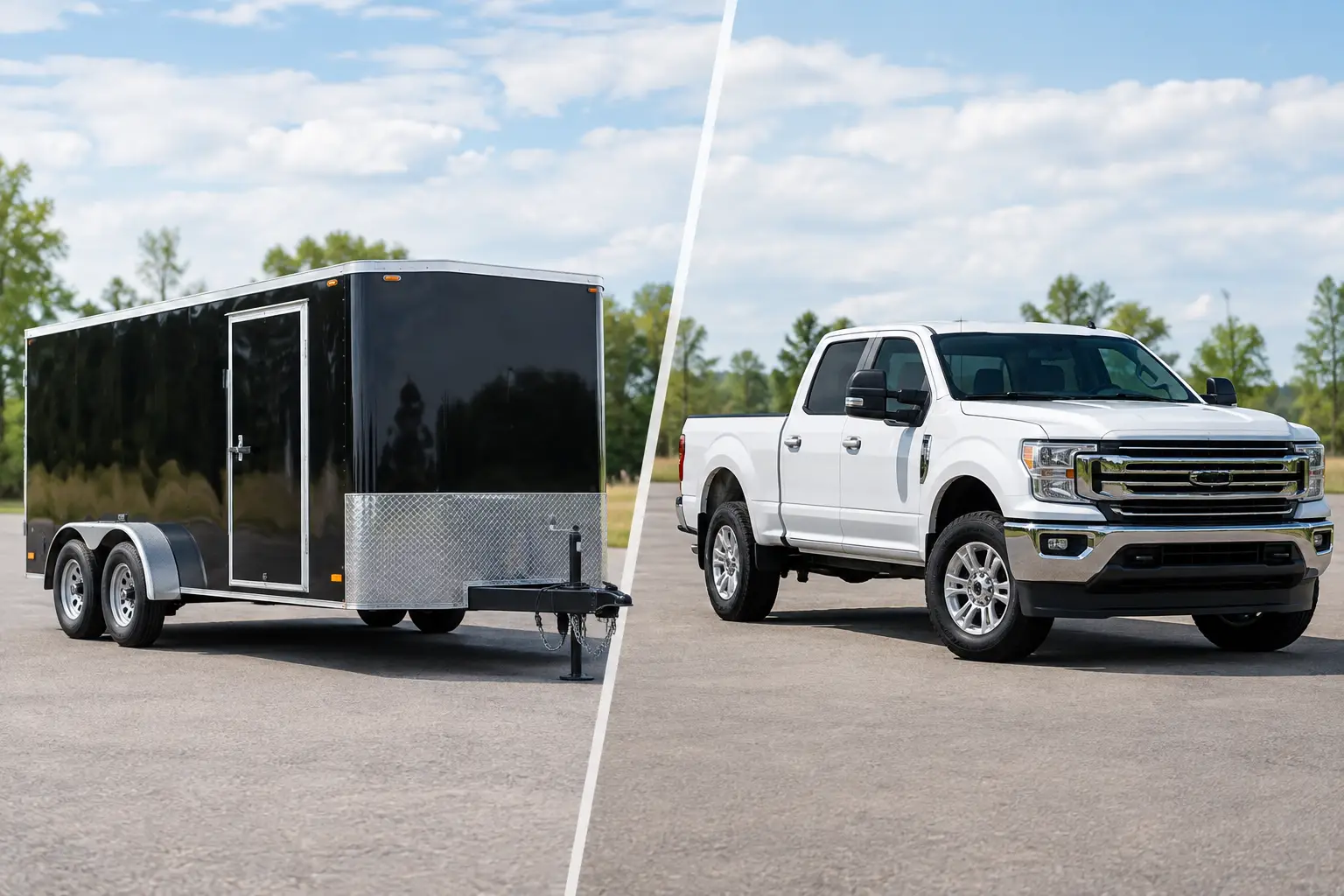
A pickup bed fills up faster than most people expect. One load of lumber, a riding mower, a couch, or a pile of brush can turn a simple Saturday job into three trips across town. When weighing trailer rental versus truck rental, the better choice comes down to what you are hauling, how far it needs to go, and whether you already have a capable tow vehicle.
A rental truck puts the cargo space and engine in one package. A trailer lets your own truck or SUV do the pulling. Neither is automatically cheaper or easier. The right answer is the one that carries the load safely without making the job bigger than it needs to be.
Trailer Rental Versus Truck Rental: Start With the Load
The load should make the decision, not the vehicle you happen to see available first. Think about its weight, dimensions, how it will be loaded, and whether it needs protection from weather or road debris.
A truck rental is often a sensible choice for boxed household goods, appliances, tools, and other items that need to stay dry and out of sight. An enclosed cargo area also keeps smaller items from shifting around in the wind. If you are moving from one home to another and do not own a tow vehicle, a rental truck may be the cleanest, simplest option.
A trailer is usually the better fit for bulky, dirty, awkward, or wheeled loads. That includes landscaping material, furniture headed to the dump, ATVs, compact equipment, motorcycles, and vehicles. An open utility trailer makes it easier to load from the side and strap down irregular items. A car hauler is built for moving a vehicle without putting extra miles on it or relying on a friend with a flatbed.
For many Verde Valley jobs, the ability to make one solid trip is what matters most. A trailer can carry far more than a pickup bed while still letting you use the truck you already know how to drive.
When a Trailer Rental Makes More Sense
A trailer rental works best when you have a properly equipped tow vehicle and need more room than its bed provides. You keep the familiar cab, your tools, and the ability to unhitch the trailer once the load is delivered.
That last point can be a real advantage. If you are hauling material to a jobsite, you can park the trailer, unload, and use your truck normally. With a rental truck, the cargo box goes everywhere with you until the rental is returned.
Trailers also tend to make sense for jobs where loading access matters. A utility trailer sits lower than many truck beds, so loading a mower, wheeled tool, or heavy item is less work. Car haulers provide ramps and tie-down points designed for vehicles. Trying to make a standard rental truck work for a car move can be impractical or simply not allowed.
The cost can favor a trailer, too, especially on a short local job. You are paying for the hauling space rather than renting an entire vehicle. Fuel use still matters, particularly on hills and longer routes, but a trailer can be a straightforward value when your own vehicle is already available.
Monsoon Trailer Rental is built around this kind of practical local need: dependable hauling equipment, easy booking, and a team that actually picks up the phone when you have a question before you hit the road.
Check Your Tow Setup Before You Book
A trailer only works well if the tow vehicle is ready for it. Check the vehicle owner’s manual for its towing capacity and maximum tongue weight. Those numbers are not suggestions. They account for the vehicle, passengers, cargo, trailer, and the load placed on the trailer.
You also need a hitch rated for the job, the correct ball size, functional trailer-light wiring, and a trailer brake controller when the trailer and load require one. Do not assume a receiver hitch means every trailer is safe to tow. A half-ton pickup, midsize truck, SUV, and crossover can have very different limits even when they look similarly equipped.
Ask about the empty trailer weight and plan for the full loaded weight, not just the item you are hauling. A vehicle may weigh more than expected once you add fuel, tools, spare parts, or cargo inside it. If there is any doubt, choose a more suitable setup rather than trying to make a borderline combination work.
When a Truck Rental Is the Better Call
Truck rental is often the right move when you do not have a tow vehicle, do not tow regularly, or need an enclosed space for a full move. It removes the need to match hitch equipment, connect wiring, and back up a trailer at a crowded apartment complex or unfamiliar driveway.
For first-time movers, a box truck can feel more predictable than towing. You load it, secure the cargo, close the door, and drive. There is still a learning curve because rental trucks are longer, taller, and wider than a personal vehicle, but there is no pivoting trailer behind you to manage.
A truck may also be preferable when rain, dust, or security is a concern. Sedona and the surrounding area can see sudden weather changes, and an enclosed truck protects cardboard boxes, electronics, and furniture better than an open trailer. If the load includes things you would not leave uncovered in a parking lot, factor that into the choice.
The trade-off is that rental trucks can cost more than people expect once mileage, fuel, coverage options, and return timing are included. They may also be less convenient for equipment or vehicles that need ramps, open access, or a low loading angle.
Compare the Whole Job, Not Just the Daily Rate
The lowest advertised daily price does not always produce the lowest total cost. Look at the actual job from driveway to return location.
With a truck rental, consider rental time, mileage charges if applicable, fuel, coverage, and the distance to pick up and return the vehicle. A moving job that takes longer than planned can get expensive quickly, especially if you are making extra trips because the cargo area was too small.
With a trailer, consider the rental cost, fuel for the tow vehicle, and whether you already have the required hitch and electrical connection. If you need to buy towing equipment for a one-time job, a rental truck might make more financial sense. If you already tow and only need temporary hauling capacity, the trailer is often the more efficient choice.
Also account for your time. A trailer that lets you haul one full load of brush, debris, or building material may save hours over using a pickup bed. On the other hand, if you have never towed and the job is a one-bedroom move, the simplicity of a truck can be worth the extra cost.
Loading and Driving: The Details That Prevent Trouble
Whichever option you choose, secure the load for the road you will actually travel. A short drive through Cottonwood can still include stoplights, turns, rough pavement, and traffic. A trip over winding roads calls for even more care.
Put heavier items low and close to the front of a trailer, while keeping the load balanced side to side. Too much weight behind the trailer axle can cause sway. Too much weight at the front can overload the tow vehicle’s rear axle or hitch. Use properly rated straps or chains, not worn rope or guesswork, and check every tie-down after the first few miles.
With a rental truck, distribute weight across the floor and secure items against movement. Keep the center of gravity low. Leave extra room for braking, watch overhead clearance, and remember that a loaded truck takes longer to stop than a personal vehicle.
Trailer drivers should practice turns and backing in an open area if they are rusty. Take turns wider, avoid sudden steering inputs, and do not try to power through trailer sway. Ease off the accelerator, hold the wheel steady, and let the combination slow down. Safe hauling is never about rushing.
Make the Choice That Keeps the Job Moving
Choose a trailer when you have a suitable tow vehicle and need flexible, open hauling space for equipment, debris, materials, or a vehicle. Choose a truck when you need an enclosed cargo area, do not have towing equipment, or want a self-contained option for a household move.
The best rental is not the biggest one or the cheapest one on paper. It is the one that fits the load, your experience, and the route ahead – so you can finish the job, return the equipment, and get on with your day.

