

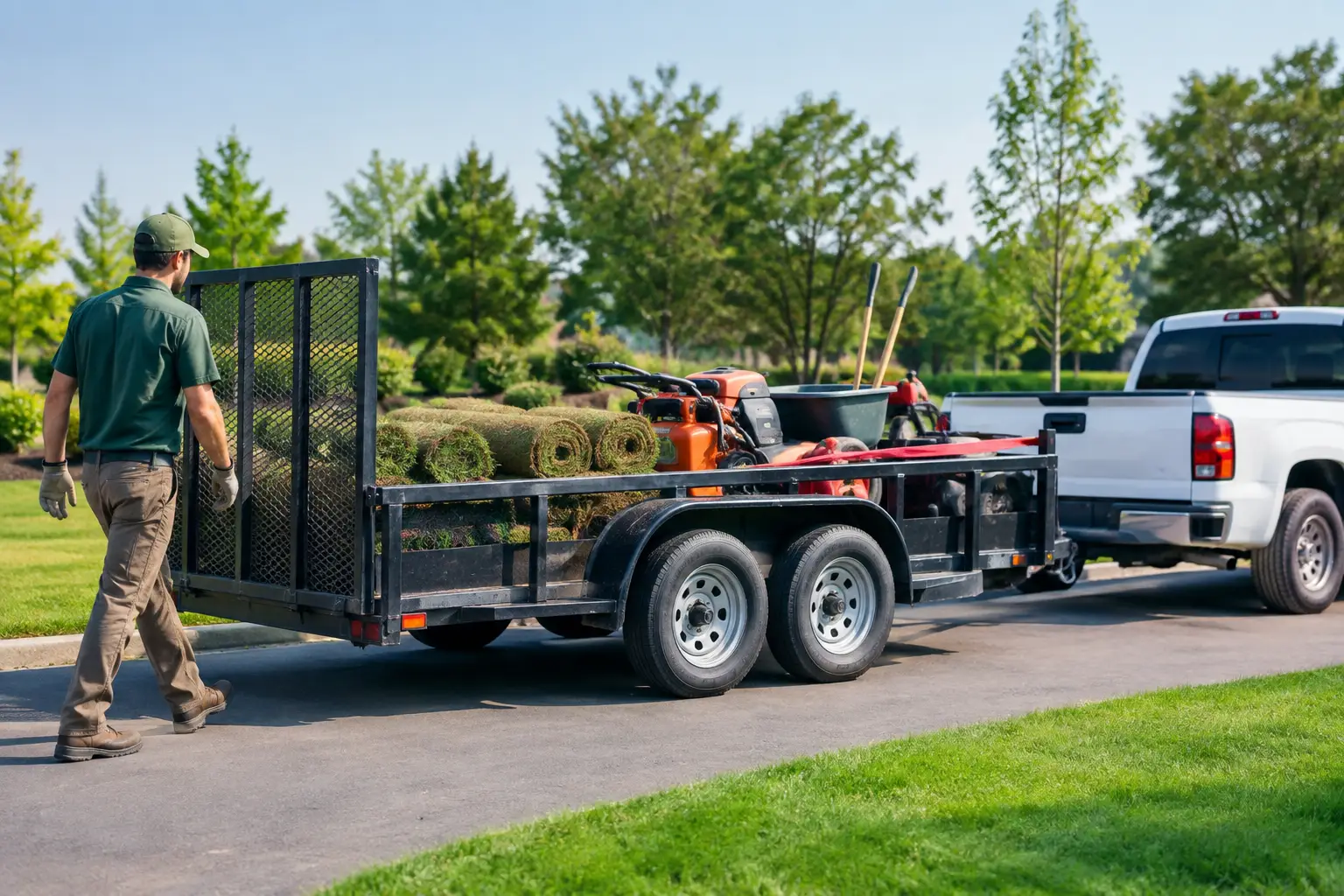
A landscape crew trailer rental example is easier to understand when you look at a real workday, not just trailer sizes on a screen. Picture a two-person crew in Cottonwood with three properties scheduled: a yard cleanup, a gravel delivery project, and a final stop to haul green waste. Their truck is ready, but without the right trailer, tools get stacked in the bed, materials take extra trips, and the day starts falling behind before lunch.
For a small landscaping business, renting a trailer can be the practical middle ground between making do and taking on the cost of owning, storing, insuring, and maintaining another piece of equipment. The right rental helps a crew carry what the job requires, keep the truck bed available, and finish more work in one run.
A Landscape Crew Trailer Rental Example
Start with the workload. This crew needs to bring mowers, trimmers, blowers, rakes, wheelbarrows, hand tools, fuel cans, and a few bags of soil to the first property. Later, they will pick up gravel and haul away branches, brush, and old landscape debris.
A utility trailer can make sense for the tools and lighter equipment portion of that day. It gives the crew room to load carefully, tie everything down, and keep the cab and truck bed from becoming a cluttered work zone. If the crew is transporting a heavier mower or compact equipment, they need to confirm that the trailer’s deck space, ramp setup, and weight rating fit the machine before booking.
The gravel and debris portion requires a different conversation. Gravel gets heavy fast. A trailer that is fine for mowers and tools may not be the right choice for a loaded material run. The crew should calculate the approximate weight of the material, add the trailer’s empty weight, and make sure both the trailer and tow vehicle are rated for the full load.
That is where a local trailer rental provider earns its keep. A quick call with the equipment list, expected material weight, and tow vehicle details can prevent a bad match. It is much better to choose the correct trailer before pickup than to arrive at a material yard and realize the job needs more capacity.
Match the Trailer to the Day’s Work
Landscaping is not one kind of hauling. A maintenance route, a hardscape job, and a cleanup project can all need different trailer setups.
For routine lawn maintenance, a utility trailer is often the straightforward choice. Open sides make it easy to reach tools, and the trailer can carry mowers and equipment that would otherwise take up the truck bed. Good tie-down points matter here because equipment needs to stay put over bumpy roads, turns, and stop-and-go traffic.
For brush, branches, bagged leaves, and old plants, the question is volume as much as weight. Loose debris can fill a trailer quickly. Plan for a tarp or proper containment when needed, especially for a drive across the Verde Valley where wind can turn an unsecured load into a roadside mess.
For pavers, block, gravel, decomposed granite, or soil, weight is the deciding factor. A crew should never choose a trailer based only on how much material looks like it will fit. A small pile of dense material can exceed a trailer’s payload long before the deck appears full. Ask the supplier for the material weight, then leave a safety margin rather than loading to the absolute limit.
Equipment moves deserve the same care. If a project calls for a skid steer, mini excavator, or larger mower, verify the machine’s operating weight, the trailer’s rated capacity, ramp capability, and the truck’s towing limit. If any part of the setup is unclear, stop and ask. Guessing on a heavy equipment load is not how a crew saves time or money.
Do Not Forget the Tow Vehicle
The trailer is only half the setup. The truck needs the proper hitch, electrical connection, towing capacity, and braking capability for the planned load. A half-ton pickup may be a good fit for one job and not enough truck for the next.
Check the owner’s manual or tow rating information for the exact truck configuration. Payload, axle ratio, cab style, drivetrain, and installed towing package can all affect what the vehicle can safely handle. Also check tire condition and pressure before loading up. Tires work hard in Arizona heat, and a hauling day is not the time to find out one is worn or underinflated.
Build a Loading Plan Before Pickup
A little planning keeps a rental trailer from becoming another problem to manage. Make a simple list of everything that needs to travel: equipment, material, fuel, hand tools, safety gear, and debris expected to come back. Then decide what must be accessible first at the job site.
Load the heaviest items low and balanced, with appropriate tongue weight on the hitch. Too much weight at the rear can make a trailer sway. Too much at the front can overload the tow vehicle’s rear axle and make steering feel light. Keep the load centered side to side, secure each major piece of equipment, and avoid relying on one strap to hold several unrelated items.
Before leaving, walk around the trailer. Confirm the coupler is fully seated and locked, safety chains are attached correctly, the breakaway cable is connected if equipped, and lights work. Check that ramps, gates, tools, and loose material are secured. This takes a few minutes, but it can save a long delay on the road.
Rental Timing Can Protect Your Profit
For a landscaping crew, the cheapest-looking rental is not always the best value if pickup rules, return timing, or equipment condition create delays. The goal is to have the trailer when the crew needs it and return it without turning the end of the day into a scramble.
A one-day rental works well for a defined job: pick up in the morning, complete the route, unload, clean out loose debris, and return it according to the agreed schedule. A multi-day rental may make more sense for a hardscape project, a large cleanup, or jobs spread across several properties. The right choice depends on how many trips are planned and whether the trailer will stay productive each day.
Contactless pickup and dropoff can be especially useful when a crew starts early or wraps up after a long day. Still, confirm the process ahead of time. Know where pickup happens, what identification or vehicle information is needed, how to report an issue, and what condition the trailer should be in at return.
When Renting Makes More Sense Than Owning
A full-time landscaping company with daily trailer use may eventually need to own its equipment. But for a new crew, a seasonal business, a contractor adding landscape work, or a homeowner taking on a major yard project, renting can be the smarter move.
Ownership brings more than a purchase payment. There is registration, insurance, storage, tire replacement, bearing service, lighting repairs, brake work, and the hassle of keeping the trailer secure when it is not in use. Renting lets you use the equipment for the jobs that need it without carrying those costs all year.
It also gives a growing crew flexibility. One week may call for a trailer for mowing equipment. The next may involve a vehicle move, cleanup load, or a heavier project with different requirements. Renting based on the actual job can be more practical than forcing every load onto one trailer.
Get the Details Right Before You Haul
When you contact Monsoon Trailer Rental, come prepared with the basics: what you are hauling, approximate weights, the truck you are towing with, where you are traveling, and how long you need the trailer. That makes it easier to get pointed toward a rental option that fits the work instead of paying for more trailer than you need or ending up short on capacity.
A good trailer rental should make the workday easier, not add another headache. Plan the load, respect the ratings, secure everything properly, and choose a setup that lets your crew spend the day finishing jobs instead of making extra trips.

