
The wrong trailer shows up fast when you’re loading a skid steer with a bucket full of dirt, trying to fit a zero-turn mower between the fenders, or realizing your ramps are too steep for the machine you need to move. If you’re figuring out the best trailer for moving equipment, the real answer is not one trailer for every job. It depends on the weight, size, loading angle, tie-down points, and the tow vehicle you already have.
That matters because equipment hauling gets expensive when you overshoot and rent more trailer than you need, but it also gets risky when you try to make a lighter trailer do a heavier job. For most homeowners, contractors, and small crews around the Verde Valley, the sweet spot is a trailer that is simple to load, rated for the machine, and stable on the road.
What makes the best trailer for moving equipment?
The best trailer for moving equipment is the one that matches the machine first, not the other way around. People often start with trailer length, but payload capacity is usually the real decision-maker. You need to know the operating weight of the equipment, then add attachments, fuel, and anything else riding with it.
A compact excavator, trencher, skid steer, small tractor, scissor lift, or pallet of material all put different demands on a trailer. Some loads are heavy but compact. Others are awkward, tall, or hard to balance over the axles. A trailer can look big enough and still be the wrong choice if the payload rating, deck layout, or ramp setup doesn’t fit the job.
The next big factor is how you’re loading. Equipment with low ground clearance, small tires, or uneven weight distribution needs a trailer that won’t create a nasty breakover angle. That’s one reason equipment trailers and car haulers are both useful, but not always interchangeable.
Equipment trailer vs. car hauler
If you’re comparing common rental options, this is where most people narrow it down.
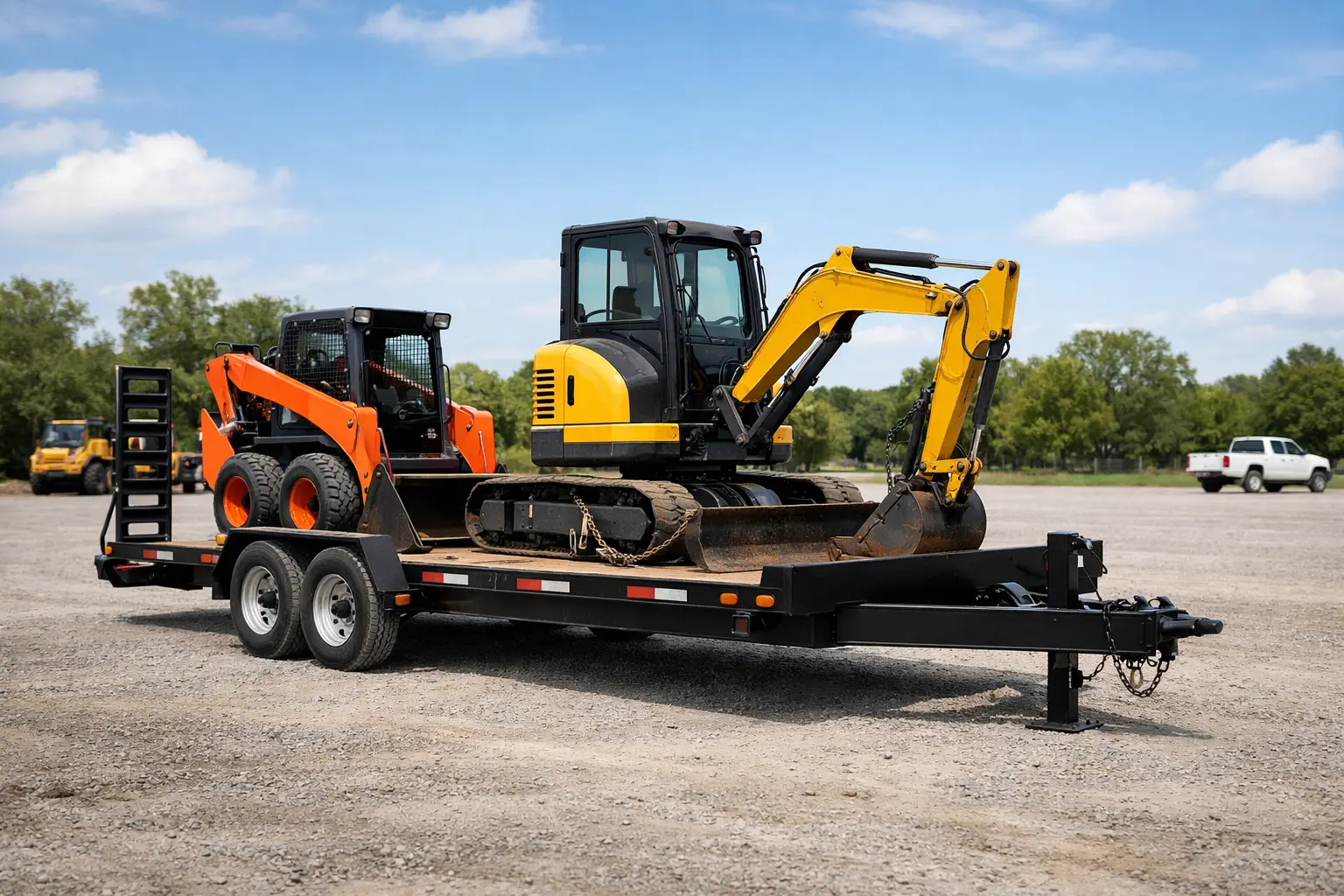
An equipment trailer is built with jobsite loads in mind. These trailers usually offer heavier-duty construction, stronger payload capacity, and features that make sense for machines rather than passenger vehicles. If you’re moving a skid steer, compact tractor, mini excavator, or other dense equipment, this is often the better fit.
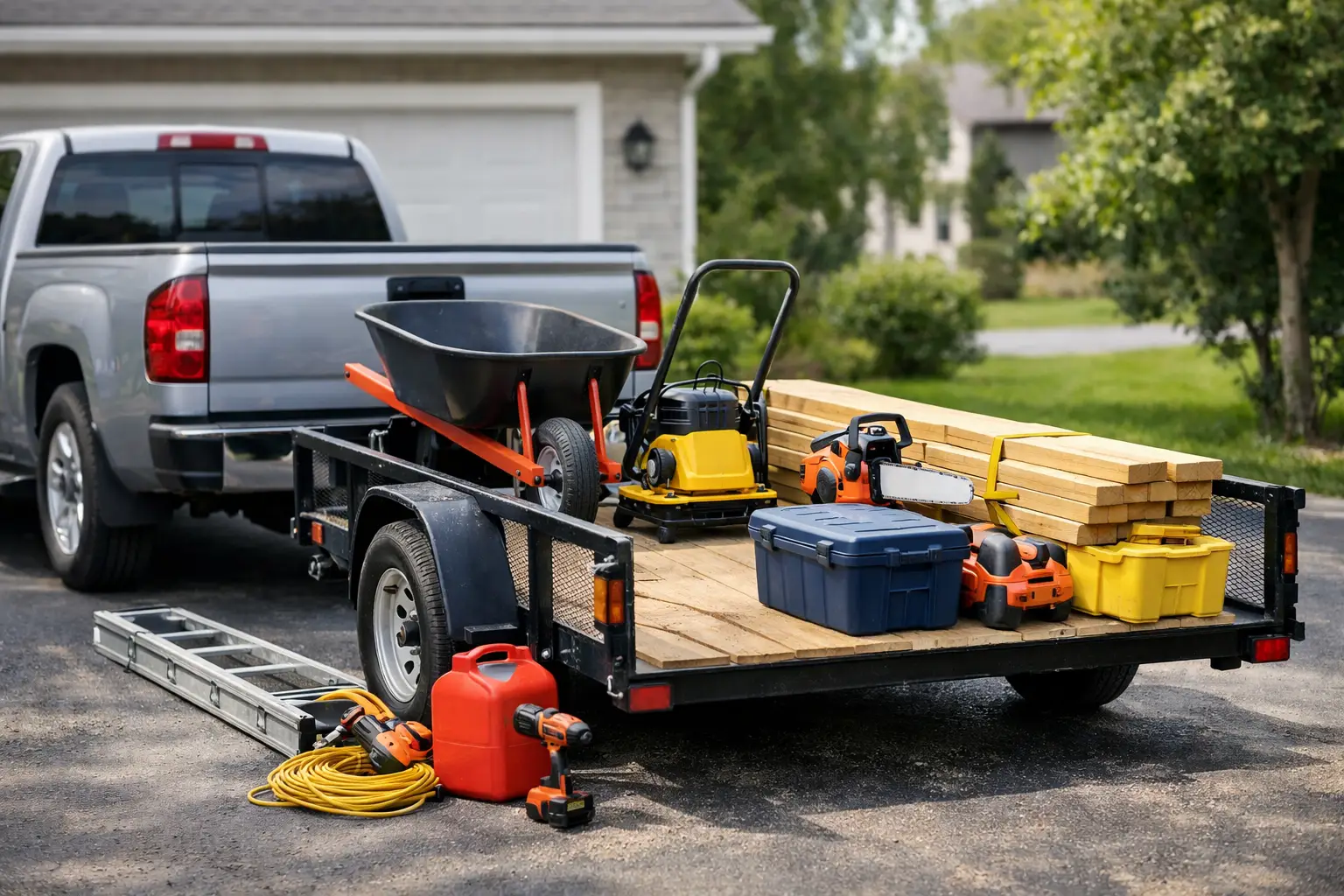
A car hauler can still be a very practical option for certain equipment. If you’re moving a lighter machine, a mower, an ATV, a small utility vehicle, or even a vehicle plus job materials, a car hauler may handle the job well. They are also often easier for people to visualize because the deck is straightforward and the loading process feels familiar.
The trade-off is simple. Equipment trailers are usually the safer choice for heavier, more concentrated loads. Car haulers can be a smart and cost-effective choice for lighter equipment when the size, weight, and tie-down needs line up.
When a heavier-duty equipment trailer is the right call
If your load is compact and heavy, don’t try to get cute with a lighter trailer. A skid steer, small tractor with implements, compact excavator, or loaded jobsite machine can push you into equipment trailer territory quickly.
The reason is not just strength. It’s balance and control. Heavier equipment trailers are designed to carry weight where it actually sits. They also tend to hold up better when you’re loading and unloading machines that put a lot of force on ramps and the rear of the deck.
This is also where braking matters. A properly matched trailer with the right capacity and brake setup gives you a much better margin when you’re stopping on grades, dealing with traffic, or hauling through tighter Arizona roads where confidence matters more than saving a few bucks on the wrong rental.
When a car hauler works well
A car hauler is often a good fit when the load is moderate, the footprint is straightforward, and you don’t need extreme payload capacity. Think small tractors, riding mowers, utility carts, compact equipment, or vehicle transport.
For a lot of customers, a car hauler makes sense because it handles more than one kind of job. You might use it for moving a car this weekend, then use it later for hauling a mower or project materials. That flexibility is valuable if you’re trying to keep the rental simple.
You still need to respect the numbers. If the equipment is too heavy, too wide, or carries weight in a way that stresses the deck, then the best trailer for moving equipment is not the most convenient-looking one. It’s the one rated for the load.
Size matters, but not the way most people think
People usually ask for a 16-foot trailer or an 18-foot trailer first. Length matters, but deck space alone doesn’t solve much if the trailer can’t safely carry the equipment.
Start with four questions. How much does the machine weigh? How wide is it at the tires or tracks? Do you have attachments staying on during transport? And where is the heaviest part of the machine going to sit once loaded?
A trailer that’s too short can create bad weight distribution and make tie-downs awkward. A trailer that’s too large for the load can still work, but it may be harder to maneuver and may not make sense if your tow vehicle is already near its limit. The right size is the one that gives you enough deck room to place the load correctly over the axles without crowding the ramps or tongue.
Don’t ignore your tow vehicle
A lot of trailer problems are really tow vehicle problems. You can rent the perfect trailer and still have a bad day if the truck or SUV isn’t rated for the trailer and equipment combined.
You need to account for the trailer’s empty weight plus the equipment weight, then compare that to your vehicle’s towing capacity and hitch rating. Tongue weight matters too. If too much weight sits forward, the rear of the tow vehicle can squat and steering gets lighter than it should. Too little tongue weight can make the trailer unstable at speed.
This is one of the biggest reasons it helps to talk with a local rental company that actually picks up the phone. A quick conversation can save you from showing up with a load that doesn’t match your setup.
Loading and tie-downs are part of the trailer choice
The best trailer for moving equipment is also the one that lets you secure the load properly. That means usable tie-down points, enough room to position chains or straps, and a deck setup that doesn’t force a weird compromise.
Loading angle matters too. Low-clearance equipment can scrape or hang up on aggressive ramps. Tall equipment can create balance issues if you’re rushing the load placement. Wet conditions, loose dirt on tracks, and uneven weight from attachments all change how the machine sits on the deck.
A trailer that loads easily tends to get loaded correctly. That sounds obvious, but it matters. If a trailer makes the process awkward, people start improvising, and that’s where problems start.
How to choose the best trailer for your job
If you’re hauling a dense machine like a skid steer, mini excavator, or compact tractor with attachments, lean toward an equipment trailer. If you’re moving lighter equipment, a mower, a side-by-side, or a vehicle, a car hauler may be all you need.
If you’re not sure, the safest move is to gather the basic details before booking: equipment make and model, approximate operating weight, overall width, and what you’re towing with. That gives you a real starting point instead of guessing from a photo or a rough estimate.
For customers in Clarkdale, Cottonwood, Sedona, and the surrounding Verde Valley, local conditions matter too. Short in-town moves, jobsite drop-offs, and hilly roads are all easier when the trailer fits the load cleanly and the towing setup is right from the start. That’s exactly why many renters prefer working with a nearby company like Monsoon Trailer Rental instead of a big outfit that treats every haul the same.
The best choice is the one that keeps the job simple
People usually look for one perfect trailer, but most of the time the better question is this: what trailer makes this specific move safe, easy, and cost-effective? For heavier machines, that often means an equipment trailer. For lighter or more versatile hauling needs, a car hauler can be the practical answer.
If you match the trailer to the machine, respect the tow ratings, and think through loading before pickup, the whole job gets easier. And when you’re not sure, asking a few plain questions up front is a whole lot cheaper than fixing a bad trailer choice later.
The smartest rental is not the biggest one on the lot. It’s the one that gets your equipment there without drama and lets you get on with the work.