
A car hauler that looks “close enough” can turn a simple move into a long day on the shoulder. The right one makes loading easier, towing steadier, and the whole job a lot less stressful. If you’re moving a project car, taking a vehicle to the shop, or hauling something that won’t make the drive on its own, a few details matter more than most people think.
If you’re figuring out how to choose a car hauler, start with the vehicle itself, then work backward to the trailer and tow vehicle. That approach keeps you from renting too small, too heavy, or just plain wrong for the job.
Start with the vehicle you’re hauling
The first question is simple: what exactly are you loading? A compact sedan, a full-size pickup, a side-by-side, and a low-clearance classic all create different trailer needs. Length matters, width matters, and weight matters most.
A lot of people guess on vehicle weight and get themselves in trouble. Don’t go by what it “feels like” it weighs. Check the owner’s manual, the door sticker, or the manufacturer’s specs. You want the curb weight of the vehicle, and if it’s loaded with gear, parts, or tools, account for that too.
Vehicle dimensions matter just as much. A trailer might technically handle the weight but still be a poor fit if the car is too wide between the fenders or too long for proper balance. If you’re hauling something with oversized tires, a wide stance, or a long wheelbase, mention that when you book. That’s the kind of detail that can save you a second trip.
Weight rating is where most mistakes happen
When people ask how to choose a car hauler, this is usually the part that decides whether the trailer is safe or not. Every trailer has a Gross Vehicle Weight Rating, or GVWR. That is the maximum total weight the trailer can handle, including the trailer itself and the vehicle on it.
What you care about as a renter is payload – how much weight the trailer can carry. A heavier-duty trailer is not automatically better if your tow vehicle can’t handle it, but a lighter trailer is definitely not better if your load exceeds its rating.
You also need to check your tow vehicle’s towing capacity. That number is not a suggestion. It includes limits for pulling weight, tongue weight, braking, and sometimes passenger and cargo load inside the truck or SUV. A half-ton truck may handle one car just fine and struggle with another. It depends on the exact vehicle, engine, axle ratio, hitch setup, and whether you’re towing in flat conditions or climbing grades.
Around the Verde Valley, grades and winding roads can change the feel of a tow pretty quickly. If you’re pulling through hillier areas or dealing with tighter roads, staying well inside your max capacity is the smart move.
Open trailer or enclosed trailer?
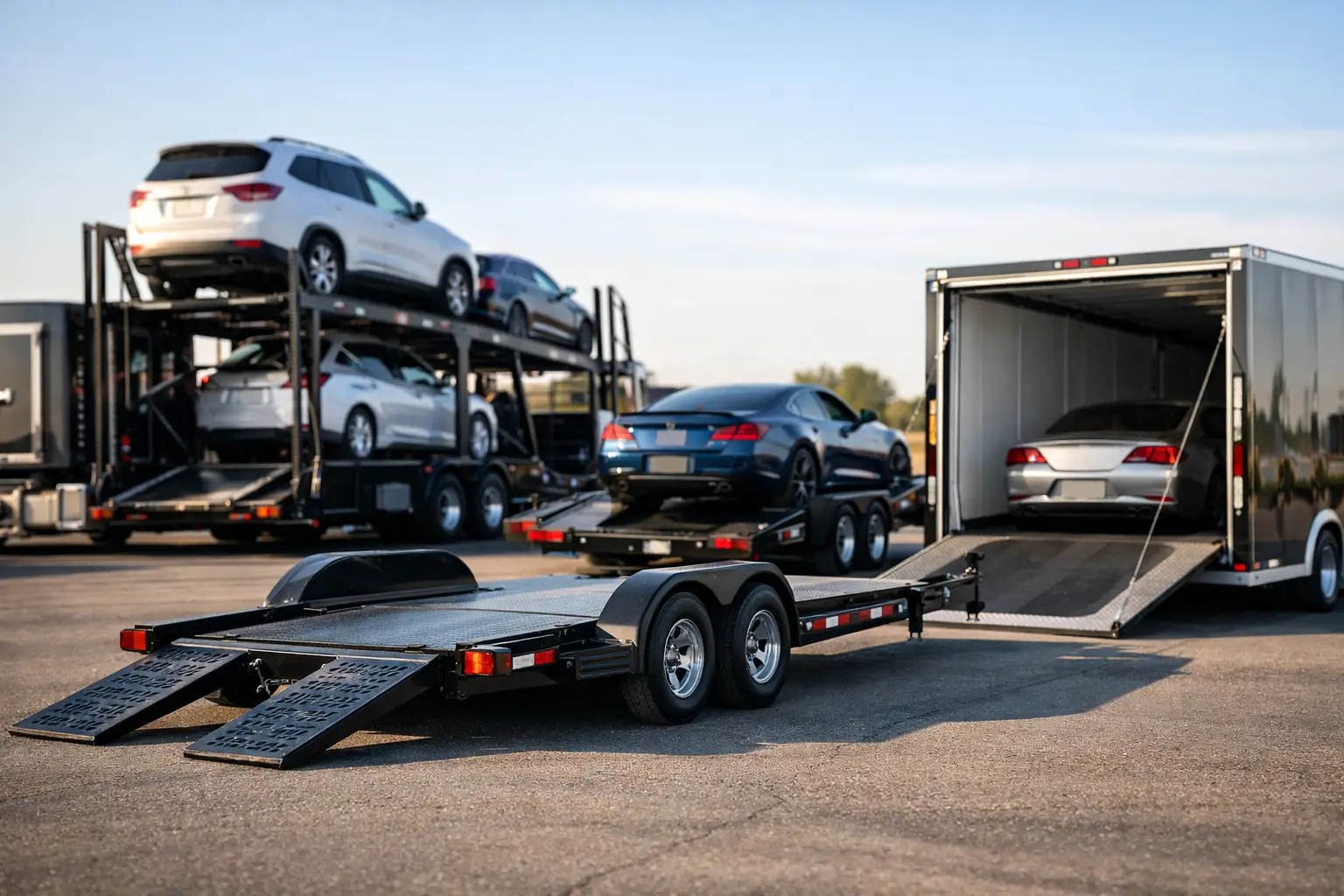
For most everyday vehicle moves, an open car hauler is the practical choice. It’s easier to load, usually lighter, and often more affordable to rent. If you’re moving a standard vehicle from one point to another, an open trailer is usually all you need.
An enclosed trailer makes more sense when weather, dust, theft concerns, or vehicle value are a bigger factor. If you’re hauling a classic car, show car, or something you just don’t want exposed, enclosed can be worth it. The trade-off is added trailer weight, more wind resistance, and a different towing feel.
For many renters, especially for short local or regional moves, the simpler answer is the right one. A solid open car hauler with the right rating and tie-down setup gets the job done without adding unnecessary cost.
Trailer deck, ramps, and clearance all matter
Not every car loads the same way. Low-clearance cars can scrape on ramps. Longer vehicles can have awkward breakover angles. Heavier vehicles need ramps and deck construction that inspire some confidence when you’re halfway up.
Ask about ramp style and loading angle before you book. This matters if you’re hauling sports cars, older vehicles, lowered cars, or anything with front spoilers. A trailer that works great for a Jeep may be a poor match for a Mustang sitting low to the ground.
Deck length is another big one. You need enough room for the vehicle to sit properly with weight balanced over the axles. Too far forward and tongue weight gets excessive. Too far back and the trailer can sway. A proper fit gives you some room to position the load where it tows best.
Know what hitch and brake setup you need
A car hauler is not the place to get casual about hitch compatibility. Check the hitch class on your tow vehicle and make sure the ball size, receiver size, and rating all match the trailer. If those parts don’t match, stop there and fix that before anything gets hooked up.
Brakes matter too. Many car hauler trailers use electric brakes, which means your tow vehicle may need a brake controller. If your vehicle isn’t set up for that, you need to know before pickup day, not after you’re already trying to leave the lot.
Trailer lights should also match your plug configuration. That sounds basic, but it’s a common issue. A quick compatibility check ahead of time saves time and frustration.
Tie-down points and security are not small details
A good car hauler should make it easy to secure the load correctly. You want solid tie-down points, proper straps or chains, and a trailer layout that lets you secure the vehicle without fighting the fenders or crawling around more than necessary.
The vehicle should be attached at the right points and tightened evenly so it stays planted during braking, turns, and bumps. If you’re new to hauling, ask how the vehicle should be secured. That’s not a rookie question. That’s just being smart.
This is one place where renting from a local outfit with real support helps. If you have questions about fit, straps, or tow setup, talking to a team that actually picks up the phone is worth a lot more than an online checkout page.
Think about the full job, not just the trailer
The right trailer on paper can still be the wrong trailer for your situation. Think about where you’re loading, where you’re unloading, and what the road looks like in between. A trailer that works in a wide, flat lot may be harder to manage in a tight driveway, dirt pull-off, or crowded work site.
If the vehicle doesn’t run, you’ll need a plan for winching or pushing it onto the trailer. If the tires are flat, if the steering is locked, or if the car sits extra low, that changes the rental decision. Mention those details upfront. The more honest you are about the job, the better chance you have of getting the right equipment the first time.
It also helps to think about your experience level. If you’ve towed for years, you may be comfortable with a heavier setup. If this is your first time, there is nothing wrong with keeping the job simple and choosing a trailer and vehicle combination with a bigger margin for error.
How to choose a car hauler without overpaying
Bigger and heavier does not always mean better. Plenty of renters spend more than they need to because they assume the largest trailer is the safest choice. Sometimes it is. Sometimes it just adds cost and creates a tougher tow.
The better approach is to match the trailer to the actual vehicle and trip. Pay for enough capacity, enough deck space, and the right loading features. Skip the extra size if it doesn’t serve the job. That keeps the rental practical and helps avoid paying for capability you won’t use.
If you’re in Clarkdale, Cottonwood, Sedona, or nearby parts of the Verde Valley, it also helps to rent local. A nearby company usually gives you faster answers, easier pickup, and more useful guidance about what works well on the roads and conditions around here. Monsoon Trailer Rental is built around that kind of straightforward help.
Ask a few questions before you reserve
Before you lock anything in, confirm the trailer’s payload, deck size, brake setup, ramp style, and tie-down options. Then confirm your own tow rating, hitch setup, and electrical connection. That short conversation clears up most problems before they start.
If the rental company asks questions about your vehicle, your tow rig, or the route, that’s a good sign. It means they’re trying to match you with the right equipment, not just hand over keys and hope for the best.
Picking a car hauler should feel straightforward because, with the right information, it is. Get the numbers right, be honest about the job, and don’t be afraid to ask for help before you tow. A little planning up front beats dealing with the wrong trailer once you’re already on the road.
Pingback: 9 Best Ways to Save on Trailer Rental - Monsoon Trailer Rental LLC