

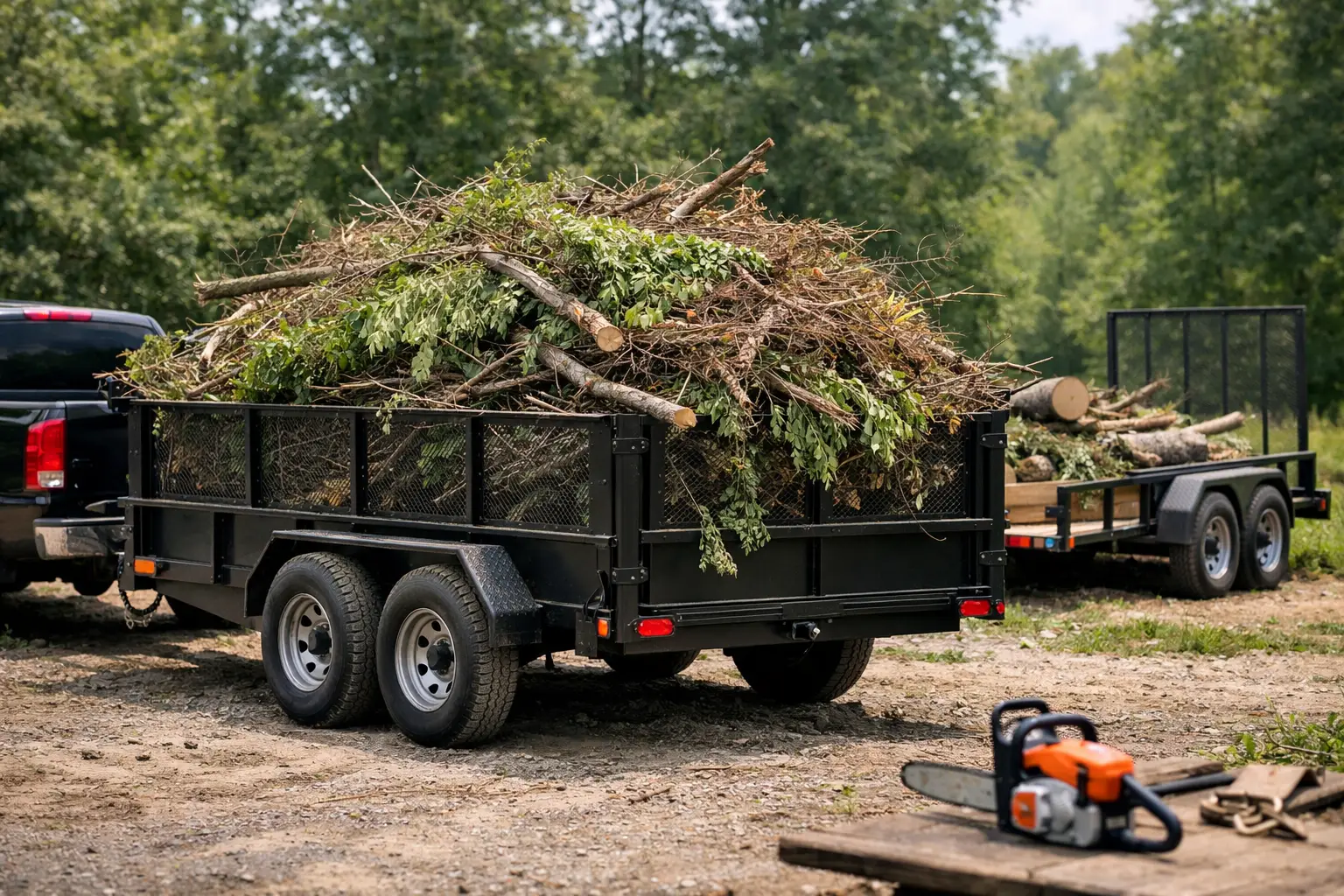
A brush pile can look harmless until you start loading it. Limbs snag on everything, cut ends poke through weak sides, and a load that seemed light at the curb can become a wind-catching mess on the road. The best trailer for brush hauling is the one that holds bulky material securely, matches your tow vehicle, and makes unloading manageable when the job is done.
For most Verde Valley cleanup jobs, an open utility or landscape-style trailer is the practical answer. But a dump trailer can save serious labor on larger, repeated jobs. The right call depends on the volume of brush, the distance you are traveling, and whether you are hauling branches, green waste, logs, or a mixed load from a property cleanup.
What Makes a Trailer Good for Brush Hauling?
Brush is different from gravel, furniture, or boxed household debris. It is light for its size, awkward to stack, and prone to shifting. A good brush trailer needs usable bed space, enough side containment, solid tie-down points, and a gate that does not turn unloading into a wrestling match.
Length matters because branches rarely fit into a neat pile. A longer deck lets you lay limbs flatter instead of building one tall, unstable mound. Width matters, too, especially for trimmings from mesquite, juniper, oak, and ornamental trees that spread out as much as they stack up.
Do not choose a trailer by payload rating alone. Brush often reaches the trailer’s physical capacity long before it reaches the weight limit. That is why a trailer that looks oversized for the weight can still be the safer, easier choice.
Utility Trailer vs. Dump Trailer for Brush
An open utility trailer is usually the best fit for a homeowner clearing a yard, trimming trees, or making one or two runs to a green-waste site. It is straightforward to load from the sides, easy to tow when properly matched to the vehicle, and well suited to loose branches and bagged yard debris. If it has a rear ramp gate, you also have an easier path for loading a wheelbarrow, mower, or small landscaping equipment along with the cleanup material.
The trade-off is unloading. Loose brush can hook onto the rails, wedge under the gate, and settle into a stubborn pile. Bring gloves, a rake, and a plan to pull material out safely. Do not climb onto an unstable load or stand behind a gate that is holding back packed branches.
A dump trailer makes more sense when the job involves several loads, wet green material, wood chips, soil mixed with brush, or a crew that needs to keep moving. Raise the bed at the disposal site and the load comes out with far less hand work. For landscapers and contractors, that saved time can outweigh the larger rental cost.
There is still a limit. Long, tangled limbs may not slide out cleanly even from a dump bed. They can bridge across the trailer or hang up at the tailgate. Cut oversized branches into shorter lengths before loading, and place the loosest brush toward the rear so it can release more easily.
When a High-Side Trailer Helps
Factory side rails are useful, but they are not always tall enough for a big pruning job. Removable side extensions can add capacity, provided they are secure and do not hide the lights or make the load impossible to tarp. High sides help contain loose material, but they also make loading by hand harder.
If you are using temporary sideboards, treat them as containment, not structure. Do not lean heavy logs against them or use damaged plywood that can break loose at highway speed. For a one-time cleanup, it is often better to make an extra trip than create a tall, poorly secured load.
Match the Trailer to the Actual Load
Start by separating what you are hauling. Small branches, leaves, and hedge clippings are a volume problem. Fresh-cut logs, palm trunks, and heavy root balls are a weight problem. Mixed demolition debris adds sharp edges and may require a different setup altogether.
A utility trailer handles light, bulky brush well. For dense wood, pay close attention to the trailer’s payload capacity and your tow vehicle’s towing limit. Green wood weighs much more than dry wood, and a load of short log rounds can become heavy fast. Keep the heaviest pieces low and centered over the trailer axle area, not piled at the very front or rear.
Your vehicle matters just as much as the trailer. Check the towing rating, hitch rating, ball size, connector, tire condition, and trailer-brake requirements before pickup. A capable trailer cannot make up for an overloaded SUV, a worn hitch, or tires that are already near their limit.
How to Load Brush Without Creating a Road Hazard
The safest load starts before the trailer arrives. Cut long limbs down to manageable lengths and make separate piles for brush, logs, and trash. That makes loading faster and keeps heavy material from crushing lighter branches or pushing against the gate.
Load logs and dense material first, low in the trailer. Put lighter brush on top, then work from front to back so the load stays balanced. Keep enough tongue weight for stable towing, but do not stack everything against the front rail. Too little tongue weight can make a trailer sway; too much can overload the rear of the tow vehicle and affect steering.
Use rated straps or a properly secured cargo net to hold the load down. A tarp is often necessary for loose leaves, small twigs, and light brush that can blow free. Check that the tarp is tight, the lights and license plate remain visible, and no branches extend dangerously from the sides.
Before leaving, walk around the trailer. Look for limbs near the tires, loose ends that could catch wind, and straps rubbing against sharp cut wood. After a few miles, pull over somewhere safe and check the load again. Brush settles, especially on rough roads and turns.
Common Brush-Hauling Mistakes
The biggest mistake is making the pile too tall. A high mound may look efficient, but it catches wind, blocks rear visibility, and is harder to secure. Another common problem is assuming branches are too light to matter. The brush may be light, yet the trailer can still become unstable because the load is wide, uneven, and moving in the wind.
Avoid loading past the rails without a real containment plan. Avoid relying on a single rope over the middle. And do not use the ramp gate as a wall for a tightly packed load unless it is designed and latched for that purpose. When brush presses hard against a gate, opening it at the dump site can release material suddenly.
Plan the disposal end, too. Confirm what the green-waste facility accepts, whether material must be separated, and whether there are restrictions on dirt, treated lumber, or construction debris. A little planning can prevent a loaded trailer from becoming a problem you have to unload twice.
Choosing the Best Trailer for Brush Hauling in Verde Valley
For a typical residential cleanup, pruning project, or light landscaping job, choose an open utility trailer with enough deck length for your branches, dependable tie-down points, and a ramp or gate that works for your loading plan. It is simple, versatile, and cost-effective.
For frequent hauling, large property cleanups, or loads that include heavy green waste and soil, a dump trailer may be worth it for the time saved at unload. Ask about the trailer’s usable dimensions, payload, ramp configuration, and brake setup rather than booking based on a photo alone.
If you are not sure what size fits your job, a local rental team should be able to talk it through without making it complicated. Monsoon Trailer Rental helps Verde Valley customers match a dependable trailer to the load, the tow vehicle, and the work ahead. Choose enough space, secure the brush like it wants to escape, and the cleanup will go a lot smoother.

