

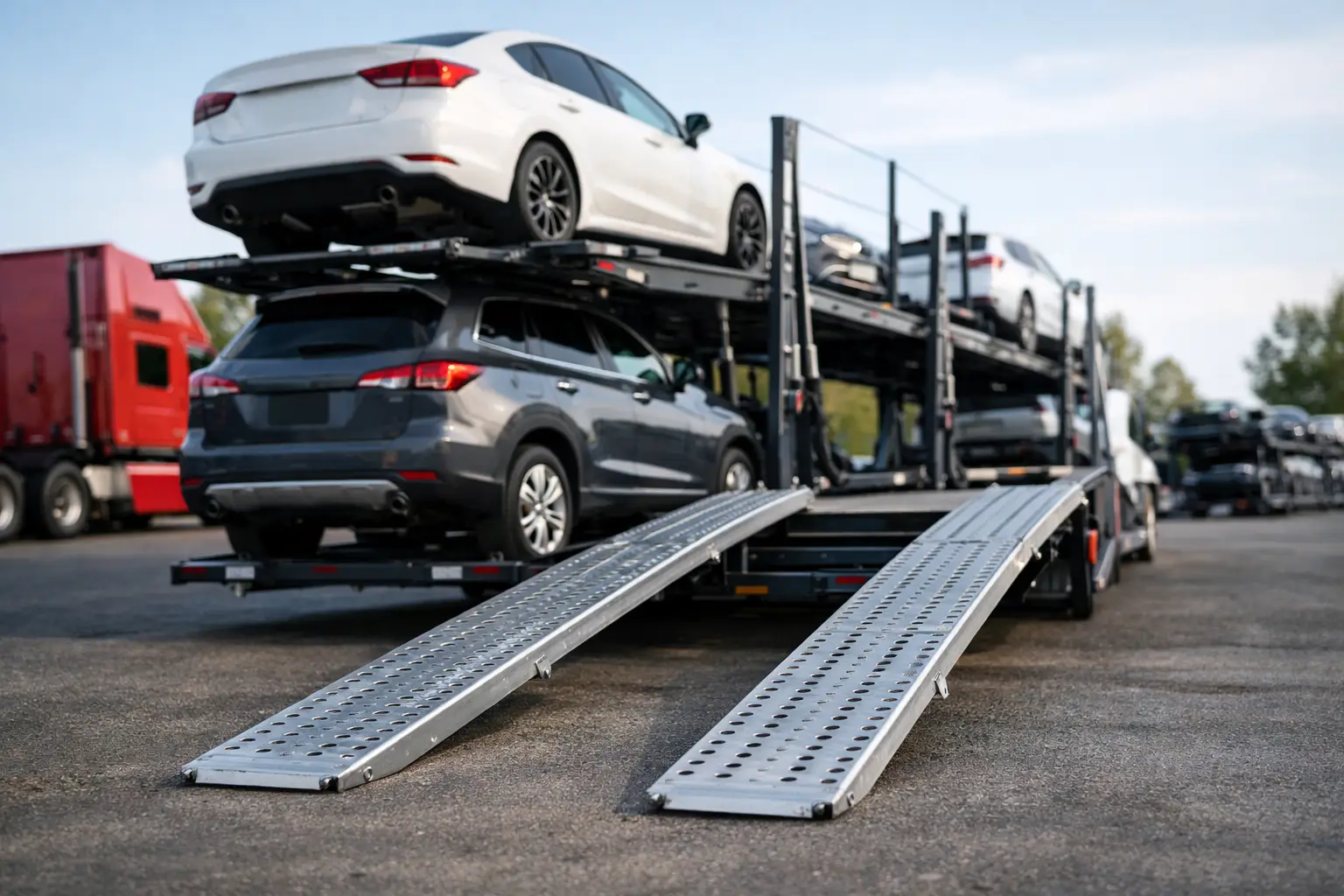
A car that runs perfectly can still be tough to load if the trailer setup is wrong. Do car haulers have ramps? Most purpose-built car haulers do, but the ramps are not all the same. Their length, width, storage style, and loading angle can decide whether loading is quick and controlled or a stressful job that risks bumper damage, tire damage, or a stuck vehicle.
For a one-time vehicle move around the Verde Valley, you do not need to become a trailer expert. You do need to know what ramps the trailer has, whether they fit your vehicle, and how to use them safely before you pull up to the trailer.
Do Car Haulers Have Ramps Built In?
Most car hauler trailers come with loading ramps because they are designed to carry cars, pickups, SUVs, UTVs, and similar rolling equipment. On many open car haulers, the ramps slide into compartments at the rear of the trailer or store under the deck. Some trailers use fold-up ramps that stand vertically behind the trailer when not in use.
The key word is most, not all. A flatbed trailer may not include ramps. Some specialty trailers use a tilt deck instead, where the trailer bed tips down to create a loading path. Others may have removable ramps that need to be placed and secured before loading. Never assume a trailer has ramps just because it is long enough to carry a car.
When booking a rental, ask directly whether the trailer includes ramps, what type they are, and whether they are a good match for the vehicle you are moving. That short conversation can prevent a wasted trip.
Ramp Length Matters More Than Many Renters Expect
The shorter the ramp, the steeper the climb onto the trailer. A steep loading angle is where low-clearance vehicles get into trouble. The front bumper, air dam, exhaust, rocker panels, or rear of the vehicle can scrape as it transitions from ramp to deck.
A lifted truck may handle short ramps without much concern. A low sports car, a sedan with a long front overhang, or a vehicle with aftermarket bodywork may not. Even a stock passenger car can scrape on a steep approach, especially if the trailer is parked on uneven ground.
Longer ramps reduce the angle and make loading easier, but they also need room behind the trailer. That matters in a tight driveway, a narrow jobsite, or a crowded storage yard. In the hills and uneven lots common around Sedona, Cottonwood, and Camp Verde, finding level ground can be just as important as the ramps themselves.
If your vehicle sits low, tell the rental provider before pickup. You may need longer ramps, ramp extensions, wood blocks placed correctly to soften the transition, or a different trailer setup. Do not improvise with loose boards, stacked rocks, or unsecured materials. A ramp needs stable support and a clear path.
Ramp Width and Tire Fit
Ramps need to support the tires fully. This sounds simple, but it deserves a check when moving vehicles with wide tires, dually rear wheels, very small tires, or unusual track widths.
Drive slowly and keep the vehicle centered as the tires climb. A tire that slips off a narrow ramp can damage the ramp, the vehicle, and the trailer. If you cannot clearly line up the tires, stop and reset. Having a spotter outside the vehicle is a smart move, especially for first-time renters.
Check the Ramp Rating and Trailer Capacity
Ramps are only one part of the loading system. The trailer’s total payload capacity must safely handle the loaded vehicle, and the ramps must be intended for that type of load. A car hauler built for passenger vehicles is not automatically the right choice for a heavy pickup, a loaded work truck, or equipment with concentrated weight.
Start with the vehicle’s actual weight. The curb weight listed online is a useful starting point, but it may not account for tools, cargo, fuel, accessories, or parts sitting in the bed. Then factor in the trailer’s payload rating, not just its overall gross vehicle weight rating. The trailer itself has weight too.
Do not use ramps to load a vehicle that exceeds the trailer’s stated capacity. Overloading affects more than the ramps. It can overwork tires, axles, bearings, brakes, coupler components, and the tow vehicle. It also makes handling less predictable on grades, curves, and rough pavement.
If you are hauling a pickup, an SUV, or anything with a questionable weight, it is worth confirming the numbers before booking. Monsoon Trailer Rental can help renters match the job to the right trailer instead of guessing at the driveway.
Loading a Vehicle With Car Hauler Ramps
Once you know the ramps fit the vehicle and the trailer is rated for the load, take your time setting up. The safest loading job starts before the wheels touch the ramps.
Park on firm, reasonably level ground. Keep the tow vehicle connected to the trailer, put it in park, set the parking brake, and use wheel chocks as needed. A detached trailer can shift or rise at the tongue as weight moves toward the rear, which is not a situation you want while driving a vehicle up ramps.
Inspect the ramps before use. Make sure they are fully seated in their mounting points, locked or pinned as designed, and free of mud, oil, loose gravel, or damage. Check that both ramps sit evenly on the ground. If one ramp is not properly secured, stop and fix it before loading.
Drive straight, slow, and steady. Avoid sudden throttle, braking, or steering inputs. Keep a spotter where they can see both tires and the front of the vehicle, but never stand directly in the vehicle’s path. If the vehicle begins to scrape, a tire starts drifting, or the ramps shift, stop immediately. Back down only if it can be done safely and under control.
After the vehicle is on the deck, position it to create proper tongue weight. In most cases, that means the vehicle’s weight should be slightly forward of the trailer axles, not all the way at the rear. The exact position depends on the trailer and load, so follow the trailer provider’s instructions. Then secure the vehicle using proper wheel straps, tire baskets, or rated tie-down points. Parking brakes alone are not tie-downs.
Common Ramp Problems and How to Avoid Them
The most common issue is assuming every car loads the same way. A full-size truck, a classic car, a front-wheel-drive sedan, and a non-running project vehicle can each need a different approach.
Low clearance is one concern. Another is a non-running vehicle. If the vehicle cannot drive onto the trailer, you may need a winch or another controlled loading method. Do not try to push a heavy vehicle up ramps with a few people behind it. That can go wrong fast, particularly on loose gravel or uneven ground.
Wet ramps deserve extra caution. Arizona may be dry much of the year, but rain, morning moisture, mud, and dust can make steel ramps slick. Slow down, wear footwear with good grip, and keep everyone clear of the loading line.
Also inspect the ramp storage before you leave. Sliding ramps should be fully stowed and pinned. Fold-up ramps should be latched securely. A ramp that comes loose on the road is a serious hazard for you and everyone behind you.
When a Tilt Trailer May Be a Better Choice
Ramps are practical, affordable, and common, but a tilt trailer can be the better fit for some jobs. A tilt deck creates a gentler loading angle and eliminates separate ramp placement. That can help with low-clearance cars or equipment that is difficult to line up on two narrow ramps.
The trade-off is that tilt trailers are not always necessary or available for every rental. They may also load differently than a standard car hauler, so the operator still needs to understand the trailer’s locking system, capacity, and tie-down points. The right choice depends on the vehicle, ground conditions, and how often you expect to load and unload.
Before you book, measure your vehicle if clearance or width is a concern, know its approximate weight, and be honest about whether it runs. With the right ramps and a properly matched car hauler, moving a vehicle can stay simple: load it straight, strap it down right, and get the job done without getting soaked by high rates.

