
A pickup bed looks like the easy answer until the load is hanging over the tailgate, the straps are fighting for a solid anchor point, and you still have half the job sitting in the driveway. When you are weighing open trailer vs pickup hauling, the right choice comes down to what you are moving, how far it needs to go, and whether you want to make one safe trip or several frustrating ones.
For a few bags of mulch or a small load of tools, your truck may be all you need. For a vehicle, a riding mower, building materials, furniture, or a cleanup load after a project, an open trailer can save time, protect your truck, and make the whole job easier.
Open Trailer vs Pickup Hauling: Start With the Load
The first question is not, “What can my truck pull?” It is, “What does this load need?” A pickup bed is enclosed on three sides and easy to access. That makes it handy for loose items, small tools, a few boxes, or supplies you want close at hand. You can load up, cover the bed if needed, and be on the road quickly.
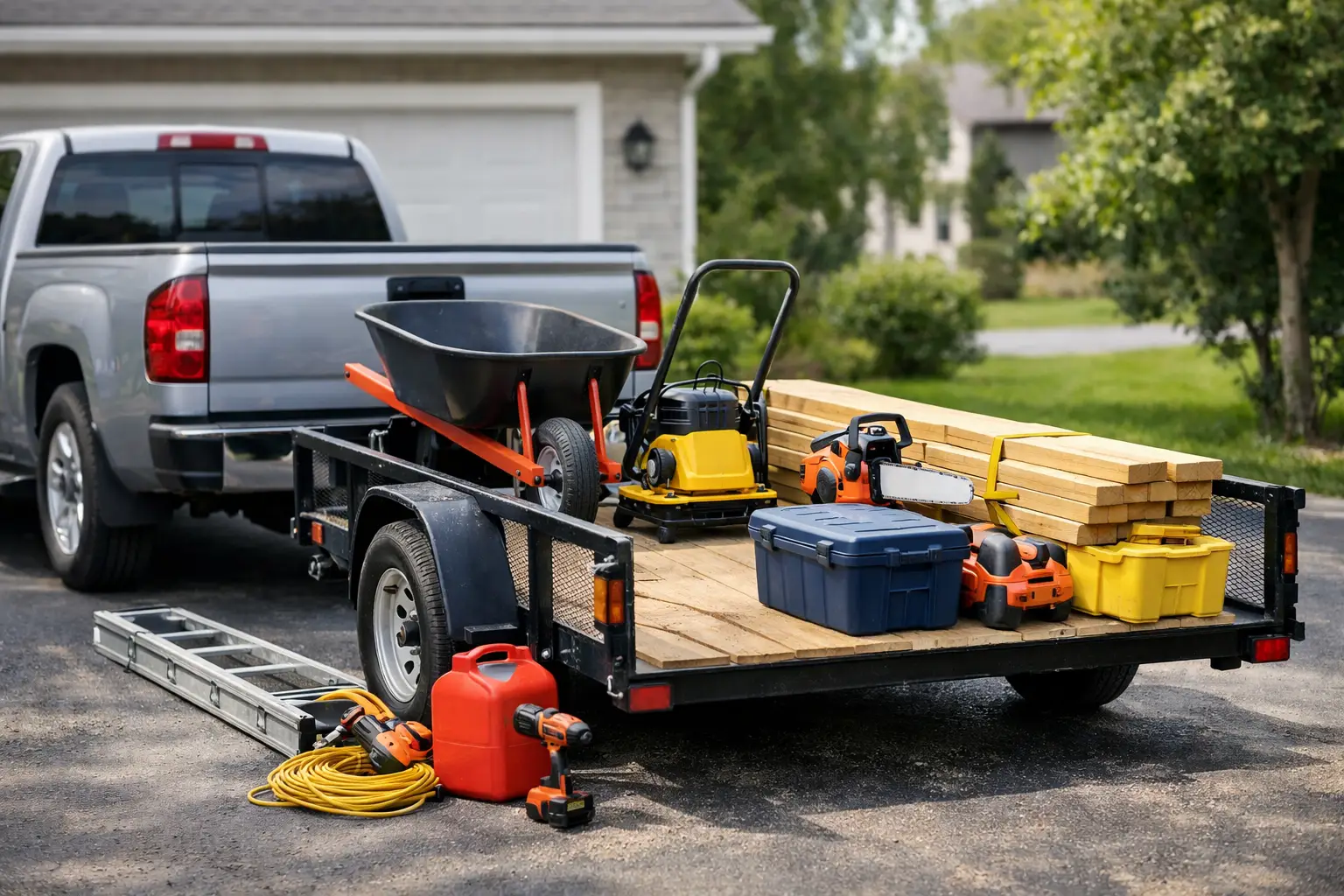
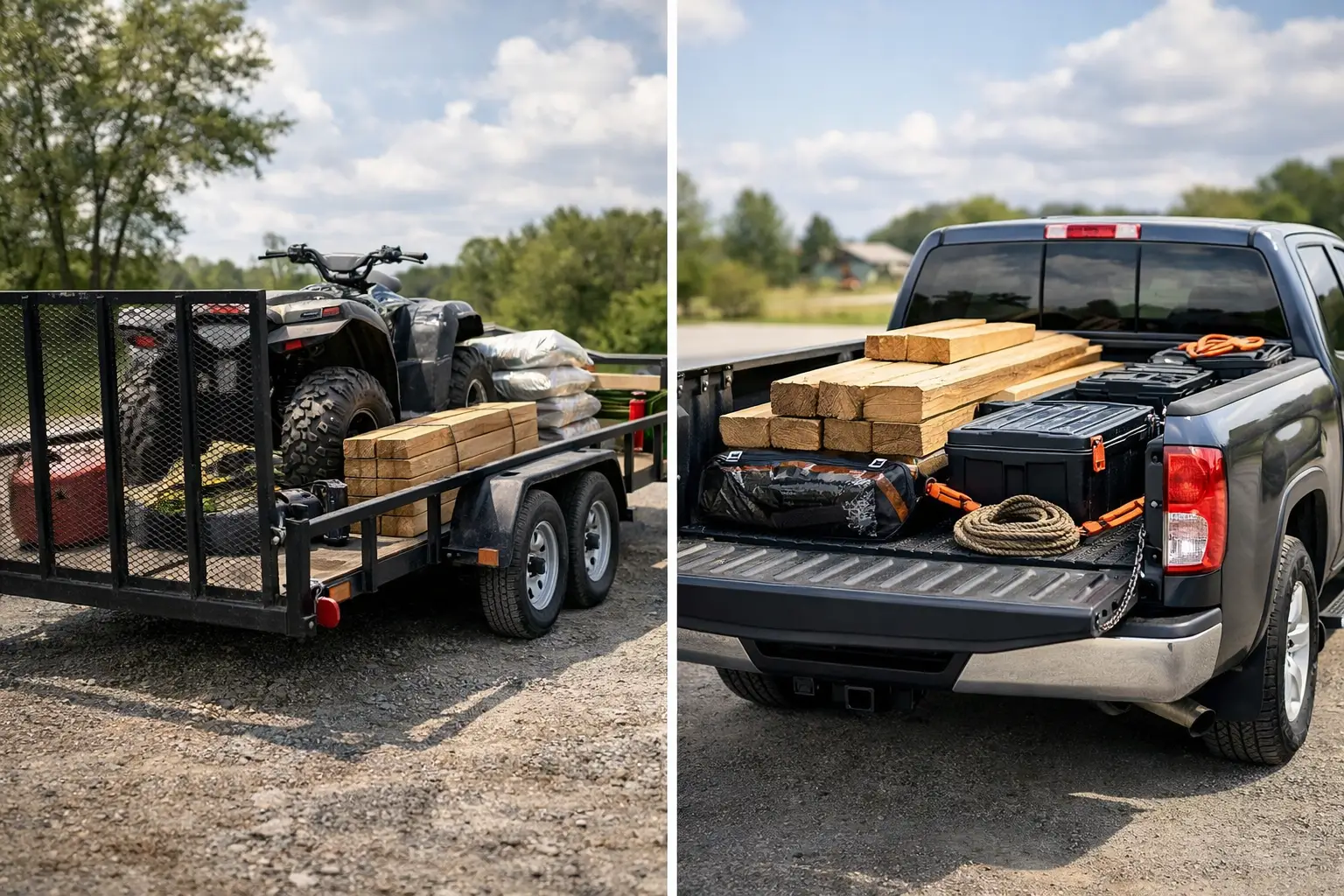
An open trailer gives you a flat, lower loading area with more usable length and width. That matters when the cargo does not fit neatly between truck-bed wheel wells or under the bed rails. A couch, several sheets of drywall, a stack of lumber, a UTV, a mower, or an ATV may physically fit in a pickup bed only with material sticking out or riding at an awkward angle. On a trailer, the load can sit level and be tied down from multiple points.
A car hauler is the clear choice for moving a vehicle. Trying to improvise with a tow dolly, a pickup bed, or borrowed equipment can turn a simple vehicle move into a risky one. A properly sized trailer gives the vehicle a stable platform and lets you secure it the way it should be secured.
Capacity Is More Than Payload
Pickup owners often focus on towing capacity, but payload is just as important. Payload is the weight your truck can carry in its bed and cab. It includes passengers, tools, cargo, a loaded hitch, and any add-ons already on the vehicle. A load of gravel, wet landscaping debris, concrete, or heavy equipment can use up payload faster than expected.
With an open trailer, much of the load weight rides on the trailer axles instead of directly in your truck bed. Your truck still needs to be rated to tow the loaded trailer, and you still need to account for tongue weight. But a trailer often gives you more room to carry bulky or heavy items without overloading the truck itself.
That does not mean a trailer is automatically the answer for every heavy load. You need the right trailer, the right hitch setup, working trailer lights, and a tow vehicle with enough capacity. Check your owner’s manual and the ratings on your truck and hitch. Do not rely on a guess, a forum comment, or the fact that your buddy pulled something similar once.
Think About Volume, Not Just Weight
A load can be light and still be a poor fit for a pickup. Brush, old fencing, cardboard, insulation, household junk, and bulky furniture fill a bed long before they reach the truck’s weight limit. If your project involves a large volume of material, an open utility trailer may keep you from making repeated dump runs.
For Verde Valley homeowners, that can make a real difference during a yard cleanup, a move, or a weekend renovation. One properly loaded trailer trip is usually better than trying to balance oversized items over the side of a pickup bed.
Loading and Unloading Make the Difference
Pickup hauling is convenient because there is no trailer to hook up. For a quick hardware-store run, that convenience is hard to beat. The downside is bed height. Lifting a generator, mower, heavy appliance, or stack of material up into a truck can be tough on your back and hard on the truck.
Open trailers sit lower, especially when equipped with a ramp or loading gate. You can roll equipment up rather than lift it. That is a big benefit for landscaping crews moving mowers, contractors hauling jobsite tools, or anyone transporting a motorcycle, golf cart, or small machine.
Loading a trailer also gives you more flexibility. You can place the weight where it needs to be, then secure it from both sides. With a pickup bed, you are working around wheel wells, bed walls, tailgate space, and sometimes limited tie-down locations.
Safety Comes Down to Securement and Balance
Neither method is safe if the load is loose. A pickup bed can make people overconfident because the cargo is surrounded by sides. But bed rails do not replace straps, chains, or proper tie-down points. A cooler, tool chest, lumber bundle, or piece of furniture can still shift, bounce, or blow out on the highway.
Trailers require a little more setup, but they offer clear advantages for securement. An open deck makes it easier to strap down equipment at multiple angles. You can keep the cargo centered, distribute weight from side to side, and maintain proper tongue weight at the hitch.
Too much weight behind the trailer axles can cause sway. Too much weight forward can overload the hitch and rear axle of the tow vehicle. In general, the load should be balanced side to side, with enough weight forward of the trailer axles to keep the trailer tracking properly. If the load is unusual, heavy, or tall, take the time to ask questions before leaving.
Also check the basics every time: hitch fully seated and locked, safety chains crossed beneath the coupler, breakaway cable connected when applicable, lights working, tires properly inflated, and straps tight. Stop after the first few miles and recheck the load. Straps can settle once the trailer starts moving.
Cost: Rental Can Beat Owning and Repeated Trips
If you already own a capable pickup, hauling in the bed may look free. But the cost is not always zero. Multiple trips use fuel and time. Heavy or sharp cargo can dent the bed, damage the tailgate, or leave behind dirt, gravel, and debris that takes time to clean out. Overloading can also create expensive wear on suspension, tires, and brakes.
A trailer rental adds an upfront cost, but it can be the better value when it turns three or four trips into one. That is especially true when your time matters, whether you are trying to finish a job for a customer or get your own project wrapped up before Monday.
Owning a trailer is worthwhile for people who haul often. For everyone else, rental keeps you from paying for registration, storage, tires, repairs, and maintenance on equipment that may sit unused most of the year. Monsoon Trailer Rental is built for those jobs where you need dependable hauling equipment without taking on trailer ownership.
When a Pickup Bed Is the Better Choice
Use the pickup when the load is small, contained, and well within your truck’s payload rating. It is a practical choice for a few bags of concrete, hand tools, a small compressor, grocery-sized landscaping supplies, or a quick run to pick up materials.
A pickup also works well when you need to park in tight places or make several short stops. Towing a trailer through crowded parking lots, narrow driveways, or busy job sites takes more room and more attention. If the trailer does not give you a real capacity or loading advantage, keeping it simple makes sense.
When an Open Trailer Is Worth It
Choose an open trailer when your cargo is bulky, long, wheeled, heavy, or too valuable to haul half-secured in a bed. It is a better fit for furniture moves, landscaping equipment, construction materials, debris removal, ATVs, motorcycles, and most vehicle transport jobs.
It is also the better choice when you are tempted to stack cargo above the cab line, leave the tailgate down with an oversized load, or make an extra trip because the bed is already full. Those are usually signs that the truck bed has reached its practical limit.
Before booking, measure the item you are moving and know its approximate weight. Have your tow vehicle’s year, make, model, hitch type, and towing rating ready. That makes it easier to match the trailer to the job and avoid last-minute surprises.
The best hauling setup is the one that lets you load safely, secure everything properly, and get home without turning a simple project into a roadside problem. If your pickup bed is enough, use it. When the job outgrows the bed, rent the trailer that gives the load the room it needs.