
An empty equipment trailer can weigh more than many people expect. That matters because every pound of trailer weight counts against what your truck can safely tow. If you are asking, “how much does a equipment trailer weigh?” the short answer is usually 2,000 to 4,500 pounds empty, but the right answer depends on its size, axles, deck style, ramps, and duty rating.
A small open equipment trailer may be manageable behind a properly equipped half-ton pickup. A heavier tandem-axle model loaded with a skid steer, compact tractor, or mini excavator is a completely different setup. Before booking or loading a trailer, look at the numbers on the trailer and your tow vehicle, not just what appears to fit.
Typical Equipment Trailer Empty Weights
Most equipment trailers are open, tandem-axle trailers built for machines that are too heavy or awkward for a utility trailer. Their empty weight, also called curb weight or tare weight, varies widely by construction and options.
A lighter 7-by-14-foot equipment trailer often weighs around 1,800 to 2,500 pounds empty. A 7-by-16-foot model commonly falls in the 2,200- to 3,000-pound range. Larger 7-by-18- and 7-by-20-foot trailers may weigh 3,000 to 4,500 pounds or more before you load a single machine.
Those ranges are useful for planning, but they are not a substitute for the trailer’s data plate. Two trailers with the same deck length can weigh hundreds of pounds apart. Steel thickness, axle size, brake equipment, treated wood versus metal decking, ramps, toolboxes, and a heavier tongue all add weight.
Car haulers are often in a similar range. A basic open car hauler might weigh roughly 1,900 to 2,800 pounds empty, while a heavier-duty hauler with a wider deck, drive-over fenders, a winch, or a tilt deck can weigh considerably more.
Empty Weight Is Only Half the Towing Math
The number that catches people off guard is not always the empty trailer weight. It is the loaded trailer weight. That is the trailer itself, the machine or vehicle, attachments, fuel, chains, tools, and anything else riding on the deck.
For example, a 2,700-pound trailer carrying a 5,500-pound compact tractor is already at 8,200 pounds. Add a front loader, bucket, brush cutter, extra fuel, and a few jobsite tools, and the actual total can climb quickly. A truck rated to tow 8,000 pounds is no longer a comfortable match.
The trailer’s Gross Vehicle Weight Rating, or GVWR, tells you the maximum the fully loaded trailer is designed to weigh. Payload is the difference between the GVWR and the empty trailer weight.
A 14,000-pound GVWR trailer that weighs 3,500 pounds empty has about 10,500 pounds of available payload. That does not mean every truck can pull it. It only means the trailer is built to carry that much when it is loaded correctly and used within its rated components.
What Changes an Equipment Trailer’s Weight?
Trailer weight is not just about length. The biggest factors are the frame, axles, deck design, and equipment added to make loading safer or easier.
A single-axle trailer is generally lighter than a tandem-axle trailer, but it carries less and is less suited to heavy machines. Tandem axles add weight, brakes, tires, suspension, and capacity. For equipment hauling, that trade-off is usually worth it.
Tilt trailers can weigh more than fixed-deck trailers because of the pivoting deck and hydraulic or gravity-tilt hardware. They can also make loading a low-clearance machine easier by eliminating tall ramps. A deckover trailer typically weighs more than a standard fender-style trailer, yet it offers a full-width deck that can be useful for wider equipment and materials.
Heavy ramps are another common difference. A pair of steel ramps suitable for a compact excavator weighs far more than lightweight landscape gates. Add a winch, battery, spare tire, toolbox, stake pockets, side rails, or a heavier coupler, and the empty weight rises again.
How Much Does an Equipment Trailer Weigh When Loaded?
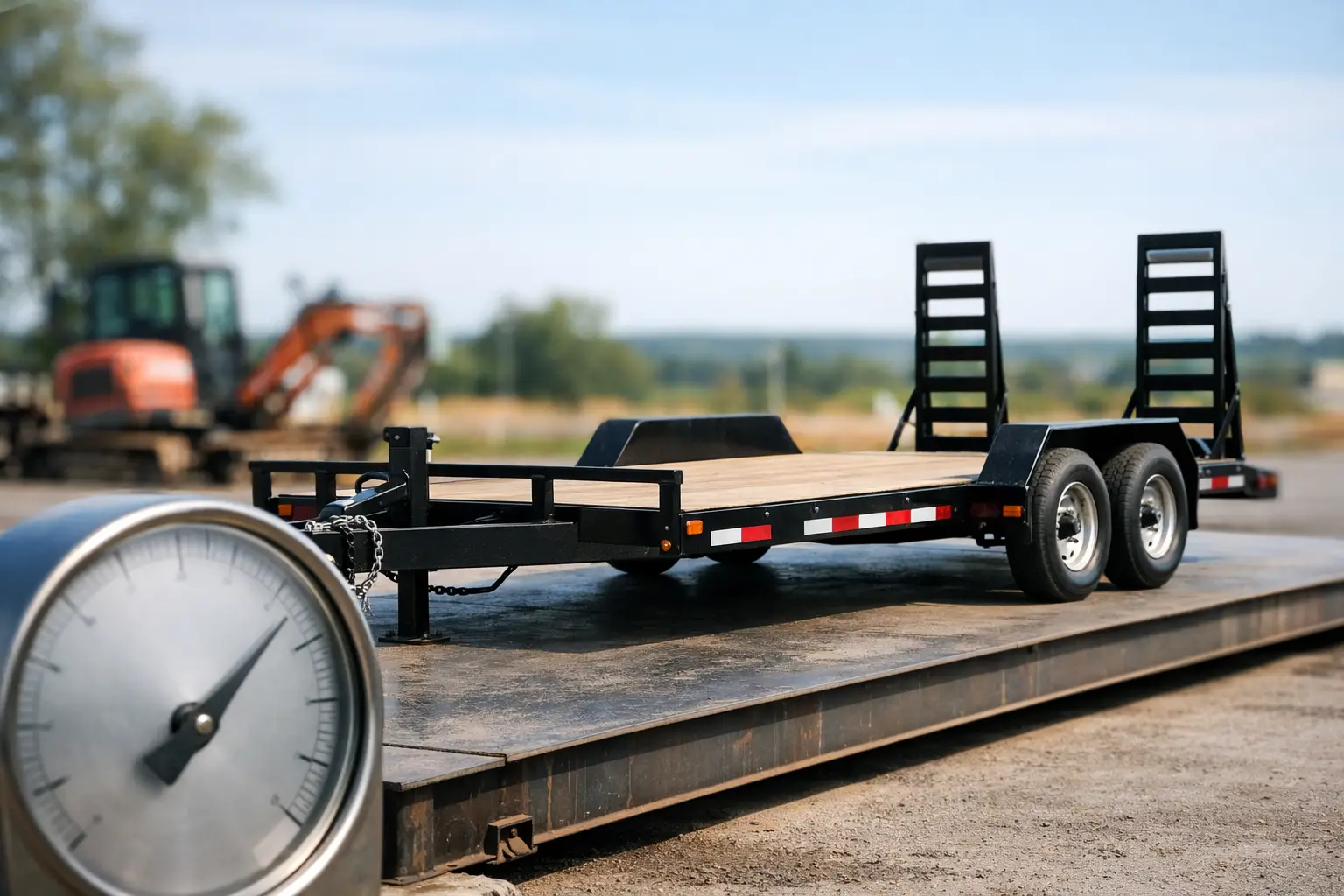
The only reliable way to know loaded weight is to use a public scale. This is especially smart when hauling unfamiliar equipment, making a long trip, or working close to your vehicle’s ratings.
Until you can scale the combination, use the manufacturer’s published operating weight for the machine and add a realistic buffer. Do not use a dry brochure weight if the machine will have fuel, a bucket, forks, a cab, tracks, attachments, or accessories installed. A compact machine that is listed at 3,000 pounds may weigh much more in ready-to-work condition.
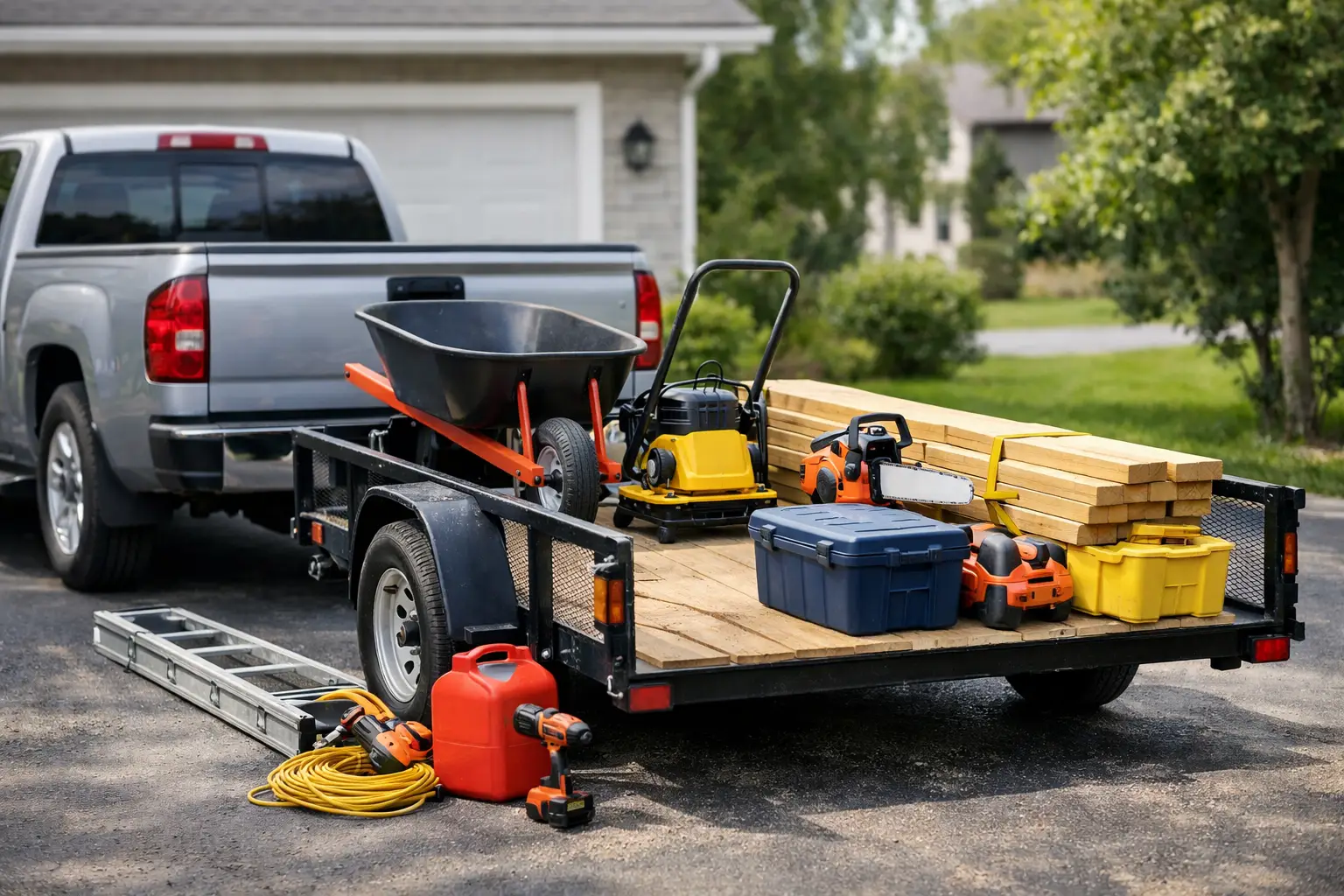
Also account for cargo that gets treated like an afterthought. Chains, binders, ramps, generators, fuel cans, pallets, and hand tools all count. They may not change the trailer’s appearance, but they affect payload, braking, and tongue weight.
Check These Ratings Before You Hook Up
A safe towing setup is governed by the lowest-rated part of the combination. A heavy trailer does not become safe simply because the truck has a large engine.
Start with your truck’s towing rating and Gross Combined Weight Rating, or GCWR. Then check the hitch receiver rating, ball mount rating, ball size, coupler rating, tire ratings, and the truck’s payload sticker. Truck payload matters because trailer tongue weight rests on the truck, along with passengers, tools, and cargo in the bed.
For most bumper-pull equipment trailers, tongue weight is often around 10% to 15% of the loaded trailer weight. An 8,000-pound loaded trailer could put roughly 800 to 1,200 pounds on the hitch. That is why a truck can have a seemingly adequate tow rating but still run out of payload.
The trailer itself also has limits beyond the GVWR. Axle ratings, tire load ratings, coupler capacity, and brake condition all matter. Never load beyond the weakest component’s rating, and do not assume a trailer’s appearance tells you its capacity.
Loading Position Affects More Than Weight
Where the equipment sits on the deck changes handling. Too little tongue weight can make a trailer sway. Too much tongue weight can overload the rear of the truck, reduce steering control, and cause the headlights to point skyward.
Load the machine with enough weight forward of the trailer axles to create stable tongue weight, then secure it according to the equipment and trailer requirements. Use properly rated chains or straps, and secure attachments separately when needed. A loader bucket, mower deck, or loose attachment can shift even when the main machine is tied down.
Take a slow test pull after loading. Watch how the truck sits, how the trailer tracks, and whether the brakes feel normal. Arizona’s grades, wind, and rough rural roads can expose a marginal setup fast, especially when traveling through the Verde Valley or heading toward higher elevations.
Choosing a Rental Trailer Without Guessing
When you rent, share the machine’s make, model, operating weight, attachment weight, and the tow vehicle you plan to use. That gives the rental provider enough information to help match the trailer to the job instead of handing you the first open deck available.
Ask for the trailer’s empty weight, GVWR, deck length, brake setup, coupler size, and required ball height. Confirm whether ramps, a winch, or other equipment are included. If your load is a vehicle rather than a machine, provide its actual weight and wheelbase so there is enough deck length and proper loading room.
At Monsoon Trailer Rental, a quick conversation before pickup can prevent a wasted trip, an overloaded combination, or a trailer that is simply too short for the job. Contactless pickup is convenient, but the load plan still needs to make sense before you leave.
The best trailer is not automatically the biggest one. It is the one with enough payload, deck space, brakes, and capacity for your load while staying comfortably within your tow vehicle’s limits. Get the numbers first, load it correctly, and your haul will be a lot less stressful.