
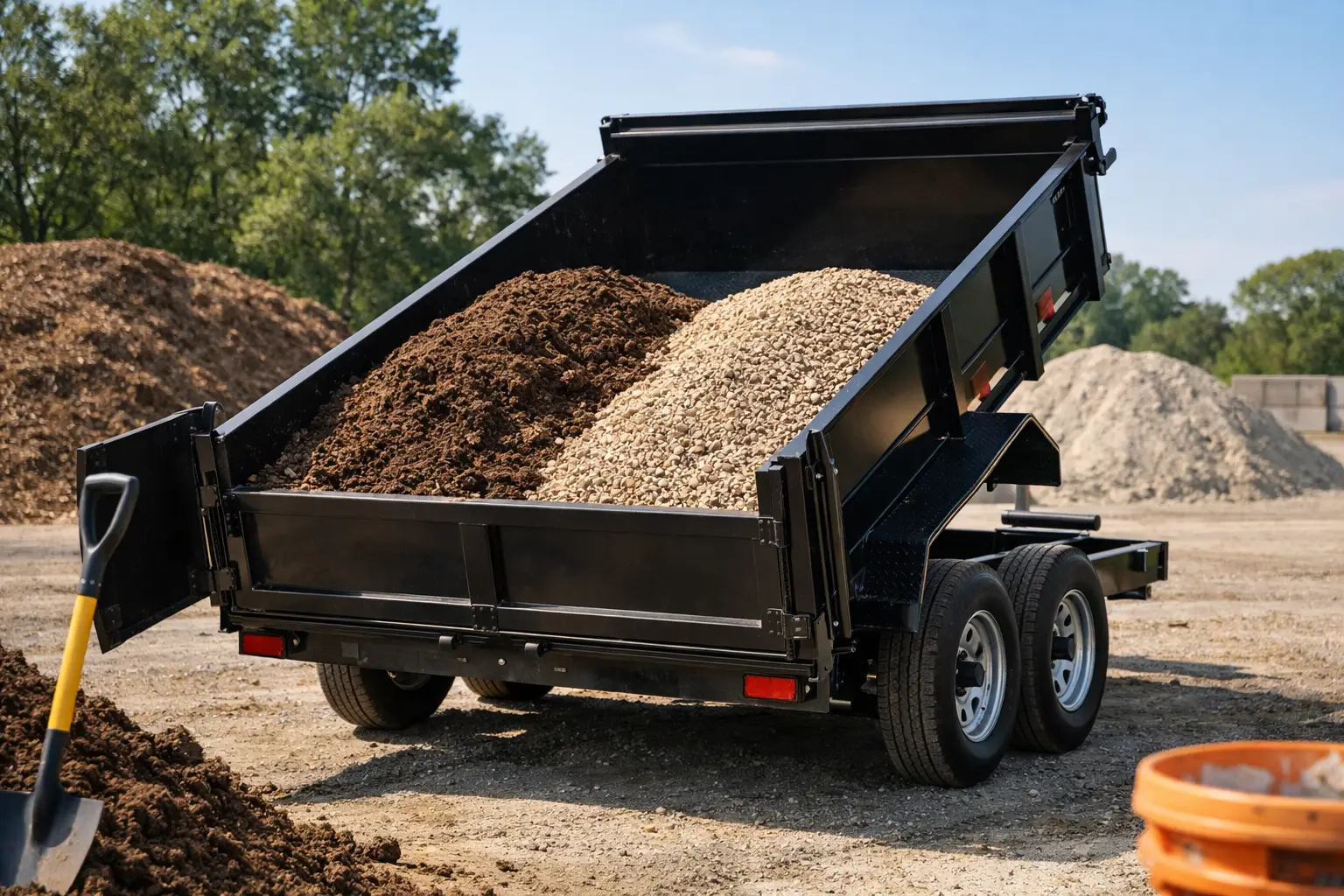
A 6×10 dump trailer is a handy size for clearing a yard, hauling gravel, moving demo debris, or handling a small contractor job. But if you are asking, “how many yards can a 6×10 dump trailer hold?” the honest answer is usually around 3 to 5 cubic yards by volume, with the usable amount depending on the trailer’s side height and the weight of what you load.
That last part matters. A trailer may physically fit four or five yards of loose material, but it may not be legal or safe to haul that much if the material is heavy. Before you start loading, look at both the trailer’s cubic-yard volume and its payload rating.
How Many Yards Can a 6×10 Dump Trailer Hold?
Most 6×10 dump trailers have a bed that is 6 feet wide and 10 feet long, or 60 square feet of floor space. The height of the sides determines the volume. A trailer with 18-inch sides holds about 3.3 cubic yards level full. A model with 24-inch sides holds about 4.4 cubic yards level full.
That makes 4 cubic yards a good working estimate for many 6×10 dump trailers. Some models with taller sides, added mesh extensions, or a slightly different bed design can carry closer to 5 cubic yards of lighter material. Always check the specific trailer instead of relying only on its 6×10 label.
The quick math is simple: multiply length by width by side height, then divide by 27 to convert cubic feet to cubic yards. For a 6×10 trailer with 2-foot sides, that is 6 x 10 x 2 = 120 cubic feet. Divide 120 by 27, and you get about 4.4 cubic yards.
Volume Is Not the Same as Payload
Cubic yards tell you how much space material takes up. Payload tells you how much weight the trailer can safely carry. For loose, lightweight material such as branches, dry leaves, cardboard, or household junk, you may fill the trailer near the top without reaching its weight limit.
Gravel, soil, sand, wet mulch, concrete, and rock are a different story. They add weight fast. A level-full trailer that looks perfectly reasonable can be overloaded before you leave the supplier’s yard.
A typical 6×10 dump trailer may have a payload capacity somewhere around 5,000 to 7,000 pounds, depending on its empty weight, axle setup, tires, brakes, and gross vehicle weight rating. The number on the trailer’s data plate is the one that counts. Do not use a general estimate when loading dense material.
Your tow vehicle also has limits. Its towing capacity, hitch rating, receiver rating, and payload rating all need to support the loaded trailer. A half-ton pickup may pull a loaded dump trailer well within its rating, while a smaller SUV or midsize truck may need a much lighter load. The trailer is only one part of the setup.
Common Materials and Realistic Load Amounts
The same 6×10 trailer can handle very different yard amounts based on what is inside. Dry mulch is relatively light, often around 400 to 800 pounds per cubic yard. A four-yard load may be workable if the trailer’s rated payload supports it.
Topsoil commonly weighs about 2,000 pounds per cubic yard, though moisture makes a major difference. Three yards of damp soil can put you around 6,000 pounds before counting the trailer itself. For many 6×10 dump trailers, that means two to three yards is the safer range.
Gravel is often 2,700 to 3,000 pounds per cubic yard. Two cubic yards can weigh roughly 5,400 to 6,000 pounds. Sand can be just as heavy, particularly when wet. If you are hauling gravel or sand, do not plan on filling a 6×10 trailer by volume. Ask for the material weight and load to the trailer’s payload rating.
Here is a practical rule of thumb: use the full box for brush, light debris, and mulch; use caution with soil; and expect to take smaller loads of gravel, rock, sand, or concrete. If you are unsure, lighter is the better choice. A second trip costs less than damaged equipment, worn-out brakes, or an unsafe drive home.
Side Height and Heaped Loads Change the Number
The advertised capacity of a dump trailer generally assumes the material is level with the top of the sides. A heaped load can add volume, but it should not be treated as extra legal payload. Loose material shifts, piles settle, and an uncovered mound can spill on the road.
For yard waste and light debris, it is sometimes practical to use side extensions or load above the rail if the trailer is designed for them. The load still needs to be secured. A tarp is not optional when loose debris, mulch, or dirt could blow or bounce out on Arizona roads.
For dense material, keep the load low and even. Spread it from front to back rather than creating one heavy pile over the axle or at the rear gate. An evenly loaded trailer handles better, brakes more predictably, and dumps more cleanly.
Do Not Forget the Trailer’s Empty Weight
A trailer’s gross vehicle weight rating, or GVWR, includes the trailer and the load. If a dump trailer has a 7,000-pound GVWR and weighs 2,000 pounds empty, its maximum payload is about 5,000 pounds. That is not enough for two full yards of especially heavy gravel in every case.
This is why a supplier may ask what you are hauling before loading you. It is not just a formality. The material yardage has to match the capacity of the trailer, the tow vehicle, and the route you are taking.
In the Verde Valley, grades, winding roads, and hot weather can make a borderline load feel a lot less manageable. Give yourself room for safe braking and stable handling, especially when traveling through hilly areas near Jerome, Sedona, or Camp Verde.
A Simple Loading Plan for a 6×10 Dump Trailer
Start by finding the trailer’s payload capacity on its VIN or specification label. Next, ask the landscape yard, gravel supplier, or disposal site for the estimated weight per cubic yard of your material. Divide the allowable payload by that material weight.
For example, if the available payload is 5,000 pounds and the gravel weighs 2,800 pounds per yard, 5,000 divided by 2,800 equals about 1.8 yards. Ordering 1.5 yards gives you a sensible safety margin. If you are hauling mulch at 600 pounds per yard, the weight limit may allow more than the physical box can hold, so volume becomes the limiting factor instead.
Check the load before pulling away. Make sure the tailgate is latched, the dump body is fully lowered, the battery breakaway cable is connected, safety chains are crossed and attached, and trailer lights and brakes are working. Secure any loose material with an appropriate tarp.
When a 6×10 Dump Trailer Is the Right Size
A 6×10 dump trailer is a strong all-around choice when you need maneuverability but still want the convenience of hydraulic unloading. It fits many residential driveways and is easier to place than a longer trailer, which is useful for homeowner cleanup, landscaping, roofing debris, and small renovation work.
It may be too small for a major excavation, a large demolition job, or a bulk order of heavy aggregate. In those cases, multiple trips or a larger trailer can be the better plan. Bigger is not automatically better, though. A trailer only helps if your tow vehicle can safely handle it and you have room to turn, park, and dump it.
If you are planning a load and the numbers are not clear, tell the rental team what material you are moving and what vehicle you will tow with. Monsoon Trailer Rental can help you think through the practical side before pickup. The right load is the one that gets your job done without pushing the trailer, truck, or driver past a safe limit.