
A trailer that is too small can turn a one-hour haul into a frustrating day. A trailer that is far too large can cost more, be harder to maneuver, and create towing problems if your vehicle is not set up for it. Knowing how to pick trailer size starts with the actual load, then works backward to trailer dimensions, weight capacity, and what your tow vehicle can safely handle.
For Verde Valley jobs, that matters more than people think. A load that seems simple in a driveway can feel very different when you are backing into a tight Sedona property, heading through Cottonwood traffic, or towing on grades with wind and loose material in the trailer.
How to Pick Trailer Size: Start With the Load
Do not choose a trailer based only on what “looks about right.” Measure the item you are hauling and get a realistic estimate of its loaded weight. That means measuring the widest point, the longest point, and the height if clearance could be an issue. For vehicles, include mirrors, tires, and any attachments. For equipment, include buckets, ramps, forks, or implements that stick out beyond the machine.
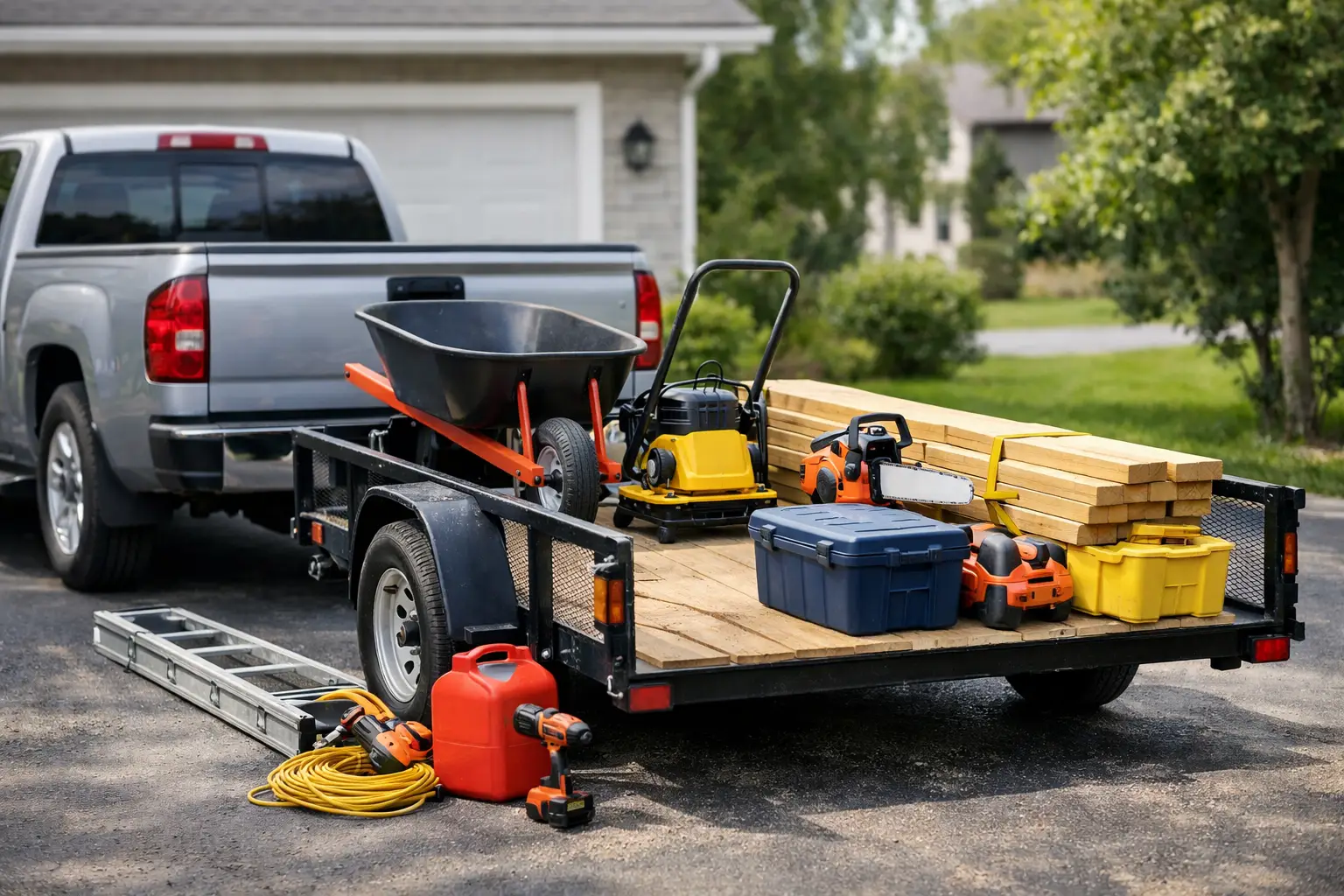
Then think about what else is going on the trailer. A compact tractor may fit by itself, but the job may also require attachments, fuel cans, tools, or pallets of material. A pickup load of yard debris can grow fast once branches, brush, and bags start piling up.
You need enough deck space for the load to sit fully supported and balanced. Hanging a heavy item off the front or back is not a workaround. It affects stability, tie-down options, and how the trailer handles on the road.
Length: Leave Working Room, Not Just Enough Room
Trailer length is usually the first number renters focus on. It is important, but the goal is not to barely squeeze the load onto the deck. Leave practical room at the front, rear, and sides for loading, tie-down straps, and safe weight placement.
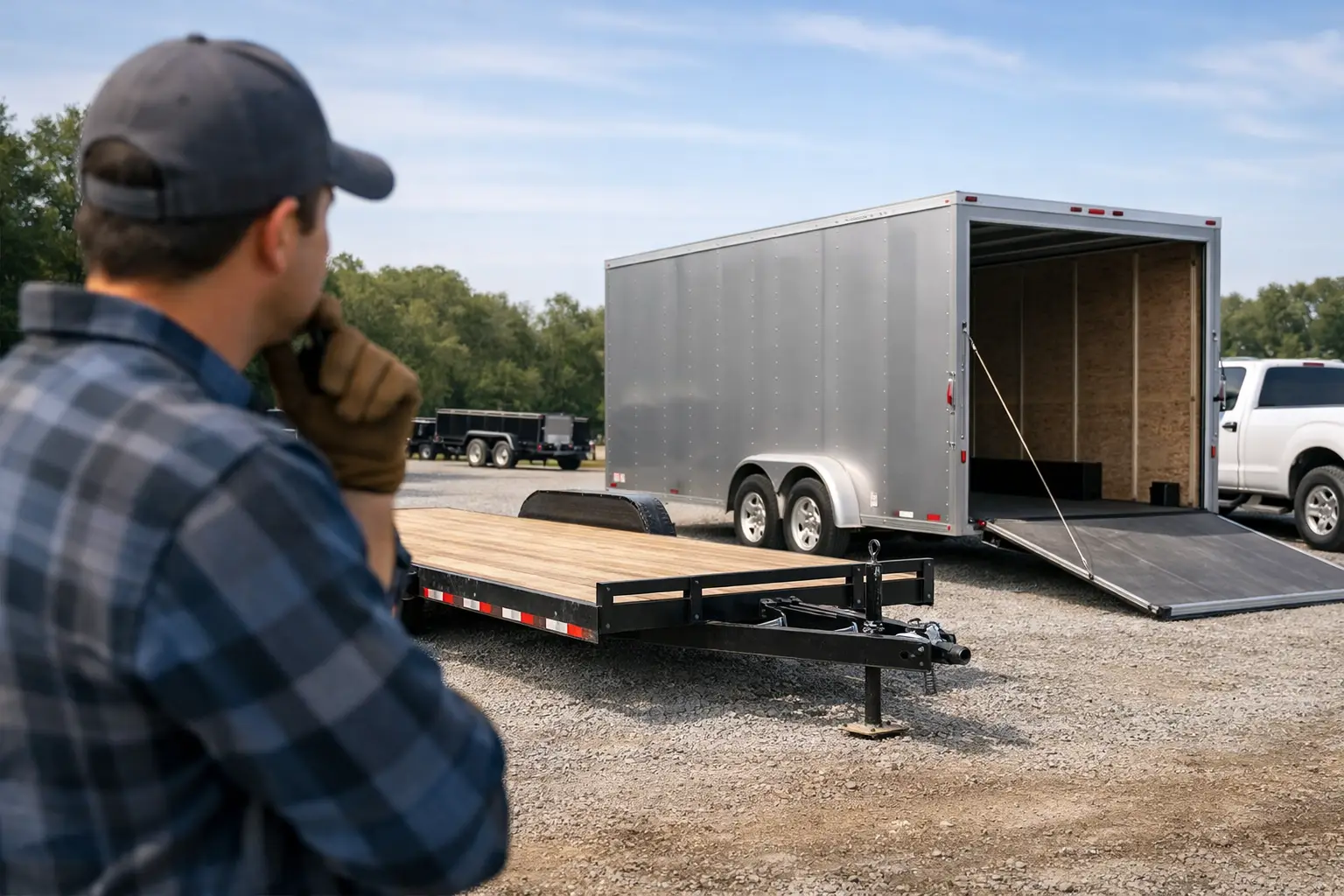
A utility trailer can be a good fit for furniture, appliances, landscaping material, dump runs, and smaller equipment. A car hauler needs enough deck length for the full vehicle, plus room to position it correctly over the axles. If you are moving a side-by-side, golf cart, mower, or ATV, measure from the frontmost point to the rearmost point with accessories installed.
For loose debris, longer is not always better. If your load is light but bulky, trailer sides or a cover may matter more than deck length. If your load is dense, such as gravel, soil, pavers, or wet green waste, weight capacity becomes the bigger concern quickly.
Width: Check the Load and the Access Route
Width affects more than whether an item physically fits. You also need room to secure the load without straps rubbing against sharp edges or tires. A vehicle should sit squarely on the deck, with tires supported where they are meant to be supported.
Before booking, consider where you will load and unload. A wide trailer may be the right choice for equipment, but it can be harder to get through narrow gates, beside a house, or into a crowded work site. Measure gate openings and driveway pinch points if access is tight. A few minutes with a tape measure can prevent a wasted rental day.
Match Trailer Capacity to the Real Weight
Every trailer has a maximum loaded weight rating, often called GVWR. That rating includes the trailer itself plus everything placed on it. The usable cargo capacity is lower because the empty trailer already has weight.
For example, a trailer rated for 7,000 pounds does not necessarily carry 7,000 pounds of cargo. If the trailer weighs 2,000 pounds empty, its available payload is closer to 5,000 pounds. The exact numbers depend on the trailer, so confirm the rating for the specific rental unit.
Do not estimate weight too casually. Dirt, rock, wet lumber, concrete debris, and green waste are common loads that surprise people. A small pile of broken block can weigh much more than a full trailer of household items. Equipment weight can also change with attachments, fluid levels, loaded tires, and materials sitting in the bucket.
When you are close to a trailer’s capacity, step up to the next size or make two trips. It is usually cheaper and safer than overloading a trailer, damaging equipment, or putting too much strain on your truck.
Your Tow Vehicle Sets the Limit
The right trailer is only half the decision. Your truck or SUV must be rated to tow the combined trailer and load. Check the vehicle owner’s manual, the tow rating for your specific configuration, and the hitch rating. Engine size, drivetrain, axle ratio, factory towing package, and passenger or cargo weight can all change the answer.
Also check tongue weight capacity. Tongue weight is the downward force the loaded trailer puts on the hitch. A properly loaded trailer generally carries a portion of its total weight on the hitch, not all of it over the trailer axles and not so much that the tow vehicle squats excessively.
Loading too far back can cause trailer sway. Loading too far forward can overload the hitch or rear axle of the tow vehicle. Keep the heavy part of the load slightly forward of the trailer axles, secure it at multiple points, and make sure the trailer is level or close to level when connected.
If you are unsure about your vehicle’s numbers, do not guess. A quick call to a local rental team that actually picks up the phone can help you avoid renting a trailer that your tow vehicle should not pull.
Choose the Trailer Type for the Job
Size is not only length and width. The trailer style needs to match how the load goes on, how it rides, and how it comes off.
An open utility trailer is often the practical choice for home projects, landscaping supplies, furniture, brush, and general hauling. It is easy to load from the sides and works well when you need flexibility rather than a specialized setup.
A car hauler is built for moving vehicles and is the better choice when transporting a car, truck, classic vehicle, or other wheeled vehicle that needs a full deck and proper tie-down points. Confirm the vehicle’s wheelbase, ground clearance, total weight, and whether it runs and steers before choosing the trailer. Low-clearance vehicles may need careful ramp loading to avoid scraping.
Equipment trailers are better suited to machines that require ramps and a heavier payload rating. If you are hauling a skid steer, mini excavator, tractor, or similar machine, include the attachment weight and make sure loading ramps are suitable for the equipment.
For material that can shift, such as brush, loose junk, or furniture, plan for containment as well as capacity. Tie-down points, tarp coverage, trailer sides, and load placement all matter. Nothing should be able to bounce, slide, or blow out on the road.
Do Not Forget Loading and Tie-Down Details
The trailer can be the right size on paper and still be wrong for the job if you cannot load safely. Check ramp width, ramp capacity, deck height, and the loading angle. A mower may be easy to drive onto one trailer but scrape badly on another with a steeper ramp angle.
Bring appropriately rated straps, chains, binders, and protective edge guards for the load. Rope is not a substitute for proper vehicle or equipment tie-downs. Use multiple securement points, recheck everything after the first few miles, and stop again if the load settles or straps loosen.
Before leaving, inspect lights, safety chains, coupler connection, breakaway equipment where applicable, and tire condition. Make sure the load does not block trailer lights or your view of mirrors. Give yourself extra stopping distance, take turns wider, and back slowly. Trailers are forgiving when loaded and driven correctly, but they do not reward rushing.
A Simple Way to Make the Final Choice
Once you have the load measurements and weight, choose the smallest trailer that gives you safe deck room, enough payload capacity, proper loading access, and a comfortable margin below your tow vehicle’s limits. “Smallest” does not mean tightest. It means efficient without compromising balance, securement, or control.
If your job involves an unfamiliar vehicle or a heavy piece of equipment, have the year, make, model, dimensions, and estimated weight ready when you call. That gives the rental team enough information to point you toward a workable option instead of making a blind recommendation.
At Monsoon Trailer Rental, the goal is straightforward: get you a dependable trailer that fits the job without soaking you with high rates or sending you out with more trailer than you need. Measure first, be honest about the weight, and leave yourself a little room to load it right.