

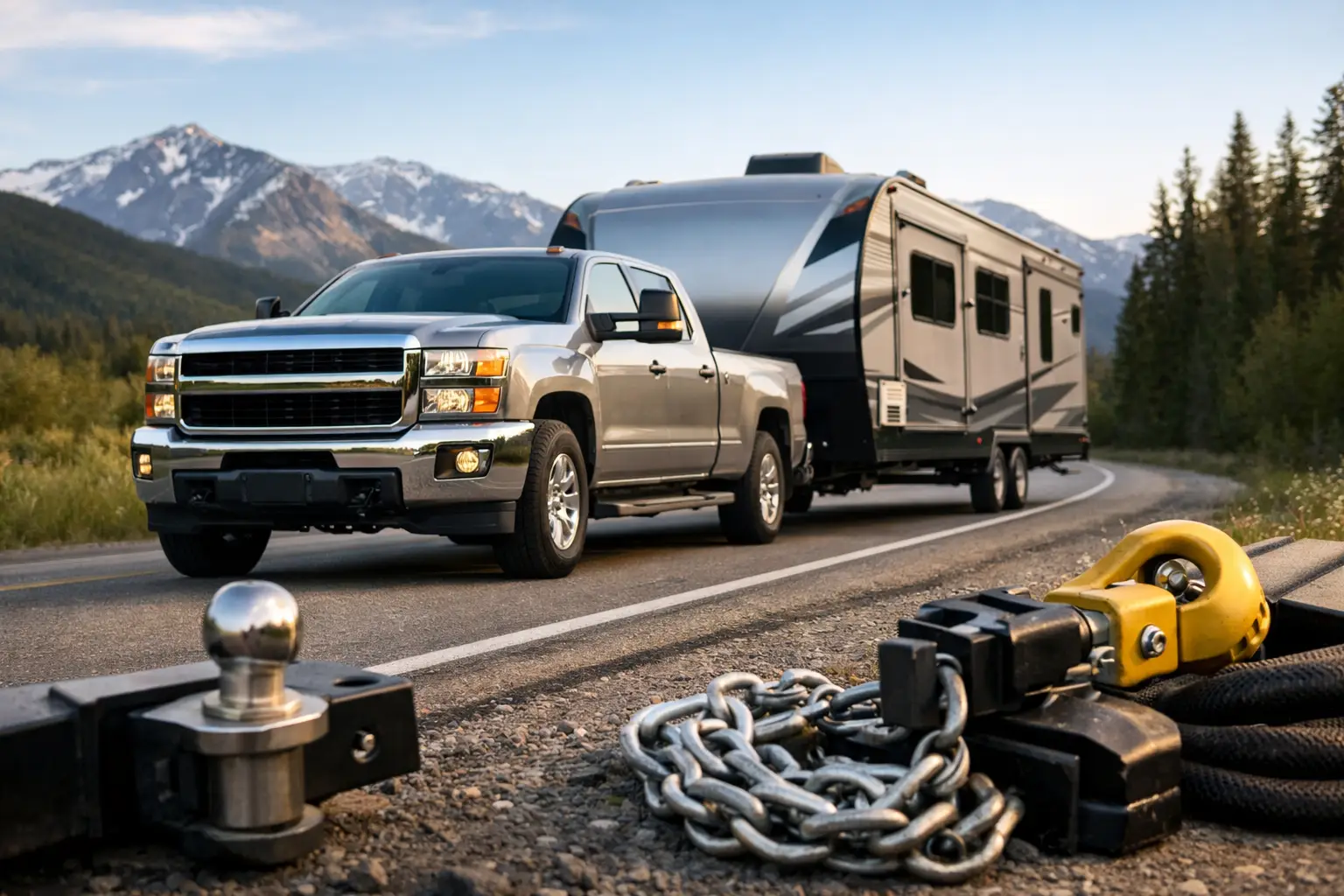
You do not need to memorize a truck brochure to tow safely. You just need to know which numbers matter, where people get tripped up, and why a trailer that looks fine in the driveway can feel very different once you are on the road.
That is where most problems start. Someone hears their vehicle can tow 5,000 pounds, rents or buys a trailer, loads it with equipment, and assumes they are covered. Sometimes they are. Sometimes they are already over the limit before they pull out of the driveway.
This guide to towing capacity basics is built for regular hauling jobs – moving a car, hauling equipment, picking up materials, or getting through a weekend project without guessing.
What towing capacity actually means
Towing capacity is the maximum trailer weight your vehicle is rated to pull under specific conditions. That number comes from the vehicle manufacturer, and it is not just a suggestion. It reflects what the vehicle can handle when it comes to power, brakes, frame strength, suspension, cooling, and stability.
The key part is this: towing capacity is about the total trailer weight, not just what you put on the trailer. If your trailer weighs 2,000 pounds empty and you load 3,000 pounds on it, your trailer weight is 5,000 pounds. That full number is what counts.
This is also where people mix up towing capacity with payload. They are connected, but they are not the same thing. Towing capacity is what your vehicle can pull. Payload is how much weight your vehicle itself can carry, including passengers, tools, cargo in the bed or trunk, and part of the trailer weight pressing down on the hitch.
The numbers you need in any guide to towing capacity basics
There are a few terms that matter more than the rest. Once you understand them, towing decisions get a lot simpler.
GVWR
GVWR stands for Gross Vehicle Weight Rating. This is the maximum your tow vehicle can weigh by itself when loaded up. That includes fuel, passengers, cargo, and hitch weight from the trailer.
If you load the truck bed with tools, put four adults in the cab, and then hook up a trailer, all of that counts toward GVWR.
GCWR
GCWR means Gross Combined Weight Rating. This is the maximum allowed weight of the tow vehicle plus the trailer together. If your loaded truck weighs 6,000 pounds and your loaded trailer weighs 5,000 pounds, your combined weight is 11,000 pounds.
Even if your trailer is under the towing limit, you can still run into trouble if your combined weight is too high.
Payload
Payload is how much weight your vehicle can carry in or on itself. This number matters more than many first-time haulers realize. Trailer tongue weight counts against payload, and so do people, coolers, tools, and gear.
A half-ton pickup may have a decent tow rating, but payload can become the real limiting factor fast.
Tongue weight
Tongue weight is the amount of the trailer’s weight that presses down on the hitch ball. For most bumper-pull trailers, it is often around 10 to 15 percent of the loaded trailer weight.
That means a 5,000-pound loaded trailer may put 500 to 750 pounds on the hitch. That weight is not floating in space. It is being carried by your tow vehicle, which means it affects payload and rear axle load.
Why the advertised tow rating is not the whole story
The big tow number in ads is usually based on a specific vehicle setup. Change the cab size, drivetrain, axle ratio, suspension package, or engine, and that number may change. Add passengers and cargo, and your practical towing ability can shrink even more.
That is why the safest move is to check the sticker on the driver’s door and the owner’s manual for your exact vehicle. If you rely on a general online number for the same model, you can end up assuming more capacity than you really have.
There is also a real difference between what a vehicle can technically tow and what it can tow comfortably. If you are right at the limit, you may notice slower braking, more sway, longer stopping distances, and a tow experience that feels tense instead of controlled. For short local trips on flat roads, some setups may feel acceptable. On grades, rough roads, or in crosswinds, the same setup can feel a lot less forgiving.
Trailer weight is more than the empty trailer
A common mistake is checking only the trailer’s empty weight. Empty weight matters, but it is rarely the working number.
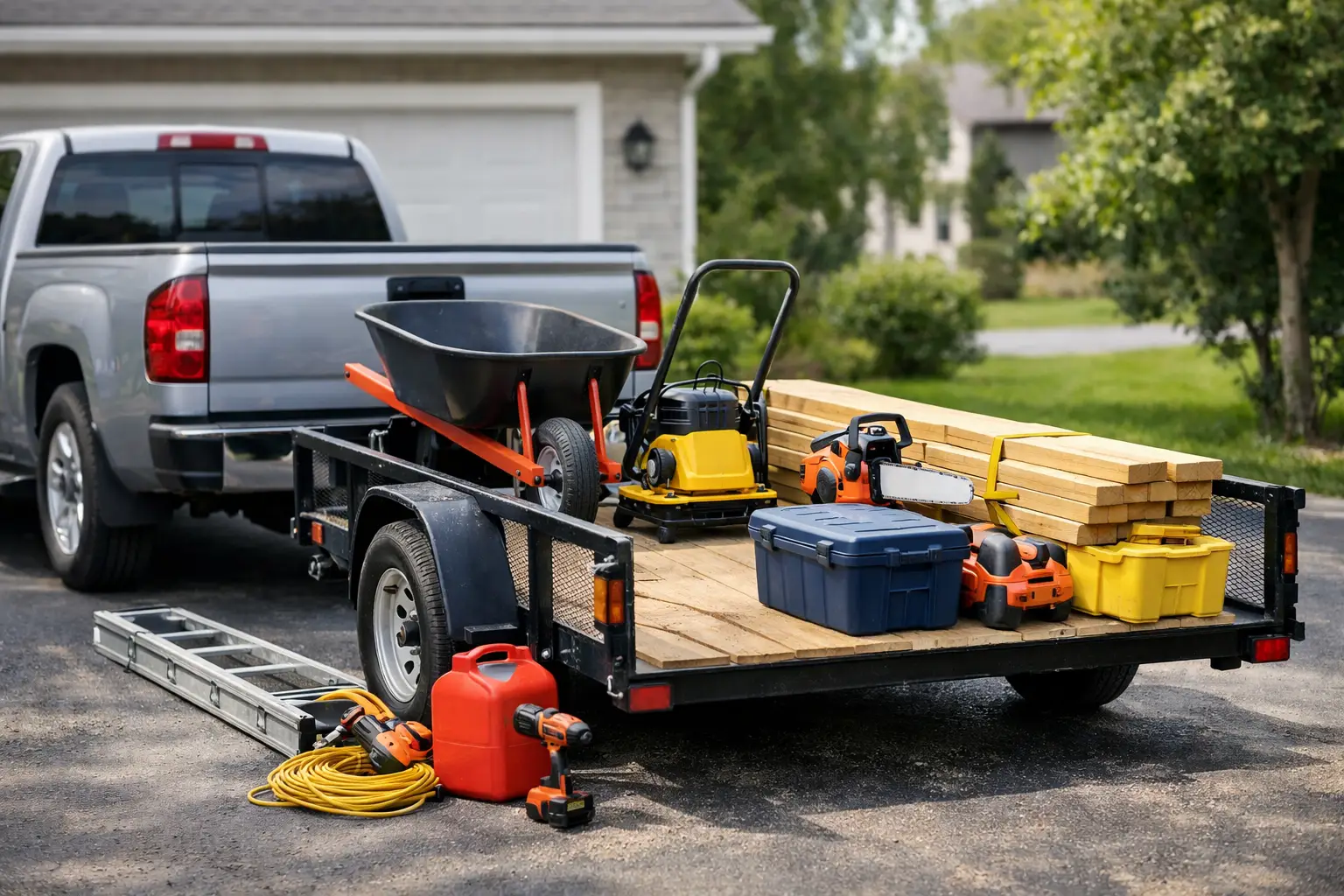
If you rent a utility trailer for landscaping debris, the load changes quickly. Dirt, gravel, pavers, mowers, and compact equipment add up fast. The same goes for car haulers. A trailer might be within range, but the trailer plus the vehicle being hauled is the number that matters.
This is especially important with project hauling. A homeowner cleaning up a property or a contractor moving tools from one job to another may load in stages without noticing how fast the total climbs. The safer approach is to estimate high, not low.
How to figure out if your setup works
Start with your vehicle’s towing capacity, payload, GVWR, and GCWR. Then get the trailer’s empty weight and the expected weight of what you plan to haul.
Next, add the trailer and cargo together to find your loaded trailer weight. Make sure that number stays under your vehicle’s tow rating. After that, estimate tongue weight – usually 10 to 15 percent for a bumper-pull trailer – and make sure that weight, plus passengers and gear in the vehicle, stays within your payload rating.
Then look at the combined number. Your loaded vehicle plus your loaded trailer should stay under GCWR.
This can sound like a lot on paper, but it is really just checking three things: can your vehicle pull it, can your vehicle carry the hitch weight, and can the whole combination stay within the total allowed weight.
The hitch and brakes matter too
Even if the weight numbers work, your towing setup still has to match the job. Your hitch receiver has its own rating. Your ball mount and hitch ball do too. The coupler on the trailer has a rating. Safety chains, tire condition, and brake function all matter.
Trailer brakes are a big one. At lighter weights, some trailers may not require them depending on local rules and trailer design. As trailer weight goes up, brakes become much more important for control and stopping distance. If you are hauling a vehicle or heavier equipment, trailer brakes are not something to treat like an extra.
Weight distribution can matter as well. Too much weight behind the trailer axle can cause sway. Too little tongue weight can make a trailer unstable. Too much tongue weight can squat the rear of the tow vehicle and affect steering and braking.
Real-world towing is about margins, not just limits
On paper, being under the limit is good. In practice, having some breathing room is better.
If your numbers are close, think about the route. Flat local roads are different from long grades or highway driving. Wind matters in open areas. So does heat. So does stop-and-go traffic. A setup that works for a short haul across town may be a poor match for a longer trip.
Driver experience matters too. Someone who tows regularly may be comfortable backing, braking early, and feeling trailer movement before it becomes a problem. A first-time renter is usually better off with a setup that gives more margin and less stress.
That is one reason local rental help matters. If you are not sure whether your SUV can handle a car hauler or whether your pickup has enough payload once the cab is full, it helps to talk with a team that actually picks up the phone. At Monsoon Trailer Rental, that kind of practical question is part of the job.
Common towing capacity mistakes
The most common mistake is trusting the max tow rating without checking payload. The next is forgetting that passengers and cargo count against the vehicle too.
Another problem is guessing at cargo weight. Building materials, appliances, compact machines, and even yard debris can weigh more than expected. People also overlook tire pressure, trailer brake connection, or load balance, which can turn an acceptable setup into a poor one.
And then there is the simple pressure to make one trip instead of two. That is where a lot of overloaded trailers happen. It may save time in the moment, but it is a bad trade if the tow vehicle struggles to stop or the trailer becomes unstable.
When to ask questions before you tow
If you are hauling a vehicle, equipment, gravel, or anything dense and heavy, it is worth slowing down and confirming the numbers. The same goes if your vehicle is an SUV, crossover, or light-duty truck with passengers on board.
A quick check up front is cheaper than replacing tires, overworking brakes, or finding out on the road that the trailer is too much for the vehicle. If you know your vehicle’s ratings and what you plan to haul, getting matched with the right trailer gets a lot easier.
Towing does not need to be complicated, but it does need to be honest. The right setup is not the biggest trailer your vehicle might move. It is the trailer your vehicle can handle safely, predictably, and without white-knuckle driving all the way home.

Pingback: Choosing a Flatbed Trailer for Equipment - Monsoon Trailer Rental LLC
Pingback: Guide to Trailer Weight Limits – Monsoon Trailer Rental LLC
Pingback: How to Book Local Trailer Rental Right - Monsoon Trailer Rental LLC