
You usually figure out the real cost of a trailer the second it is not moving. It is sitting in the yard, taking up space, needing tires, tags, and maintenance, while you only use it a handful of times a year. That is where trailer rental versus trailer ownership becomes a practical question, not just a money question.
For some people, owning a trailer makes perfect sense. For plenty of homeowners, contractors, landscapers, and vehicle owners around the Verde Valley, renting is the cleaner, cheaper move. The right answer depends on how often you haul, what you haul, and whether you want to deal with storage, upkeep, and registration when the job is done.
Trailer rental versus trailer ownership comes down to usage
The biggest factor is frequency. If you use a trailer every week, ownership starts to look more reasonable. If you need one for a dump run, a side-by-side move, a car haul, or a weekend project once in a while, rental usually wins.
A lot of people assume buying is cheaper because you are paying for something you keep. But keeping it is exactly where the costs start stacking up. A trailer is not a one-time expense. It comes with registration, maintenance, tire replacement, wiring checks, brake service on some models, and the simple fact that equipment wears out whether you are using it or not.
Rental shifts those burdens away from you. You pay for the time you actually need the equipment, then you return it and move on. That is hard to beat when your hauling needs come in bursts instead of on a schedule.
The real cost of owning a trailer
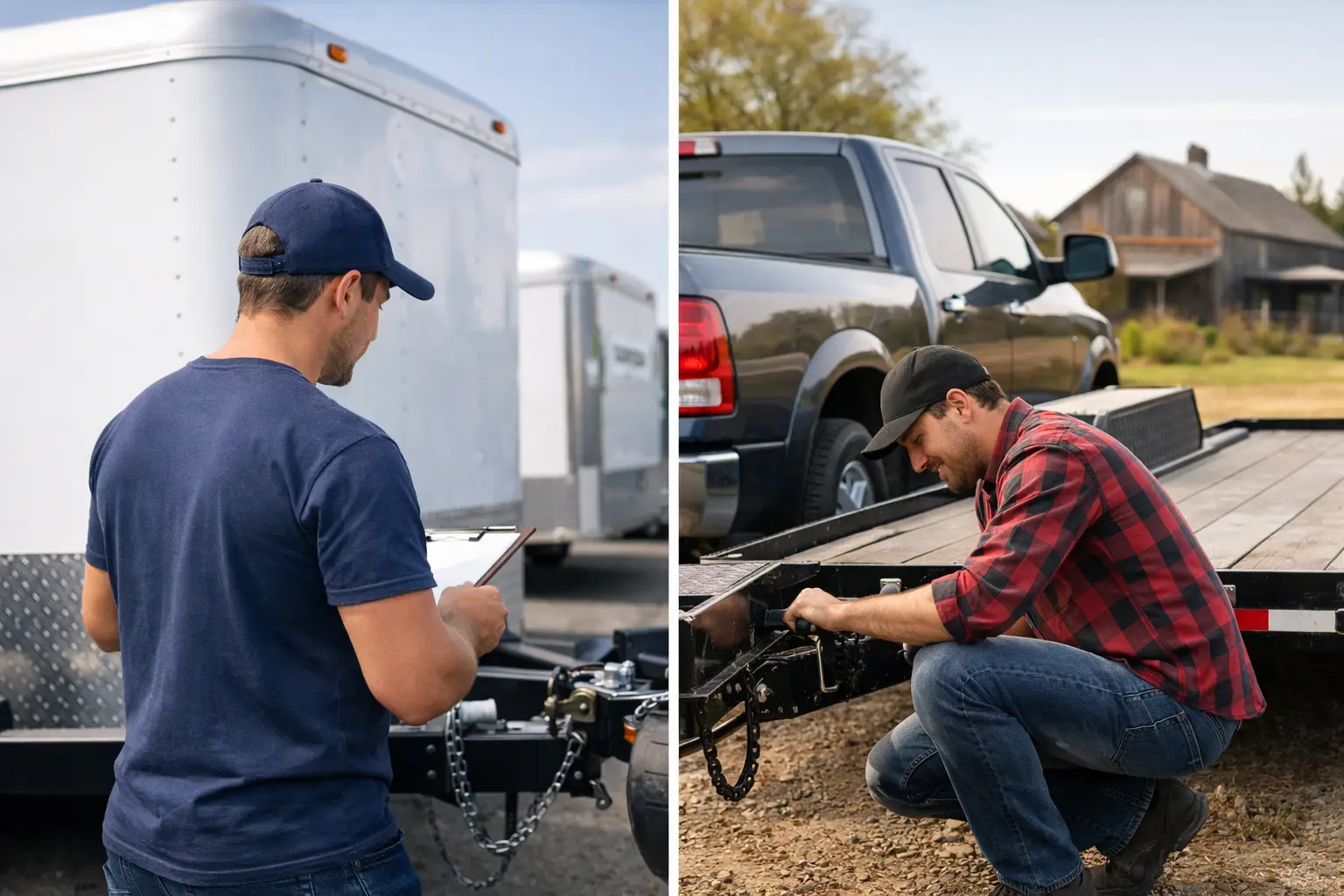
The purchase price is only the front end of ownership. After that, there is insurance in some cases, annual registration, routine maintenance, and repairs that show up at the worst time. Bearings need service. Tires age out. Lights stop cooperating. Deck boards and ramps take abuse. If the trailer sits outside through Arizona heat, wear can creep up even faster.
There is also the cost of space. Not everybody has room to keep a car hauler, utility trailer, or equipment trailer at home. Even if you do, that space has value. It may mean less room for work vehicles, less room in the driveway, or one more thing to move around every time you need access.
Depreciation matters too. Trailers hold value better than some equipment, but they still lose value over time. If you buy the wrong size, outgrow it, or stop needing it, you may not get back what you expected.
None of that means ownership is a bad idea. It just means the math needs to be honest. A trailer you use a dozen times a year may still cost more than you think once all the extras are counted.
Ownership makes sense in a few clear cases
If you are hauling equipment for work several days a week, buying may be the better fit. The same goes for contractors with regular jobsite needs, landscapers moving mowers and tools daily, or anyone whose schedule depends on having a trailer available at all times.
Ownership can also make sense if your work requires a very specific setup. Maybe you need a particular deck length, a specialized loading angle, or a trailer outfitted for one narrow purpose. In that case, controlling your own equipment may save time and hassle.
But those are repeat-use business cases. They are not the same as occasional hauling for a remodel, a vehicle move, or a cleanout weekend.
When trailer rental is the smarter move
Trailer rental is often the better choice when your needs change from job to job. One weekend you may need a utility trailer for yard debris. The next month you may need a car hauler. Buying one trailer does not solve every hauling problem unless you are willing to compromise.
That flexibility is one of the biggest advantages of renting. You can match the trailer to the load instead of trying to make one owned trailer work for everything.
Renting also makes sense when you want predictable costs. You know what the job is, you know how long you need the trailer, and you can budget around that. There is no surprise repair bill and no off-season expense when the trailer is parked.
For a lot of local customers, that is the whole point. They need reliable equipment for a real job, not another item to maintain after the job is finished.
Trailer rental versus trailer ownership for homeowners
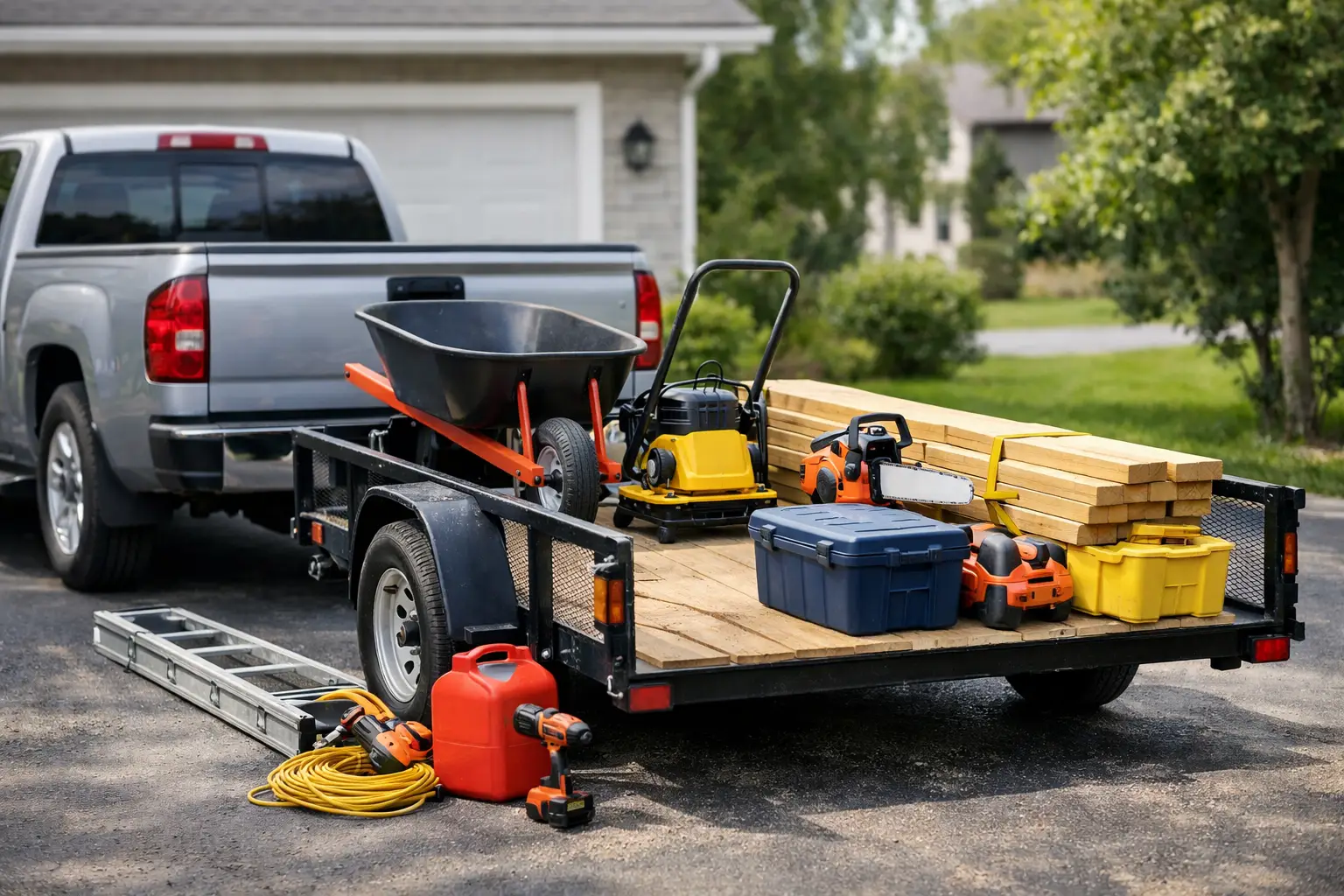
Homeowners are usually the clearest case for renting. Most do not need a trailer every week. They need one for a landscaping project, a furniture move, a home renovation, or a trip to haul off brush, trash, or building material.
In those cases, ownership can be overkill. You buy a trailer for a project that lasts two weekends, then spend years storing and maintaining it. Renting lets you get the work done without turning a short-term need into a long-term expense.
That is especially true if you are not fully sure what size trailer you need. Renting gives you the chance to choose the right trailer for the task instead of buying first and figuring out the fit later.
For small businesses, it depends on workload
Small business owners usually sit in the middle. If you are hauling often enough that rental fees stack up every month, ownership deserves a serious look. But if hauling is tied to seasonal work, occasional deliveries, or specific projects, rental may still be the better business decision.
Cash flow matters here. Buying a trailer means tying up money in equipment. Renting keeps that capital available for payroll, materials, tools, or fuel. For a growing business, that flexibility can matter more than owning another asset.
There is also downtime to consider. If your trailer needs service and you own it, the problem is yours. If you rent from a dependable local provider, the expectation is simple – the equipment should be ready to work when you are.
Convenience is part of the decision
People often compare trailer rental versus trailer ownership on price alone, but convenience has real value. Owning means handling maintenance schedules, registration deadlines, storage, and repair shops. Renting means booking what you need, using it, and returning it.
That convenience matters most when time is tight. If you are trying to finish a job over the weekend or move a vehicle on a schedule, the last thing you want is to discover your trailer lights are out or a tire is dry-rotted from sitting.
A good rental experience also removes a lot of guesswork. If you are not sure what trailer fits your load, it helps to work with a team that actually picks up the phone and points you in the right direction. That is especially helpful for first-time renters who do not want to gamble on the wrong setup.
A simple way to decide
If you are on the fence, ask yourself four plain questions. How often will you really use the trailer? Do you have space to store it? Are you willing to maintain it? And do you need the same type of trailer every time?
If the answers point to frequent use, secure storage, and consistent hauling needs, ownership may be worth it. If your use is occasional, your jobs vary, or you just do not want another piece of equipment to manage, rental is usually the better call.
For many people in places like Cottonwood, Clarkdale, and nearby communities, hauling needs come and go with projects, moves, and seasonal work. That is exactly where rental earns its keep. You get the trailer when you need it, skip the long-term costs, and keep your focus on the job instead of the equipment.
Monsoon Trailer Rental is built around that kind of practical decision-making. Fair rates, dependable equipment, and real local help matter more than making things complicated.
The best choice is the one that fits your actual workload, not the one that sounds better on paper. If a trailer spends more time parked than pulling, renting is probably telling you the truth.
Pingback: 8 Best Ways to Haul Debris - Monsoon Trailer Rental LLC