
That bathroom demo always looks simple until you’re staring at a pile of busted tile, old drywall, and a vanity that definitely will not fit in the back of your SUV. That is where knowing the best trailer types for DIY projects saves time, money, and a lot of frustration.
The right trailer depends on what you are hauling, how often you need to load and unload, and whether your project is more about cleanup, material pickup, or moving equipment. Some trailers are better for weekend landscaping jobs. Others make a lot more sense for hauling a vehicle, a compact machine, or a full load of building materials. If you pick too small, you make extra trips. If you pick the wrong style, loading gets harder than it needs to be.
Best trailer types for DIY projects depend on the job
Most DIY jobs fall into a few common categories. You are either hauling loose material, picking up long building supplies, moving bulky items, or transporting equipment that cannot be driven onto just any trailer. Once you think about the job that way, choosing gets easier.
A homeowner cleaning up a yard in Cottonwood has different trailer needs than someone moving a project car in Clarkdale or hauling a skid steer for a property job outside town. The trailer should match the load, not just the idea of getting “something big enough.”
Utility trailers for everyday hauling
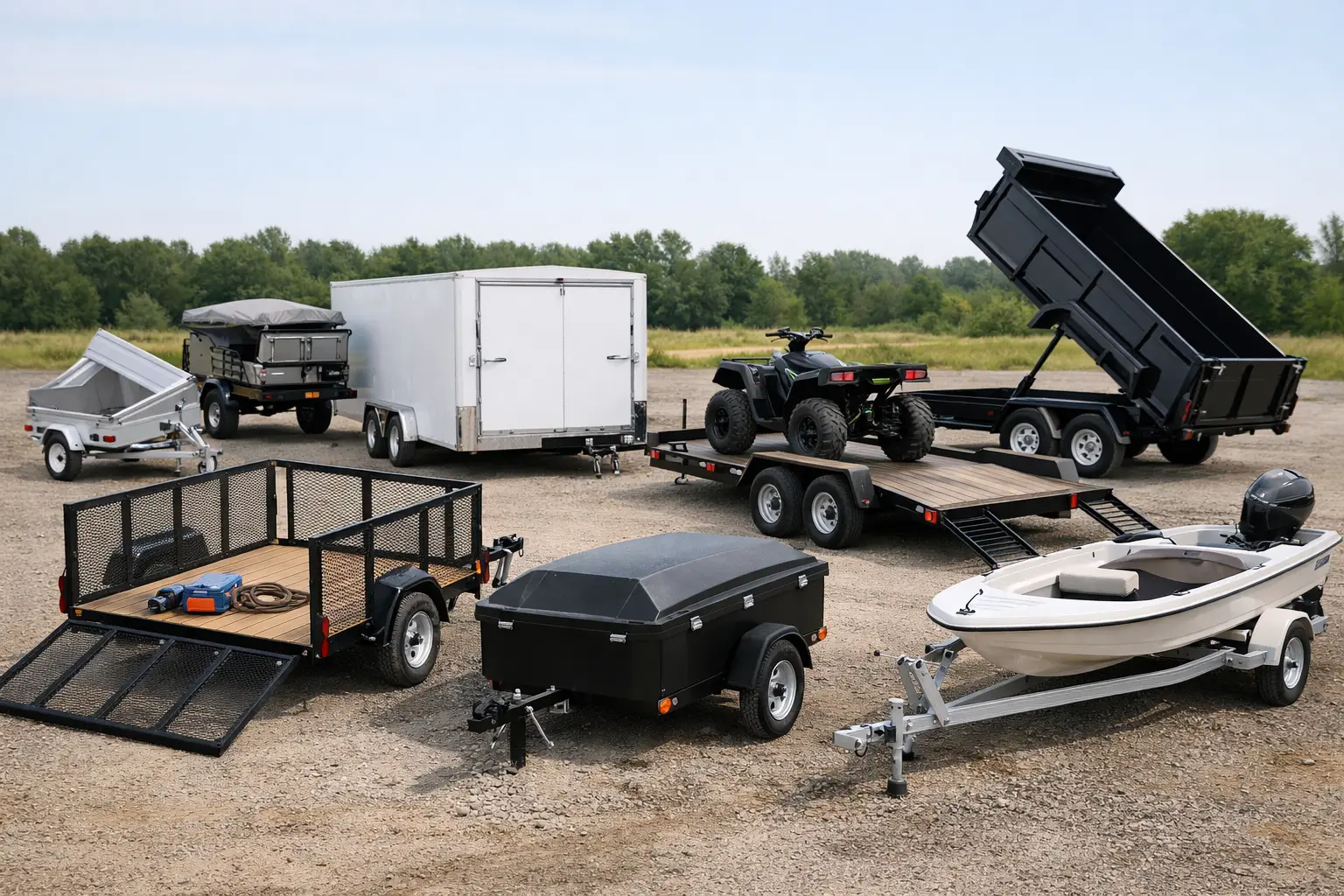
If there is one trailer that handles the widest range of homeowner jobs, it is the utility trailer. For many people, this is the first place to look when comparing the best trailer types for DIY projects.
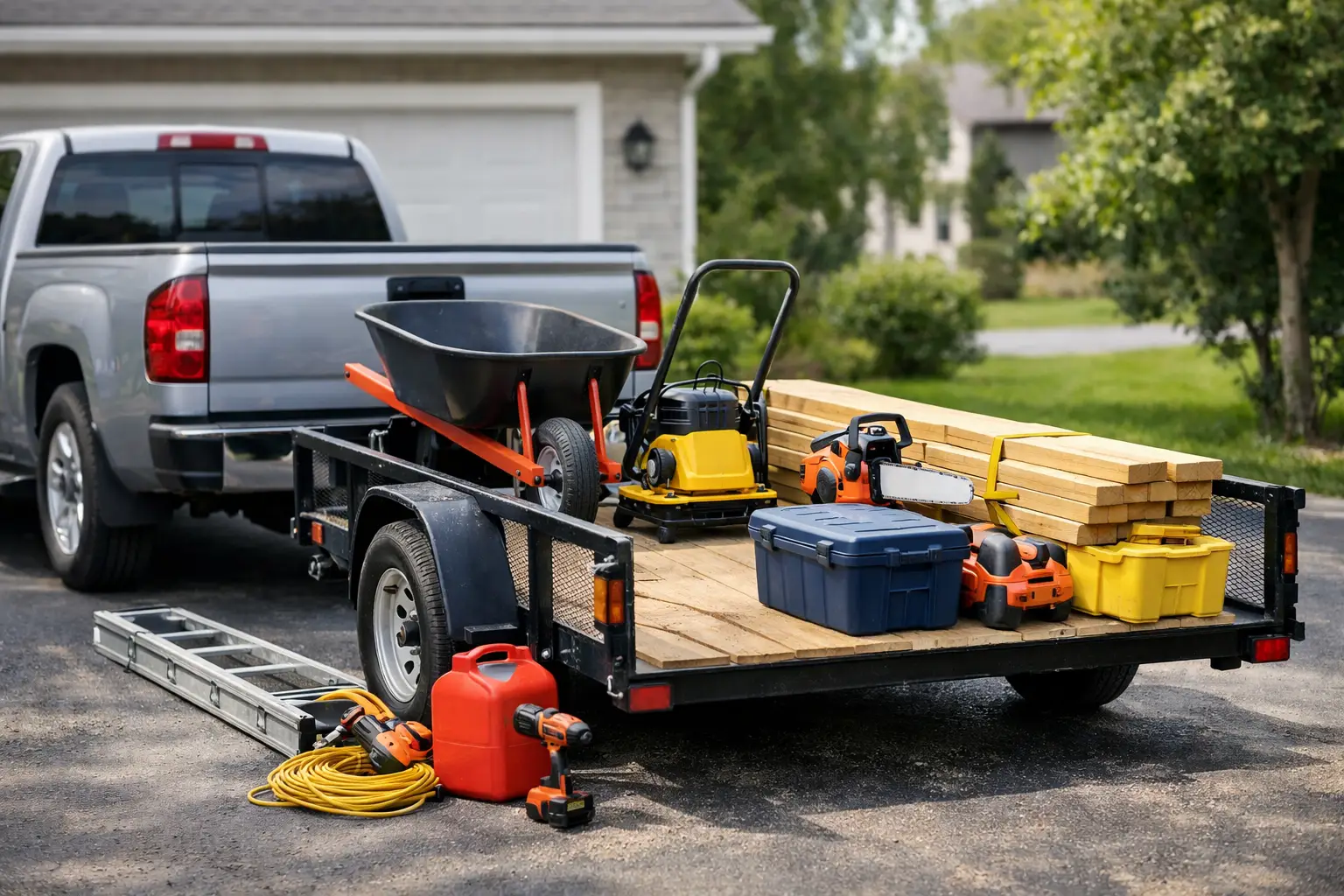
A utility trailer works well for lumber, bagged materials, yard waste, small furniture, appliances, and general cleanup loads. The open design makes loading easier, especially when you are not dealing with tall enclosed sides or a roof. If your weekend project involves fencing supplies, pavers, mulch, or hauling away branches, this style covers a lot of ground.
The trade-off is exposure. Your load is out in the weather, and lighter items may need to be secured carefully so they do not shift or blow around. Utility trailers are practical, but they do ask you to think about tie-downs and load balance.
Dump trailers for heavy debris and messy jobs
Some DIY projects create the kind of mess that nobody wants to shovel out by hand at the end. That is where a dump trailer starts to make real sense.
For demolition debris, dirt, gravel, concrete chunks, roofing tear-off, or heavy landscape material, a dump trailer can save serious labor. Instead of unloading one wheelbarrow at a time, you can dump the load where it needs to go. If you are tearing out a patio, regrading part of a property, or doing a major yard overhaul, this is often the smartest option.
The main downside is that a dump trailer can be more trailer than some jobs require. If you are only picking up a few sheets of plywood and a couple of doors, a dump trailer is overkill. It shines when weight, bulk, and unloading effort are the real problem.
Car hauler trailers for vehicles and equipment
A car hauler is not just for moving cars. It is also a strong choice for certain DIY jobs involving equipment, side-by-sides, tractors, zero-turn mowers, and other rolling loads.
If your project includes transporting a vehicle to a shop, moving a project car, or bringing home a machine for property work, a car hauler gives you a stable platform built for weight and wheels. It is especially useful when ramps and deck design matter. Trying to improvise with the wrong trailer here can turn into a loading headache fast.
This type of trailer is less ideal for loose debris or awkward household junk. A flat deck can handle a lot, but if your load is not on wheels or not easy to secure, another trailer may be the better fit. Still, for vehicle moves and machine transport, car haulers earn their place on the list.
Flatbed trailers for oversized building materials
When the job involves long, wide, or awkward materials, flatbed trailers are hard to beat. Think lumber, sheet goods, metal panels, pipes, pallets, and jobsite supplies that do not fit neatly inside a smaller utility trailer.
The benefit is access from multiple sides. Forklifts can load them more easily, and you are not boxed in by rails as much as you would be with some utility designs. For deck builds, shed materials, or large landscaping supplies, a flatbed can make pickup much simpler.
The catch is that securement matters even more. Without enclosed sides, your tie-down setup has to do the work. For experienced haulers, that is not a problem. For first-time renters, it is worth asking a few questions before choosing this route.
Which trailer type is best for your DIY project?
The answer usually comes down to three things: what the material is, how heavy it is, and how you want to unload it.
If you are cleaning up brush, hauling tools, or picking up home improvement materials, a utility trailer is often the practical choice. If the project is producing dense debris like concrete, dirt, or broken masonry, a dump trailer usually saves more effort than it costs. If you need to move a vehicle or wheeled equipment, a car hauler is the safer bet. If the load is oversized and needs open access, a flatbed earns a look.
There is also the question of towing comfort. Bigger is not always better. A trailer that fits your tow vehicle and your confidence level will usually serve you better than renting the largest thing available. A shorter trip across town is one thing. Hauling through tighter roads or uneven property access is another.
Enclosed trailers have a place, but not for every DIY job
People sometimes assume enclosed trailers are automatically the best option because they protect the load. That can be true if you are moving tools, cabinets, or materials that need to stay dry and secure.
But for many DIY projects, enclosed trailers create extra hassle. Loading bulky debris through a rear door is slower. Tall walls limit how you toss in brush or demo waste. And if your project involves dirt, gravel, or anything messy, cleaning out an enclosed trailer is not much fun. They work best when protection matters more than fast loading.
Landscape trailers can help with lighter outdoor jobs
For lighter property work, a landscape-style trailer can be a good middle ground. These trailers are useful for mowers, hand tools, small equipment, yard debris, and general outdoor cleanup.
They are especially handy for routine maintenance jobs or weekend property work where you want easy access and decent capacity without stepping up to a heavier dump trailer. The limitation is weight. Once the load gets dense, like rock or wet soil, you need to be careful not to choose a trailer that is better suited for clippings than heavy hauling.
A few mistakes that cost DIY renters time
One common mistake is focusing only on trailer bed size and not payload. A trailer may be long enough for your load but not rated for the weight you plan to carry. Another is ignoring loading height. A trailer that is technically large enough can still be the wrong pick if getting material onto it is awkward.
People also underestimate how different one project phase can be from another. The trailer you want for picking up framing lumber may not be the same one you want for hauling away old drywall and tile. It is often worth matching the trailer to the specific stage of the project instead of trying to force one setup to do everything.
If you are in the Verde Valley and dealing with mixed jobs, like hauling materials one day and clearing debris the next, this is where talking to a local rental team actually helps. A quick conversation can save you from booking a trailer that looks right on paper but makes the work harder in real life.
Choosing the best trailer without overpaying
The best trailer rental is not the biggest one or the most expensive one. It is the one that handles your load safely and makes the job easier from pickup to unload.
For a lot of DIY work, utility trailers are the everyday winner because they are flexible and easy to use. Dump trailers are the labor-savers for heavy cleanup and landscape material. Car haulers are the clear choice for vehicles and rolling equipment. Flatbeds work well when material size matters more than enclosure. And enclosed trailers only make sense when weather protection or security is the top concern.
If you are not sure which way to go, keep it simple. Think about what you are hauling, how heavy it is, and what unloading will look like at the end of the day. The right trailer should make your project move faster, not give you one more problem to solve.
When a job already has enough moving parts, choosing the right trailer should be the easy part.