
A dump run can turn into a long, expensive day when the trailer is too small, the load is packed poorly, or the landfill will not accept part of what you brought. To plan dump run trailer use the same mindset you would for any job: know what is leaving the property, how much it weighs, where it is going, and what your tow vehicle can safely handle.
For homeowners cleaning out a garage, landlords turning a rental, or contractors clearing a jobsite, the goal is simple: make one safe trip instead of two or three frustrating ones. A little planning before pickup keeps the work moving and helps you rent the right trailer for the job.
Plan a Dump Run Trailer Load Before You Book
Start by walking the entire area you are clearing. Do not rely on the pile you can see from the driveway. Look in sheds, behind fences, under tarps, and around the side yard. Most dump-run loads grow once the cleanup starts.
Make a quick count of the big items first. Old couches, mattresses, appliances, construction debris, branches, and broken furniture take up space differently. A trailer can look full long before it reaches its weight limit, especially when the load includes bulky household items. On the other hand, dirt, concrete, shingles, tile, and wet green waste can become too heavy fast, even when the trailer is only partly filled.
That difference matters when choosing a rental trailer. For a household cleanup, an open utility trailer with adequate side rails may be a practical fit. For dense material, you may need a larger-capacity setup but a smaller load. The best choice depends on both volume and weight, not just how much ground the pile covers.
Be honest about your tow vehicle as well. Check its towing capacity, hitch rating, and payload limits. Your vehicle has to handle not only the trailer but also the loaded trailer weight, passengers, tools, and anything else in the truck or SUV. If you are unsure, ask before booking. It is far easier to match the equipment correctly than to discover a problem after the trailer is loaded.
Separate What the Disposal Site Will Not Take
Do not load everything together until you know the rules at the disposal site. Many transfer stations and landfills have separate requirements for green waste, household trash, metal, tires, appliances, electronics, batteries, paint, chemicals, propane tanks, and hazardous materials. Some items are accepted only on certain days or for an added fee.
Call ahead or check the facility’s current requirements before loading. Disposal rules and fees can change, and a little confirmation can save you from unloading prohibited items back at home. If you have a mixed cleanup, create separate piles before the trailer arrives. One pile for general debris, one for metal, one for green waste, and one for items requiring special disposal will make the trip much easier.
In the Verde Valley, this is especially useful after yard work, remodeling, or a move. Loads often include a mix of desert brush, old lumber, broken patio furniture, and household junk. Sorting at the property is cleaner and faster than sorting on the ground at the dump.
Load the Trailer for a Safe Dump Run
The trailer should be loaded with weight balance in mind, not just with whatever item is closest. Heavy items belong low and centered over or slightly ahead of the trailer axle area. This helps prevent sway and keeps the tongue weight where it needs to be for controlled towing.
Avoid loading all the heavy material at the rear. A tail-heavy trailer can sway at speed, feel unstable, and put you in a difficult position on busy roads. Loading too much weight at the very front can also overload the hitch or rear suspension of the tow vehicle. The load should be balanced, secure, and within the trailer’s rated capacity.
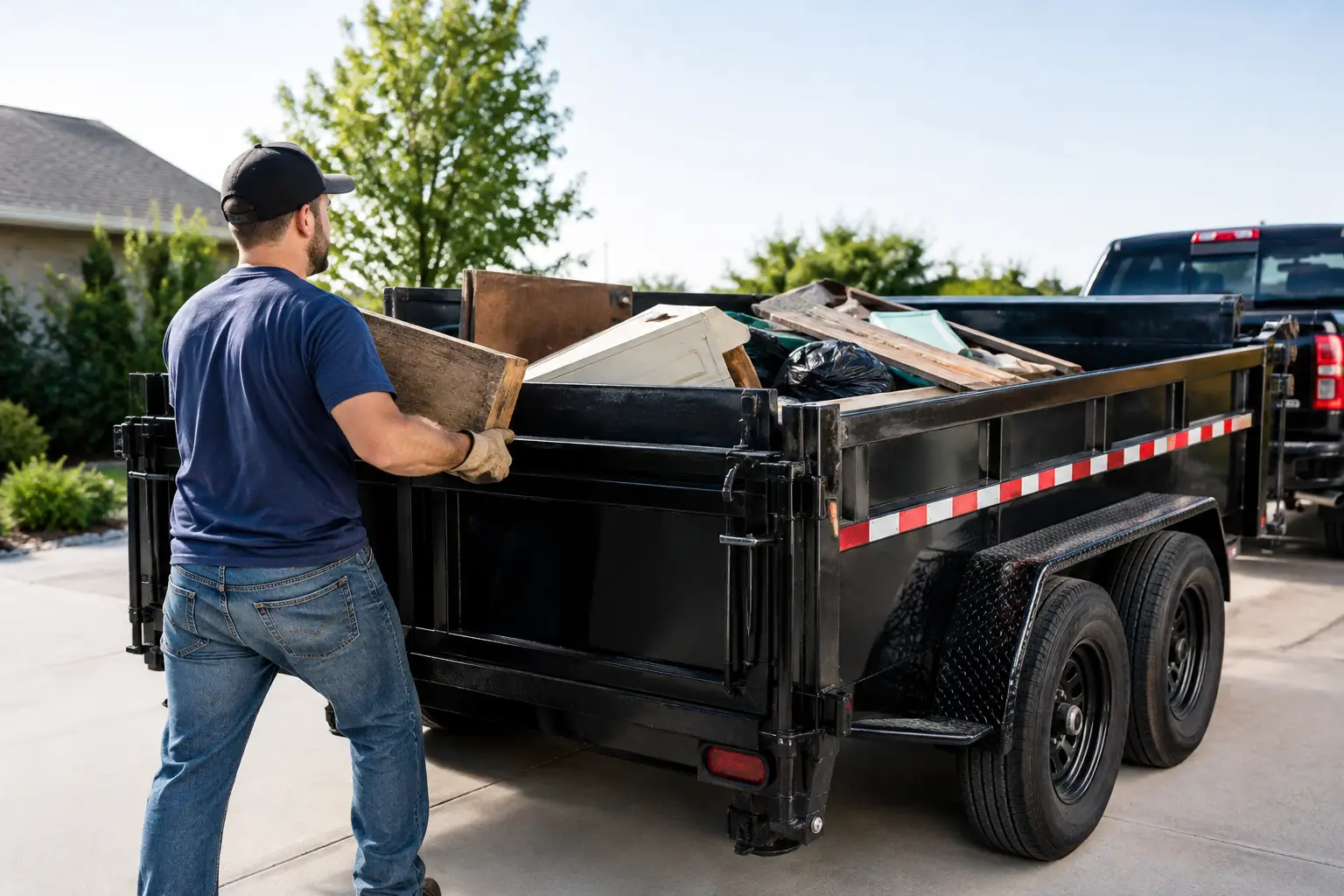
Put flat, dense material on the bottom. That might include lumber, broken-down cabinets, drywall, or bagged debris. Place bulky but lighter items on top, filling empty spaces as you go. Break down cardboard boxes, disassemble furniture when practical, and stack scrap wood rather than tossing it in loose. You will fit more in the trailer and have fewer chances for material to shift.
Secure the whole load before leaving the property. Tie-down straps are not just for a motorcycle or a piece of equipment. They can keep furniture, branches, bins, and loose debris from moving around. Use a tarp or proper cover when required, especially for lightweight trash, leaves, insulation, or small loose items that can blow out on the road.
A fast pre-trip check should cover the basics:
- Confirm the coupler is fully seated and locked on the hitch ball.
- Cross and connect the safety chains correctly, with enough room to turn but not drag.
- Plug in the lights and test brake lights, turn signals, and running lights.
- Check that tires look properly inflated and that the load is tied down.
- Make sure the trailer jack is fully raised and secured before moving.
These checks take only a few minutes. Skipping them can cost far more time than they save.
Leave Room for the Unexpected
It is tempting to stack a trailer as high as possible to avoid a second trip. Sometimes that works, but it depends on the material, the trailer sides, and how well the load can be secured. A tall load of loose household junk may be less safe than a slightly smaller, lower, well-tied load.
Leave enough room to add a tarp without crushing or losing items. Keep the trailer’s lights and license plate visible. If your cleanup includes something awkward, such as a long couch, oversized branches, or a damaged appliance, plan for its placement before filling the trailer around it.
Choose a Route That Works With a Trailer
A dump run is not the day to take the narrow shortcut you use in a car. Plan a route with enough room for turns, lane changes, and safe access at the disposal site. Trailer handling changes your stopping distance, turning radius, and ability to maneuver in traffic.
Give yourself extra time. Drive at a steady, comfortable speed and leave more room ahead than usual. Take corners wide enough that the trailer tracks safely behind you, but stay aware of curbs, signs, and parked vehicles. If the trailer begins to sway, do not slam on the brakes or jerk the wheel. Ease off the accelerator, keep the steering straight, and let the rig settle down.
Also think about access at home. If the trailer needs to be backed into a driveway, clear the approach before pickup. Move vehicles, bins, and low obstacles. A clean loading area lets you place debris directly into the trailer instead of carrying it across the yard twice.
Get More Value From Your Rental Time
The cheapest dump run is usually the one that does not require an extra day of rental, an extra landfill visit, or a rushed reload. Have your piles sorted before the trailer arrives. Keep gloves, straps, a tarp, and basic cleanup tools ready. If friends or crew members are helping, give everyone a job: one person breaks down material, one loads, and one watches the balance of the trailer.
For larger cleanouts, load in stages. Start with the heaviest material while the trailer floor is clear. Add medium-size items next, then use lighter debris to fill gaps. Stop once the load reaches a safe height and weight, even if a few items remain. A second small trip is better than an overloaded first one.
If you are not sure what size trailer fits your load or whether your vehicle is a good match, call a local rental provider before you book. At Monsoon Trailer Rental, the goal is to help you get dependable equipment for the actual job, without getting soaked by high rates or bounced through an impersonal call center.
A well-planned dump run is not complicated. Sort the debris, choose the right trailer, load it low and balanced, secure everything, and give yourself time to tow carefully. When the trailer rolls out of the driveway ready for the road, the cleanup is already well on its way to being done.