
A trailer can turn a weekend project into one trip instead of six. It can also create a long day fast if the trailer, tow vehicle, and load do not match. These trailer rental essentials help you get the right setup before pickup, load it safely, and head out ready for the real work – whether you are clearing brush in Cottonwood, moving equipment across the Verde Valley, or bringing a vehicle home.
Start With the Job, Not the Trailer
The best trailer is the one that fits the load you actually have. Before booking, know what you are hauling, its approximate weight, its length and width, and whether it rolls, drives, or needs to be loaded with equipment. A pile of household debris, a compact tractor, and a disabled car may all need a trailer, but they do not need the same kind.
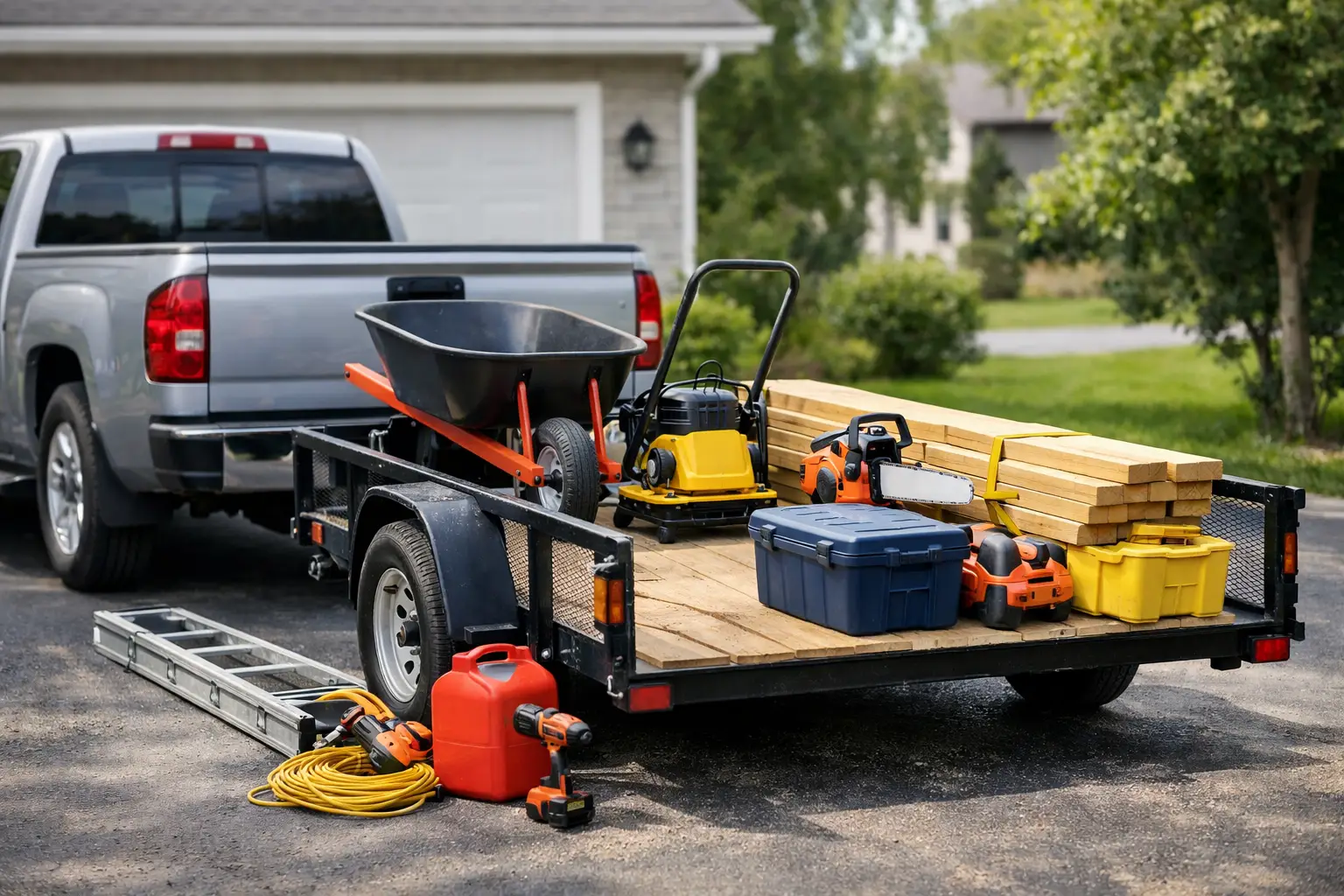
For general hauling, an open utility trailer is often a practical choice for furniture, landscaping supplies, tools, motorcycles, and cleanup loads. Make sure the sides and deck provide enough room to secure the load, not just barely fit it.
For a vehicle, a car hauler gives you the deck length, ramps, tie-down points, and capacity needed for the job. Confirm the vehicle’s overall weight and width before you reserve it. That includes anything still in the vehicle, such as tools, cargo, or aftermarket equipment. A vehicle that fits on the deck is not automatically a vehicle the trailer can safely carry.
If your load is unusually heavy, tall, loose, or awkward, say so when you book. Straight answers up front save time at pickup and help you avoid renting equipment that is too small for the job.
Trailer Rental Essentials: Match the Tow Vehicle
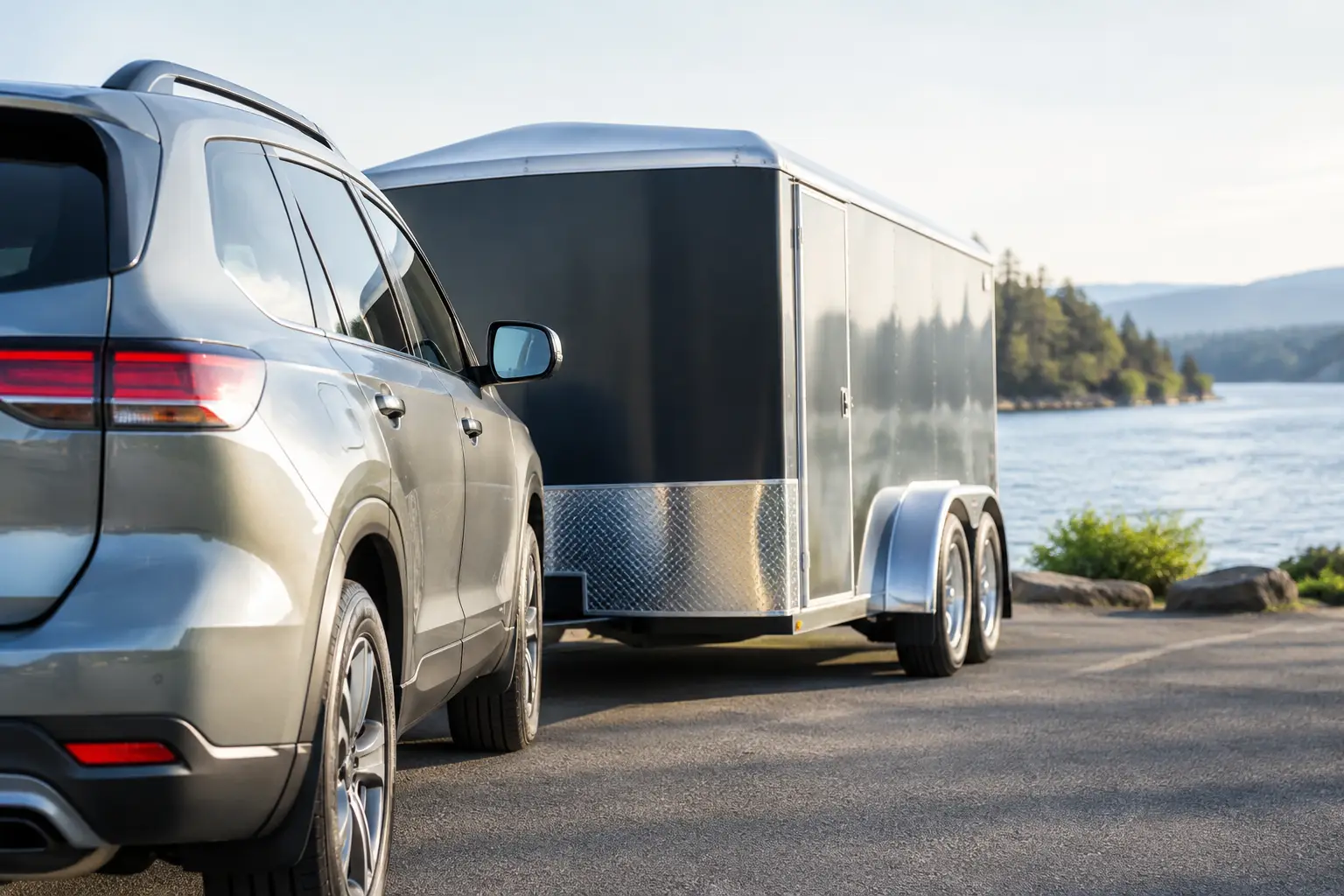
Your truck or SUV needs to be rated for the total job, not just strong enough to pull an empty trailer around the block. Check the owner’s manual or the towing information label for the vehicle’s towing capacity, hitch rating, payload limit, and maximum tongue weight. The lowest applicable rating is the one that matters.
Start with the trailer’s empty weight, then add the full weight of your cargo. That combined number needs to stay within your vehicle’s towing limit and the trailer’s capacity. Do not forget that tongue weight – the downward force on the hitch – counts against the tow vehicle’s payload along with passengers, tools, and gear in the cab or bed.
Your hitch receiver, ball mount, hitch ball, safety chains, wiring connection, and brake controller also need to match the setup. A ball that is the wrong size or a receiver that is not rated for the load is not a minor detail. It is a reason to stop before loading.
Many loaded trailers use electric brakes. If the rental trailer requires a brake controller, make sure your tow vehicle has a compatible, working controller before pickup. Test the lights, turn signals, brake lights, and trailer brakes in a safe area before you get on the highway.
Inspect Before You Load
A dependable rental provider should keep equipment ready to work, but a quick walk-around is still part of a good pickup. It gives you a chance to understand the trailer and catch questions while help is close by.
Check that the coupler is fully seated on the ball and locked, then secure the safety chains correctly and connect the breakaway cable. The chains should have enough room for turns but should not drag. Raise and lock the jack, check that ramps and gates are stowed securely, and plug in the electrical connector.
Walk around the trailer with the lights on. Verify running lights, brake lights, and both turn signals. Look at the tires for obvious damage or low pressure, and make sure the load area is clear of loose items. If something does not look right, call before you leave. A local rental team that actually picks up the phone is worth having when you need a quick answer.
Contactless pickup can make the process faster, especially when your day starts early. It does not replace the walk-around. Take a few minutes to read the pickup instructions, confirm the trailer you received, and take photos of the trailer condition before you load.
Load for Balance, Then Secure It
Most hauling problems start with poor load balance or weak tie-downs. Put the heaviest part of the load low and centered over the trailer’s axles, with enough weight forward to maintain stable tongue weight. A common target is roughly 10 to 15 percent of the loaded trailer weight on the hitch, but follow the trailer and vehicle guidance for your specific setup.
Too much weight behind the axle can cause trailer sway. Too much weight too far forward can overload the hitch or rear axle of the tow vehicle. If the trailer feels light at the hitch, do not try to solve it by driving slower. Reposition the load.
Use rated straps, chains, binders, or wheel nets that are designed for the load. Do not rely on a rope, a single light-duty strap, or the trailer’s side rails as your only restraint. A vehicle on a car hauler should be secured at appropriate vehicle tie-down points, usually with multiple restraints, and parking brake use should follow the rental provider’s instructions.
For loose material, use a tarp or containment method that keeps debris from blowing out. For equipment with buckets, ramps, doors, or moving parts, lower and secure everything that could shift. After loading, walk around once more and look at the trailer from a few steps back. If the load appears crooked, top-heavy, or lightly secured, it probably needs another pass.
Drive Like You Have a Trailer Behind You
Towing changes how your vehicle accelerates, turns, brakes, and handles wind. Leave more space than usual, start braking early, and take corners wider. Avoid sudden lane changes. A trailer tracks inside the tow vehicle’s path, which matters in parking lots, gas stations, narrow roads, and tight job sites.
Arizona’s heat and uneven back roads can be hard on tires, bearings, and brakes. Keep your speed reasonable for the conditions, watch the mirrors often, and give yourself room when descending grades. If the trailer begins to sway, keep the steering wheel steady and ease off the accelerator. Do not jerk the wheel or slam on the tow vehicle brakes. If your setup has a trailer brake controller, use it only as instructed to help bring the trailer back into line.
Plan fuel stops and turns before you need them. Pulling through a roomy station is easier than backing out of a tight one. When reversing, go slowly and use a spotter when possible. Small steering inputs work better than big corrections, and there is no prize for backing up on the first try.
Stop after the first few miles and check the coupler, chains, lights, ramps, and tie-downs. This is especially useful after hauling a vehicle, a heavy machine, or a tall load. Straps can settle as the load shifts into place. Check them again during longer trips and any time you stop for fuel.
Know What Your Rental Includes
Rental details matter as much as trailer size. Ask about the rental period, pickup and return process, included equipment, required identification, and what happens if your schedule changes. Confirm whether straps, ramps, wheel nets, or other accessories are included or need to be arranged separately.
It also helps to be clear about the route and job site. A trailer that works perfectly on pavement may be harder to maneuver on a steep driveway, loose gravel, or a narrow access road. If you are working around Sedona, Jerome, or rural parts of the Verde Valley, allow extra time for grades, traffic, and tighter turns.
Monsoon Trailer Rental keeps the process straightforward: choose equipment that fits the job, bring a properly equipped tow vehicle, and ask questions before you leave. Fair pricing matters, but the right trailer and a safe setup are what keep a simple haul from becoming an expensive problem.
When the job is done, unload on level ground when you can, remove tie-downs only after the load is stable, and return the trailer as agreed. A few careful minutes at pickup, loading, and return make rental hauling easier for you and safer for everyone sharing the road.