
A rushed pickup, a skid steer that needs to move by noon, a load of materials that will not fit in the truck bed – this is where trailer rental for small business hauling starts making real sense. For a lot of small businesses, buying more equipment is not the smartest next step. Renting the right trailer for the job can keep work moving without tying up cash in something that sits most of the month.
If you run a landscaping crew, handyman business, small construction outfit, mobile mechanic service, or property maintenance company, hauling is part of getting paid. The question is not whether you need trailer capacity. It is whether you need to own that capacity year-round. In many cases, the better answer is to rent when the schedule calls for it and keep overhead under control.
Why trailer rental for small business hauling makes sense
Owning a trailer sounds simple until the real costs show up. There is the purchase price, of course, but also registration, tire replacement, lighting repairs, brake service, storage space, and the time spent dealing with all of it. If your trailer is used every day, ownership can pencil out. If you only need extra hauling capacity during busy weeks or for certain jobs, it often does not.
Rental gives small businesses flexibility. You can take on a bigger cleanup job, move equipment for a one-off project, or handle a vehicle transport without committing to a trailer you may not need next month. That matters when every dollar has a job to do.
It also helps with job matching. One week you may need an open utility trailer for landscaping debris. The next week you may need a car hauler to move a vehicle or equipment. Renting lets you choose based on the load instead of trying to force every job into one trailer.
The biggest advantage is cash flow
Small business owners know that the invoice amount is not the same as money in hand. Fuel, payroll, materials, insurance, and repairs all hit before some customers pay. Buying a trailer adds another large expense, and not every business needs that pressure.
Renting spreads cost across actual work. If the trailer helps complete a paying job, the expense is easier to justify. You are paying for use, not for downtime. That can be a better fit for newer businesses, seasonal operations, or crews that are growing but not ready to add more owned equipment.
There is a trade-off here. If you rent often enough, ownership may become cheaper over time. But many small businesses rent because it keeps them nimble. They can say yes to work now without making a long-term purchase decision under pressure.
Choosing the right trailer for the job
The right rental starts with the load, not the price tag. A trailer that is too small creates multiple trips and wasted labor. A trailer that is too large can be harder to tow, harder to load, and unnecessary for the work.
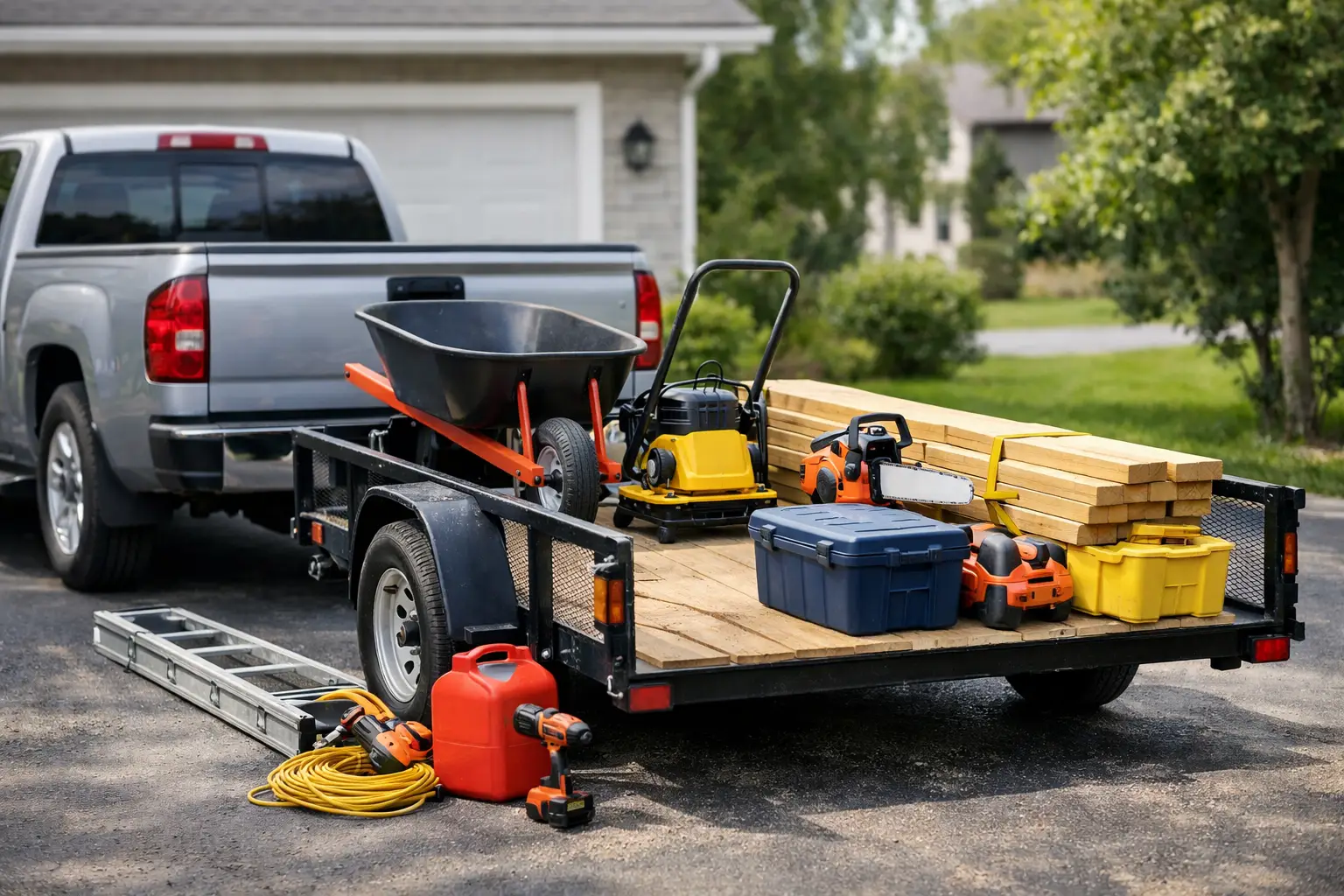
For general hauling, utility trailers are a common choice. They work well for tools, mowers, small equipment, debris, and material runs. They are practical, straightforward, and often the best fit for day-to-day business needs.
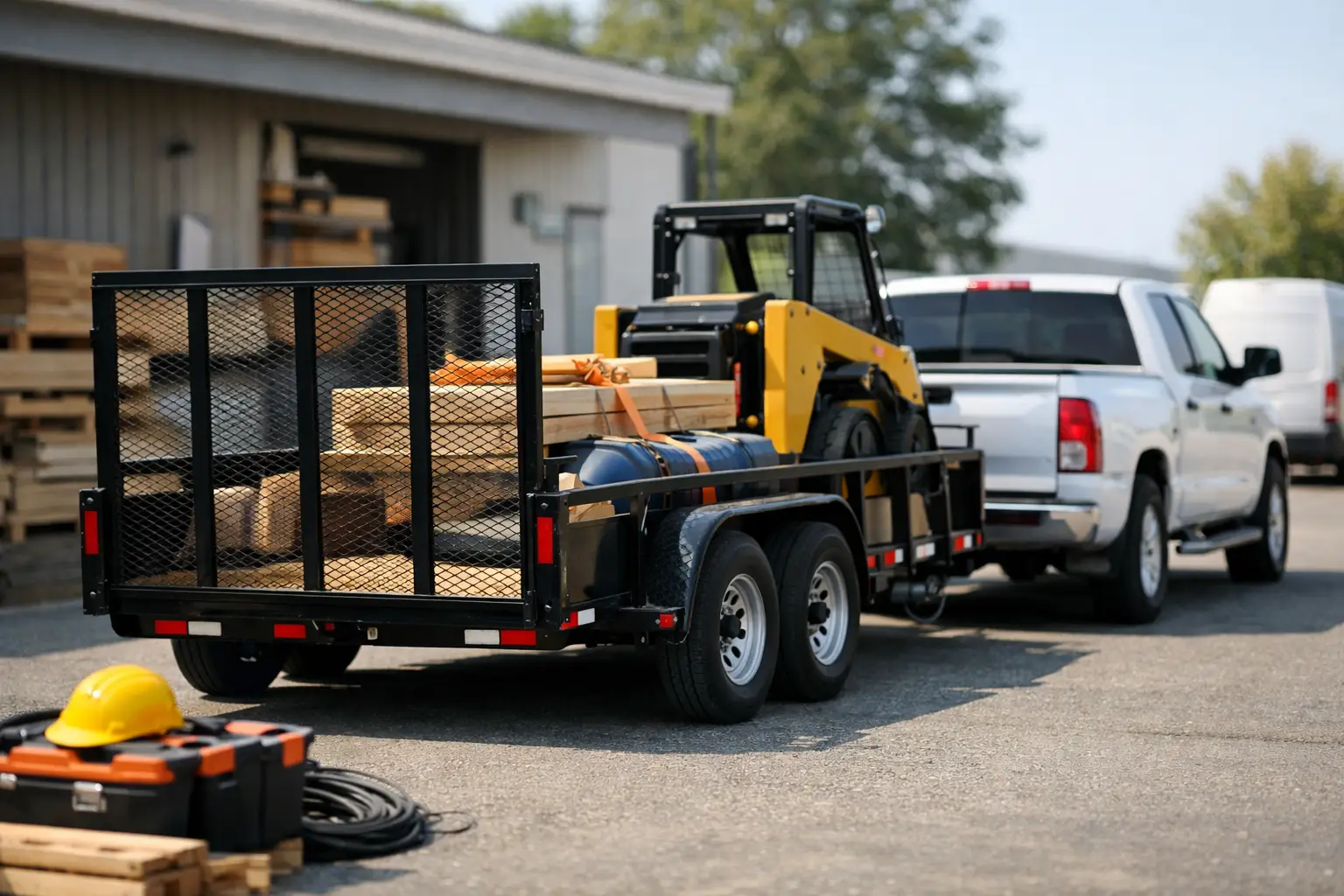
For vehicle moves, heavier equipment, or jobs where loading angle matters, a car hauler may be the better option. This matters for mechanics, body shops, contractors moving compact equipment, and anyone transporting vehicles between locations.
Weight matters just as much as size. You need to know what your tow vehicle is rated for, what the trailer weighs empty, and what your full load will weigh once tied down. A good rental experience should include plain answers about capacity so you are not left guessing.
When renting beats owning
There are a few situations where renting is usually the smarter business move.
If your hauling needs change from week to week, rental gives you more flexibility. If your jobs are seasonal, rental keeps you from paying for equipment during slow periods. If you are expanding into new types of work, rental lets you test demand before buying. And if your current trailer is down for repair, a rental can keep jobs on schedule instead of forcing delays.
This is especially useful for smaller operations in places like Clarkdale, Cottonwood, and across the Verde Valley, where work can range from property cleanup to equipment transport to material runs in a single week. A local rental option can save time and cut out the hassle that comes with dealing with a distant chain.
What small business owners should ask before booking
A trailer rental should make the job easier, not add surprises. Before you book, ask a few basic questions.
First, confirm the trailer’s payload capacity and whether it fits your intended load. Second, make sure your vehicle has the right hitch, electrical connection, and towing capacity. Third, ask about trailer brakes if your load size calls for them. Fourth, confirm pickup times, return times, and what happens if the job runs long.
The answers should be clear and direct. If you have to chase down basic information or cannot get someone on the phone, that is a warning sign. When you are trying to keep a crew moving, responsive service matters as much as the equipment itself.
A good rental company saves you more than money
Price matters, but time matters too. A cheap rental is not cheap if the lights do not work, the tires are worn, or the booking process turns into a headache. Small businesses usually do not have extra hours to waste fixing rental problems.
A dependable local provider should have equipment that is ready to go, explain what you need to tow safely, and keep the process simple. That is where local service stands apart from bigger outfits that treat every customer like a number. You want a team that actually picks up the phone, answers questions clearly, and helps match the trailer to the job.
That local factor is not just about friendliness. It is about speed and accountability. If your business runs on tight schedules, being able to deal with real people nearby can make the whole rental process smoother.
Common mistakes with trailer rental for small business hauling
The most common mistake is underestimating the load. People often think in terms of whether the equipment will fit, but towing safety depends on total weight, balance, and tie-down points. A trailer can be physically large enough and still be the wrong choice.
Another mistake is ignoring the tow vehicle setup. Hitch class, brake controller requirements, wiring, and tire condition all matter. If your truck is not ready, the trailer alone will not solve the problem.
A third issue is booking too late. During busy seasons, weekends, and project surges, the trailer you want may not be available at the last minute. Planning ahead gives you better options and helps avoid scrambling when a job is already on the calendar.
Renting as a growth tool, not just a backup plan
Some owners think of rental as a stopgap. In practice, it can be a smart operating strategy. Renting lets you take on larger jobs, expand service offerings, and handle occasional transport needs without carrying full ownership costs.
That can be useful for a growing business that wants to stay lean. Instead of buying every piece of support equipment upfront, you rent what you need as demand proves itself. It is a practical way to grow without getting soaked by high rates or stuck with equipment that does not earn its keep.
For example, a landscaper may only need extra hauling capacity during spring cleanup. A contractor may need a car hauler for occasional equipment moves. A handyman may need a utility trailer only on dump-run days. In each case, renting keeps the business flexible and focused on revenue-producing work.
What to look for in a local trailer rental partner
Straight answers, fair pricing, dependable equipment, and easy booking should not be hard to find. Those basics are what matter most. If a rental company makes things complicated, hides costs, or leaves you guessing, that friction carries over into your workday.
A local company like Monsoon Trailer Rental fits the way small businesses actually operate – quick decisions, real schedules, and jobs that need to get done without a lot of back-and-forth. Whether you need a trailer for a day, a weekend, or a specific project, the right rental should feel simple from the first call to the final return.
The best approach is to treat trailer rental like any other business tool. Use it when it helps you take on work, protect your cash flow, and keep your crew productive. If a rented trailer gets the job done without adding a long-term expense, that is not a compromise. That is just good business.