
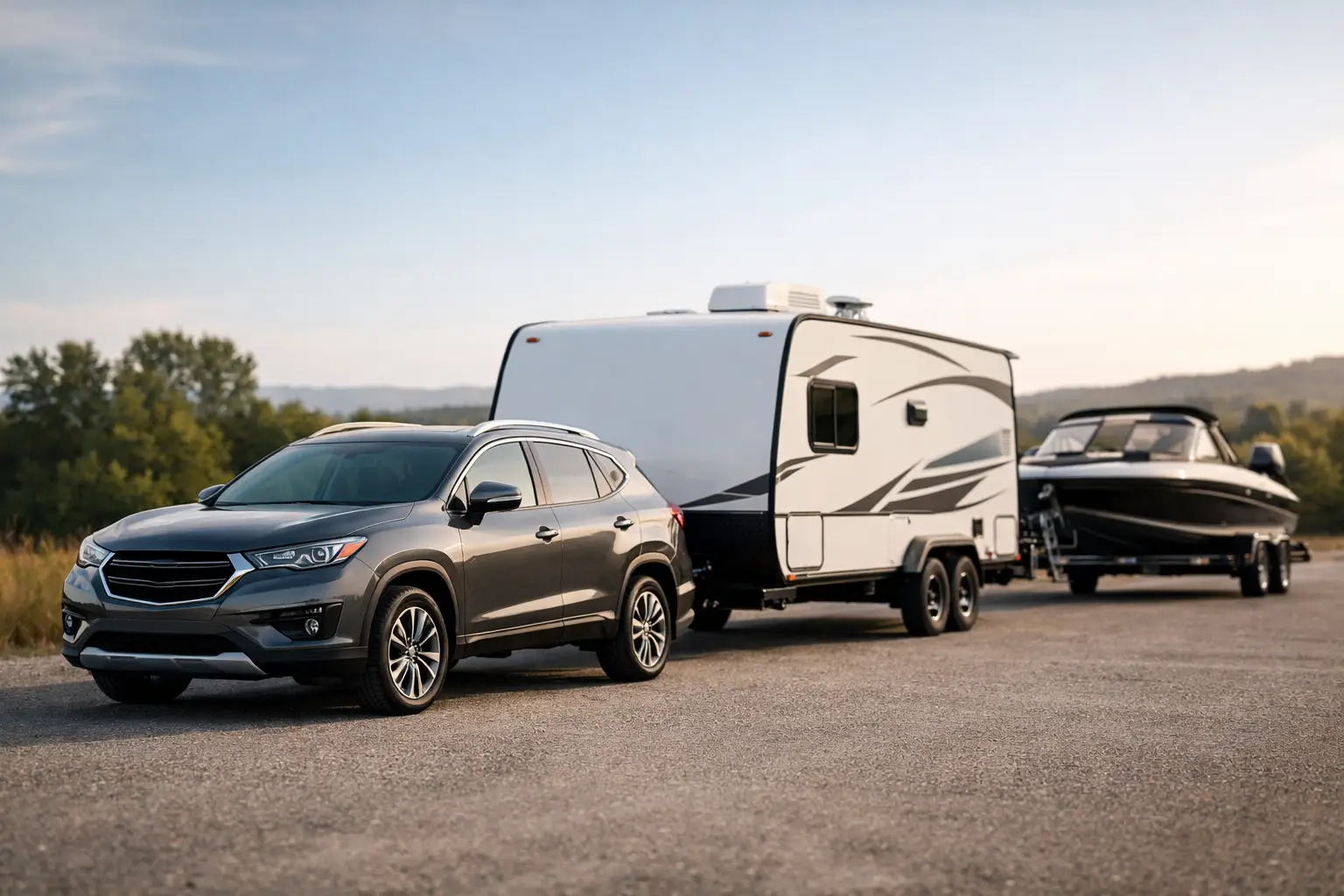
A lot of people ask the same thing right before they rent or buy a trailer: can I tow with a crossover, or do I really need a truck? The honest answer is yes, many crossovers can tow. But that only works if the numbers line up, the trailer fits the vehicle, and you stay realistic about what your crossover is built to do.
That matters more than people think. A crossover might handle a light utility trailer, a small landscape load, or even a compact car hauler setup in some cases. It might also be a bad match if the load is too heavy, the hitch is underrated, or the vehicle is front-wheel drive and already working hard just carrying passengers and gear.
Can I tow with a crossover? Yes, but only within its limits
A crossover is not automatically disqualified from towing. Many newer models come with factory tow ratings, trailer sway control, transmission cooling upgrades, and available towing packages. If your owners manual gives the vehicle a tow rating, that means the manufacturer says it can tow under the right conditions.
The part people miss is that the tow rating is not a blanket green light for every trailer. That number assumes the vehicle is in good condition, properly equipped, and not overloaded with cargo inside the cabin. A crossover rated to tow 3,500 pounds might not really have 3,500 pounds available once you add adults, tools, coolers, or job materials.
So if youre asking can I tow with a crossover, the better question is this: can my specific crossover safely tow this specific trailer and load today?
Start with the numbers that matter
Before you hook anything up, you need four basic numbers. First is your vehicles maximum tow rating. Second is payload, which is how much weight the crossover can carry in passengers, cargo, and tongue weight. Third is the trailers empty weight. Fourth is the total loaded trailer weight.
Tongue weight is where people get in trouble fast. Thats the downward force the trailer puts on the hitch, and it usually lands around 10 to 15 percent of the loaded trailer weight for most bumper-pull trailers. Even if your crossover can technically pull the weight, it still has to carry that tongue weight without squatting too much or exceeding payload.
For example, say your trailer and cargo together weigh 2,500 pounds. That could mean 250 to 375 pounds of tongue weight. Add two adults, a few tools, and a full cargo area, and some crossovers run out of payload before they run out of tow rating.
Thats why the sticker on the drivers door matters just as much as the brochure.
The trailer type makes a big difference
Not all trailers pull the same. A low, open utility trailer is usually easier on a crossover than a tall enclosed trailer that catches wind. A lightweight yard debris run is very different from hauling a side-by-side, palletized materials, or a vehicle.
Aerodynamics matter more than many drivers expect, especially around places with elevation changes, gusty conditions, and two-lane highways. A crossover that feels fine towing a flat utility trailer around town may struggle with an enclosed trailer on grades or in crosswinds.
Wheelbase matters too. Smaller crossovers can feel unsettled with longer trailers, even when the weight looks acceptable on paper. A midsize crossover with a stronger platform and longer wheelbase will usually tow more confidently than a compact model with the same advertised rating.
What your crossover needs to tow safely
If your vehicle is rated for towing, look at how it is equipped. Some crossovers only reach their higher tow capacity with a factory tow package. That package may include a transmission cooler, upgraded radiator, wiring harness, hitch receiver, or software calibrated for trailer handling.
If you do not have the tow package, your actual usable capacity may be lower than the headline number you saw online. This is a common mistake, especially with used vehicles.
You also need the right hitch class. The hitch has its own rating, and that rating must match or exceed the trailer setup. The ball mount, hitch ball, and coupler all need to fit and be rated correctly. Safety chains need proper attachment points, and trailer lights need to work every time.
For heavier trailer setups, trailer brakes may be required by law or simply be the smart move regardless. Your crossovers brakes are designed to stop the vehicle, not the vehicle plus a trailer that is pushing from behind on a downhill stretch.
When a crossover is a good fit
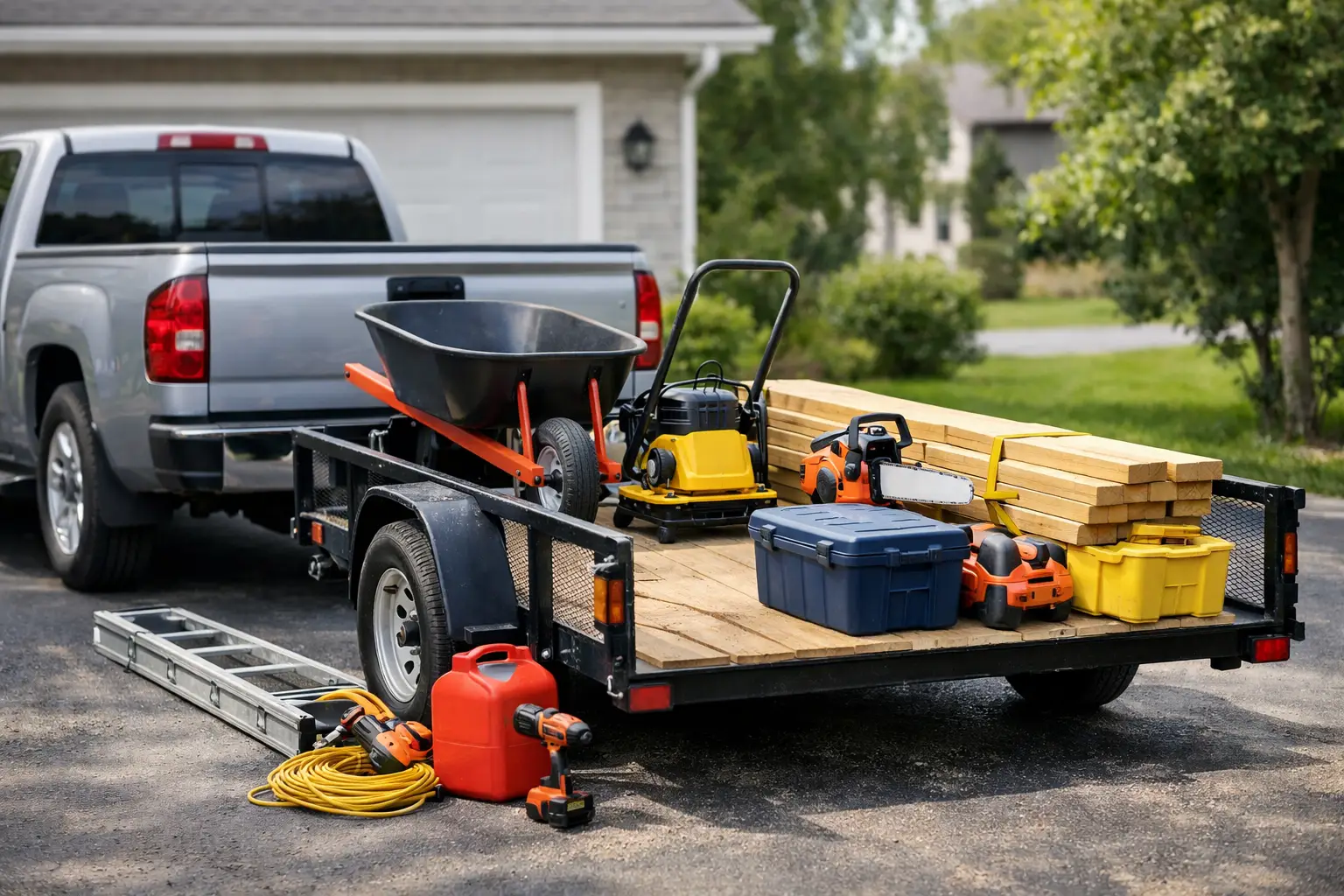
A crossover can be a very practical tow vehicle if the job is light to moderate and the vehicle is properly rated. Homeowners making dump runs, hauling small equipment, moving a riding mower, picking up building supplies, or transporting lightweight furniture often do just fine with the right trailer.
This is especially true when the trailer itself is sized appropriately. A lighter trailer with a lower deck and manageable dimensions puts less strain on the vehicle and gives the driver a lot more control.
For some local hauling jobs, using a crossover you already own makes more sense than borrowing a half-ton truck you are not familiar with. If your crossover has the rating, the hitch, and enough payload margin, it may be the simplest option.
When the answer is probably no
If your crossover is near its limit before the trailer is even loaded, thats a sign to stop and rethink the plan. The same goes for steep grades, long-distance towing in hot weather, or hauling a high-profile trailer that will catch every gust.
You should also be cautious if the vehicle has a continuously variable transmission and a low tow rating, worn tires, soft rear suspension, or unknown maintenance history. A crossover can tow, but it does not have much room for wishful thinking.
Car haulers deserve extra caution. Even if a crossover has a decent tow rating, most full car hauler setups with the vehicle loaded will be beyond what a typical crossover should handle. That is one of those cases where being technically close is not good enough.
Can I tow with a crossover in Arizona conditions?
Arizona adds its own layer to the question. Heat, hills, and longer stretches of highway can make a crossover work harder than it would on flat, mild roads. If you are towing anywhere around the Verde Valley, a setup that seems fine on paper can feel a lot different when you hit grades, rough pavement, or afternoon wind.
That does not mean a crossover cannot do the job. It means you need to leave yourself more margin. Keep the load lighter, make sure the tires are properly inflated, check coolant and transmission condition, and give yourself more stopping distance than you think you need.
A quick way to decide before you book
If you want a simple gut-check, look at it this way. If your crossover is rated to tow the trailer and load with room to spare, has the right hitch and wiring, and is not already loaded down with passengers and gear, you may be in good shape. If every number is right on the edge, you are already in the gray area.
This is where talking to a real person helps. A good trailer rental company will ask what you are towing with, what you plan to haul, and whether the trailer is actually a fit. That saves time and helps you avoid showing up with a vehicle-trailer mismatch.
Monsoon Trailer Rental works with plenty of customers who are trying to figure this out before haul day, and that kind of conversation is worth having before you commit to the wrong setup.
The safest answer is the honest one
So, can I tow with a crossover? Sometimes yes. But safe towing is not about proving your vehicle can move a trailer down the road. It is about matching the trailer to the vehicle, leaving enough margin for real-world conditions, and knowing when the smarter call is to go lighter or use a different tow vehicle.
If you are careful with the numbers, honest about the load, and willing to stay inside the limits, a crossover can handle more than some people think. If you are guessing, it can also get sketchy faster than most people expect. The best towing setup is the one that gets the job done without turning the drive home into the hard part.