

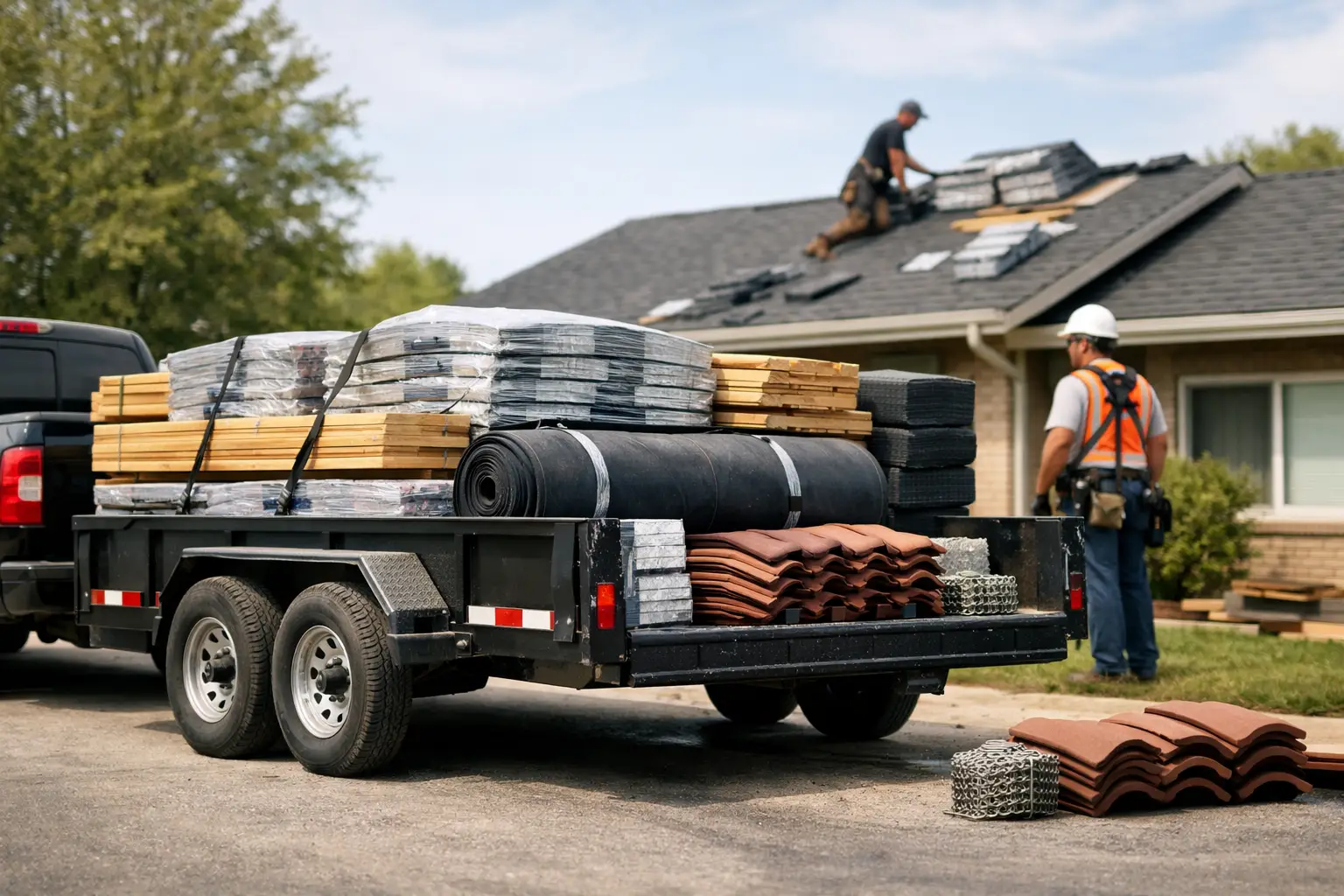
A roof can look like a straightforward weekend project until the materials start arriving. Shingle bundles, underlayment, drip edge, flashing, nails, and disposal debris add up fast. A trailer rental for roofing materials gives you a practical way to get supplies to the job without cramming a pickup bed, making multiple runs, or leaving materials exposed in the driveway.
For homeowners and contractors around the Verde Valley, the right trailer can keep a roofing job moving from the first material pickup through final cleanup. The key is not simply renting the biggest trailer available. It is choosing one that matches the weight, length, loading method, and towing ability of your specific job.
Start With the Weight, Not the Roof Size
Roofing materials are dense. A bundle of asphalt shingles commonly weighs 50 to 80 pounds, depending on the product. A square of shingles – 100 square feet of roof coverage – often requires three bundles. That means even a modest roof can put thousands of pounds on a trailer before you add tools, plywood, or tear-off debris.
Before booking, ask your supplier for the total material weight. If you are picking up materials yourself, include every item on the order rather than estimating from shingles alone. Roof decking, rolls of underlayment, ridge caps, starter strips, fasteners, and flashing all count toward the load.
Then check two limits: the trailer’s payload capacity and your tow vehicle’s rated towing capacity. The lower number is the one that matters. A capable trailer does not make an overloaded truck safe, and a strong truck cannot make a trailer safely carry more than its rating.
It also pays to leave room below the maximum. Roads through Cottonwood, Clarkdale, Sedona, and the surrounding area can include grades, curves, uneven entrances, and changing weather. A little capacity margin makes the drive less stressful and gives your brakes, tires, and suspension a better chance to do their job.
Pick the Trailer That Fits the Roofing Job
A utility trailer can be a good fit for many roofing material runs, especially when you need an open deck that a forklift can load from the side or rear. It also makes it easier to carry long pieces such as drip edge, lumber, or sections of flashing, provided they are properly supported and secured.
An enclosed trailer offers weather protection, which may matter when materials need to sit overnight or a storm is rolling in. The trade-off is that it can be less convenient for forklift loading and may have less usable height or access for bulky orders. If the supplier will load materials with a forklift, confirm that the trailer’s layout works for their equipment before you arrive.
For tear-off work, the hauling plan may be different from the delivery plan. Old shingles and roofing debris are heavy, messy, and often better handled in a dedicated disposal container or with a separate dump run. Do not assume that a trailer loaded for new materials should also be used at its maximum capacity for debris. Wet shingles, plywood, and nails can turn a manageable load into an overweight one quickly.
When you call for a rental, have your trailer hitch size, vehicle information, estimated material weight, and planned travel distance ready. A local team that actually picks up the phone can help you think through the fit before pickup day.
Load Roofing Materials Low and Balanced
The way you load the trailer matters as much as the amount you load. Shingle bundles should sit low, flat, and centered over the trailer’s axles whenever possible. This keeps the center of gravity down and helps the trailer track properly behind the tow vehicle.
Avoid piling the entire order at the very back of the trailer. Too much weight behind the axle can cause sway. Too much weight at the front can overload the hitch and rear suspension of the tow vehicle. A properly balanced load generally places some weight on the hitch while keeping the majority supported by the trailer axles. Follow the trailer and vehicle manufacturer guidance for tongue weight.
If the material yard loads the trailer, tell the loader where the axles sit and ask for a balanced placement. Once loaded, inspect the arrangement yourself before pulling away. Forklift operators are skilled at loading material, but you are still responsible for towing the finished load safely.
Long items need special attention. Drip edge, flashing, lumber, and roof panels can act like sails in the wind if they are not supported. Keep them from extending beyond the trailer whenever possible. If an overhang is unavoidable, follow Arizona requirements for marking it and make sure the items cannot shift, bounce, or drag.
Secure Every Layer Before You Leave
A few straps over the top are not always enough. Roofing loads can settle as you drive, especially on bumpy roads. Use properly rated tie-downs and attach them to secure trailer anchor points. Protect sharp metal edges from cutting straps, and do not rely on loose rope or worn-out hardware.
Check that the trailer coupler is fully seated and locked onto the hitch ball. Cross and connect safety chains correctly, plug in the electrical connection, and test the lights, turn signals, and brake lights before leaving. If the trailer has brakes, make sure the brake controller is set up and working for the load.
After the first few miles, pull over somewhere safe and recheck the straps, coupler, tires, and load. This small stop can catch a strap that has loosened or a bundle that has settled before it becomes a problem. Recheck again after any long stretch, rough road, or sharp change in elevation.
Plan the Jobsite Before the Trailer Arrives
A loaded trailer needs more room than most people expect. Before material pickup, clear a path to the unloading area and think about where the truck and trailer will turn around. A narrow driveway, low-hanging branches, soft dirt, or a steep approach can make delivery harder than the haul itself.
Keep the trailer on firm, level ground when loading or unloading. Chock the wheels when appropriate, especially if the site has even a slight slope. Do not ask people to stand behind the trailer while it is being backed, and keep children and pets clear of the work area.
You should also consider how materials will move from the trailer to the roof. If roofers are hand-carrying bundles, place the load where it can be accessed without climbing over stacks or stepping onto loose debris. If a lift, conveyor, or loading crew is involved, leave them room to work. Good jobsite layout saves time, but more importantly, it reduces unnecessary lifting and trips.
Know When One Trip Is Better Than One Big Load
The cheapest-looking plan is not always the best hauling plan. Trying to carry an entire roofing order in one overloaded trip can lead to poor handling, damaged equipment, expensive delays, or a serious accident. Two properly loaded trips may be the smarter call, particularly for larger roofs, heavier architectural shingles, or a tow vehicle with limited capacity.
The same goes for mixed loads. New shingles should stay clean and dry. Old roofing debris should be contained and disposed of properly. Separating delivery from cleanup often keeps the jobsite more organized and prevents nails, grit, and torn material from ending up where fresh supplies need to go.
A trailer rental can also make sense when material delivery timing does not line up with your work crew. Pick up supplies when the yard is open, stage them securely at the jobsite if conditions allow, and keep the work moving when your crew arrives. Just avoid leaving materials or a rental trailer in a place that blocks traffic, violates neighborhood rules, or creates a security issue.
Trailer Rental for Roofing Materials Without the Guesswork
The best rental process starts with an honest description of the job. Say how many squares of shingles you are hauling, whether you have decking or long trim pieces, what vehicle will tow the trailer, and whether you expect to make a disposal run. That information helps match the trailer to the work instead of leaving you to figure it out at the material yard.
Monsoon Trailer Rental serves practical hauling needs across the Verde Valley with dependable equipment, easy booking, and contactless pickup and dropoff options. If you are not sure what size trailer your roofing project needs, asking before you book is a whole lot easier than realizing your load will not fit after the supplier starts loading it.
A roofing project already has enough moving parts. Give the materials a safe, properly sized place to ride, take a few minutes to check the load, and you can spend more of the day getting the roof done instead of making avoidable runs.

