

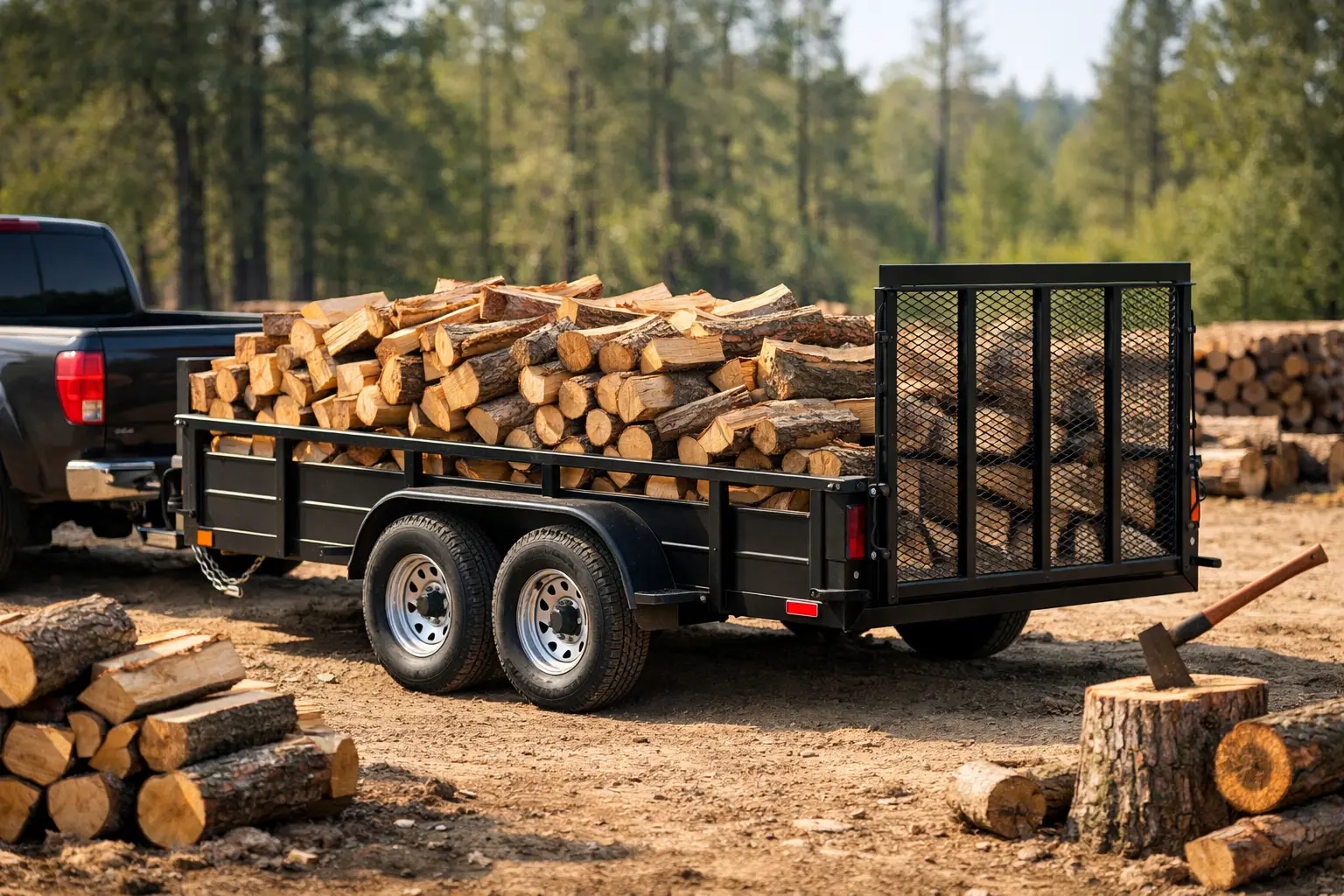
A pickup bed fills up fast when you are loading split oak, juniper, or pine for the season. The best trailer for hauling firewood gives you enough floor space and payload for a worthwhile load without asking your tow vehicle to do more than it can safely handle. For most homeowners around the Verde Valley, that means a properly sized open utility trailer with secure sides, good tires, and a load plan that keeps the wood where it belongs.
The right choice is not always the biggest trailer available. A trailer that is too large can be harder to maneuver on a narrow driveway, rough forest road, or crowded wood yard. A trailer that is too small may turn one wood-hauling day into several trips. Start with the amount of wood you need, then match the trailer to your truck or SUV’s real towing and payload limits.
Best Trailer for Hauling Firewood: Start With Payload
Firewood is heavier than it looks. A full cord of seasoned wood can weigh roughly 2,000 to 4,000 pounds, depending on the species and moisture level. Green wood can weigh considerably more. That means a trailer that looks half full may already be near its safe working capacity.
When choosing a trailer, focus on payload rather than only the trailer’s overall rating. Payload is the amount of cargo the trailer can carry after its own empty weight is accounted for. Your tow vehicle also has limits for towing, tongue weight, hitch rating, and rear axle load. The lowest-rated component in the setup sets the safe limit.
Do not estimate based on how much wood you think you can stack. If you are picking up mixed rounds, green hardwood, or densely stacked split wood, weight adds up quickly. Ask the seller or wood yard how the load is measured and whether it is seasoned. A loose pickup load, a face cord, and a full cord are not the same amount of wood.
Why an Open Utility Trailer Usually Makes Sense
For most firewood runs, an open utility trailer is the practical choice. It is easy to load from the side, easy to unload by hand, and simple to sweep out when the job is done. A low deck height also saves your back when you are lifting heavy rounds or stacked splits.
A 6-by-12 or 7-by-14 utility trailer is often a useful range for homeowners and small property owners. It provides enough room for a meaningful load while remaining manageable behind many properly equipped trucks and SUVs. The exact size depends on the trailer’s axle rating and your vehicle’s capabilities, so dimensions alone should never make the decision.
Side rails matter with firewood. They help contain uneven pieces and give you places to secure straps or a cargo net. If the trailer has a wood floor, check that it is solid and free of soft spots before loading. Firewood creates concentrated weight, especially when rounds are dropped into the trailer instead of placed carefully.
A trailer with a rear gate can be helpful for loading a wheelbarrow, splitting equipment, or a small loader. Still, do not rely on the gate as the only thing holding your load in. It should be latched securely, and the firewood should be tied down independently.
When a Dump Trailer Is Worth Considering
A dump trailer can save serious time if you are buying bulk firewood and unloading it at a storage area. Instead of handling every piece twice, you can dump the load near the stack and move it from there. That is a real advantage for larger jobs, ranch properties, or anyone putting up several cords.
The trade-off is weight. Dump trailers are heavier than basic utility trailers, which reduces the payload available within the same gross vehicle weight rating. They can also be more trailer than you need for a small load of seasoned splits. If you only haul firewood once or twice a year, a standard utility trailer is often the simpler, more affordable option.
Why a Car Hauler Is Not Usually the First Pick
A car hauler has a long, strong deck and can handle heavy work, but it is not automatically the best choice for loose firewood. Many car haulers have low or open sides, so rounds and split pieces need extra containment. Without sideboards, a tarp, netting, or properly placed straps, the load can shift or fall out.
A car hauler can work for stacked bundles of wood, palletized firewood, or a load secured inside added sideboards. It may also make sense when your firewood job is part of a larger day that includes moving equipment. For loose wood, though, an open utility trailer with sides is generally easier to load safely.
Match Trailer Size to the Way You Buy Wood
If you buy bundled firewood a few times each winter, almost any appropriately rated small utility trailer may be more capacity than you need. The bigger question is how easily you can secure the load and back the trailer into your driveway.
If you buy by the half-cord or cord, give yourself enough deck space to spread the weight across the axles. Avoid creating one tall pile in the front or back of the trailer. A low, even load is easier to secure and gives the trailer a more predictable feel on the road.
For people cutting their own wood, consider the shape of the load. Unsawn rounds are awkward and can roll. A trailer with solid sides, sturdy tie-down points, and room to place the wood low is more valuable than extra length you will not use. If you are hauling a splitter or chainsaw equipment along with the wood, leave room for it or plan a separate trip.
Load Firewood So the Trailer Tows Straight
A good trailer can still tow poorly if it is loaded wrong. Place the heaviest portion of the load slightly forward of the trailer axles. This creates proper tongue weight and helps prevent sway. Too much weight behind the axles can make the trailer unstable, especially at highway speeds or when a gust hits on the open road.
Do not pile wood high just because the side rails allow it. High stacks raise the center of gravity and make loose pieces more likely to shift. Keep the load as low as practical, distribute the weight side to side, and leave enough room to secure it properly.
Use more than one tie-down. Ratchet straps over the load, attached to rated anchor points, are a straightforward choice. A cargo net can help hold smaller split pieces in place, but it should not replace proper straps for a heavy load. Check straps after the first few miles because firewood settles as the trailer moves.
Before pulling out, inspect the coupler, safety chains, breakaway cable if equipped, lights, tire condition, and tire pressure. Make sure the trailer jack is fully raised and secured. These checks take only a few minutes and are far easier than dealing with a problem on the road.
Consider the Roads and Driveways You Will Use
A trailer that works well on a wide, paved lot may be frustrating on a steep dirt drive or tight residential street. Think about where you will pick up the wood and where you will unload it. If you need to turn around in a confined area, a shorter trailer can make the day much easier.
Arizona back roads can be rough, dry, washboarded, or muddy after weather moves through. Leave extra room for braking, slow down on uneven surfaces, and avoid overloading just because the trip is short. Firewood loads shift more easily on rough roads than a neatly strapped pallet load.
If you are renting for a one-time pickup, tell the rental provider what you are hauling, how much wood you expect, and what vehicle will tow it. A local team such as Monsoon Trailer Rental can help you choose a trailer that fits the job instead of sending you home with more trailer, or less capacity, than you need.
The Practical Choice for Most Wood Runs
For most people, the best answer is a properly rated open utility trailer with side rails, dependable tires, working lights, and enough payload for the load you actually plan to bring home. Choose a dump trailer when faster unloading is worth the added trailer weight. Choose a car hauler only when you have a solid way to contain the wood or are hauling other equipment as part of the same job.
A well-matched trailer makes firewood day less of a wrestling match. Load it low, keep the weight balanced, secure every piece, and give yourself enough time to make the trip safely. Then you can spend the cold evening enjoying the wood, not wishing you had made one more run.

