

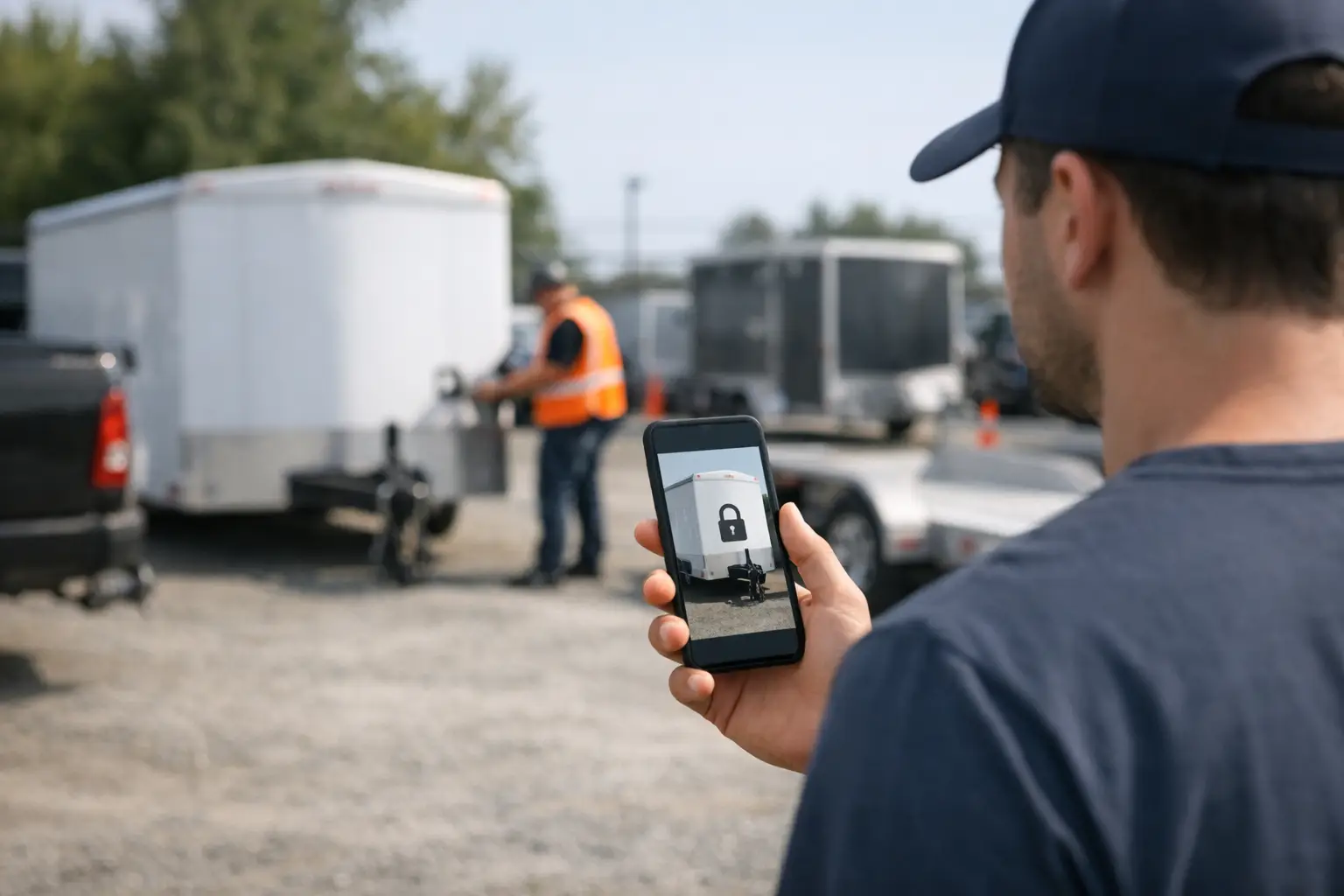
A trailer pickup does not become safe because someone is standing in the parking lot. It becomes safe when the trailer, tow vehicle, hitch connection, and load are checked the right way. So, is contactless trailer pickup safe? Yes, when the rental company provides clear instructions and the renter takes a few minutes to inspect the equipment before pulling out.
For a lot of Verde Valley jobs, contactless pickup is a real convenience. You may be loading up early for a dump run, moving a vehicle before work, or trying to finish a landscaping project before the Arizona heat sets in. A good contactless process lets you pick up and return on your schedule without skipping the safety basics.
Is Contactless Trailer Pickup Safe? It Depends on the Process
Contactless pickup is not the same as unattended pickup with no support. A dependable rental process should give you the information you need before arrival: where the trailer is located, what equipment is included, how to access it, and how to reach a real person if something does not look right.
The trade-off is simple. With a traditional handoff, someone may walk around the trailer with you. With contactless pickup, you take responsibility for that walk-around yourself. That does not have to be a problem. In fact, experienced haulers often prefer the flexibility. But first-time renters should slow down, follow the instructions, and ask questions before towing away.
Safety also depends on choosing the right trailer for the job. A utility trailer for yard waste and a car hauler for a vehicle move have different loading needs, tie-down points, and weight limits. If you are unsure which one fits your job, get that sorted out before booking or pickup day. The wrong trailer can create problems that no checkout method can fix.
Start With the Tow Vehicle, Not the Trailer
Before you hook up, make sure your vehicle is ready to tow the loaded trailer. Check your owner’s manual for towing capacity, tongue-weight limits, and any requirements for trailer brakes or wiring. Do not guess based on how powerful the truck or SUV feels.
Your hitch receiver, ball mount, and hitch ball need to match the trailer. The hitch ball must be the correct size and securely fastened. Your vehicle’s electrical connector must also match the trailer plug so the running lights, brake lights, turn signals, and electric brakes work as intended.
This matters on every road, but especially around the Verde Valley. A loaded trailer handles differently on grades, through traffic, and on curving routes near Sedona, Jerome, or Camp Verde. Having enough tow rating and working brakes gives you more control when conditions are less forgiving.
Do a Slow, Hands-On Trailer Inspection
When you arrive for a contactless pickup, do not rush to load. Walk around the trailer before connecting it to your vehicle. Take photos or video of the trailer’s condition from all sides. This creates a clear record for both you and the rental company, especially if you notice existing cosmetic damage.
Look at the tires for obvious cuts, bulges, low air, or excessive wear. Check that the wheels and fenders look secure. Inspect the deck, ramps, rails, coupler, safety chains, and tie-down points for visible damage. If the trailer has brakes, look for loose wires or anything that appears out of place.
You are not expected to be a mechanic. You are looking for clear issues that could affect a safe haul. If a tire is flat, a ramp is damaged, a chain is missing, or the coupler will not operate normally, stop and call the rental provider. A local company that actually picks up the phone is part of what makes contactless service work.
Hook Up Carefully Before You Load
The hitch connection deserves your full attention. Back the tow vehicle into position, lower the coupler fully onto the hitch ball, and lock the coupler according to the trailer’s instructions. Then raise the trailer jack completely so it cannot strike the road.
Cross the safety chains under the coupler and attach them to the designated points on your vehicle. Crossing them helps support the trailer tongue if the coupler ever comes loose. Connect the breakaway cable separately from the chains. It should be attached to the vehicle, not looped around the hitch or safety chains, and it should have enough slack for turns without dragging.
Plug in the trailer wiring and test every light before leaving. Check left and right turn signals, brake lights, running lights, and hazard lights. Have someone stand behind the trailer if possible, or use a reflection and phone video to confirm what you cannot see from the driver’s seat.
A quick tug test is also worth doing. With the coupler latched and jack raised, put the vehicle in drive and gently pull forward. The trailer should follow firmly. Do this before you load, not after you are already headed down the road.
Load for Stability, Not Just for Space
A trailer can be correctly connected and still become dangerous if it is loaded poorly. Keep the load centered from side to side and place heavier items low and slightly forward of the trailer axle. You need enough tongue weight to keep the trailer stable, but not so much that the rear of the tow vehicle squats excessively or steering becomes light.
For a car hauler rental, position the vehicle as directed for that trailer and secure it with the proper straps or chains at approved attachment points. Put the transmission in park, set the parking brake when appropriate, and follow the rental instructions for securing the vehicle. Never rely on the parking brake alone.
For tools, furniture, debris, or landscaping materials, use rated tie-downs and secure each item so it cannot slide, bounce, or fly out. Cover loose material when needed. A load that shifts at 50 mph can cause trailer sway fast, even if the trailer felt fine leaving the driveway.
After loading, walk around one more time. Check ramp latches, doors, straps, chains, and the trailer’s overall balance. Then drive a short distance at low speed and stop to recheck the hitch and tie-downs. This is one of the best habits any renter can develop.
Drive Like You Are Towing a Trailer
Give yourself more room than usual. A trailer needs more distance to stop, more space to turn, and more time to merge. Keep your speed reasonable, avoid sudden steering inputs, and leave extra following distance. If the trailer starts to sway, do not accelerate or jerk the wheel. Ease off the gas, hold the steering wheel steady, and let the rig slow down gradually.
Watch your mirrors often, especially after turns and lane changes. Take turns wider so trailer tires do not clip curbs or rocks. Be careful in parking lots, gas stations, and tight driveways. When backing up, use a spotter when you can. If you do not have one, get out and look rather than trying to guess.
Arizona heat also deserves respect. Longer trips can put extra strain on tires, brakes, and your tow vehicle. Check your route, avoid overloading, and take a moment to inspect the trailer if you stop for fuel or a break.
Contactless Return Needs the Same Care
Returning a trailer contactlessly is usually straightforward, but do not treat it as a drop-and-go job. Park in the designated spot on level ground when possible. Unload everything, remove your personal tie-downs, and make sure ramps, gates, and doors are secured.
Disconnect in the correct order. Chock the trailer if needed, lower the jack, unplug the wiring, remove the breakaway cable and chains, then unlock the coupler. Take a final set of photos showing the trailer’s condition and where it was parked. Follow the return instructions for keys, documents, or confirmation photos.
That final record protects you and makes the next renter’s pickup easier. It is the same practical mindset that makes the whole contactless system work.
Contactless pickup is safe when it is backed by dependable equipment, clear directions, and a renter who does not skip the basics. For your next haul, give yourself a few extra minutes at pickup. That small pause can make the rest of the job a lot easier.

