
Saturday dump runs, a quick landscaping pickup, moving a mower across town – this is usually when people ask, what can I haul with a utility trailer? The short answer is a lot more than most first-time renters expect. A utility trailer is one of the most useful tools for everyday hauling, but the right answer depends on the trailer size, weight limits, and how the load needs to be secured.
For homeowners and small business crews, a utility trailer covers a wide range of jobs without the cost and hassle of owning one year-round. It works well for bulky items, dirty materials, and equipment that you do not want inside a truck bed or SUV. That said, not every load belongs on every trailer, and a little planning makes the difference between an easy trip and a bad one.
What can I haul with a utility trailer?
In practical terms, utility trailers are built for general cargo. That includes household items, yard waste, building materials, small equipment, tools, and many kinds of furniture. If the load is solid, fits within the trailer bed, stays within the trailer’s weight rating, and can be tied down properly, a utility trailer is often a good option.
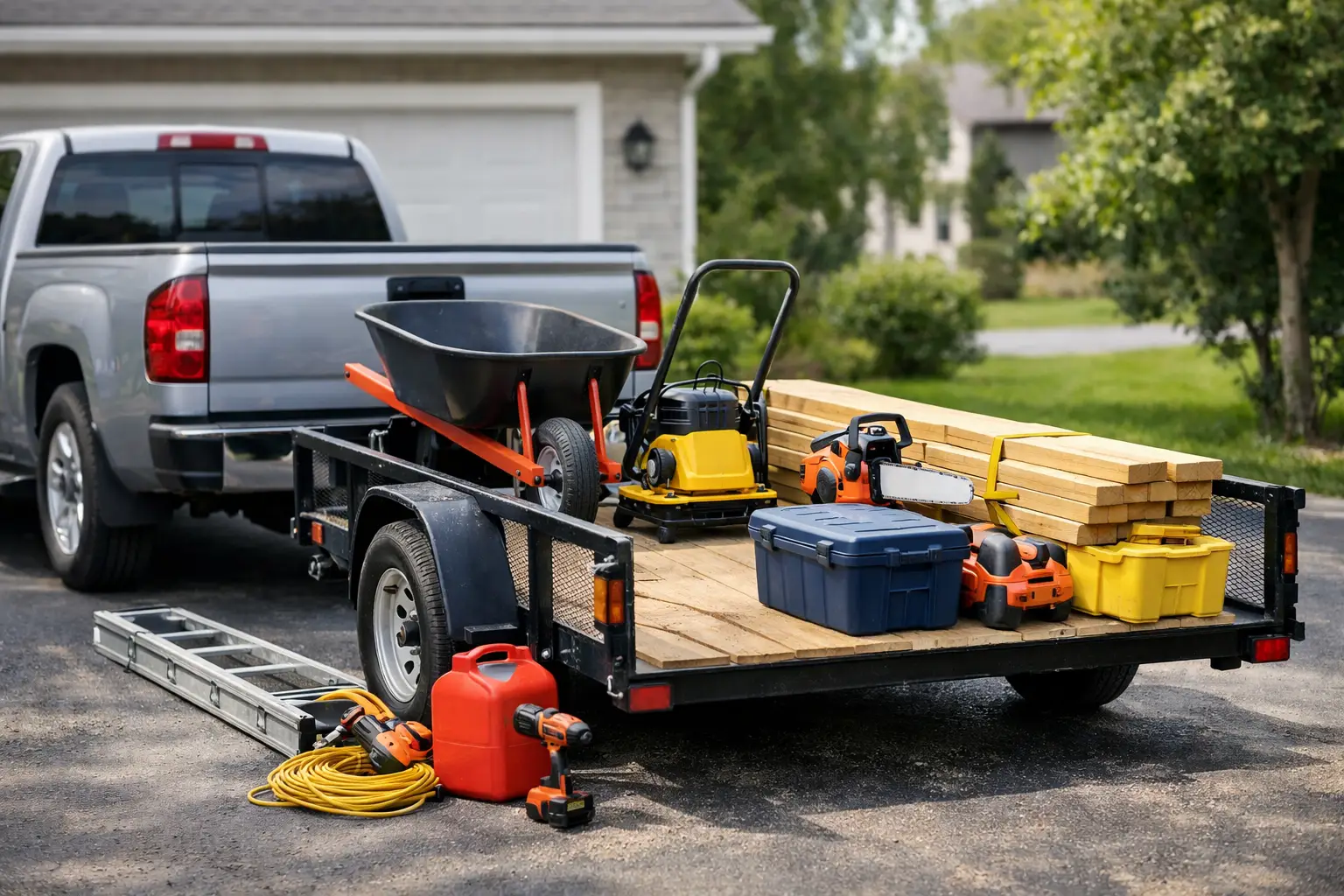
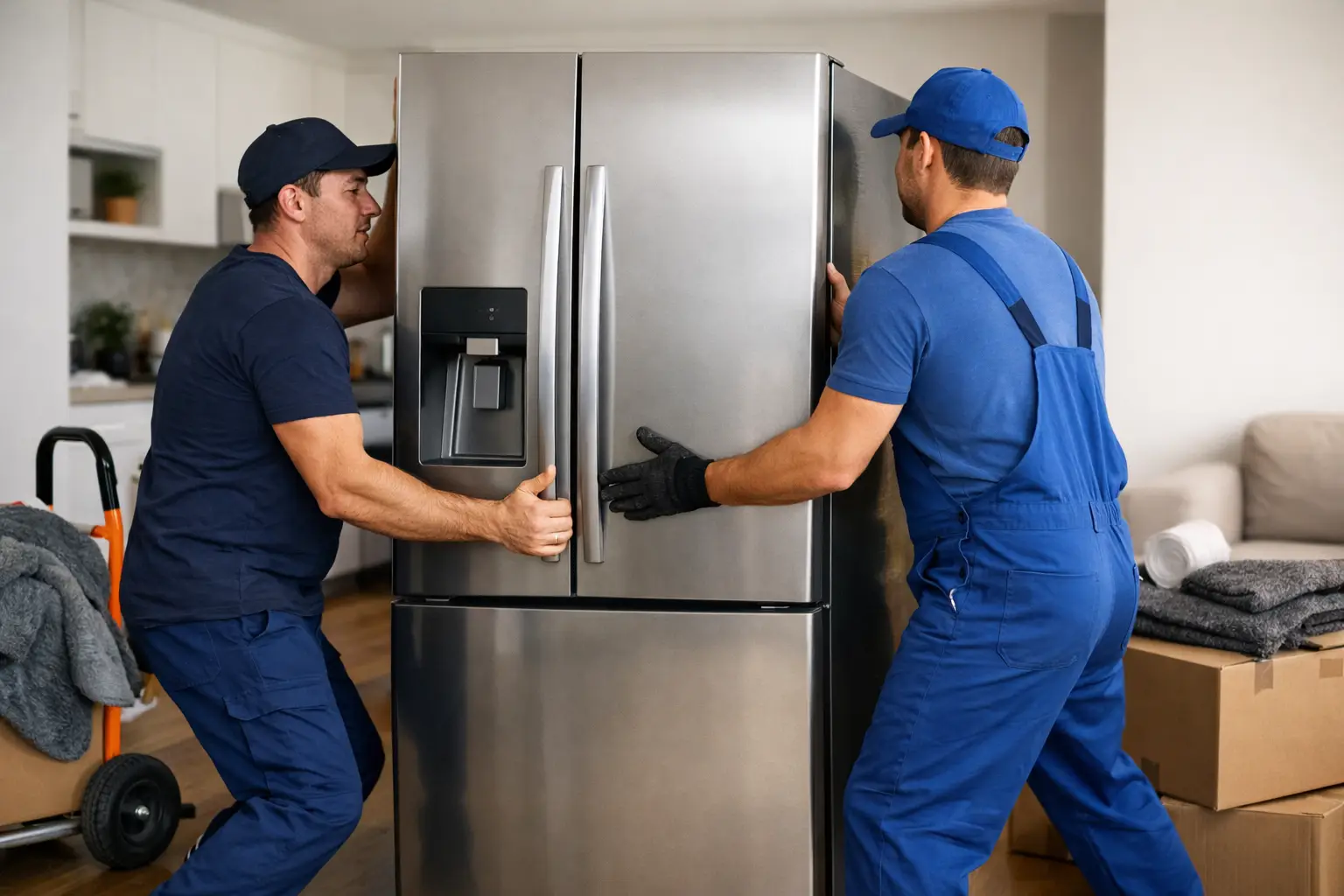
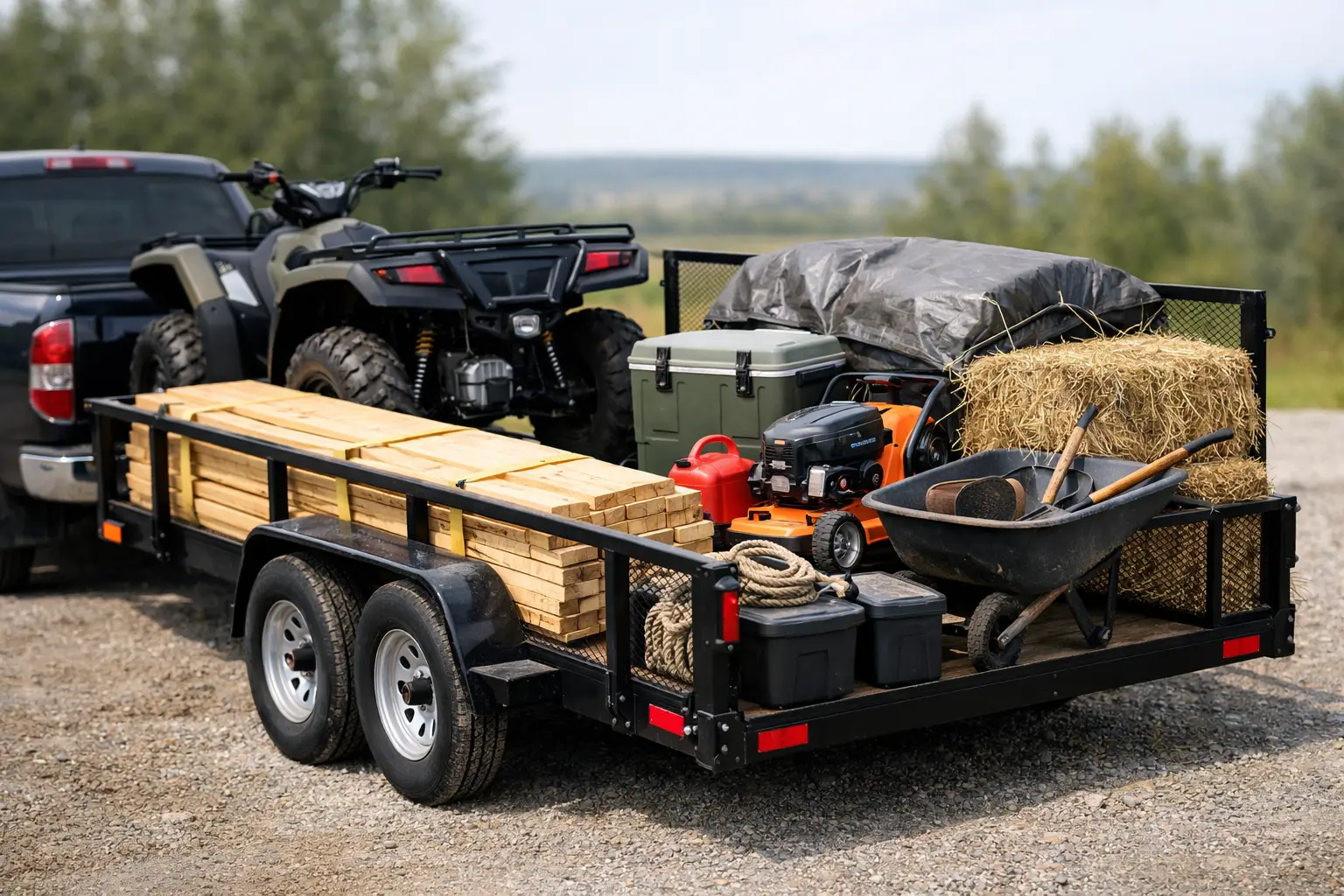
A lot of people use one for mulch, gravel in small quantities, lumber, fence panels, appliances, mattresses, couches, push mowers, small ATVs, dirt bikes, generators, and jobsite tools. They are also handy for cleanup work after garage cleanouts, rental property turnovers, or storm debris removal. In places like Cottonwood, Clarkdale, and the rest of the Verde Valley, they are especially useful for home projects where you need one trailer for supply pickup and another run to the dump after the job is done.
The main trade-off is that utility trailers are general-purpose trailers, not specialty trailers. They handle a lot, but they are not the right fit for every kind of cargo.
Best uses for a utility trailer
Yard and landscaping materials
One of the most common jobs for a utility trailer is yard work. Branches, leaves, bagged soil, pavers, irrigation supplies, and small landscaping tools all ride well in a utility trailer. Cleanup loads are often awkward and messy, which is exactly where an open trailer helps.
Loose materials can be the exception. Bagged mulch is easy. A few pieces of flagstone are easy. But if you plan to haul loose gravel, sand, or dirt, you need to think about both weight and containment. Those materials get heavy fast, and some loads may be better suited to a dump trailer if the quantity is large.
Home improvement supplies
If you are remodeling a bathroom, building a shed, replacing fencing, or hauling materials for a rental property, a utility trailer can save a lot of back-and-forth. Lumber, drywall in limited amounts, trim, doors, cabinets, buckets of paint, flooring, and tools are all common loads.
Length matters here as much as weight. A trailer may be able to carry the pounds, but if boards or panels hang too far out, the load becomes harder to secure and less safe on the road. For long building materials, make sure the trailer bed size matches the job instead of assuming everything can just be strapped down and sent.
Furniture and household items
Utility trailers are useful for moving bulky household items, especially when the load is too dirty, too tall, or too awkward for a pickup bed. Couches, dressers, patio furniture, mattresses, boxed belongings, and garage storage shelves can all work well.
Weather is the obvious trade-off. An open utility trailer does not protect against wind, dust, or rain. If you are hauling a couch across town on a dry day, that may be fine. If you are moving electronics, antiques, or anything that should stay clean and dry, an enclosed trailer is usually the better call.
Equipment for work or property maintenance
Small contractors, handymen, and property owners often use utility trailers for pressure washers, compressors, wheelbarrows, ladders, generators, and compact equipment. Riding mowers and some small machines can also be a good fit if the trailer has the right ramp setup and enough payload capacity.
This is where details matter. Equipment weight is not always obvious, and attachments can push a load over the limit faster than people think. A mower by itself may fit fine, but add fuel, tools, and extra gear, and now the trailer and tow vehicle both need another look.
What should not go on a utility trailer?
Some loads are poor candidates no matter how convenient the trailer seems. Very heavy machinery may exceed the trailer rating or require a different deck style. Vehicles should go on a proper car hauler, not a standard utility trailer, unless the trailer is specifically built and rated for that use.
Hazardous materials are another category to treat carefully. Fuel containers, chemicals, propane, and anything flammable or regulated may require special handling, legal restrictions, or a different transport method. The same goes for loads that are unstable, top-heavy, or likely to shift in transit.
You also want to think twice about anything highly valuable or weather-sensitive. Utility trailers are open and exposed. That is great for easy loading, but not great for cargo that can be damaged by road debris, wind, or sudden weather.
Weight matters more than volume
A trailer can look half empty and still be overloaded. That is one of the biggest mistakes first-time renters make. People often judge by space when they should be judging by weight.
Concrete blocks, tile, rock, soil, shingles, and green yard waste add up fast. Even appliances can be heavier than they appear, especially older units. Before loading, know the trailer’s gross vehicle weight rating, its payload capacity, and your vehicle’s towing capacity. If one of those numbers is too low, the load is too much.
The tow vehicle matters just as much as the trailer. A half-ton pickup may handle one job comfortably, while an SUV may be better suited for lighter loads. Braking, suspension, and tongue weight all affect how safe the trip feels once you are on the road.
How to tell if your load is a good fit
The easiest way to answer what can I haul with a utility trailer is to ask four simple questions. Does it fit inside the trailer bed? Is it under the trailer’s payload limit? Can it be tied down securely? And is your vehicle rated to tow it safely?
If the answer to any of those is no, it is time to change the plan. That could mean making two trips, renting a different trailer, or reducing the load. There is no prize for forcing one oversized load into one trip.
This is also where local, responsive rental help makes a difference. A good trailer provider can tell you quickly whether your cargo matches the trailer you are considering, instead of leaving you to guess from a spec sheet.
Loading a utility trailer the right way
Even a good trailer becomes a problem if the load is poorly placed. Weight should be balanced side to side and positioned so the trailer has proper tongue weight without becoming nose-heavy. Too much weight in the rear can cause sway. Too much up front can overload the hitch and strain the tow vehicle.
Use ratchet straps, chains, or other tie-downs that match the cargo. Do not rely on one strap over the top and hope for the best. Items should not roll, bounce, slide, or lift in the wind. For loose debris, a tarp is often a smart move, especially if you are headed to a landfill or transfer station.
Check the lights, tires, coupler, and safety chains before you leave. Then stop after the first few miles and check the straps again. Loads settle. A five-minute recheck can prevent a much bigger problem later.
When a utility trailer is the smart rental
A utility trailer is the smart choice when the job is short-term, the cargo is bulky or messy, and you want something simple to load and unload. It works well for weekend projects, property cleanup, supply runs, and many small business hauling jobs. If you only need a trailer once in a while, renting usually makes more sense than storing, maintaining, and registering one yourself.
For folks around Sedona, Camp Verde, and nearby communities, that flexibility is a big part of the value. You can get the trailer you need for the job at hand instead of trying to make one permanent setup do everything.
The best rule is simple: match the trailer to the load, not the other way around. If you are not sure whether your cargo belongs on a utility trailer, ask before you book. A quick conversation now can save you time, money, and a roadside headache later.