

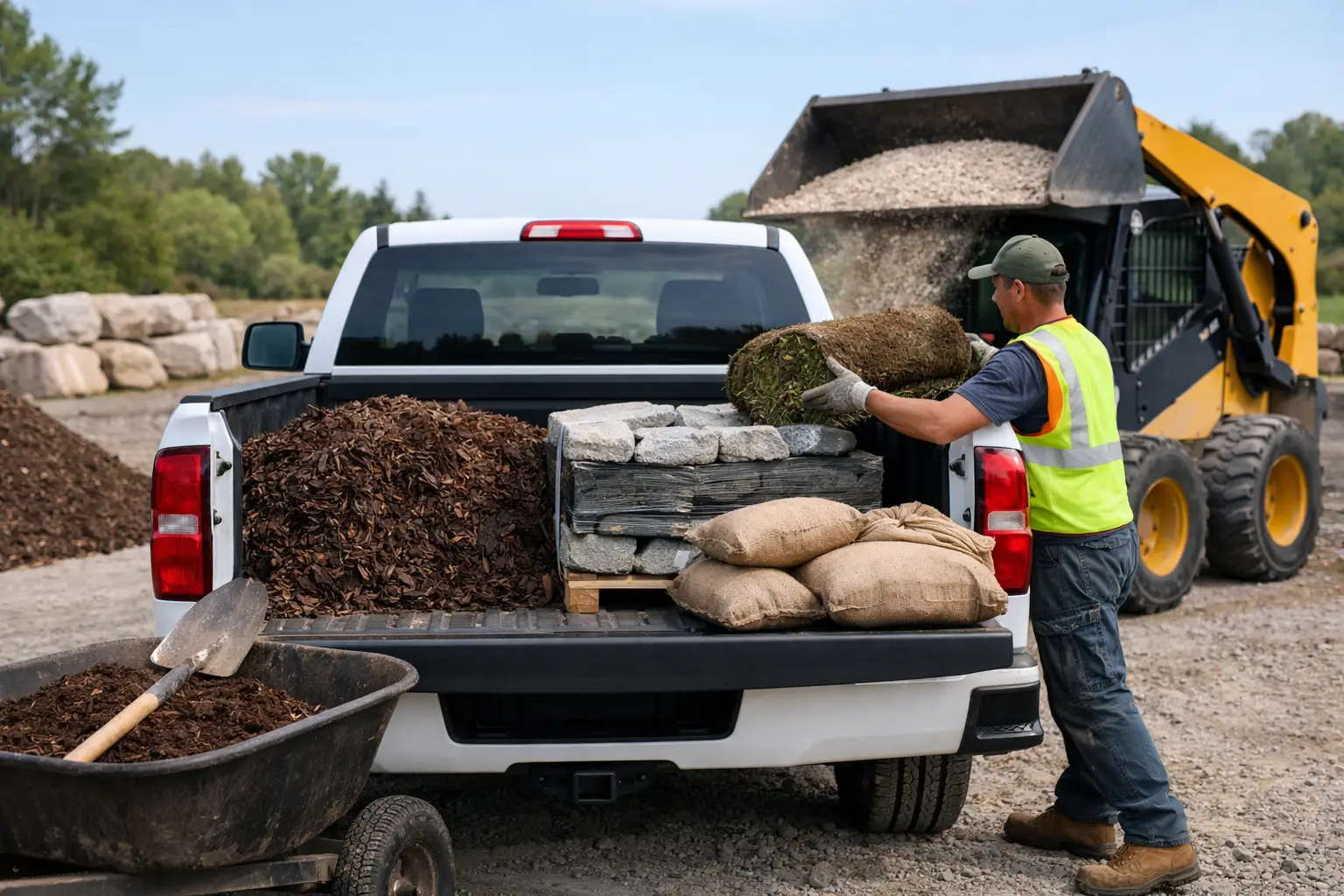
A yard project can get expensive fast when you make three trips for soil, then realize the pavers will not fit in the truck bed. This guide to hauling landscaping materials covers the part that keeps a project moving: choosing the right trailer, loading it correctly, securing the cargo, and getting it home without creating a roadside problem.
Landscaping loads do not all behave the same. A pallet of block is dense and stable. Loose mulch is light but can blow out. A load of flagstone may look manageable until its weight adds up. The right plan depends on what you are hauling, how much it weighs, and what your tow vehicle is rated to handle.
Start With the Material, Not the Trailer
Before booking equipment or heading to a landscape supply yard, make a simple list of what is coming home. Include the quantity, whether it is loose or palletized, and whether you need to carry tools, wheelbarrows, or small equipment in the same load.
Weight is the first question. Topsoil, gravel, decomposed granite, sand, and stone are much heavier than most people expect. A cubic yard of gravel can weigh well over a ton, while a cubic yard of mulch may weigh only a few hundred pounds depending on moisture. Ask the supplier for the weight per yard or per pallet. Do not guess based on how much space the material takes up.
Then check your vehicle’s towing capacity and payload limits. Towing capacity is not the only number that matters. The tongue weight resting on the hitch counts against vehicle payload, along with passengers, tools, and cargo carried in the vehicle. Your owner’s manual and the sticker inside the driver’s door are better sources than a quick online estimate.
If the numbers are close, reduce the load or make another trip. Overloading is not a shortcut. It affects braking, steering, tire heat, and trailer control, especially on grades and curves common around the Verde Valley.
Choose a Trailer That Fits the Job
An open utility trailer works well for many landscaping runs. It gives you room for bagged soil, plants, tools, wheelbarrows, and palletized material loaded by a yard forklift. A trailer with sides is useful for retaining loose mulch, branches, or light green waste, but it still needs a tarp.
For heavy, dense material, trailer capacity matters more than floor space. A larger trailer is not automatically the better choice if its empty weight leaves too little room for cargo within your vehicle’s towing limit. Ask for the trailer’s empty weight, gross vehicle weight rating, and usable cargo capacity.
A few practical matches help narrow it down:
- Bagged soil, nursery plants, tools, and a wheelbarrow usually fit well on a standard utility trailer.
- Bulk mulch, brush, and yard debris need side containment and a secure tarp.
- Pallets of pavers, block, or stone require a trailer rated for the weight and a loading plan that keeps the pallet centered.
- Mini equipment or larger landscape machines may call for a purpose-built equipment trailer with proper ramps, tie-down points, and load capacity.
If you are unsure, describe the material, quantity, and tow vehicle when you call. A local rental team that actually picks up the phone can save you from booking too small, too large, or simply the wrong kind of trailer.
Load Landscaping Materials for Balance
The goal is a balanced load with enough weight forward to keep the trailer stable. In general, about 10 to 15 percent of the loaded trailer weight should rest on the hitch. Too little tongue weight can lead to trailer sway. Too much can overload the rear of the tow vehicle, lighten the front tires, and make steering less responsive.
Place the heaviest material low and slightly ahead of the trailer axle. For a pallet of stone or pavers, have the supplier position it carefully rather than dropping it at the very front or rear of the deck. If you have two pallets, distribute them evenly side to side and keep the combined weight slightly forward of the axle.
Avoid piling all your bags on one side, even if it seems easier at the supply yard. An uneven load can make the trailer pull poorly and puts extra stress on tires and suspension. Set loose tools, rakes, and wheelbarrows where they cannot shift into the heavier materials.
Let the Supplier Help With Placement
Many landscape yards will load bulk materials or pallets with a loader or forklift. Tell the operator you are towing a trailer and ask them to place the material for proper balance. It is much easier to get the placement right before leaving the yard than to rearrange a half-ton pallet by hand.
For loose gravel or soil, ask for an even load rather than a steep pile at one end. Keep the total amount within the trailer’s capacity. Wet soil and gravel can be significantly heavier than dry material, so leave yourself a margin.
Secure Every Load Before You Roll
A trailer gate, side rail, or a pile that looks settled is not cargo securement. Landscaping materials shift, bounce, and catch wind. Use equipment rated for the job, not worn-out rope or a single light-duty strap.
Palletized loads should be secured with ratchet straps connected to solid trailer tie-down points. Use at least two straps over or around the pallet as needed to prevent both forward-and-back movement and side-to-side movement. Protect straps from sharp stone edges with corner protectors or a buffer where possible. Stop after a few miles to check tension, because straps can loosen as a load settles.
Loose materials need containment. A quality tarp keeps mulch, leaves, sand, and small debris from blowing out. Cover the entire load, secure the tarp at multiple points, and make sure no loose corners can flap in the wind. A tarp is also worth using over bagged materials if rain is possible, particularly for paper bags of concrete or soil amendments.
Plants deserve their own approach. Keep pots upright in sturdy crates, boxes, or grouped tightly together. Tall shrubs and small trees can act like sails at highway speed, so tie them down low and protect branches from rubbing against straps. Do not rely on the nursery’s plastic wrap alone.
Check the Tow Setup Before Leaving
Back the tow vehicle straight to the coupler, lower it fully onto the hitch ball, and lock the coupler. Attach safety chains in a crossed pattern below the coupler, leaving enough room for turns without letting them drag. Connect the breakaway cable directly to the tow vehicle, not to the safety chains.
Plug in the trailer lights and test the running lights, brake lights, turn signals, and hazard lights. Check that trailer tires are properly inflated and have no obvious damage. Confirm the trailer jack is fully raised and secured, ramps are latched, and the gate is closed.
Take one more walk around the load. Look for hanging straps, loose tools, material sitting above the side rails, and anything that could move. This takes two minutes. It can prevent a damaged trailer, a lost load, or a much longer day.
Drive Like You Are Carrying a Load, Because You Are
Give yourself more room than usual for braking and lane changes. A loaded trailer takes longer to stop, and sudden steering inputs can start a sway event. Keep speeds reasonable, especially in crosswinds, on rough roads, and when descending grades.
Use lower gears when appropriate on long downhill stretches so the engine helps control speed. Riding the brakes can overheat them. Make wider turns to keep trailer tires off curbs, watch your mirrors often, and avoid backing into a tight area until you have a clear plan for where the trailer needs to go.
If the trailer begins to sway, stay calm. Ease off the accelerator, hold the steering wheel steady, and let the rig slow down. Do not jerk the wheel or slam on the brakes. Once stopped safely, inspect the load balance and securement before continuing.
Unload Without Creating a Second Problem
Park on firm, level ground whenever possible. Chock the trailer wheels before unloading heavy material or equipment. Remove straps in a controlled order and keep people clear of a pallet, ramp, or stacked material that could shift once tension is released.
For bulk material, make sure the drop location is reachable before the supplier loads you. Hand-shoveling gravel from the street to the backyard is sometimes unavoidable, but it should not be a surprise. Plan for where the trailer will sit, whether a gate allows access, and how you will move the material from trailer to project area.
A dependable trailer turns a landscaping project into one organized haul instead of a string of frustrating trips. For homeowners and working crews around Cottonwood, Clarkdale, Sedona, and the Verde Valley, Monsoon Trailer Rental can help match the trailer to the material so you can load it right, haul it safely, and get back to the work that matters.

