
Jerome roads can make a simple haul feel less simple in a hurry. Between steep grades, tighter turns, and older properties with limited access, choosing the right equipment trailer Jerome renters need is less about guesswork and more about matching the trailer to the job from the start.
That matters whether you are moving a skid steer for a work site, hauling a compact tractor for property cleanup, or getting a project vehicle from one place to another without wasting half the day. A good rental should make the job easier, not add stress, surprise costs, or equipment that does not fit what you are towing.
What makes an equipment trailer in Jerome different
Not every haul around the Verde Valley asks much from your setup. Jerome often does. Elevation changes, narrow approaches, and uneven loading areas can turn a trailer that looked fine on paper into the wrong choice once you are on the road.
That is why trailer selection here should start with the route and the load, not just the rental price. If you are hauling uphill, braking downhill, or pulling in and out of tighter spaces, trailer balance and capacity matter more than people expect. It is not just about whether the machine fits on the deck. It is also about whether your tow vehicle can handle the total weight confidently.
For a lot of customers, the safest move is renting slightly above the minimum needed capacity instead of cutting it close. That gives you more margin for the machine itself, attachments, fuel, and the reality that listed weights are not always the same as real working weights.
Choosing the right equipment trailer Jerome renters actually need
The right trailer depends on three things – what you are hauling, what you are towing with, and where the trailer needs to go.
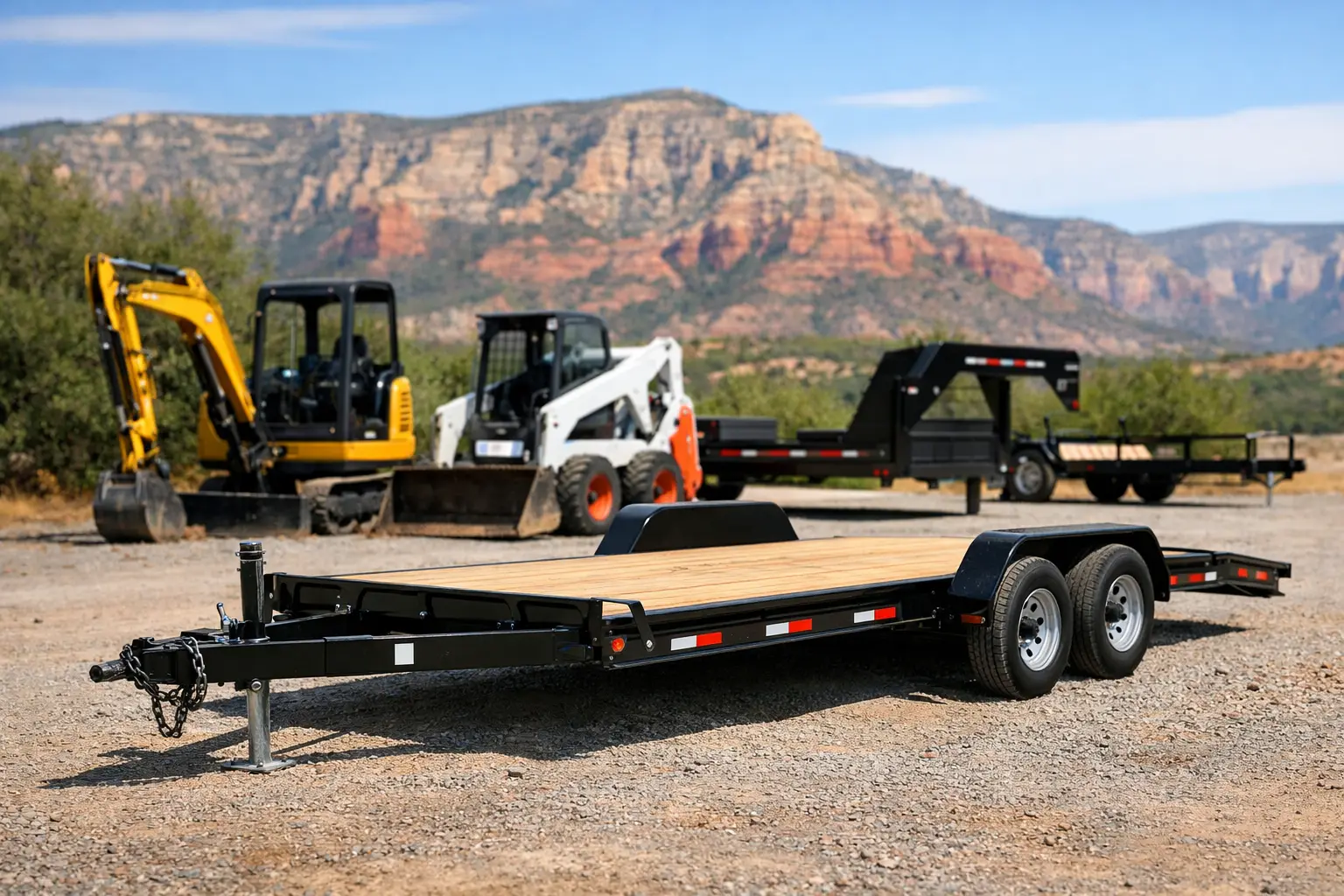
If you are moving compact equipment like a small tractor, mini skid steer, or light construction machine, an equipment trailer is usually the right fit when you need a stable deck, strong loading support, and enough capacity for jobsite weight. If the load is a car, SUV, or pickup, a car hauler may be the better match because it is built around vehicle transport rather than general equipment.
That difference matters. People sometimes assume any flat trailer can handle any load as long as the dimensions look close. In practice, equipment trailers and car haulers are built for different kinds of cargo, different weight distribution, and different tie-down needs.
A first-time renter should think through a few practical questions before booking. What is the actual operating weight of the item being hauled? Are there attachments, buckets, tools, or spare materials coming with it? Is the loading area paved, dirt, sloped, or uneven? And just as important, what is the tow rating of the truck doing the work?
If any one of those answers is unclear, that is where local rental help matters. It saves people from booking too light, too short, or simply wrong for the job.
Common hauling jobs that call for an equipment trailer
Around Jerome and nearby communities, most equipment trailer rentals fall into a few real-world uses. Homeowners often need one for land cleanup, moving rented machinery, or hauling a tractor or mower between properties. Contractors and landscapers use them to move equipment without tying up a larger fleet vehicle or making multiple trips.
There is also the one-time project customer – someone clearing a lot, replacing fencing, building a retaining wall, or helping family move heavy gear. In those cases, renting makes more sense than owning. You get the trailer for the days you need it, without maintenance, storage headaches, or paying for something that will sit most of the year.
That is especially true in places where parking space is limited. Jerome is not exactly built around extra room for a full-size trailer when it is not in use.
Capacity is where people get in trouble
The most common rental mistake is choosing by appearance instead of numbers. A machine may physically fit on the deck and still be the wrong load for the trailer or tow vehicle.
Gross trailer weight is the number that counts once everything is loaded. That includes the trailer itself plus the equipment, attachments, fuel, and anything else riding along. Tongue weight matters too. If too much or too little weight sits on the hitch, towing gets less stable, especially on grades and curves.
This is where people can get themselves into trouble fast by relying on rough estimates. A contractor may know the machine model but forget the bucket, pallet forks, or extra tools. A homeowner may tow with a capable truck but not realize the hitch or brake setup is the limiting factor, not the engine.
It is better to spend a few extra minutes confirming numbers than spend the trip white-knuckling the wheel.
Local terrain changes how you should think about towing
A flat route and a hill route are not the same haul, even with the same equipment. Jerome drivers know that already, but it is worth saying plainly. Grade changes put more demand on brakes, transmission performance, and trailer stability.
That does not mean every haul is difficult. It means margin matters. A properly sized trailer, working brakes, good tires, and secure tie-down points are not extras. They are what make the trip manageable.
Loading also deserves more attention on uneven ground. If you are loading on dirt or gravel, or on a site where one side sits lower than the other, the process can feel very different than loading in a flat yard. Taking the time to line things up, center the load, and check securement before leaving is part of getting the job done right.
Renting versus owning for occasional heavy hauling
For most people, buying an equipment trailer only makes sense when hauling is a regular part of the business. If you need one every week, ownership may pencil out. If you need one for a property project, a weekend job, seasonal work, or a few equipment moves a year, renting is usually the smarter call.
Owning means registration, maintenance, tire replacement, brake service, storage, and the usual problem of finding out something needs attention right when you need to use it. Renting keeps the focus where it belongs – get the trailer, do the haul, return it, move on.
That is one reason local customers tend to prefer a straightforward rental process. They want fair pricing, dependable equipment, and a team that actually picks up the phone when they have a question about fit, capacity, or scheduling. Monsoon Trailer Rental is built around that kind of service.
What to have ready before you book
A smoother rental starts before pickup day. You do not need to overcomplicate it, but you do want the right information in hand.
Know the year, make, and model of your tow vehicle. Have the weight and dimensions of what you plan to haul as accurately as possible. Think about whether you need room for attachments or extra materials. And be honest about your route. If you are heading through tighter roads or dealing with a steep driveway, say so.
That information helps match you to a trailer that works in the real world, not just in theory. It also cuts down on delays at pickup because the key questions are already answered.
First-time renters should not guess
If this is your first time renting an equipment trailer, there is no prize for pretending you know more than you do. Ask questions. Confirm the coupler size, brake connection, lighting plug, and tie-down expectations before you show up.
Most rental problems are avoidable. They happen when somebody assumes their truck has the right setup, assumes the machine weighs less than it does, or assumes loading will be easy because they have towed small utility trailers before. Heavy equipment is different. The weight behaves differently, stopping distance changes, and securement is more serious.
That does not mean the process is hard. It just means the right setup matters.
When a car hauler might be better than an equipment trailer
Some customers search for an equipment trailer when what they really need is a car hauler. If the load is a vehicle rather than a machine, the trailer choice should reflect that.
A car hauler is usually the better option for transporting standard vehicles because it is designed around wheel placement, vehicle length, and tie-down patterns that suit cars and light trucks. An equipment trailer can be the wrong tool if the cargo is lower clearance, differently balanced, or not meant to be secured like compact machinery.
If you are not sure which category your load falls into, ask before booking. It is a simple question that can save time and money.
Getting the job done without overpaying
Most people renting a trailer are not looking for bells and whistles. They want a solid piece of equipment, a reasonable price, and a simple process. That is especially true when the rental is attached to a bigger project that already has enough moving parts.
The best rental experience is usually the least dramatic one. You book the right trailer, pick it up without a runaround, haul what you need, and return it knowing the job stayed on schedule. That is what dependable service looks like.
If you are planning a haul in Jerome, the smartest first step is not chasing the cheapest number you can find. It is making sure the trailer actually fits the load, the route, and the truck you are using so the whole job goes smoother from the first mile to the last.