
A project car is rarely moved under perfect conditions. It may not start, the brakes may be questionable, the tires may be low, and it may have been sitting behind a garage for years. This moving a project car example shows how to think through a real haul before the vehicle ever touches a trailer.
Picture this: You bought a non-running older Jeep in Cottonwood and need to get it home to Camp Verde. It rolls, but it does not run reliably enough for a road trip. The goal is simple – load it safely, get it secured correctly, and arrive with both the Jeep and your tow vehicle in one piece.
Start With the Weight, Not the Vehicle’s Appearance
Project cars can be misleading. A stripped-down compact car may be lighter than expected, but a full-size truck, classic sedan, or four-wheel-drive SUV can weigh far more than it looks like it should. Before reserving a car hauler, find the vehicle’s curb weight and allow extra room for parts, tools, spare tires, and anything stored inside the vehicle.
Then check your tow vehicle’s towing capacity, payload rating, hitch rating, and the trailer’s capacity. The lowest rating in the setup is the number that matters. A trailer that is right for a lightweight coupe may not be the right choice for a heavy pickup, even if it physically fits between the fenders.
Do not assume that a bigger truck automatically makes every combination safe. Tongue weight, trailer brakes, hitch equipment, and load placement all matter. If you are unsure which trailer fits the job, ask before booking. It is easier to get the right setup at the start than to deal with a loaded vehicle that is too heavy or poorly balanced.
Choose a Car Hauler That Matches the Job
For most project cars, a full car hauler is the practical answer. It supports all four tires, keeps the vehicle off the road, and gives you secure tie-down points. That is usually a better fit than trying to tow a non-running vehicle with a tow dolly, especially when the condition of the drivetrain or tires is unknown.
A car hauler also makes sense when the vehicle has no current registration, worn tires, missing parts, or brakes that should not be trusted at road speed. For a project car that has been sitting, keeping every wheel off the pavement removes a lot of risk.
Make sure the trailer deck is long and wide enough for the vehicle. Pay attention to low front bumpers, long wheelbases, lowered suspension, and vehicles with wide tires. A low car may need longer ramps or extra clearance to avoid scraping while loading. A long classic truck may fit on the deck but leave little room to position the weight properly.
Monsoon Trailer Rental can help Verde Valley customers choose a dependable car hauler for a vehicle move without making the process complicated. The right trailer should feel like a solution, not another project.
Inspect the Project Car Before Loading
The vehicle does not need to run perfectly to be moved, but it does need to be safe enough to load. Walk around it before the trailer arrives. Check that the tires hold air, the wheels turn, and there are no loose body panels, open hoods, hanging exhaust pieces, or parts that could fall off on the road.
If the car has been parked for a long time, inspect the brakes before relying on them. You may only need enough brake function to control the vehicle while it is being winched or driven onto the trailer, but no one should stand in front of it while loading. If the brakes do not work, use wheel chocks and a controlled loading plan.
Also check the steering. A vehicle with a locked steering wheel or severely damaged front suspension may require more planning than a straightforward pull onto a trailer. If the car cannot roll freely, do not force it. A winch, recovery equipment, or professional help may be the safer route.
How This Moving a Project Car Example Works
In this example, the Jeep rolls but will not start. The owner backs the tow vehicle and trailer onto level ground, connects the trailer fully, checks the lights, and sets wheel chocks behind the trailer tires. The ramps are lowered and lined up with the Jeep’s tires.
Because the Jeep will not run, it is pulled onto the trailer with a winch. One person operates the winch while another person stays well clear of the cable path and watches tire alignment from the side. Nobody stands directly in front of the vehicle or between the Jeep and the tow vehicle.
The Jeep is loaded facing forward. Its position is adjusted so a proper portion of the total loaded weight rests on the hitch. Too much weight at the rear can cause trailer sway. Too much weight at the front can overload the hitch or rear axle of the tow vehicle. This is not a guess-and-go step. If the trailer sits noticeably nose-high, nose-low, or unbalanced, stop and correct it before leaving.
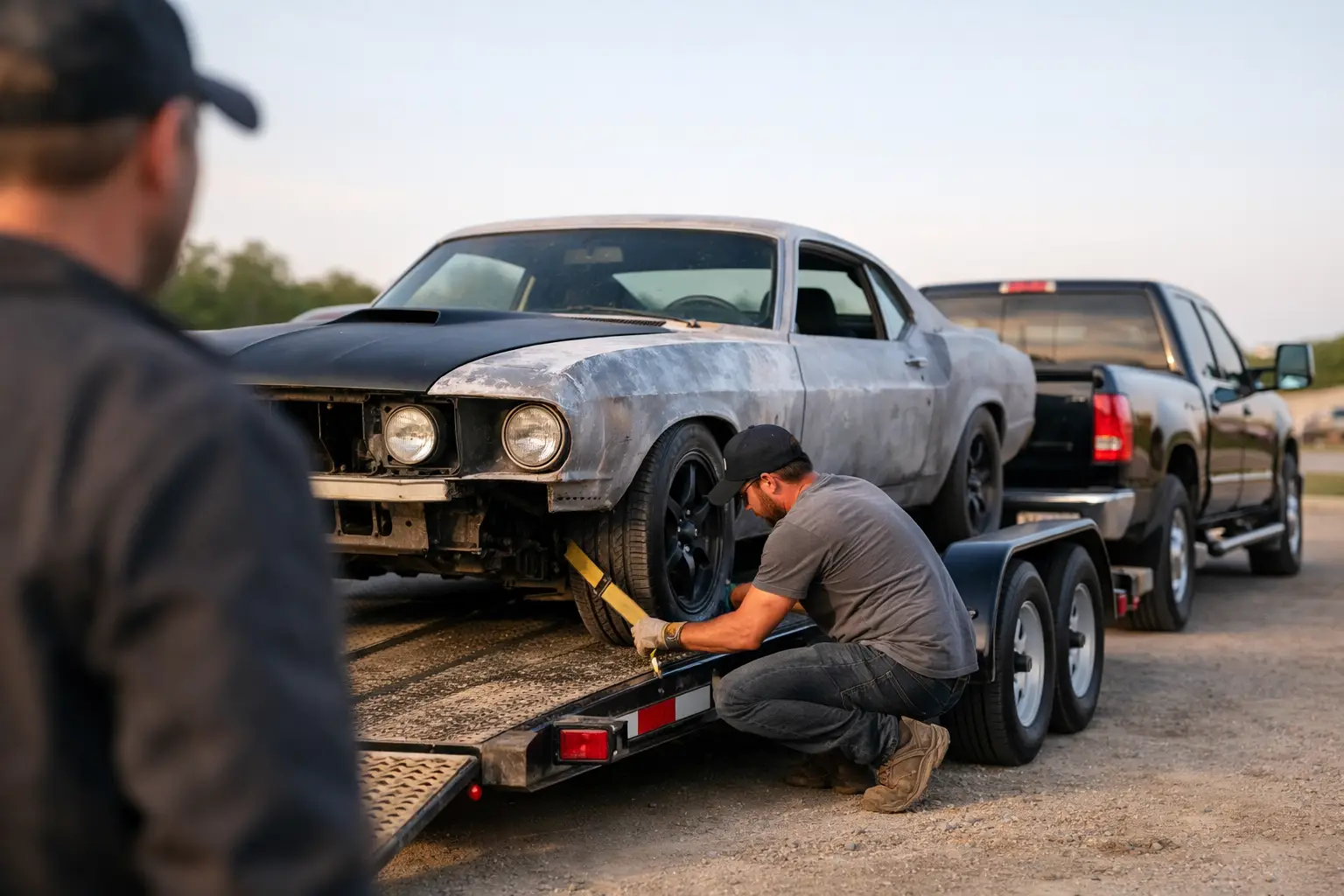
Once the Jeep is in place, the parking brake is set if it works. The wheels are then secured with approved wheel straps or axle straps designed for vehicle transport. The straps should be tight, straight, and connected to suitable trailer anchor points. Avoid attaching to weak suspension pieces, steering components, brake lines, or random sheet metal.
Use safety chains where appropriate, secure any loose ramps, and remove or tie down loose parts inside the project vehicle. A floor jack, toolbox, loose battery, or spare bumper can become a serious problem after a few miles of rough road.
Make the First Stop a Safety Check
Do not load the car, pull onto the highway, and assume everything will stay tight. Stop after the first few miles in a safe area and inspect the setup. Check the tire straps, hitch connection, safety chains, trailer lights, and the vehicle’s position on the deck.
Straps can settle once the suspension compresses and the load shifts into place. A quick recheck is normal, not a sign that something went wrong. Check again during longer trips, especially after rough pavement, sharp turns, or major elevation changes.
For Verde Valley hauls, plan for terrain as well as distance. A short trip can still include grades, narrow roads, traffic, wind, and uneven shoulders. Leave extra following distance, brake early, take turns wider than usual, and give yourself room to accelerate gradually. Towing is not the time to rush because the light turned yellow or the car behind you is impatient.
Common Mistakes That Turn a Simple Haul Into Trouble
The biggest mistake is using a trailer based only on what is available instead of what the vehicle and tow rig can safely handle. The next is assuming a project car can be driven onto the trailer just because it starts. Weak brakes, old fuel, poor tires, and a stuck throttle can make that a bad bet.
Another common issue is securing the car by the frame with whatever chain or strap is nearby. Vehicle transport equipment is designed to control the load without damaging the vehicle or allowing it to shift. Use the right gear and follow its rated use.
Finally, do not ignore the paperwork side of the move. Bring the vehicle keys, title or bill of sale if needed, registration information for the tow vehicle, and any required trailer rental documents. If the project car is coming from a seller’s property, confirm access before you show up with a trailer. A narrow driveway, locked gate, or steep dirt approach can change the loading plan fast.
A project car move does not need to be dramatic. Give yourself time, use equipment sized for the real weight, and treat loading and tie-down as the job – not just the part before the drive. That is how a future build makes it home ready for its next chapter.