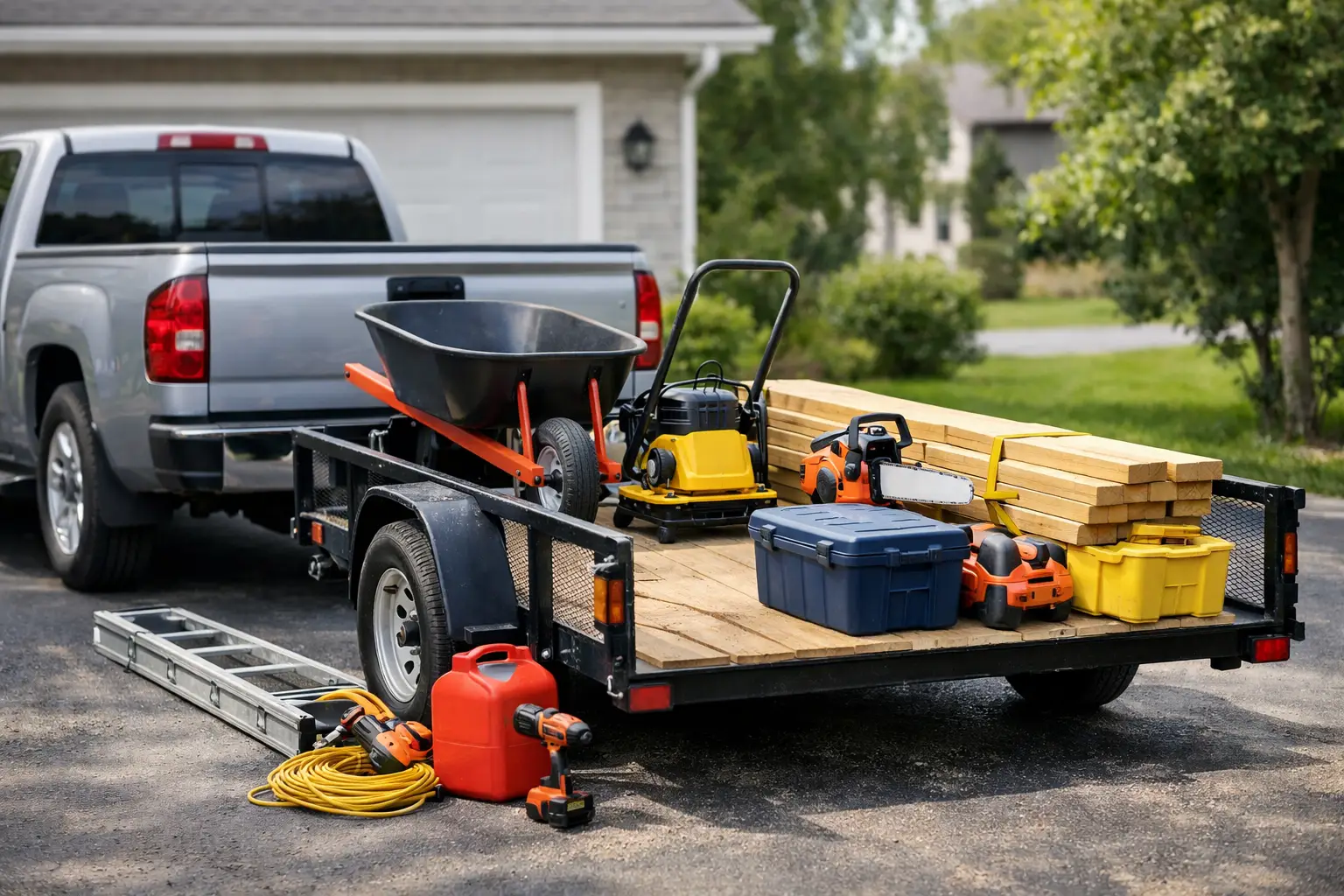

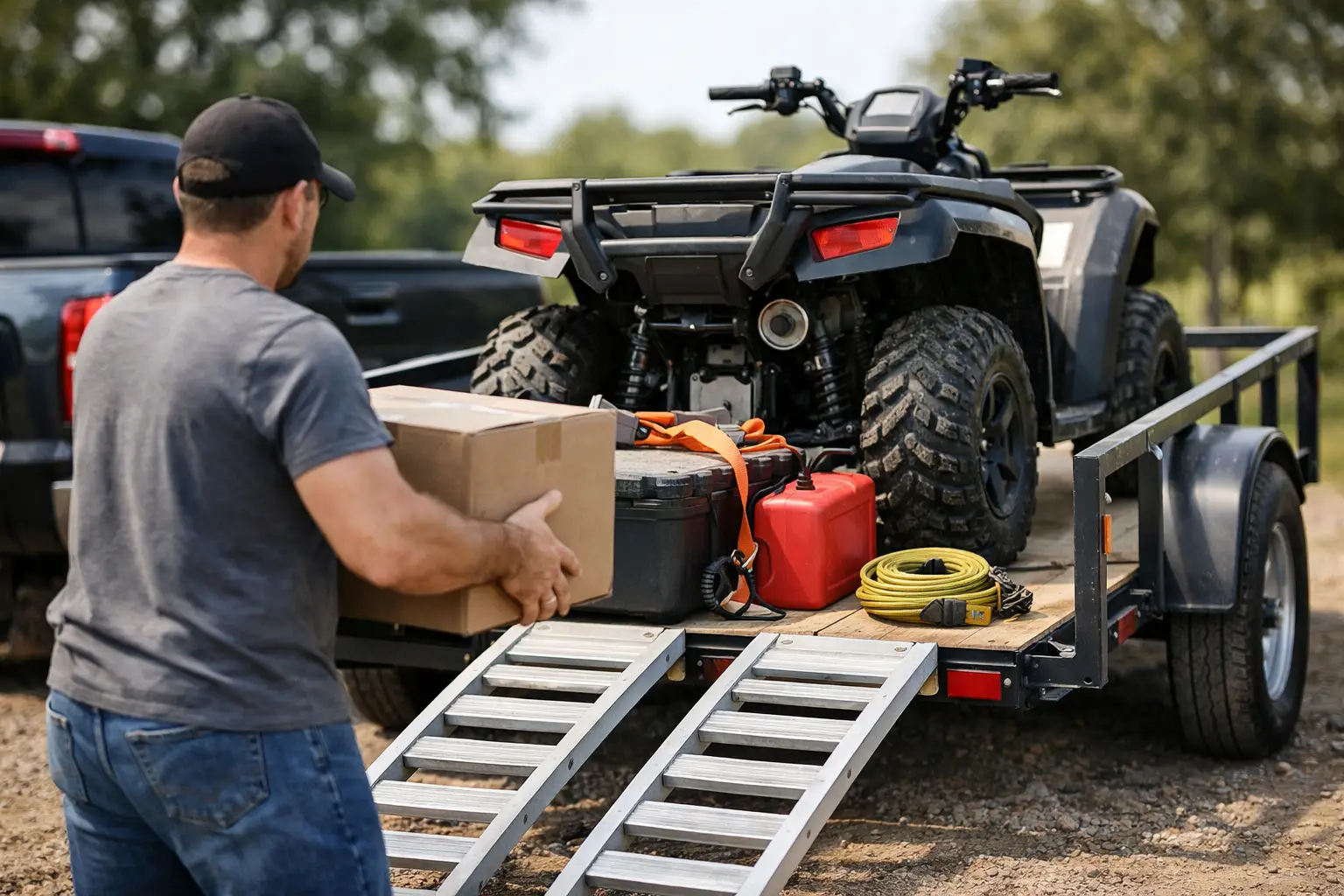
A utility trailer can make a dump run, landscaping job, move, or equipment pickup a whole lot easier. But a trailer that is loaded wrong can sway, handle poorly, damage your cargo, or put too much strain on your tow vehicle. Knowing how to load a utility trailer comes down to a few practical habits: match the trailer to the job, keep weight balanced, tie everything down, and check your setup before you pull onto the road.
Start With the Right Trailer and Tow Vehicle
Before loading anything, make sure the trailer is built for the job. A small open utility trailer is great for yard debris, furniture, tools, and lighter materials. A larger utility trailer may be a better fit for an ATV, compact equipment, pallets, or a heavy load of construction material. If you are moving a vehicle, use a purpose-built car hauler rather than trying to make a standard utility trailer do work it was not designed to handle.
Check the trailer’s gross vehicle weight rating, or GVWR. That is the maximum combined weight of the trailer and everything loaded on it. You also need to know your tow vehicle’s towing capacity, hitch rating, and payload capacity. These numbers are not guesses. If the load is too heavy for any part of the setup, use a larger trailer or make more than one trip.
Do not forget the basics before you start loading. Confirm that the coupler is seated fully on the hitch ball, the latch is locked, safety chains are crossed under the tongue, the breakaway cable is connected when equipped, and trailer lights work. Check tire condition and pressure on both the trailer and tow vehicle. Arizona heat, rough roads, and long grades can expose a weak tire quickly.
How to Load a Utility Trailer for Stable Towing
The goal is a balanced load with enough weight on the hitch to keep the trailer tracking straight. As a general rule, about 10% to 15% of the loaded trailer weight should rest on the tongue. Too little tongue weight is one of the most common reasons a trailer starts swaying. Too much can overload the rear of the tow vehicle, make steering light, and reduce braking control.
Place your heaviest items low on the trailer floor and slightly ahead of the axle or axles. That position puts useful weight on the tongue while keeping the center of gravity low. For example, when hauling a lawn tractor, place it so the engine and most of the machine’s weight are a little forward of the trailer axle, then secure it at four points.
Avoid loading all the heavy material at the very front. A stack of pavers, a generator, or a heavy tool chest right against the front rail may create excessive tongue weight. On the other hand, putting heavy cargo at the very back can lift weight off the hitch and create a dangerous fishtail condition.
With a tandem-axle trailer, keep the main weight centered between the two axles, with a slight bias toward the front. With a single-axle trailer, the exact placement matters even more because there is less room for error. If you are unsure, load slowly and check how the tow vehicle sits. It should remain level or close to level, not sag heavily in the rear or rise at the front.
Keep the Load Low and Even
A tall load can be legal and still be a poor towing load. The higher cargo sits, the more it can shift the trailer’s center of gravity during turns, on uneven pavement, or when you need to brake hard. Spread loose material evenly across the trailer bed instead of piling it into one tall mound.
This matters with common Verde Valley jobs. A trailer full of brush may look light, but a loose, top-heavy load can catch wind and move around. A load of rock, soil, or roofing material may look compact, but it can exceed a trailer’s capacity faster than expected. Estimate the weight before loading, especially with gravel, wet dirt, concrete debris, and green yard waste.
Secure Every Item, Not Just the Heavy Ones
Good load balance does not help if the cargo can slide, bounce, or blow out. Use tie-downs rated for the job and attach them to proper trailer anchor points. Ratchet straps work well for many loads, while chains and binders are often the better choice for equipment with designated tie-down points. Do not rely on rope for heavy cargo.
For a load that includes several items, secure each major item separately when possible. A single strap across a pile of furniture may keep the top piece from flying out, but it will not necessarily stop the pieces underneath from shifting. Use moving blankets or cardboard to protect finished surfaces, then strap the load down in more than one direction.
A practical securement check includes these points:
- Tie down heavy equipment at four corners so it cannot move forward, backward, or sideways.
- Use a tarp or cargo net over loose debris, branches, boxes, or lightweight materials.
- Keep straps away from sharp edges, hot exhaust parts, and tire contact areas.
- Close and latch trailer gates, ramps, toolboxes, and side panels before moving.
- Recheck every strap after the first few miles, because a settled load can create slack.
If you are hauling a mower, ATV, or other rolling equipment, put the transmission in park or gear as recommended by the manufacturer, set the parking brake if appropriate, and use wheel chocks in addition to tie-downs. Chocks are extra protection, not a substitute for straps or chains.
Load Ramps and Equipment Carefully
Loading ramps deserve your full attention. Park on level, firm ground whenever possible. Uneven ground can cause ramps to shift, leave too much angle for low-clearance equipment, or make the trailer move unexpectedly. Keep people clear of the ramp path and never stand directly behind a machine as it is being loaded.
Make sure ramps are pinned, locked, or otherwise secured to the trailer before driving equipment up them. Confirm that the ramps are rated for the machine’s weight. Wet ramps, dusty boots, and spinning tires are a bad combination, so take your time and use steady throttle.
Once equipment is on the trailer, lower it slowly, place it in the planned position, and set the tie-downs before doing anything else. Do not assume you will remember to strap it later after loading smaller items around it. Load the main machine first, secure it, then fill open space with lighter cargo.
Check Your Setup Before You Leave
Walk around the trailer before every trip. Look at the hitch, chains, electrical plug, tires, ramps, gate, and cargo. Make sure no straps are dragging and no loose items can fall through the trailer rails. If your trailer has brakes, test the brake controller at low speed in a safe area.
Then pay attention to how the rig feels once you are moving. Start slowly and listen for rattles, bumps, or a repeated clunk that could mean cargo is shifting. At the first safe stop, check the straps, hitch, and tires again. A five-minute check can prevent a long roadside problem.
Give yourself more room to brake, turn wider than usual, and leave extra distance from the vehicle ahead. Trailers need time and space. Backing up also takes practice, so make small steering corrections and use a spotter when available. If you cannot see the trailer clearly in your mirrors, stop and adjust before you go.
Know When to Ask for Help
Some loads are straightforward. Others need a second set of eyes. If you are unsure about trailer size, load placement, towing capacity, or the right equipment for a vehicle move, ask before you book or load. It is cheaper and safer to get the right trailer than to fight an overloaded or unstable one all day.
For homeowners, contractors, and weekend DIY crews around the Verde Valley, Monsoon Trailer Rental can help match a dependable trailer to the actual job. Load it level, secure it tight, take the first few miles easy, and your trailer will do what it is supposed to do: help you get the work done without unnecessary trouble.