
A trailer rental should not take longer to arrange than the haul itself. Whether you are clearing brush outside Cottonwood, moving a vehicle from Sedona, or bringing materials to a job in Camp Verde, an easy trailer booking process starts with knowing what you need to move and getting a straight answer from someone who knows the equipment.
At Monsoon Trailer Rental, the goal is simple: dependable trailers, fair rates, and a team that actually picks up the phone. You do not need to own a trailer for the occasional dump run, landscaping project, vehicle move, or equipment haul. You just need the right trailer, available when you need it, and clear instructions before you head out.
Start the Easy Trailer Booking Process With the Load
The fastest way to book the right trailer is to think about the load before you think about the trailer. What are you hauling, how much does it weigh, and where is it going? Those three details prevent most rental mistakes.
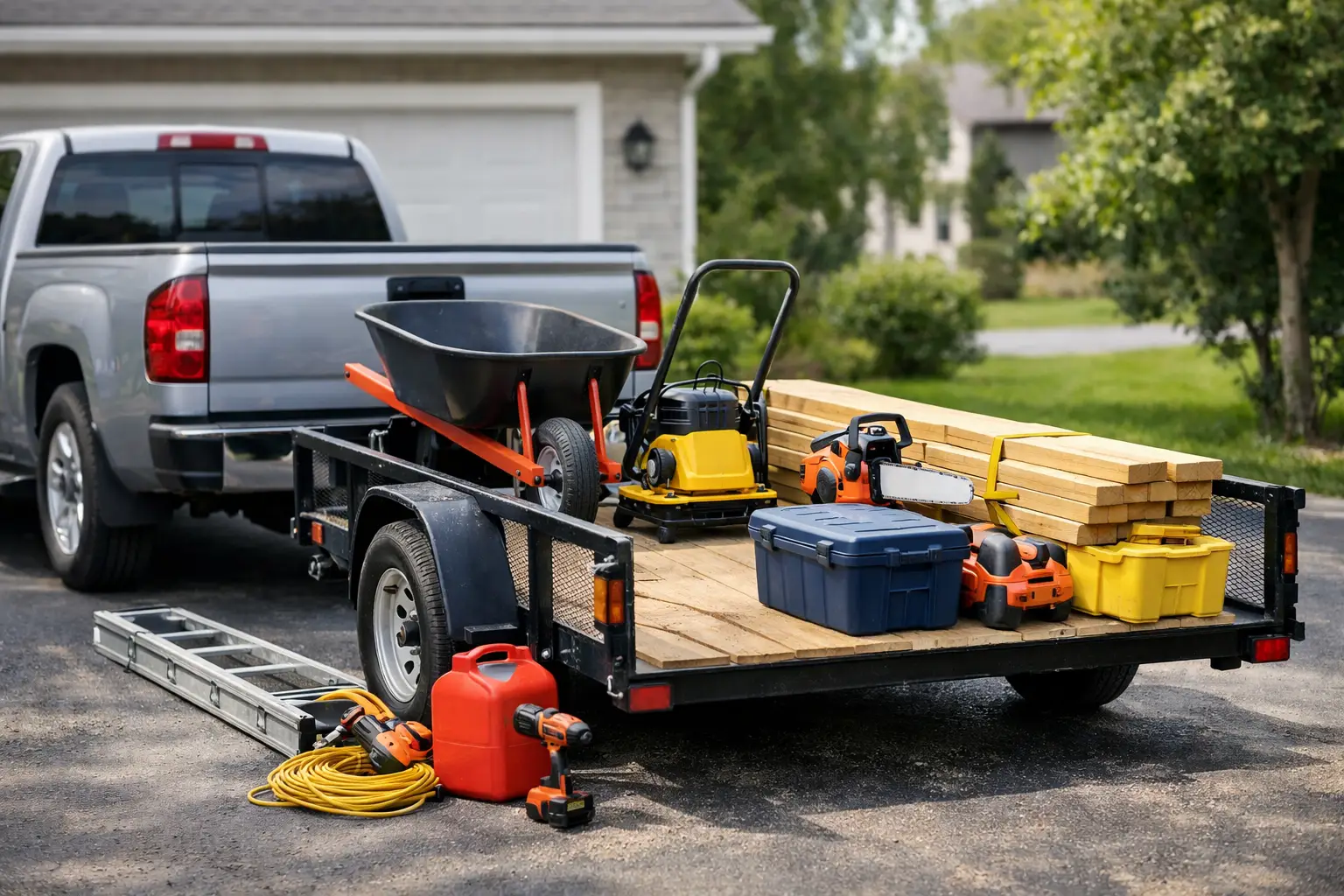
A pile of household debris, lumber, tools, or landscaping material may call for a utility trailer. A vehicle needs a car hauler with the proper deck size, ramps, tie-down points, and capacity. Small equipment may fit on a utility trailer, but the weight of the machine matters just as much as whether it physically fits.
Do not guess on weight if you can avoid it. Look up the vehicle curb weight, equipment operating weight, or material weight before booking. Gravel, wet soil, pavers, and green yard waste can get heavy fast. The trailer capacity is only one part of the equation. Your tow vehicle also needs to be rated to pull the loaded trailer safely.
If you are not sure what fits your job, ask. A quick conversation is usually faster than reserving the wrong trailer, arriving for pickup, and having to change plans.
Have the Right Tow Vehicle Information Ready
Trailer rentals move faster when you have your tow vehicle details handy. You do not need to know every mechanical specification, but it helps to know the make, model, hitch receiver size, and towing capacity of the vehicle you plan to use.
Your vehicle needs a working hitch, the correct ball size, functional trailer-light connection, and enough towing capacity for both the trailer and the load. A trailer that is empty at pickup will not stay empty for long, so plan around the fully loaded weight.
Before booking, check four practical things:
- Your owner’s manual or manufacturer information for towing capacity
- The hitch class and ball size on your vehicle
- Whether your trailer plug and brake lights work properly
- The total weight of the trailer, cargo, passengers, and gear
This is not busywork. A mismatched hitch or overloaded tow vehicle can turn a simple Saturday project into a delayed, expensive problem. If the load is close to the limit, it is usually smarter to choose a larger-capacity setup or make two trips.
Do Not Forget Trailer Brakes and Wiring
For heavier loads, trailer brakes and a compatible brake controller may be required or strongly recommended. This depends on the trailer, the load, and applicable requirements. Ask about the trailer you are renting before pickup so you are not discovering a wiring issue in the driveway.
Take a minute to inspect your connector, too. Dirt, corrosion, or a loose connection can leave you without working lights. That is an easy fix when you catch it early and a real headache when you are ready to leave town.
Reserve for the Time You Actually Need
An easy trailer booking process also means choosing a realistic rental window. A short rental works well for a local dump run or a quick material pickup. A vehicle move, a larger cleanup, or a job with multiple stops may need more time.
Think through the entire route, not just loading time. Include the drive to pickup, loading, securing the load, travel time, unloading, fuel stops, and return. Verde Valley roads can be straightforward, but steep grades, traffic through Sedona, weather, and a busy landfill or transfer station can add time to the day.
Booking early is a good move if you need a trailer for a weekend, a holiday period, or a job with a firm deadline. It gives you a better chance of getting the right equipment instead of settling for whatever happens to be available. If your schedule changes, contact the rental provider as soon as possible. Clear communication makes it easier to adjust when equipment availability allows.
Know What to Bring at Pickup
Pickup should be quick, but it still needs to be done right. Bring the identification, payment method, and towing vehicle required for your rental. If another person will be driving, make sure the rental company knows that ahead of time.
At pickup, do a walk-around before you leave. Check the tires, coupler, safety chains, lights, ramps, deck, and tie-down points. Make sure the trailer is connected securely and that the coupler is locked onto the hitch ball. Cross the safety chains under the tongue, connect the breakaway cable if the trailer has one, and test the lights with someone watching behind the trailer.
This is also the time to ask about loading and return expectations. Contactless pickup and dropoff can save time, especially when your workday starts early or ends late, but you still need clear instructions. Know where to park the trailer, how to document its condition, and what to do if you run into an issue during the rental.
Load It Like You Plan to Get Home Safely
The booking is only the first part of a good rental experience. Proper loading is what makes the haul safe and manageable.
Keep the load balanced from side to side, with enough weight toward the front of the trailer to maintain stable tongue weight. Too much weight behind the trailer axle can cause sway. Too much weight on the tongue can overload the rear of the tow vehicle. Secure every item with rated straps, chains, or binders that match the job. A tarp may keep lightweight debris from blowing out, but it is not a substitute for tie-downs.
For a car hauler rental, load the vehicle centered on the deck and secure it at appropriate points. Follow the instructions for ramps, wheel straps, chains, and parking brake use. Do not assume a vehicle is secure because it is in park. Bumps, grades, and turns put real force on a load.
Once you are on the road, give yourself extra room to stop and turn. Trailers track differently than a pickup by itself. Slow down before corners, watch your mirrors, and avoid sudden steering inputs. If something feels wrong – sway, noise, a shifting load, or a light problem – pull over safely and inspect it before continuing.
A Local Booking Experience Should Be Straightforward
Big rental counters can make a basic trailer rental feel like a paperwork project. Local service should be different. You should be able to explain the job, get help choosing the equipment, understand the price, and know what happens at pickup and return.
That does not mean every job takes the same trailer or the same amount of time. A homeowner hauling branches from Cornville has different needs than a contractor moving equipment between Clarkdale and Rimrock. The right answer depends on the load, the tow vehicle, and the schedule. What should stay consistent is dependable equipment and a real person who can answer practical questions.
Before you book, have your load details, tow vehicle information, preferred dates, and destination in mind. Then reach out, confirm the trailer that fits the job, and reserve it before your schedule gets tight. A good trailer rental should help you get the work done, not add another problem to the list.