
A truck bed fills up fast when you are clearing brush, hauling materials, moving a vehicle, or trying to finish a job before the weekend is over. The best local hauling solutions give you enough capacity for the work without forcing you to buy, store, insure, and maintain a trailer you only need a few times a year.
For Verde Valley homeowners, contractors, landscapers, and vehicle owners, renting the right trailer is often the practical answer. The key is matching the trailer, your tow vehicle, and the load before pickup day. That keeps the job moving and helps avoid the kind of extra trips, delays, and damage that make a simple haul expensive.
What Makes a Local Hauling Solution Worth Using?
A good hauling option is not just a trailer with an open deck. It should be dependable, priced fairly, easy to book, and backed by someone local who can answer a straightforward question when you have one. If you are hauling a project load from Cottonwood, picking up equipment near Camp Verde, or moving a car around Clarkdale, local availability matters as much as the trailer itself.
Ownership can make sense for people who haul every week. For everyone else, it brings costs that do not show up on the initial purchase price: registration, tires, bearings, lights, storage space, repairs, and time. A rental lets you use the capacity you need for the job at hand, then return it when the work is done.
The best choice also depends on the load. A load of yard waste needs a different setup than a compact tractor, building materials, or a disabled vehicle. Choosing based on price alone can leave you with too little space, the wrong loading method, or a trailer that is not suited to the weight.
Best Local Hauling Solutions Start With the Load
Before reserving anything, take a few minutes to get clear on what is being moved. Guessing is where many hauling jobs go sideways. Measure longer items, estimate total weight as accurately as you can, and think through how the load will be loaded and secured.
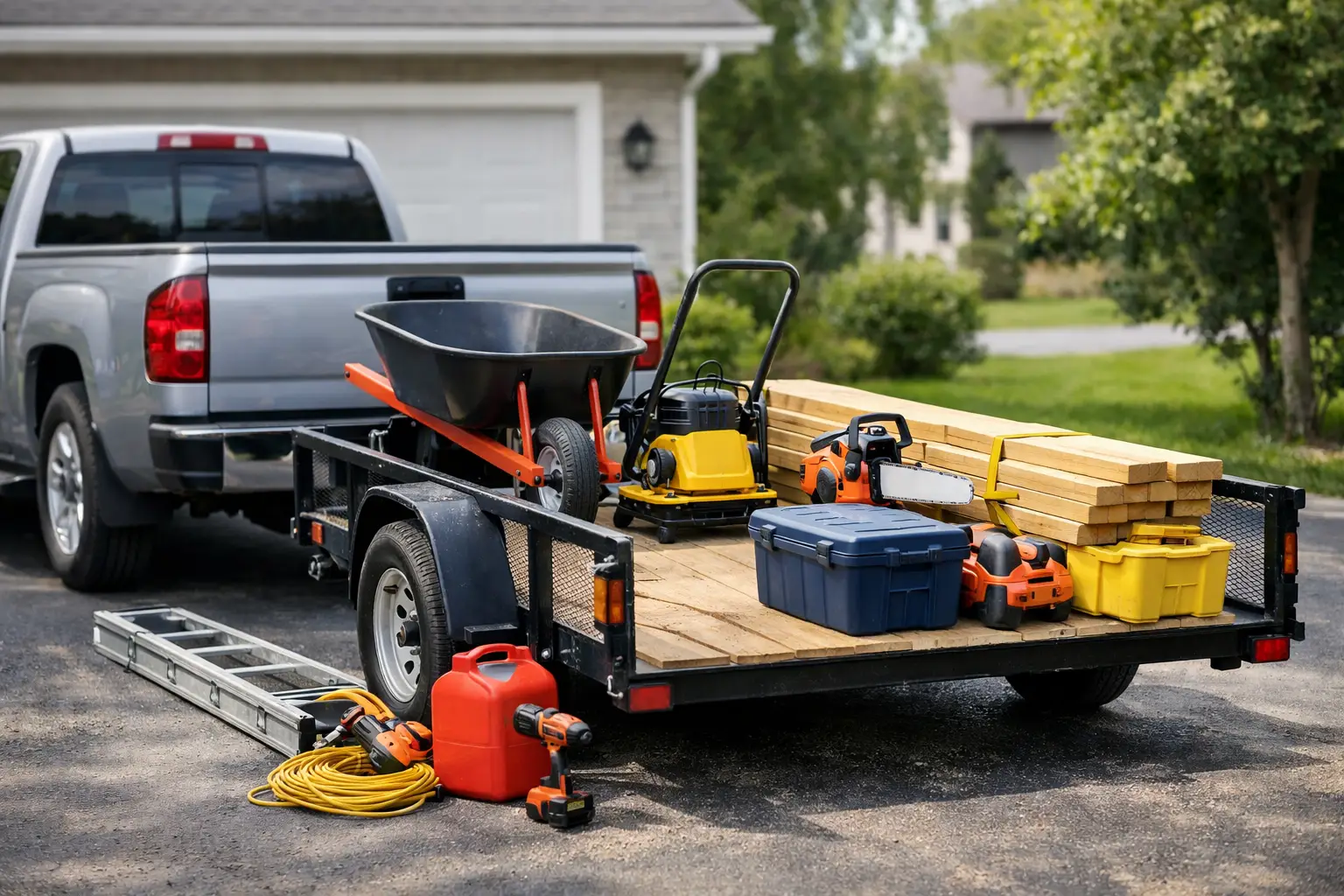
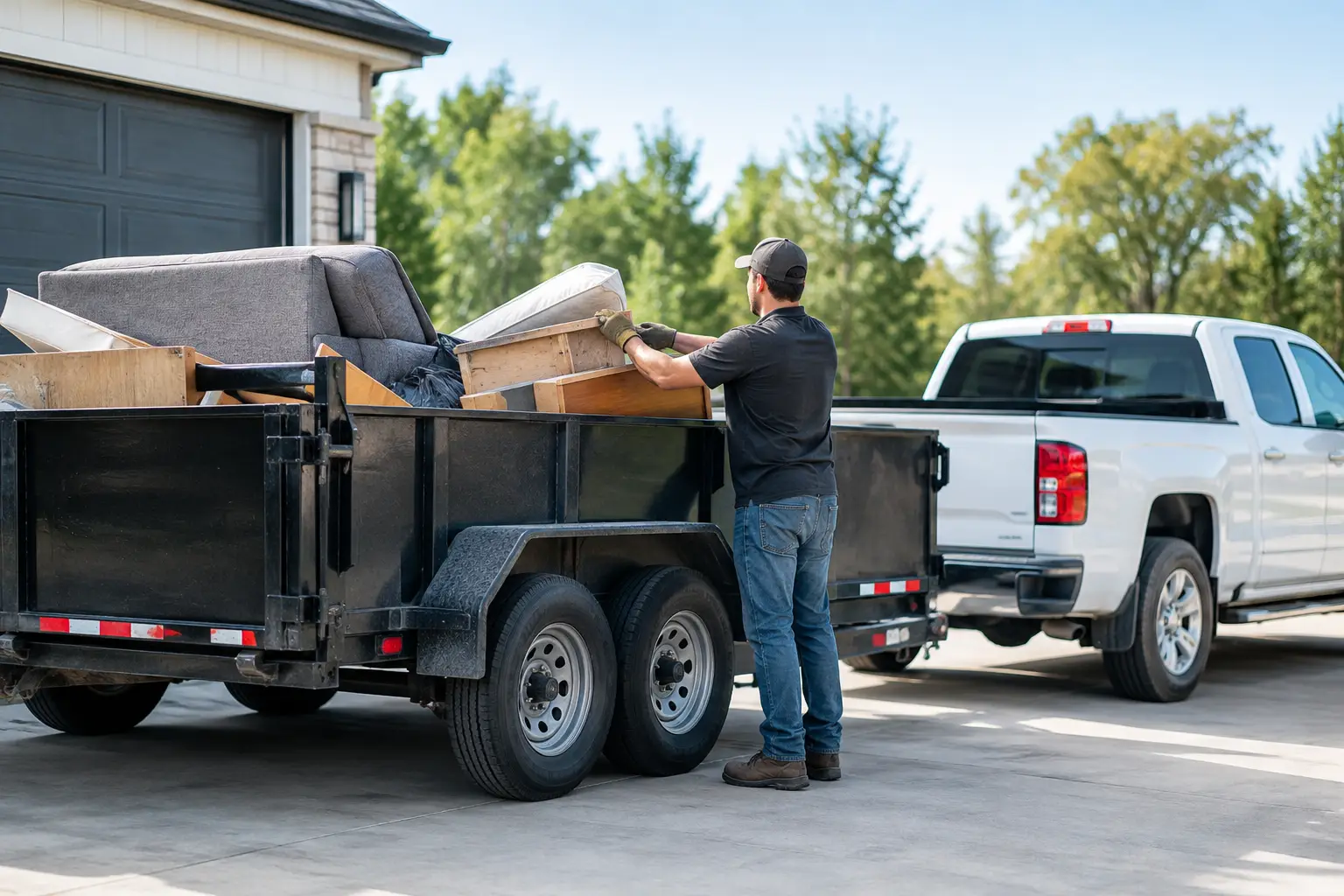
A utility trailer is often a solid fit for general-purpose jobs. Homeowners use them for dump runs, furniture, landscaping materials, tools, and smaller equipment. The open design makes loading convenient, but it also means loose items need to be tied down properly and covered when necessary.
A car hauler is built for vehicle moves. It is the better option when you need to transport a car, truck, side-by-side, or similar rolling load. The vehicle must fit the usable deck space, and the combined weight has to stay within the trailer’s rating and the tow vehicle’s limits. Never assume a vehicle is light enough based on how it looks. Check its actual curb weight, account for added cargo, and confirm the trailer’s capacity before you book.
For bulky materials or equipment, a larger trailer may save more money than a smaller one that requires multiple runs. That said, bigger is not automatically better. A trailer that is oversized for the tow vehicle can be harder to handle, more difficult to park, and unsafe if towing limits are exceeded. The right fit is the smallest trailer that safely handles the full load with room for proper securement.
Match the Trailer to Your Tow Vehicle
Your truck or SUV is part of the hauling setup, not an afterthought. Check the owner’s manual or the towing information on the vehicle for its tow rating, payload limits, hitch requirements, and connector type. A rental provider can help you discuss trailer options, but the driver is responsible for knowing what the tow vehicle can safely pull.
Make sure the hitch ball size matches the trailer coupler and that the hitch is correctly rated. Confirm that your safety chains, trailer lights, brakes if equipped, and brake controller if required are all working before you leave. If any part of the connection is questionable, solve it at pickup, not on the highway.
This matters even more around the Verde Valley, where changing grades, tight turns, wind, and busy traffic can make a poorly matched setup harder to control. Give yourself more following distance, avoid sudden steering inputs, and plan a route that does not put you in a tight parking lot with no room to turn around.
How to Choose a Trailer Rental Without Overpaying
The lowest advertised rate is not always the lowest total cost. Ask what is included, what the rental period covers, and how pickup and return work. A clear local rental process helps you plan your job without surprises at the end.
Look for equipment that is maintained and ready to work. Worn tires, bad lights, damaged tie-down points, or a rough coupler can turn a productive day into a headache. At pickup, walk around the trailer before leaving. Check the tires, deck, ramps, coupler, safety chains, lights, and any straps or accessories you are using. Take photos if you notice existing damage, and make sure you understand the return expectations.
Convenience matters, too. Contactless pickup and dropoff can make a real difference when a job starts early or runs long. Easy booking and a team that actually picks up the phone are not extras when you are trying to coordinate a crew, a vehicle pickup, or a weekend project.
Monsoon Trailer Rental focuses on that straightforward local approach: dependable trailer rentals, fair value, and responsive help for real hauling work. Whether you are an experienced hauler or renting for the first time, asking a few questions before reserving can save time on the day of the job.
Load It Like You Plan to Get There Safely
A properly loaded trailer tows better, stops more predictably, and puts less strain on the tow vehicle. Put the heaviest items low and balanced from side to side. In most cases, the load should sit slightly forward of the trailer axle rather than stacked at the rear. Too much weight behind the axle can cause trailer sway, while too much weight on the tongue can overload the hitch or rear suspension.
Secure each major item independently. Rope may be fine for light items, but it is not the right answer for heavy equipment, appliances, lumber stacks, or a vehicle. Use appropriately rated straps or chains, attach them to solid tie-down points, and protect sharp edges that could cut the straps during travel.
Before pulling out, walk around the entire setup once more. Check that ramps are latched, the coupler is locked, chains are connected, the jack is raised, and lights work. Then stop again after the first few miles to inspect straps and the load. Loads settle. Taking five minutes to recheck can prevent a long, expensive problem.
Four Questions to Answer Before You Reserve
- What is the total weight and overall size of what I am hauling?
- Can my tow vehicle safely pull the trailer and load together?
- How will the load get onto the trailer, and do I need ramps?
- What straps, chains, tarps, or other securement gear will the job require?
If you do not know an answer, ask before pickup. A quick conversation is far better than arriving with the wrong trailer or finding out your vehicle cannot safely tow the setup.
When a Trailer Rental Makes More Sense Than a Delivery Service
Delivery is convenient when you are receiving one pallet of materials or buying an item from a store that offers transport. It becomes less useful when you need flexibility. Maybe you are making several stops, picking up used equipment, taking debris to a disposal site, or moving a vehicle on your own schedule. A trailer rental gives you control over the route, timing, and number of loads within the rental period.
It can also be a better fit for small businesses. Landscapers may need to move mowers or material on a busy week without adding another trailer to the fleet. Contractors may need extra hauling capacity for a short project. A rental helps cover the gap without a large purchase or a long-term commitment.
There are times to call a professional hauler instead. If the load is unusually heavy, oversized, hazardous, difficult to secure, or beyond your comfort level, professional transport is the safer call. Knowing when not to tow is part of making a smart hauling decision.
The right trailer should make the work simpler, not add another problem to the day. Choose for the load, verify your tow setup, secure everything carefully, and book with a local provider that treats your time like it matters.