
A load of lumber headed up to Sedona, a mower going to a new jobsite, or a side-by-side moving across the Verde Valley can all call for a trailer. But the right choice is not always obvious. In the enclosed trailer versus utility trailer decision, the best option comes down to what you are hauling, how far it is going, and how much protection and access the load needs.
For some jobs, an open utility trailer is the fast, simple answer. For others, an enclosed trailer keeps valuable tools and supplies secure, dry, and out of sight. Knowing the trade-offs before you book helps you avoid paying for more trailer than you need – or bringing home a trailer that makes the job harder.
Enclosed trailer versus utility trailer: the main difference
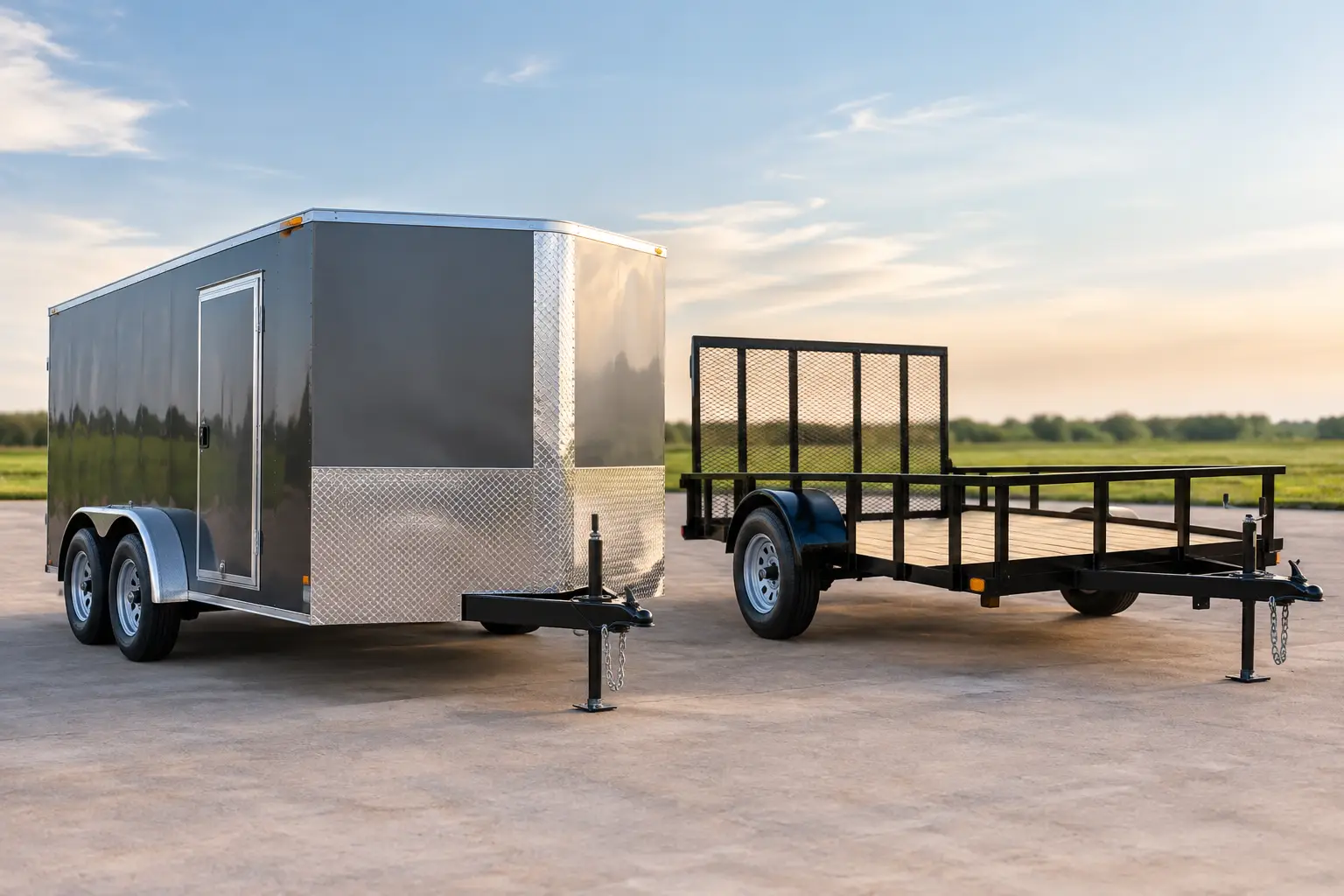
An enclosed trailer has walls, a roof, and locking doors or a rear ramp door. It is built to carry cargo away from weather, road dust, and casual eyes. Think contractor tools, moving boxes, furniture, retail supplies, motorcycles, and materials that should not get soaked during an Arizona monsoon.
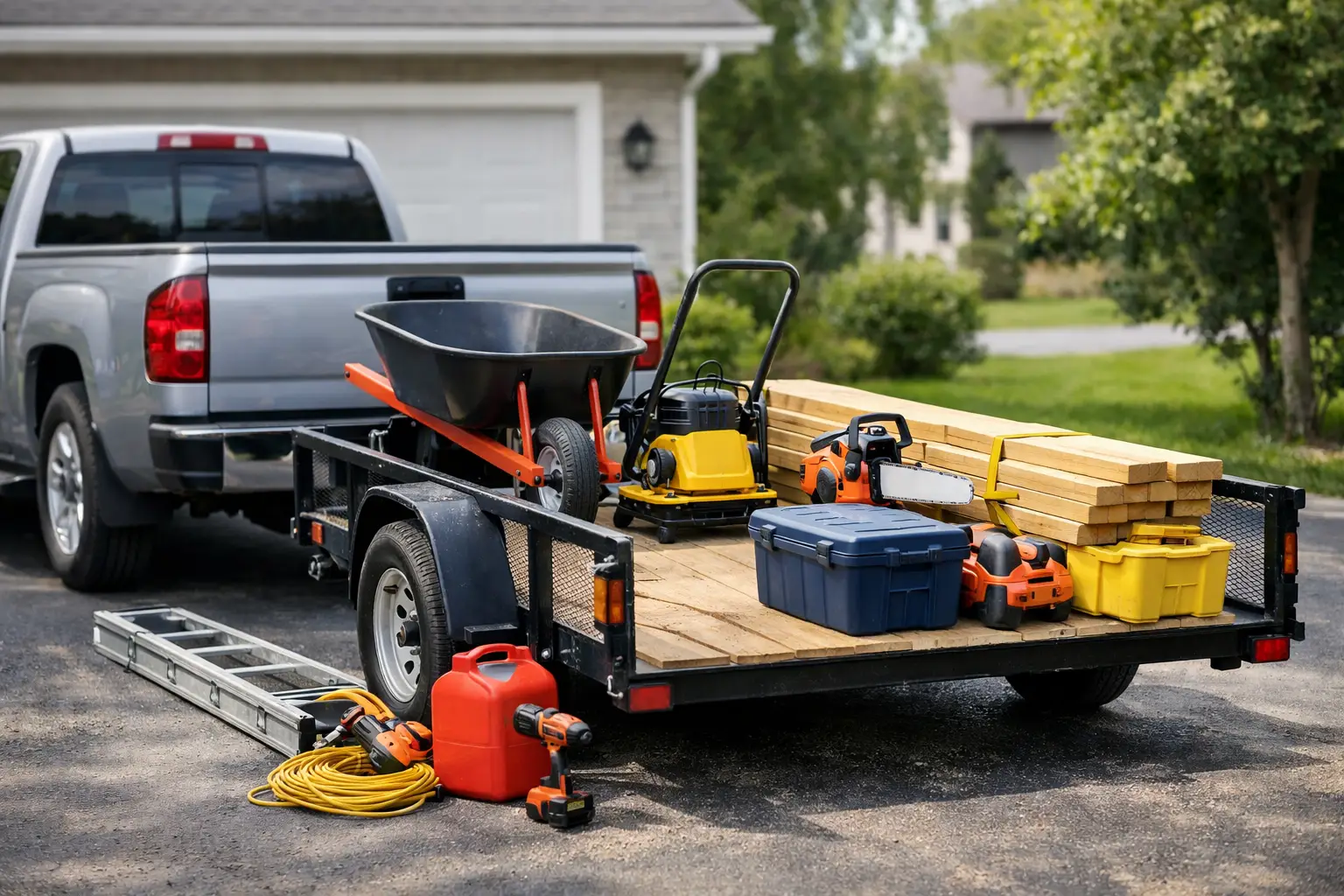
A utility trailer has an open deck, often with side rails and a ramp or gate. It is designed for easy loading and unloading of equipment, yard waste, landscaping materials, ATVs, compact machines, and awkward loads that do not fit neatly inside a box. You can see the cargo from every side, tie it down quickly, and load it with a forklift or by hand without working around walls.
Neither style wins every job. An enclosed trailer provides security and weather protection. A utility trailer provides flexibility, easier access, and often a lighter, simpler setup. The better choice is the one that matches the load rather than the one that merely looks bigger.
When an enclosed trailer makes sense
An enclosed trailer earns its keep when the cargo needs protection. If you are moving boxed household items from Cottonwood to Camp Verde, hauling tools to a remodel, or transporting equipment that should stay clean and dry, an enclosed trailer gives you a controlled space.
Security is another major reason to choose one. A locking trailer will not replace common sense – you should still secure valuables and avoid leaving a loaded trailer unattended for long periods – but it is a much better option than leaving expensive tools exposed on an open deck. For contractors carrying saws, compressors, hand tools, or job materials, that peace of mind can matter as much as the extra cargo room.
Enclosed trailers also work well for lighter loads that take up a lot of space. Boxes, chairs, shelving, display materials, and household goods may not weigh much, but they can be difficult to keep contained on an open trailer. Walls give you a clear boundary and make it easier to protect the load from wind.
There are trade-offs. An enclosed trailer catches more wind than an open utility trailer, especially on exposed roads or during gusty conditions. It can also be harder to see around while backing, and loading large or unusually tall equipment may not be possible. Before booking, measure the item at its widest and tallest points, not just its length.
When a utility trailer is the better fit
Utility trailers are made for jobs where easy access matters more than full weather protection. Hauling a mower, compact tractor, ATV, dirt bike, pallet of material, tree trimmings, or demolition debris is usually more straightforward on an open deck.
The open design makes securing equipment easier because you can reach the tie-down points from all sides. It also makes loading with ramps less complicated. If you are moving a machine with wheels, you can drive or winch it on, balance the weight, secure it properly, and check your work without squeezing inside an enclosed space.
For property cleanup and landscaping jobs, utility trailers are hard to beat. Brush, branches, gravel, bagged mulch, old fencing, and dirty equipment do not need a finished interior around them. You can load the trailer, tarp the material when needed, and get the job done without worrying about scuffing walls or cleaning out an enclosed cargo area.
A utility trailer is not the right answer for everything. Tools and boxes are exposed to sun, rain, dust, and theft. Smaller loose items require extra attention, and some cargo may need a tarp or weatherproof containers. If you expect to stop for food, fuel, or supplies with valuable gear on the trailer, factor security into the decision.
Start with the load, not the trailer
The fastest way to choose is to get specific about what you are hauling. Estimate the total weight, measure the length, width, and height, and consider how it will be loaded. A trailer that is long enough can still be the wrong fit if the cargo is too wide, too tall, or too heavy for its capacity.
Weight distribution matters just as much as trailer size. The load should sit low and balanced, with appropriate tongue weight on the tow vehicle. A load piled too far back can cause trailer sway. Too much weight forward can overload the rear of the tow vehicle and affect steering and braking. Keep heavy items centered over or slightly ahead of the trailer axle when the trailer design and load allow it.
Think through the trip as well. A ten-minute haul across town is different from a longer route with elevation changes, traffic, and crosswinds. If you are traveling through the Verde Valley with an enclosed trailer, give yourself more room for braking and turns. If you are carrying loose landscaping material on a utility trailer, secure or cover it so it stays where it belongs.
Towing requirements are not optional
Before renting either type of trailer, confirm that your vehicle is suited to tow it. Check the owner’s manual for the vehicle’s towing capacity and make sure the rating accounts for the trailer plus everything loaded on it. Do not rely on a guess based on how powerful the truck or SUV feels.
You will also need the right hitch setup, correct ball size, functioning trailer lights, and properly connected safety chains. Trailer brakes may be required depending on the trailer and load, and your tow vehicle may need a brake controller. If you are not sure what your vehicle can handle, ask before pickup. A quick conversation is a lot better than discovering a mismatch after the trailer is loaded.
Plan for the real-world details, too. Can you turn around at the pickup point? Is there enough room to back into your driveway? Will the trailer clear gates, trees, or a narrow side yard? An enclosed trailer may need more vertical clearance, while an open utility trailer can have a long rear ramp that needs room to lower.
Cost and convenience: choose what saves work
An open utility trailer is often the more economical choice for a short equipment or cleanup haul. It is simple, easy to load, and does not make you pay for enclosed space you will not use. For a mower pickup, a dump run, or a load of materials, that can be exactly what you need.
An enclosed trailer can be the better value when it prevents damage or protects expensive cargo. Replacing rain-damaged boxes, cleaning dusty furniture, or worrying about unsecured tools can cost more in time and money than choosing the enclosed option from the start.
It also depends on how you will load and unload. If you need frequent access to several items during the day, an open utility trailer may keep the job moving. If you want to load once, lock up, and make the haul without watching the weather, enclosed space is worth considering.
Make the rental decision easier
When you call or book, have four details ready: what you are hauling, the approximate weight and dimensions, the tow vehicle you are using, and where you need to load it. Those basics make it easier to match the trailer to the job and avoid last-minute surprises.
Monsoon Trailer Rental serves people who need a practical answer, whether that means moving equipment, cleaning up a property, or getting a vehicle where it needs to go. The goal is not to rent the biggest trailer. It is to rent the right one, get it loaded safely, and finish the haul without getting soaked by high rates or unnecessary hassle.
If the cargo needs to stay secure, clean, and dry, lean toward an enclosed trailer. If it is bulky, dirty, wheeled, or needs easy access from every side, a utility trailer is usually the better tool. Pick for the load in front of you, check your towing setup, and the rest of the job gets a whole lot simpler.