

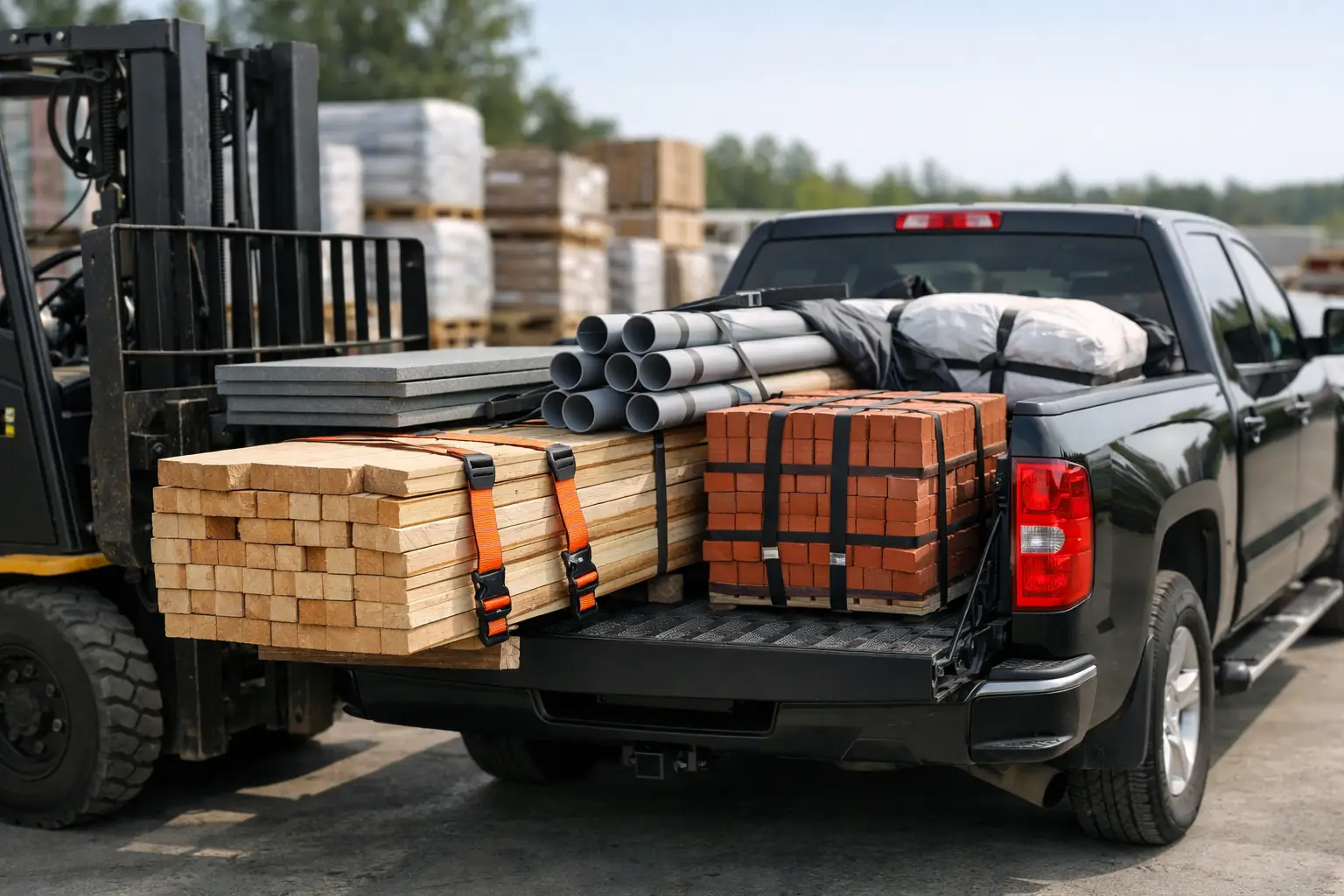
A load of lumber can look manageable until it starts shifting at 45 mph. Sheet goods catch wind, loose gravel finds every gap in a tailgate, and a few extra bags of concrete can put a truck or trailer over its safe working limit. Knowing how to transport building materials comes down to matching the right equipment to the load, securing it correctly, and giving yourself enough time to haul without rushing.
For homeowners, contractors, and landscapers around the Verde Valley, a little planning prevents damaged materials, traffic hazards, and expensive mistakes. The goal is simple: get the materials to the jobsite in the same condition they left the yard.
Start With the Material, Not the Trailer
Before choosing a trailer or loading the truck, make a clear list of what you are moving. Include dimensions, estimated weight, and whether the load can shift, spill, or be damaged by weather. A dozen 2x4s are handled differently than 20 sheets of drywall, a pallet of pavers, or a compact mixer.
Weight is the first concern. Building materials add up fast. A single sheet of 3/4-inch plywood can weigh roughly 60 pounds, while concrete, block, gravel, and roofing bundles can push a load into thousands of pounds. Check the weight rating of your tow vehicle, hitch, trailer, tires, and tie-down points. The lowest-rated part of the setup sets the real limit.
Size matters just as much. Lumber that hangs far past the rear of a truck bed needs proper support and marking. Full sheets of plywood or drywall are often safer on a flat trailer than balanced upright in a pickup bed. If the material is too long, too wide, or too heavy for the equipment you have, make another trip or rent equipment that fits the job. Saving one trip is not worth an unsafe load.
Choose the Right Trailer for Building Materials
The best trailer depends on the materials and the way they need to be loaded. An open utility trailer works well for lumber, fencing, bagged materials, tools, and many landscaping supplies. Its low deck makes loading easier, and the open sides give you multiple securement points.
A car hauler can be a useful option for heavier equipment, such as a small skid steer, compact tractor, or other wheeled jobsite equipment, provided the trailer capacity and loading setup are right. It can also give you a long, level deck for certain oversized materials. The key is not just whether an item fits on the trailer, but whether it can be properly positioned and tied down.
For loose material such as gravel, sand, or demolition debris, a trailer with suitable sides or a covered load is often the better choice. Do not assume a tarp alone will contain a load that is already too high or poorly distributed.
If you are unsure, have the material list ready before booking. A local provider such as Monsoon Trailer Rental can help you think through trailer size, deck space, and the practical details that are easy to miss when you only haul once in a while.
Check Tow Vehicle and Hitch Capacity
Your trailer may be rated for the load, but that does not mean your vehicle is. Review the owner’s manual for towing capacity, maximum tongue weight, and payload. Payload includes people, tools, cargo in the truck bed, and the trailer’s tongue weight. Do not overlook it.
Use a hitch and ball mount rated for the trailer and load. Make sure the ball size matches the coupler, safety chains are crossed beneath the coupler, and the trailer lights and brakes work before you leave. If the trailer has electric brakes, confirm the brake controller is adjusted for the load.
Load Heavy Materials Low and Centered
A stable trailer starts with good weight distribution. Place the heaviest items low on the deck and near the trailer’s axle area. In most cases, you want a modest amount of weight on the hitch, not a load that is rear-heavy.
Too much weight behind the axle can cause trailer sway. Too much weight at the front can overload the hitch or squat the rear of the tow vehicle. A properly loaded trailer should sit level or close to level when connected. If the rear of the trailer is noticeably low or the front of the truck is lifted, stop and rearrange the load.
Stack materials so they cannot slide or roll. Put sheets flat whenever possible, with the largest and heaviest sheets on the bottom. Keep bundles of lumber together. Use blocking, racks, or sideboards where appropriate to keep round or irregular materials from moving.
Do not pile materials above the trailer sides just because there is room. A tall, top-heavy load changes how the trailer handles, especially on curves, uneven pavement, and windy stretches of road. This matters on the grades and turns common between Cottonwood, Sedona, Jerome, and surrounding job sites.
Secure Every Load for the Road
Straps are not an afterthought. They are what keep the load from becoming someone else’s emergency. Use ratchet straps, chains, binders, or cargo nets that are rated for the materials being hauled. Rope may be fine for light-duty items, but it is not a replacement for proper load securement on lumber, sheet goods, equipment, or heavy pallets.
Run straps over the load and attach them to solid trailer anchor points. Use more than one strap for long materials. A single strap in the middle of a lumber stack can allow both ends to lift or shift. For sheet goods, straps should hold the stack down while additional securement prevents forward or backward movement.
Protect sharp edges from cutting straps. Corner protectors, scrap cardboard, or proper edge guards can help, especially around metal roofing, masonry, or sheet material. Tighten straps firmly, but do not crank them down so hard that you crack drywall, dent siding, or bend thin metal panels.
Before pulling out, walk around the trailer. Check that the coupler is latched, chains are connected, breakaway cable is attached if equipped, jack is fully raised, ramps are secured, and lights are operating. Then stop again after the first few miles. Loads settle, straps stretch, and what looked tight at the yard may need another click on the ratchet.
Cover Materials That Need Protection
Arizona weather can be hard on building materials. Sun, dust, wind, and sudden monsoon rain can all affect a load. Drywall, insulation, cement bags, engineered wood products, and interior finish materials should be protected from moisture. A tarp can help, but it needs to be secured tightly enough that it will not flap, tear, or turn into a sail.
For light materials such as insulation or empty boxes, cover and secure them even if the forecast is clear. Wind can pull lightweight products out of an open trailer quickly. Keep the tarp smooth, use enough tie-down points, and check it at your first stop.
Some loads are better hauled uncovered. Long lumber or heavy pavers may not need a tarp, and adding one poorly can create more risk than protection. The right choice depends on the material, weather, trip distance, and how well the cover can be fastened.
Drive Like You Have a Load Behind You
Towing changes braking distance, turning radius, acceleration, and visibility. Leave more room ahead than you would in an unloaded vehicle. Brake early and smoothly. Take corners wider, watch curbs, and avoid sudden lane changes.
Keep your speed reasonable for the trailer, road conditions, and load. Even a properly loaded trailer can sway if it is pushed too fast by wind, rough pavement, or downhill momentum. If you feel sway, do not slam on the brakes or jerk the wheel. Ease off the accelerator, hold the steering wheel steady, and let the rig slow down gradually.
Plan your route before loading. Low clearances, steep driveways, tight parking lots, and narrow jobsite entrances can turn a simple delivery into a difficult maneuver. Backing a loaded trailer is easier when you have room to straighten out, so think about where the materials will be unloaded before you leave the supplier.
Unload With the Same Care You Used to Load
Park on firm, level ground whenever possible. Set the parking brake, keep people clear of the unloading area, and remove straps slowly. Loads can shift after a drive, particularly stacks of lumber, sheet goods, and heavy pallets.
Unload from a stable position. Do not climb onto an unsecured load or stand downhill from materials that may roll. For bulky items, get a second person to help rather than trying to control an awkward sheet of plywood or a long bundle alone.
A good haul is not about cramming the most material into one trip. It is about choosing equipment that fits, loading it with care, and arriving ready to work. When the load is secure and the trailer is right for the job, the rest of the project starts on solid ground.

