

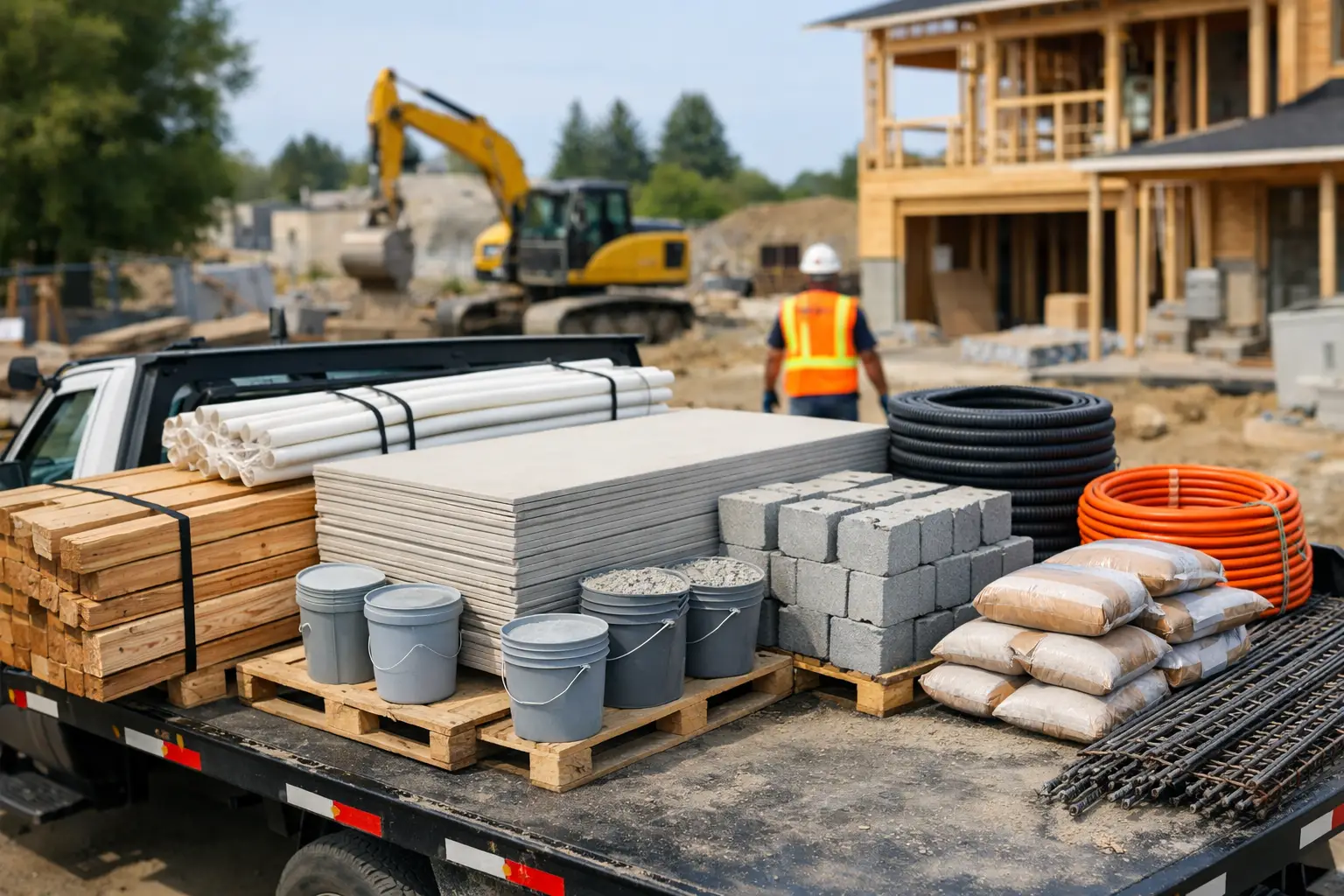
A contractor material haul example is more useful than a generic trailer checklist when the clock is running and the jobsite is waiting. It shows how the numbers, the trailer, the truck, and the load all work together on a real run. The goal is simple: get the materials there in one safe trip without overloading your equipment, damaging the load, or losing half the morning at the supply yard.
Picture a small crew in Cottonwood heading to a residential deck project. They need lumber, concrete, hardware, and a few tools at the site before framing can begin. A trailer rental can make the run practical, but only if the load is planned before the order gets loaded.
Contractor Material Haul Example: A Deck Supply Run
For this example, the contractor is hauling materials for a 16-by-20-foot elevated deck. The order includes pressure-treated framing lumber, deck boards, bags of concrete mix, post bases, fasteners, and a compact load of jobsite tools.
The supply yard has the lumber bundled by length. The contractor plans to pick up 20-foot boards along with shorter framing members, so trailer deck length matters as much as total payload. Trying to hang long boards too far past a short trailer is a bad shortcut. It creates a difficult load to secure, affects handling, and can create legal issues depending on the overhang.
A flatbed-style utility trailer or equipment trailer with enough usable deck length is often the better fit for lumber. The right choice depends on the actual trailer ratings, the longest materials, and the tow vehicle. Before booking, the contractor should know the approximate total material weight and confirm that the truck’s towing capacity, trailer capacity, hitch, ball, and wiring are all compatible.
Estimating the Load Before Leaving
Here is a reasonable planning estimate for this type of run:
- Framing lumber and deck boards: about 2,200 pounds
- Concrete mix, 30 bags at 80 pounds each: 2,400 pounds
- Hardware, post bases, tools, and miscellaneous supplies: about 300 pounds
- Total cargo weight: about 4,900 pounds
That 4,900-pound figure is cargo only. It does not include the empty trailer weight. This is where many hauls go sideways. A trailer may have a payload rating that looks adequate at first glance, but the combined weight of trailer plus cargo must also stay within the truck’s rated towing capacity and the hitch’s limits.
A contractor should not use a rough estimate as permission to load heavy. Lumber moisture content, concrete quantity, toolboxes, fuel cans, and last-minute add-ons can push a load higher than expected. If the numbers are close, split the materials into two trips or have part of the order delivered. One extra run costs less than a damaged truck, a broken trailer component, or a roadside problem.
Choosing the Right Trailer for the Materials
For a material haul, the best trailer is not always the biggest one available. A larger trailer can provide more room, but it also weighs more and may be harder to maneuver at a tight property or busy supply yard. The right setup matches the job without asking the truck to do more than it was built to do.
For this deck example, deck space is needed for long boards, while sufficient payload is needed for the concrete. If the concrete is placed all the way at the front and the lumber is stacked carelessly at the rear, the trailer can become poorly balanced. The load should be positioned to maintain appropriate tongue weight, generally with more weight forward of the trailer axle or axles, without overloading the hitch or rear axle of the tow vehicle.
It depends on the trailer design and load shape, but a common planning target is roughly 10% to 15% of loaded trailer weight on the tongue. Too little tongue weight can lead to trailer sway. Too much can make the truck squat, reduce steering control, and overload the hitch or vehicle.
The trailer’s published ratings, tires, coupler, safety chains, and brakes all matter. So does the tow vehicle’s owner’s manual. If you are unsure whether a planned load is within safe limits, stop and verify before the material yard starts loading.
How to Load the Trailer at the Yard
The contractor starts by having the heaviest dense materials loaded low and near the axle area, with a controlled amount of weight forward. In this case, the concrete bags go on the trailer first. They are placed in a compact section, spread evenly side to side, and kept low. The crew avoids piling all 30 bags against one rail or placing them at the very back of the deck.
Next come the lumber bundles. Long boards should lie flat, supported properly, and centered from side to side. The contractor checks that no board can shift forward, backward, or sideways once the trailer starts moving. If the lumber extends beyond the rear, it must be handled according to Arizona requirements, including any required warning flag or lighting. When possible, using a trailer long enough for the material is the cleaner and safer plan.
Tools, fasteners, and smaller boxes go in a protected spot where they cannot slide into the lumber or fall through an open rail. Heavy toolboxes should not be treated as filler. They affect balance too.
A good rule at the yard is to pause before the straps go on. Walk around the trailer and ask three questions: Is the weight balanced left to right? Is there enough tongue weight without overloading the truck? Can anything move if the trailer hits a pothole, takes a curve, or brakes hard?
Securement Is Not a One-Strap Job
A load of lumber needs more than a single strap tossed across the middle. The contractor uses properly rated tie-downs in more than one location, with straps positioned to prevent the load from sliding in either direction. Edge protection can help prevent straps from getting cut or damaged on sharp material edges.
Concrete bags need containment as well. If they are stacked on a pallet, the pallet must be secured, not just the bags. Loose bags should be arranged so they cannot tumble or shift during a turn. Small items should be in secured bins, boxes, or tied-down tool storage.
Before pulling out, the driver checks the coupler connection, locked latch, safety chains, breakaway cable if equipped, electrical plug, brake lights, turn signals, and trailer brakes. Tires should be inspected for visible damage and proper inflation. A five-minute walk-around is cheap insurance.
The Drive to the Jobsite Matters
The route from the supply yard to a Verde Valley jobsite may include traffic, hills, uneven pavement, and narrow residential streets. A loaded trailer needs more following distance and slower, smoother inputs than an unloaded truck.
The driver avoids fast lane changes, sudden braking, and sharp turns. Corners should be taken wider because trailers track inside the path of the tow vehicle. Going downhill requires particular attention. Use a lower gear when appropriate, maintain a controlled speed, and do not ride the brakes until they overheat.
A quick stop after the first few miles is smart, especially on a new load. Straps can settle as lumber compresses and materials shift into place. The contractor checks strap tension, lights, tire condition, and the coupler again. On a longer run, another check at the halfway point is worth the few minutes it takes.
Unloading Without Creating a Second Problem
At the jobsite, the crew parks on as level and firm a surface as possible. They avoid unloading on a steep slope, loose wash, or soft shoulder where the truck and trailer can move unexpectedly. The trailer stays connected to the tow vehicle during unloading unless there is a specific safe reason to disconnect it.
The crew unloads with balance in mind. Pulling every heavy item from the front first can change tongue weight quickly. Concrete and lumber should come off in a controlled sequence, especially if workers are stepping on or around the trailer deck.
For contractors who only need hauling equipment when the job calls for it, Monsoon Trailer Rental offers a practical local option without the cost of owning, storing, and maintaining another piece of equipment. The best rental experience starts with a clear description of what you are hauling, how much it weighs, and the longest item on the order.
A well-planned haul does more than protect the materials. It keeps the crew moving, the truck working within its limits, and the job ready for the next step when you arrive.

