
A trailer can look ready to go while the tow vehicle is the weak link. That is where rushed hauling jobs get expensive. Use this tow vehicle requirements checklist before you pick up a trailer, load a vehicle, or head out with materials for a job in the Verde Valley.
The right answer is not always “the biggest truck.” It is matching the vehicle, hitch, trailer, and load to the job. A properly matched midsize truck can be a better setup than an overloaded full-size pickup. Check the numbers first, then make sure the equipment is in good working order.
Tow Vehicle Requirements Checklist: Start With the Ratings
Your owner’s manual, driver-side door jamb sticker, and hitch label are the places to start. Do not rely on a friend’s estimate, an online forum, or the number printed in an old sales brochure. Tow ratings can change by engine, cab length, drivetrain, axle ratio, trim package, and whether the vehicle has a factory tow package.
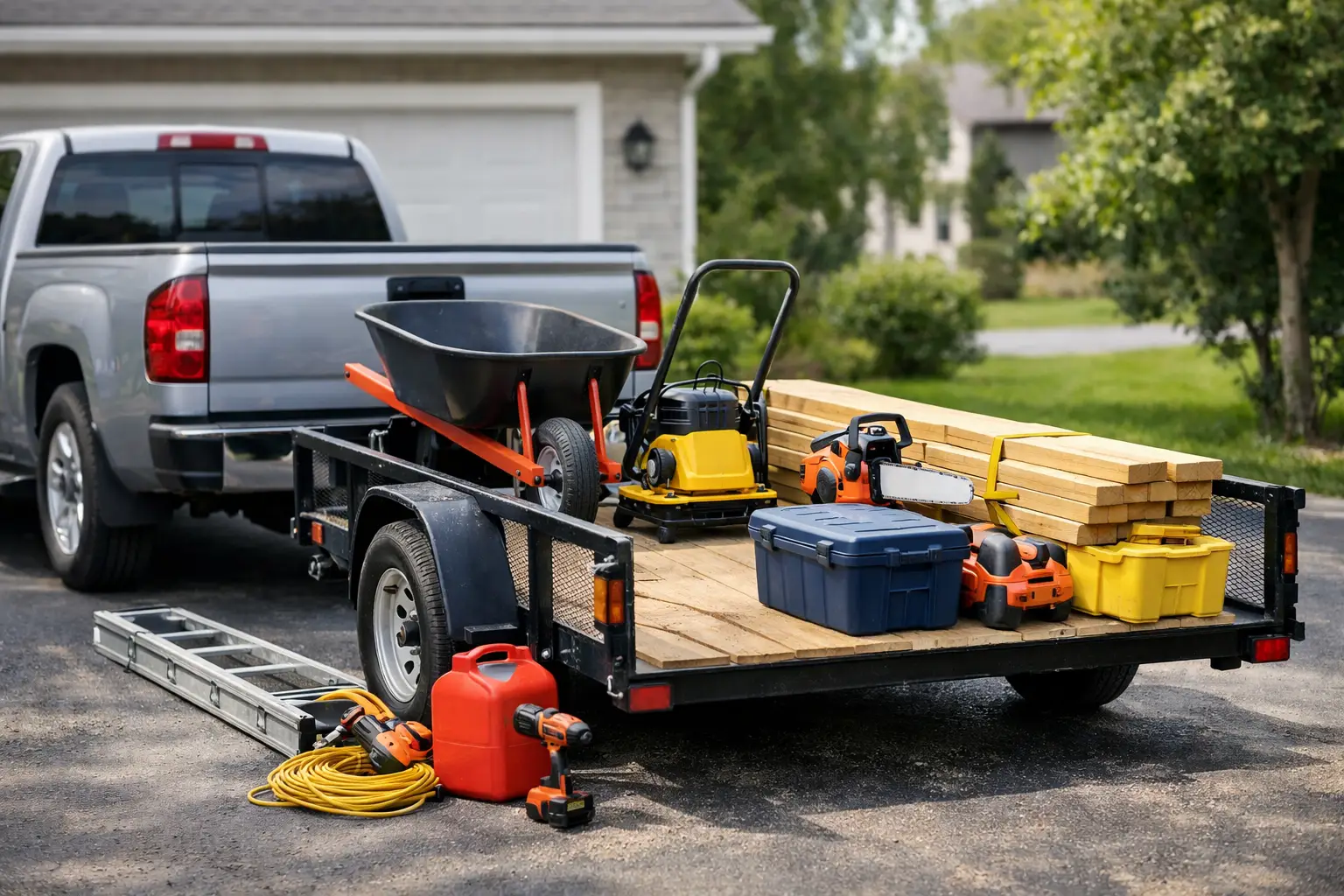
The first number most people look for is maximum towing capacity. That number matters, but it is only one part of the job. Your trailer’s empty weight plus everything loaded on it must stay below the vehicle’s rated towing capacity. Count the weight of ramps, straps, tools, fuel cans, coolers, landscaping equipment, and anything else that rides in or on the trailer.
Payload is just as important and often gets missed. Payload is the weight your vehicle can carry, including people, cargo in the cab or bed, and trailer tongue weight. A trailer that is technically under the tow rating can still overload a truck’s payload capacity once passengers and equipment are added.
Also check the gross combined weight rating, or GCWR. This is the maximum allowed weight of the loaded tow vehicle and loaded trailer together. If you are hauling a car, skid steer, stacked building materials, or a full utility trailer, GCWR can be the limit that decides whether the setup works.
Match the lowest-rated part
Your safe working limit is set by the lowest-rated piece of the setup. That can be the vehicle, receiver hitch, ball mount, hitch ball, trailer coupler, safety chains, tires, or trailer axle rating. A heavy-duty hitch ball does not raise the rating of a light receiver, and a strong truck does not make an undersized trailer safe.
Check that the receiver, ball mount, and hitch ball are rated for the trailer’s loaded weight and expected tongue weight. The ball size must also match the trailer coupler exactly. If either rating or fit is uncertain, stop and verify it before loading.
Confirm Your Vehicle Has the Right Towing Equipment
A tow-capable vehicle needs more than a hitch receiver. The basic equipment should fit the trailer and the load you plan to carry.
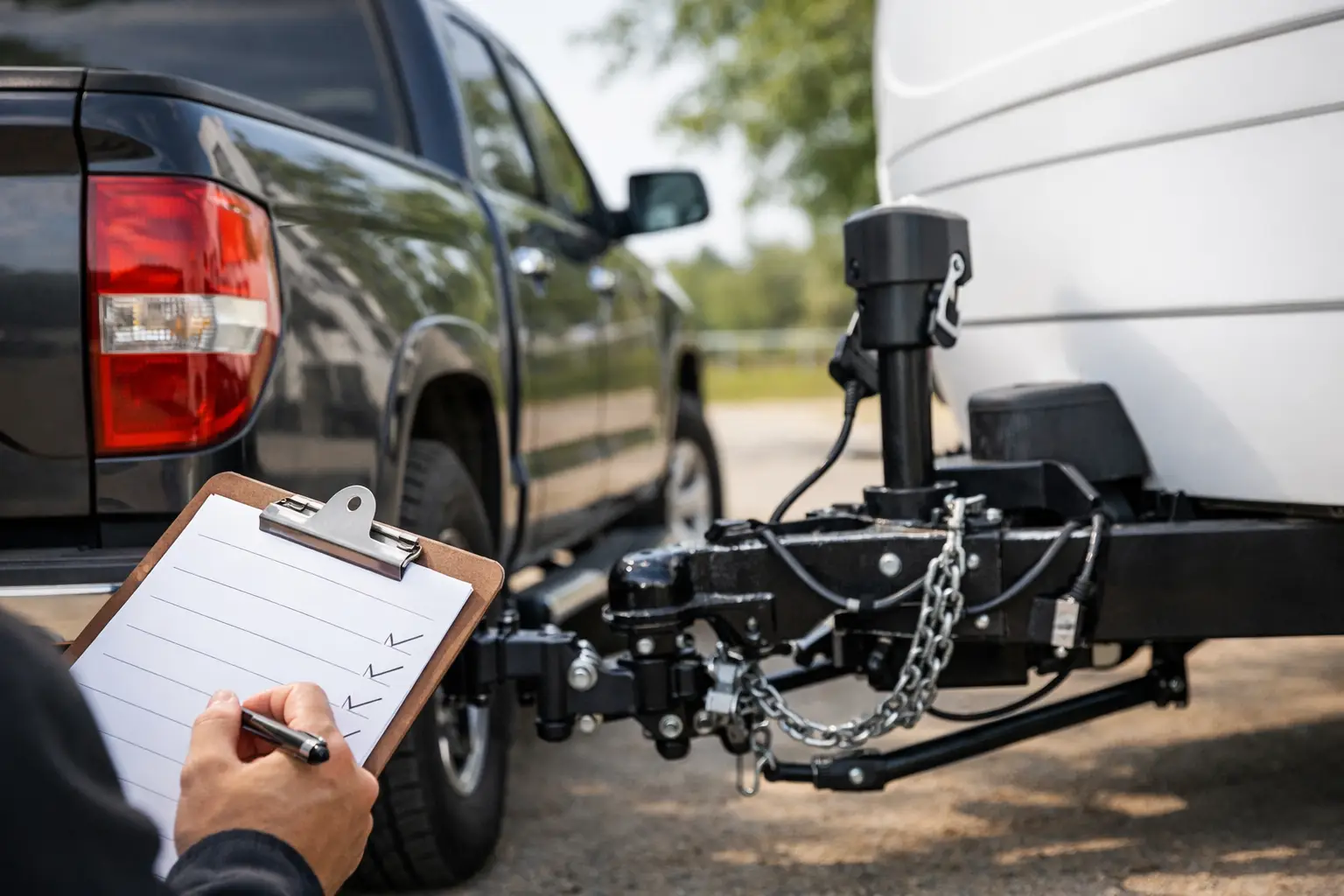
For most rental and personal hauling jobs, check these items before departure:
- A properly rated receiver, ball mount, and hitch ball that match the trailer coupler
- Functional trailer-light wiring with turn signals, brake lights, running lights, and hazard lights
- Safety chains crossed under the coupler and attached to approved points on the vehicle
- A breakaway cable connected directly to the tow vehicle, not looped through the safety chains
- Tires with good tread, correct pressure, and enough load capacity for the vehicle and its payload
- Mirrors that give you a clear view down both sides of the trailer
If the trailer has electric brakes, your tow vehicle may need a compatible brake controller. Do not assume the trailer brakes will work simply because the plug fits. Test the controller and brake function in a safe area before getting onto the highway.
A brake controller is especially useful on long grades and with heavier loads. The roads around Sedona, Jerome, and the rest of the Verde Valley can put more demand on brakes than a flat, short run across town. Use lower gears when appropriate and leave room to slow down gradually. Riding the brakes downhill can overheat them fast.
Weigh the Load, Not Just the Item You Are Hauling
A vehicle’s curb weight is not its loaded weight. A project trailer may carry a compact tractor, but also attachments, a fuel tank, chains, and a toolbox. A car hauler may carry a vehicle with extra parts in the trunk and a full tank of fuel. Those details add up.
When you are uncertain, use the manufacturer’s listed weight as a starting point and add a margin for everything else. A public scale is the best way to settle the question for a heavy or repeat load. It is cheaper to weigh the rig than to replace worn tires, damaged suspension parts, or a transmission that was pushed past its limits.
How you load the trailer matters as much as how much you load. Most bumper-pull trailers need a portion of the load’s weight on the hitch, often called tongue weight. Too little tongue weight can lead to trailer sway. Too much can overload the rear axle, rear tires, hitch, or payload rating of the tow vehicle.
The exact target depends on the trailer manufacturer and trailer type, but a common starting point for bumper-pull trailers is about 10 to 15 percent of loaded trailer weight on the tongue. Keep heavy cargo low, centered from side to side, and positioned according to the trailer’s loading guidance. Secure it at enough approved tie-down points that it cannot shift under braking, turning, or a rough patch of road.
Check the Tow Vehicle Before Pickup Day
A tow vehicle that handles daily errands may need attention before it handles a loaded trailer. Check your engine oil, coolant, transmission fluid if applicable, brake fluid, battery condition, belts, hoses, and windshield washer fluid. Arizona heat is hard on cooling systems, batteries, and tires.
Look closely at the tires. Check pressure when they are cold, including the spare. Tire pressure should follow the vehicle manufacturer’s recommendation for the load you are carrying, not simply the number printed as the tire’s maximum pressure. Bulges, cracks, exposed cords, uneven tread wear, and slow leaks are reasons to deal with the tire before the haul.
Make sure your brakes feel normal when driving without the trailer. A soft pedal, pulling under braking, warning light, or grinding noise is not something to ignore when you are about to add thousands of pounds behind the vehicle. The same goes for a check-engine light or an overheating issue. Towing puts extra demand on the engine, transmission, brakes, and cooling system.
Plan for the Route, Weather, and Driver
A setup that is comfortable for a short local run can feel very different on a steep grade, in crosswinds, or after dark. Plan your route around the trailer’s size and your experience level. Watch for tight fuel stations, narrow turns, low branches, rough access roads, and places where backing up will be difficult.
Give yourself more following distance than usual. Make wider turns, accelerate gradually, and avoid sudden lane changes. If the trailer starts to sway, do not stomp on the tow vehicle brakes or jerk the steering wheel. Ease off the accelerator, keep the wheel steady, and let the combination slow down in a controlled way. Trailer brakes, when properly adjusted and used according to their instructions, can help stabilize a trailer.
Driver readiness belongs on the checklist too. Bring your license, rental paperwork, and any required registration or insurance information. Know where the trailer’s lights, coupler, safety chains, jack, and breakaway system are before you leave. If you are a first-time renter, ask questions at pickup. A few clear answers are better than figuring it out on the shoulder of the road.
When Your Tow Vehicle Is Not a Good Match
Sometimes the best decision is to change the plan. If your SUV or truck is close to its tow or payload limit, you may need a lighter trailer, a smaller load, multiple trips, or a different tow vehicle. That is not overkill. It is how you protect your vehicle, your cargo, and the people sharing the road.
Pay particular attention to short-wheelbase SUVs, older vehicles, vehicles with passenger-heavy cabins, and trucks carrying tools or material in the bed. These setups can reach their payload limit sooner than expected. A weight-distributing hitch may help with some properly equipped combinations, but it does not increase the manufacturer’s tow, payload, axle, or receiver ratings.
Monsoon Trailer Rental can help renters talk through trailer size and the basic information needed for a good match. Bring your vehicle year, make, model, engine, and hitch details when you book, along with a realistic description of what you need to haul.
Before you pull away, take five extra minutes for one final walk-around: verify the coupler is locked, chains are attached, the jack is raised, lights work, tires look right, and the load is tied down. That small habit keeps a simple hauling job from turning into a long day.