
A trailer can make a landscaping job a whole lot easier, right up until the moment a mower shifts, a ramp kicks out, or the load gets too tongue-heavy to tow safely. If you’re figuring out how to load landscaping equipment, the goal is not just fitting everything on the trailer. The goal is getting it there without damaging your gear, your truck, or somebody else’s vehicle.
Most loading problems come from rushing. A skid steer gets parked too far back, handheld tools get tossed in loose, or a zero-turn gets driven up wet ramps without checking traction first. Good loading is simple, but it has to be deliberate. A few extra minutes in the driveway beats a bad mile on the road.
Start with the right trailer and tow setup
Before you load a single piece of equipment, make sure the trailer actually fits the job. Landscaping gear varies a lot in size and weight. A couple push mowers, trimmers, and bags of mulch are one thing. A zero-turn, compact tractor, mini skid steer, or pallet of pavers is another.
Check three numbers first: the trailer’s payload capacity, your tow vehicle’s towing capacity, and the weight of the equipment you plan to load. The lightest-looking item is not always the lightest item. Commercial mowers, stand-on units, compact loaders, and attachments add up fast.
You also want the hitch height right and the trailer level when connected. A nose-up or nose-down trailer changes how the weight sits on the axles and can make loading less stable. Make sure the coupler is fully latched, safety chains are crossed and secured, and the trailer plug is connected before loading begins. If the trailer has brakes, confirm they’re working.
How to load landscaping equipment without guessing on weight
Weight distribution matters as much as total weight. You can be under the trailer’s limit and still have a bad setup if the load is unbalanced.
In most cases, you want about 10 to 15 percent of the total loaded trailer weight on the hitch. Too little tongue weight and the trailer can sway. Too much and you overload the rear of the tow vehicle, which affects steering, braking, and suspension.
That usually means placing the heaviest machine slightly forward of the trailer axles, not all the way at the front and not hanging back near the gate. The exact position depends on the trailer layout and what else you’re carrying. If you’re loading a mower plus smaller tools, get the mower placed first, then build around it. If you’re hauling a compact loader with an attachment, treat both pieces as part of the total balance, not as separate loads.
A common mistake is loading based on convenience. People put the first machine wherever it lands easiest, then cram the rest into the open space. That can leave too much weight on one side or too much weight at the rear. Better to stop and plan the load before the ramps come down.
Check the ground before the ramps go down
A good loading setup starts under the trailer, not on it. Park on firm, level ground whenever possible. Soft dirt, gravel that shifts, sloped pavement, or a shoulder with a drop-off can make loading risky fast.
Set the tow vehicle in park, engage the parking brake, and chock the trailer wheels before you drop the ramps. If the trailer has a jack, make sure it is up and clear. If you’re loading a heavier machine, it helps to keep the trailer connected to the tow vehicle during loading so the tongue doesn’t lift.
Take a look at the ramps too. Make sure they’re rated for the equipment, fully seated, and free of mud, oil, or loose debris. Wet steel ramps can get slick, especially with mower tires. If traction looks questionable, fix that before you start moving equipment.
Loading mowers, small machines, and loose gear
Different landscaping equipment needs to be loaded a little differently. The basics stay the same, but the details matter.
For zero-turn mowers and stand-on mowers, line up straight with the ramps and go slow. Sudden steering corrections halfway up the ramp can put a tire off the edge. Keep the deck height in mind so it doesn’t hang up during the transition from ramp to trailer. Once on the deck, park the mower in gear or according to the manufacturer’s transport guidance, shut it off, and secure it at solid tie-down points.
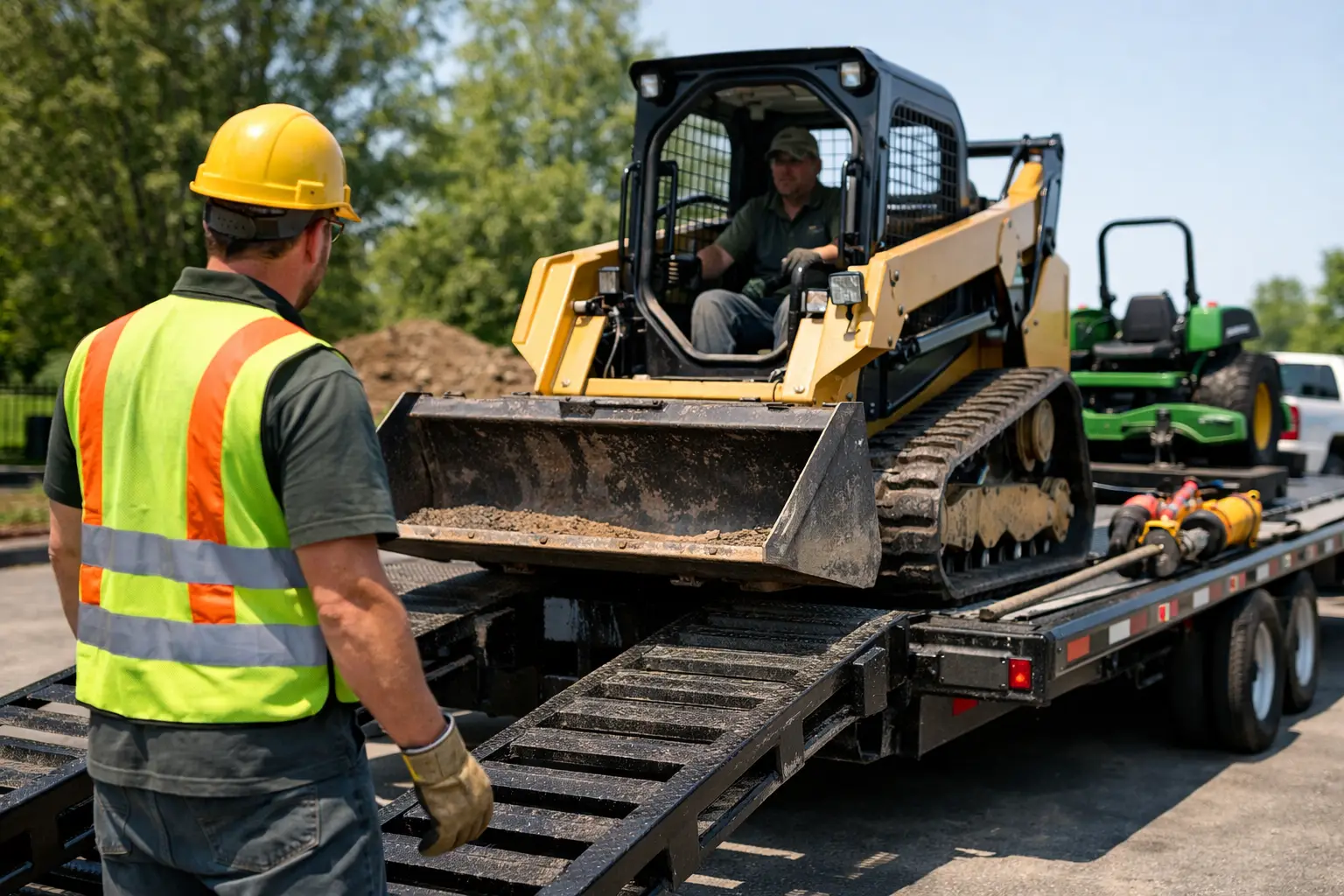
For compact loaders, mini skid steers, or small tractors, use low speed and keep attachments low while loading. Buckets or forks should not be raised high in transport. After positioning, lower the attachment to the trailer deck if appropriate for the machine and secure both the machine and any moving attachment points.
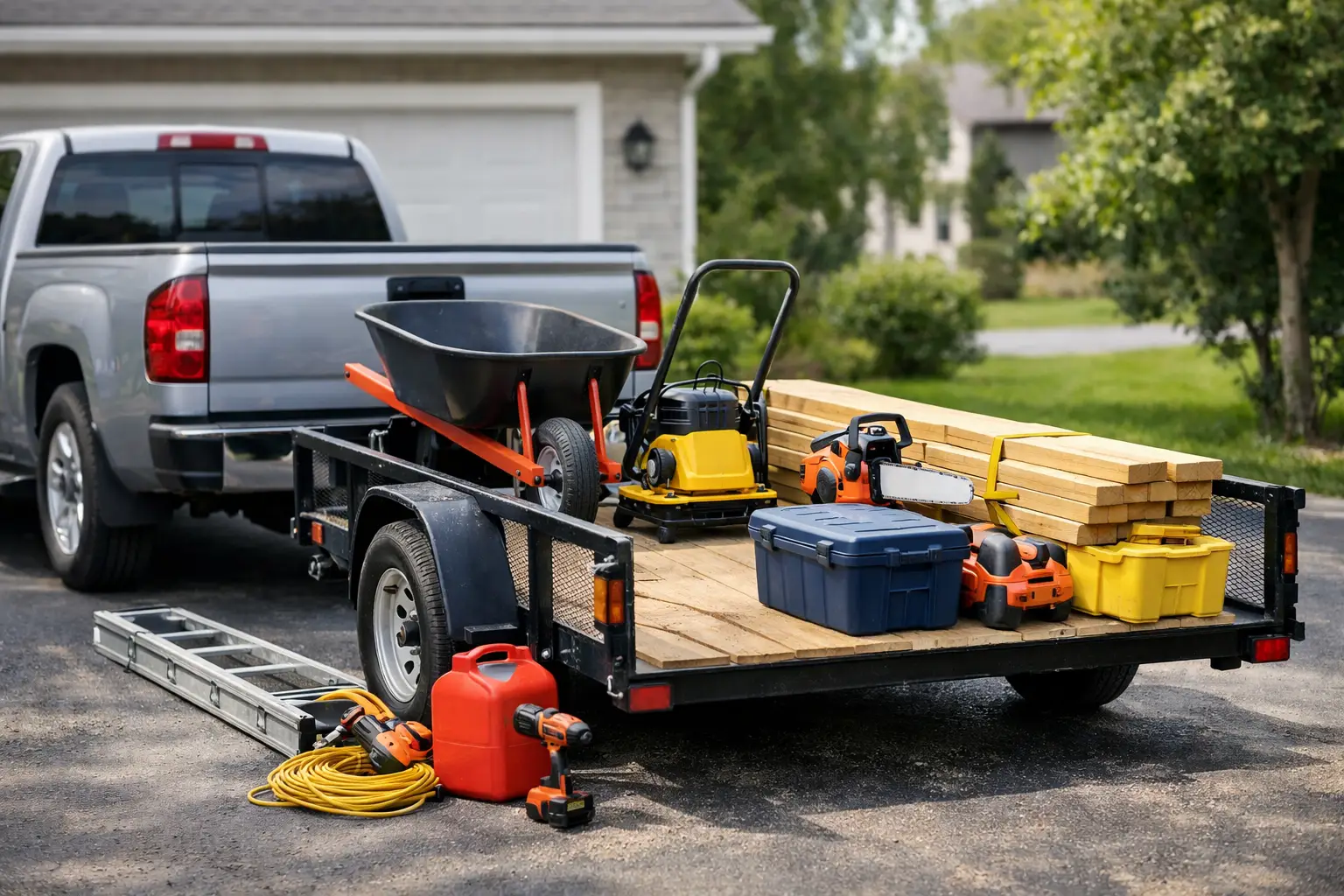
Push mowers, trimmers, blowers, edgers, hand tools, fuel cans, and spare parts should never be left loose. This is where loads get sloppy. A trailer that looks fine from ten feet away can become a mess after the first stop sign if smaller gear is rolling around. Use tool racks, bins, straps, or sidewall containment so handheld equipment stays put.
Secure every piece like the road is worse than you expect
Tie-downs are not the place to improvise. Use straps or chains rated for the equipment weight and in good condition. Frayed webbing, bent hooks, and worn ratchets are asking for trouble.
Most powered equipment should be secured at four points when possible. Attach to designated tie-down locations or solid frame members, not weak guards or control arms. The goal is to keep the machine from shifting forward, backward, or sideways. Cross-strapping can help with side-to-side stability, but the best setup depends on the machine and trailer.
After you tighten the straps, check that nothing is rubbing on sharp metal edges or hot engine parts. Secure loose strap ends so they don’t flap in the wind. Then give the machine a hard shake by hand. If it moves more than a little, tighten and reset.
Smaller gear still needs real restraint. One strap thrown over a pile of tools is not enough. Group similar items together and secure them individually or in contained sections. Fuel should ride upright and be approved for transport.
Common loading mistakes that cause real problems
The biggest mistakes are usually simple ones. Loading too much trailer for the truck, or too much equipment for the trailer, is one. Another is relying on the ramp gate as a load stop. The gate is not there to hold your machine in place during travel.
People also forget about side-to-side balance. If all the weight is loaded on the driver’s side because that’s where it’s easiest to park the mower, the trailer can pull poorly and tire wear goes up. Even a legal load can feel bad on the road if it’s lopsided.
Another common issue is skipping the recheck. Straps settle. Tires shift. Suspension compresses after the first few miles. If you’re hauling across town or out through the Verde Valley on uneven roads, stop early and inspect the load again. A two-minute check can save an hour on the side of the road.
How to load landscaping equipment for a mixed job
A lot of landscaping loads are mixed loads. Maybe it’s a zero-turn, two trimmers, a blower, shovels, a wheelbarrow, and a pallet of material. This is where planning matters more than muscle.
Start with the heaviest item and place it for proper tongue weight. Then fill in medium-weight items so the load stays balanced from left to right. Put lighter hand tools and awkward pieces where they can be secured without creating dead space. If something is fragile, valuable, or easy to bounce around, don’t make it the last thing tossed on.
Think about unload order too. If the mower needs to come off first at the jobsite, don’t trap it behind a stack of tools and bags. Efficient loading is not just about road safety. It’s also about not wasting time when you get to work.
For first-time renters, this is often where a good local trailer rental company helps. The right trailer size, ramp style, and deck layout make loading much easier than trying to force the job onto whatever happens to be available. That’s part of why working with a local outfit like Monsoon Trailer Rental can save headaches – you can get equipment that fits the load instead of guessing.
Final checks before you pull out
Walk the whole setup one last time. Check the hitch, coupler latch, chains, plug, jack, ramps, straps, and tires. Confirm that gates, bins, and compartments are closed. Make sure lights work. If your mirrors don’t give you a clear view down both sides of the trailer, fix that before you hit the road.
Then drive like you’re hauling equipment, because you are. Take turns wider, brake earlier, and give the trailer time to react. Even a perfectly loaded trailer can get unsettled by speed, rough pavement, or quick lane changes.
A good load should feel boring on the road. That’s the point. When your landscaping equipment is balanced, secured, and matched to the right trailer, the haul becomes one less thing to worry about so you can focus on the actual job.