

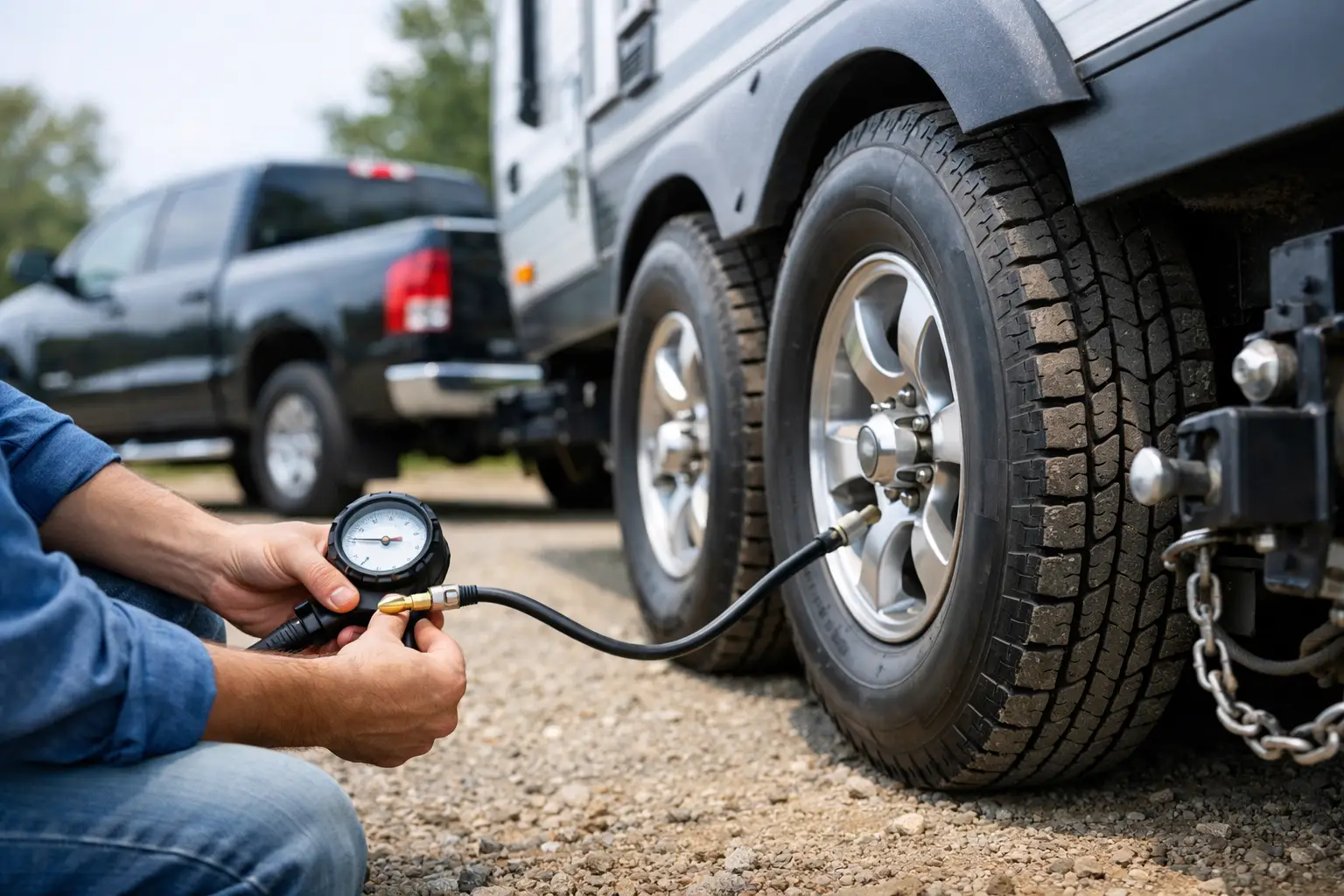
A loaded trailer can turn a small tire problem into a long day on the side of the road. Before you hook up a car hauler, load landscaping equipment, or head out with a utility trailer, take five minutes to check the tires. Knowing how to check tire pressure properly helps your truck handle better, protects your load, and reduces the chance of a preventable blowout.
That matters even more around the Verde Valley, where hot pavement, steep grades, and long stretches between stops can be tough on underinflated tires. This is simple maintenance, but the details matter.
How to Check Tire Pressure the Right Way
You need a dependable tire pressure gauge. A basic pencil-style gauge works, but a dial or digital gauge is easier to read and usually more accurate. Keep one in your truck, along with a portable air compressor if you tow regularly.
Check pressure when the tires are cold. In practical terms, that means the vehicle or trailer has been parked for at least three hours or has only been driven a very short distance. Tires heat up as they roll, and hot air inside the tire raises the PSI reading. A warm-tire reading can make you think the tire is properly inflated when it is not.
Start by removing the valve cap from one tire. Press the gauge firmly and straight onto the valve stem. You may hear a quick hiss of air as the gauge seats, but it should stop right away. Read the number, then repeat the process once if the first reading seems questionable.
Write the readings down if you are checking several tires. It is easy to lose track when you are moving between a truck, trailer, and spare. Replace each valve cap when you are done. Those small caps help keep moisture and grit out of the valve stem.
Do not rely on looking at the tire. A tire can be low by several PSI and still appear normal, especially on a heavy-duty truck or a trailer with multiple tires sharing the load. Your foot is not a pressure gauge either. Use the gauge every time.
Find the Correct PSI Before Adding Air
The right number is not automatically the maximum PSI printed on the tire sidewall. For your tow vehicle, look for the tire and loading information label, usually located on the driver-side door jamb. That label lists the cold tire pressure recommended by the vehicle manufacturer for the front and rear tires.
The number on the tire sidewall is generally the tire’s maximum cold inflation pressure at its maximum rated load. It is not necessarily the everyday target for your truck. Overinflating a tow vehicle’s tires can reduce the contact patch, make the ride harsher, and affect traction on uneven roads.
For a trailer, look for its tire and loading label or follow the rental provider’s instructions. Many trailer tires are designed to operate at the cold pressure stated for their rated load, but the trailer’s label is the first place to look. If the trailer has different tires than the original setup or the label is missing, do not guess. Check the tire manufacturer’s load-and-inflation information or ask the owner before hauling.
This distinction is especially useful with car haulers. The tow vehicle, the trailer, and the vehicle being transported all have separate tire-pressure requirements. One PSI number does not fit the whole setup.
Add Air Slowly and Recheck
If a tire is low, add air in short bursts. Recheck with your gauge after each burst instead of holding the inflator on and hoping for the best. Portable compressors can add pressure quickly, particularly to smaller trailer tires.
If you add too much air, release a little through the valve stem and measure again. It takes a few extra seconds, but accurate pressure is worth it when you are hauling weight behind you.
Never let air out of a hot tire just because its pressure is higher after driving. That increase is normal. Let the tire cool completely, then check it against the recommended cold PSI. Bleeding a hot tire can leave it dangerously underinflated once it cools.
Check Every Tire in the Tow Setup
Before a haul, check all four tires on the tow vehicle, every tire on the trailer, and both spares if they are part of the trip plan. A spare that has been sitting under a trailer for months may look fine while having very little usable air.
The trailer deserves extra attention because its tires often sit for long periods, then go straight to carrying a heavy load. One low tire forces the other tires on that axle to carry more weight. That extra heat and flex can damage a tire fast, particularly during summer hauling.
While you are down there, give each tire a quick visual inspection. Look for cracks in the sidewall, nails or screws in the tread, bulges, exposed cords, and uneven wear. Also look at the valve stems. Dry, cracked rubber stems can leak slowly and fail without much warning.
If one tire reads noticeably lower than the others, fill it to the correct PSI and check it again later. A difference of a pound or two can happen, but a tire that repeatedly loses several PSI has a leak, valve problem, or wheel issue that needs attention before a loaded trip.
Tire Pressure Changes With Load and Temperature
Arizona heat can change tire pressure quickly. As a rough rule, tire pressure changes about 1 PSI for every 10-degree change in temperature. A cool early-morning reading may rise once the road surface gets hot, especially on a fully loaded trailer.
That is one reason to start with the proper cold pressure rather than trying to adjust based on hot readings at a fuel stop. Heat-related pressure increase is expected. What is not normal is one tire running much hotter or showing substantially more pressure than the tire beside it. That can point to an overloaded tire, dragging brake, bearing issue, or other mechanical problem.
Load also changes the equation. A truck that feels fine empty may need its higher recommended rear-tire pressure when carrying tongue weight from a trailer. Follow the vehicle’s towing guidance and tire-pressure label. If your truck has separate unloaded and loaded recommendations, use the recommendation that matches the way you are driving that day.
Do not exceed your vehicle’s payload, towing, axle, or tire-load ratings just because the tires are aired up correctly. Proper inflation supports safe hauling, but it cannot make an overloaded setup safe.
Common Tire Pressure Mistakes to Avoid
The most common mistake is checking tires after driving and treating the warm reading as the baseline. Another is using the sidewall maximum as the default setting for every tire on every vehicle. Both can lead to poor handling or inaccurate decisions.
It is also easy to trust the dashboard tire-pressure monitoring system too much. TPMS is helpful, but it is a warning system, not a replacement for a manual gauge. It may alert you only after pressure has dropped significantly, and many trailers do not have TPMS at all.
Avoid mixing pressure units as well. Most passenger and light-truck tire gauges in the United States read PSI, while some equipment may show kPa. Use the unit printed on your vehicle or trailer label, and make sure your gauge matches it.
Finally, do not overlook the spare. If you get a flat on a loaded car hauler or utility trailer, an empty spare is about as useful as no spare at all.
Make Pressure Checks Part of Your Hauling Routine
The best time to check tire pressure is before every towing trip, especially if the trailer has been parked for a while. For a truck you drive daily, check at least once a month and before any longer haul. It takes less time than dealing with a roadside tire problem.
If you are renting a trailer, inspect the tires during pickup and ask questions before leaving if something does not look right. At Monsoon Trailer Rental, a quick walk-around and a clear plan before you pull out helps keep the job moving without unnecessary surprises.
A good gauge, the correct cold PSI, and a two-minute inspection give you a better start than rushing out with a loaded trailer and hoping the tires hold up. Set the pressure before the pavement gets hot, then focus on getting the haul done right.

