

A renovation can look manageable until the first pile of drywall, old cabinets, broken tile, and lumber starts taking over the driveway. The best trailers for home renovations are the ones that match the material you need to move, the distance you are hauling, and the vehicle doing the towing. Pick the wrong trailer, and a simple cleanup or supply run becomes the slowest part of the job.
For homeowners and contractors around the Verde Valley, renting often makes more sense than owning. You get the trailer you need for the project at hand without paying to store, maintain, register, and insure equipment that may sit unused for months.
Start With What You Need to Haul
Most renovation trailer decisions come down to two jobs: getting materials to the property and getting debris out. Those jobs can require different setups.
A bathroom remodel may create dense debris like tile, plaster, old fixtures, and concrete backer board. A kitchen project can mean bulky but lighter material such as cabinets, appliances, packaging, and trim. A yard refresh tied to a renovation may add brush, dirt, pavers, or landscape timbers to the mix.
Before reserving a trailer, think through the biggest load rather than the average load. A trailer that handles a few boxes with room to spare may not be the right choice once demolition starts. Also consider whether you are making one trip or several. The right rental can save a lot of loading, unloading, and repeat driving.
Best Trailers for Home Renovations by Job
Utility trailers for general materials and cleanup
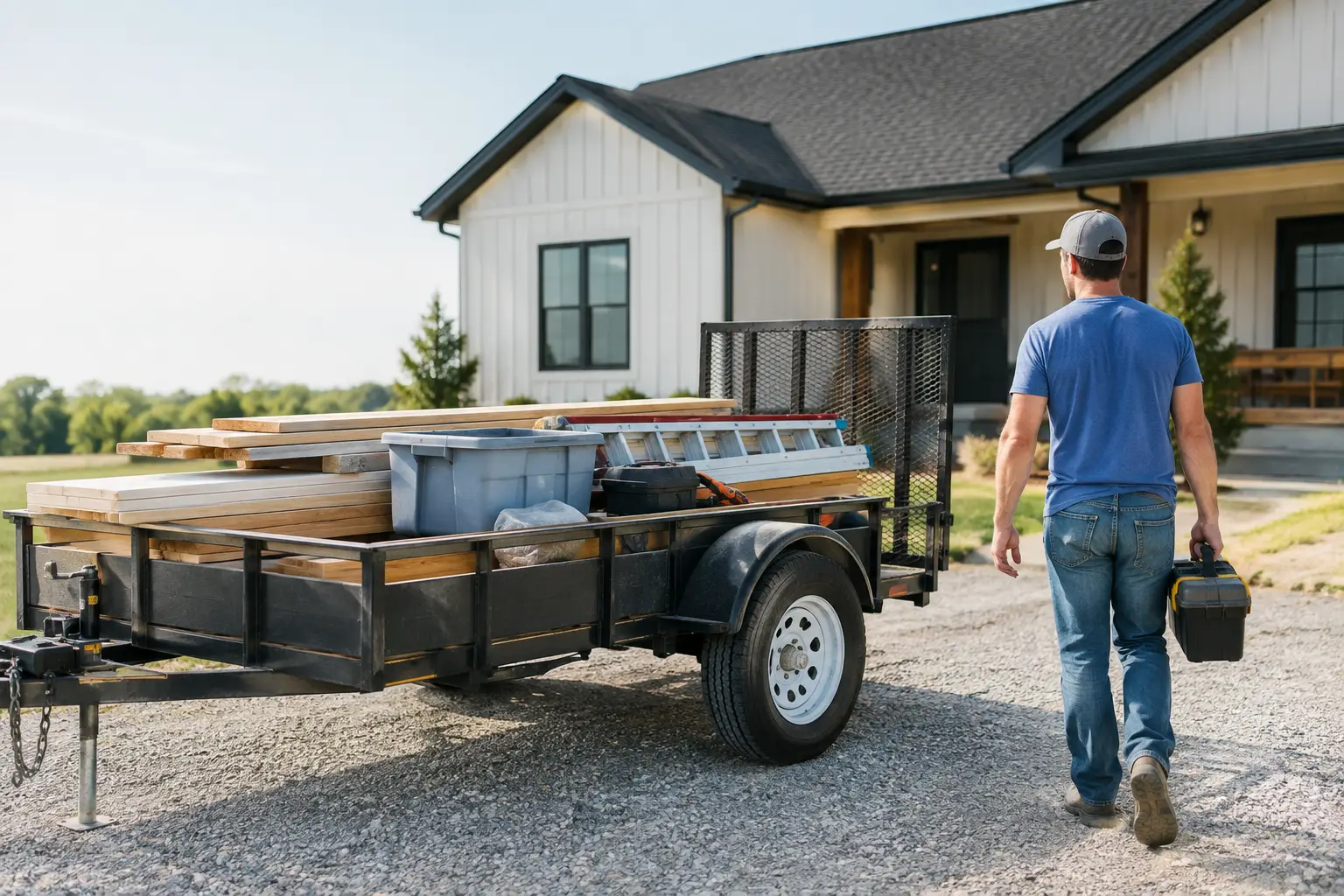
An open utility trailer is often the practical choice for smaller remodeling jobs. It works well for lumber, doors, cabinets, boxed flooring, tools, bagged waste, and bulky debris that does not need weather protection.
Utility trailers are especially useful when you need to make multiple runs between a home improvement store, the job site, and a disposal location. Their open design makes loading easier, but it also means every load needs to be secured properly. Loose insulation, cardboard, and lightweight debris can become a road hazard fast, particularly on higher-speed roads or in windy conditions.
For many homeowners, a utility trailer is the best all-around option when the project involves mixed materials and moderate loads. It is simple, versatile, and usually easier to maneuver than a larger specialty trailer.
Dump trailers for heavy demolition debris
A dump trailer earns its keep when the renovation creates a lot of heavy material. Think broken concrete, dirt, roofing tear-off, tile, brick, old decking, or several loads of construction waste. Instead of shoveling out the trailer by hand, you can raise the bed and unload at the proper disposal site.
That convenience matters more than people expect. Heavy debris is hard on your back, takes time to unload, and can turn a one-day cleanup into a weekend chore. A dump trailer can also make a contractor crew more efficient because the trailer gets emptied quickly and goes back to work.
The trade-off is weight. Dense debris can overload a trailer long before it looks full. A bed piled high with lightweight drywall is very different from a shallow load of broken masonry. Know the trailer’s payload rating, account for the weight of the trailer itself, and make sure your tow vehicle is rated for the full loaded setup.
Enclosed trailers for tools and protected materials
If your renovation takes place over several days and you need to keep tools, paint, flooring, or finish materials dry and out of sight, an enclosed trailer may be worth considering. It gives you mobile storage and protection from sun, rain, and dust.
This option makes the most sense when the trailer will carry valuable tools or materials that should not be exposed to weather. It is less convenient for oversized debris and may not be the best choice for hauling dirty demolition waste. In that case, an open utility or dump trailer is usually the more sensible call.
Car haulers for equipment and vehicle moves
A car hauler is not the first trailer most people think of for a home renovation, but it can be the right tool in specific situations. If you need to move a compact piece of equipment, transport a project vehicle, or relocate a riding mower or side-by-side before work begins, a properly sized car hauler can help.
Use this type of trailer only for equipment and vehicles it is designed to carry. Confirm the deck size, weight capacity, tie-down points, and loading approach before booking. A trailer is only dependable when the load is within its intended limits.
Match the Trailer to Your Tow Vehicle
The trailer is only half the equation. Your truck or SUV needs to safely handle the trailer’s empty weight, the cargo weight, and the hitch weight pressing down on the vehicle.
Check your owner’s manual or the towing information for your specific vehicle. Do not rely on a general number you found for a similar model. Engine, drivetrain, tow package, passenger load, and equipment can all change what your vehicle is rated to pull.
You also need the correct hitch receiver, ball size, electrical connection, and brake controller when required. Trailer brakes are not an optional detail on heavier loads. They are a major part of stopping safely, especially on grades and busy roads.
If you are unsure whether your vehicle and planned load are a good match, ask before you book. A local rental team that actually answers the phone can help you avoid showing up with a setup that will not work.
Do Not Choose by Trailer Length Alone
A longer trailer can be useful for sheet goods, lumber, and large cabinets, but length does not automatically mean more usable capacity. Weight rating, axle configuration, deck height, side height, and loading access all matter.
For example, a trailer with tall sides may hold more loose debris, while a lower-deck utility trailer can make loading heavy appliances or material carts easier. A dump trailer may be the clear winner for demolition cleanup even if a utility trailer has a similar footprint.
Think about how you will load it, not just what can fit inside it. Do you have a helper? Will you be carrying material by hand, using a dolly, or driving equipment up ramps? Those answers can change the best choice.
Load It Like You Plan to Get Home Safely
Even a properly sized trailer can be unsafe if the load is placed badly. Keep the heaviest items low and balanced from side to side. Place enough weight forward of the trailer axle to maintain stable hitch weight, but do not overload the front of the trailer or tow vehicle.
Secure materials with rated straps, chains, or other appropriate tie-downs. Cover loose debris when needed. Recheck your load after the first few miles, because straps can settle and material can shift once the trailer starts moving.
Before leaving, take a minute to inspect the basics:
- Confirm the coupler is fully latched and secured to the hitch ball.
- Cross and attach safety chains correctly, leaving enough room for turns.
- Plug in the lights and test brake lights, turn signals, and running lights.
- Check tire condition and make sure ramps, gates, and loose items are secured.
That quick walk-around is not wasted time. It is what keeps a renovation haul from becoming a roadside problem.
A Better Rental Plan for Your Project
Book the trailer around the project schedule, not after debris is already stacked up. If demolition is on Saturday, arrange the trailer so you have time to load carefully and make the disposal run without rushing before return time. If materials are being delivered in stages, a utility trailer for a full day may be more useful than trying to squeeze everything into one overloaded trip.
Be honest about the job when you call. Say whether you are hauling appliances, roofing, concrete, cabinets, lumber, or equipment. Give the rental provider your tow vehicle details if you are not certain about capacity. Straight answers up front lead to the right trailer and fewer surprises later.
Monsoon Trailer Rental serves practical hauling needs across the Verde Valley with dependable equipment, fair local service, and contactless pickup and drop-off options. Whether you are clearing out a single room or managing a larger renovation, the right trailer should make the work easier, not add another problem to solve.
Choose for the heaviest real load, secure everything before you roll, and give yourself enough time to do the haul right. That is how a trailer rental helps keep a renovation moving instead of holding it up.

