

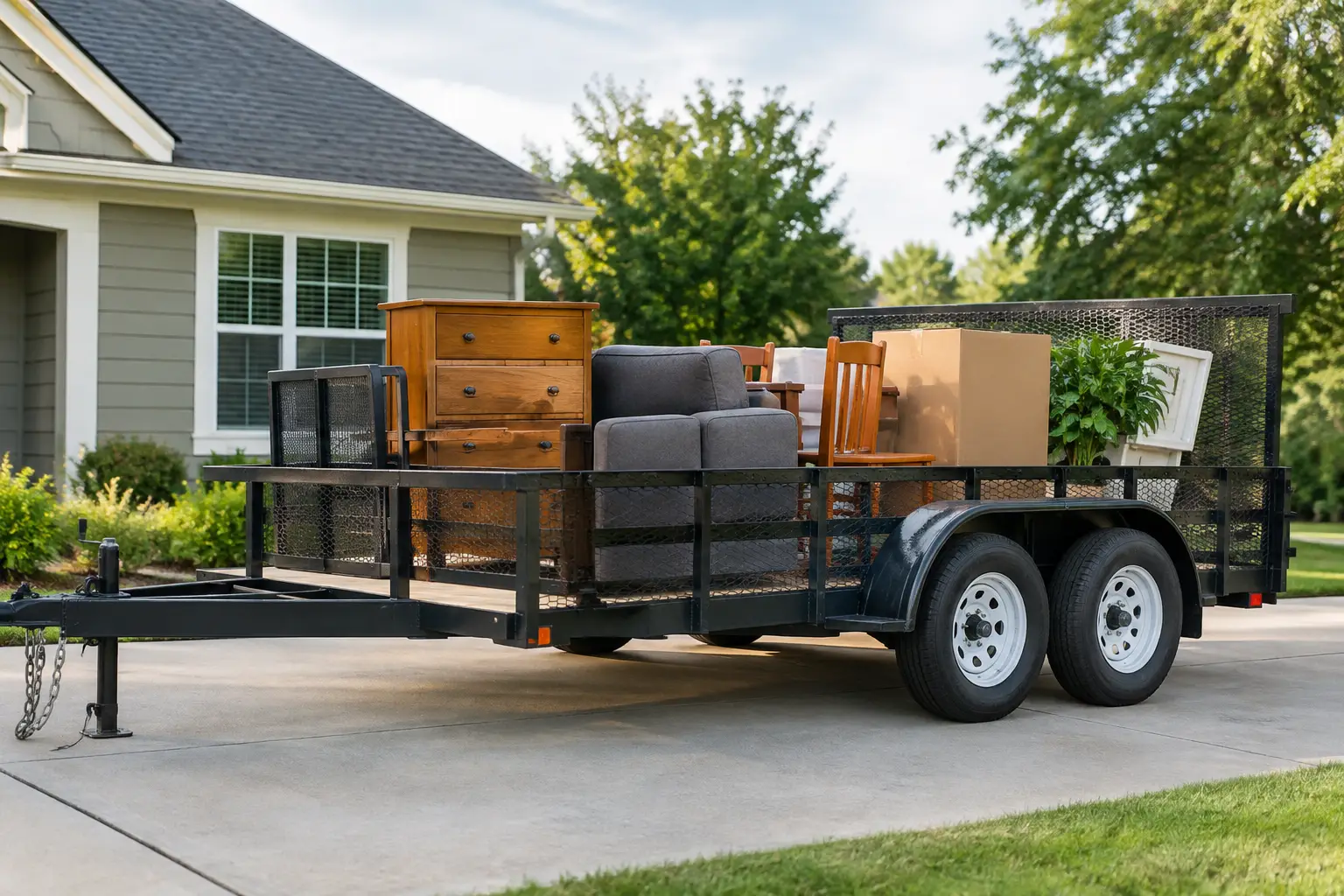
An estate cleanout rarely starts with a neat stack of boxes by the curb. It usually starts with a garage full of old paint cans, a shed with broken tools, furniture that will not fit in a pickup bed, and a house where every closet has one more surprise. Choosing the best trailers for estate cleanouts can save multiple dump runs, prevent overloads, and make a difficult job feel manageable.
The right trailer depends less on the square footage of the house and more on what is inside it. A cleanout involving bags, boxes, and light household items calls for a different setup than one involving appliances, wet carpet, construction debris, or a property with years of accumulated belongings. Start with the material, the access, and the tow vehicle before deciding how much trailer you need.
What Makes a Trailer Right for an Estate Cleanout?
For most cleanouts, volume matters first. Furniture, mattresses, boxes, and loose household items take up space fast, even when they are not especially heavy. A trailer with adequate deck length and side height lets you load efficiently instead of building an unstable pile and making extra trips.
Weight still matters. Old books, cast-iron cookware, tile, dirt, appliances, and water-damaged material can turn a seemingly ordinary load into a heavy one. Trailer capacity, your vehicle’s towing rating, hitch rating, and payload all need to work together. The trailer may be able to carry the load, but that does not mean your SUV or truck is rated to pull it safely.
Access is the other part people often overlook. If the trailer needs to back down a narrow driveway, turn around near a hillside home, or fit beside a carport, a bigger trailer is not automatically better. The best choice is the largest trailer you can safely tow, load, maneuver, and unload for the job at hand.
Best Trailers for Estate Cleanouts by Load Type
Open utility trailers for general household items
An open utility trailer is often the practical choice for a standard estate cleanout. It works well for boxed belongings, bagged trash, small furniture, yard waste, shelving, and items headed to donation or the transfer station. The open design makes it easy to load from either side and simple to sort as you go.
This is a good fit when the property is reasonably organized or when you plan to make separate piles for donation, recycling, and disposal. It is also easier to use when several family members or workers are carrying items out at once.
The trade-off is weather and load security. In the Verde Valley, wind can make lightweight debris a problem quickly. Bring a properly sized tarp, ratchet straps, and a cargo net where appropriate. A load that looks secure in a driveway can shift on the road to the disposal site.
High-side trailers for bulky, loose loads
For cleanouts with mattresses, cushions, bagged clothing, broken-down furniture, and piles of miscellaneous household goods, taller sides can be a major advantage. They keep the load contained and reduce the temptation to stack loose items above the trailer rails.
High sides are especially useful when a home has been packed full over many years. The contents may be light but awkward, and the trailer can fill before it gets heavy. Rather than cramming everything into a pickup bed or taking repeated small loads, a higher-sided trailer gives you room to work.
Do not confuse more volume with unlimited capacity. Load heavy items low and toward the front of the trailer, then fill around them with lighter material. Keep enough weight forward of the trailer axle for stable towing, but do not overload the tongue weight of the tow vehicle.
Dump trailers for heavy debris and renovation material
A dump trailer can be the better tool when the estate cleanout includes dense, hard-to-handle material. Think broken furniture, demolition debris, old fencing, landscaping waste, soaked carpet, roofing material, or a large amount of trash that cannot be easily lifted back out by hand.
The main benefit is unloading. At a disposal site, a dump-capable trailer can save a lot of labor compared with climbing into an open trailer and dragging out heavy debris. For a property cleanout paired with repairs or yard cleanup, that difference can be substantial.
Still, a dump trailer is not necessary for every estate job. It can be more trailer than you need for a few rooms of boxed belongings and light furniture. It also requires a tow vehicle that can handle the loaded weight. If your cleanout is mostly household contents, an open utility trailer may be simpler and more cost-effective.
Enclosed trailers for items worth protecting
An enclosed trailer makes sense when part of the cleanout includes belongings that need to stay dry, clean, or secure before they are delivered to family, storage, an estate sale, or a donation center. It can be useful for antiques, documents, electronics, tools, and furniture that should not ride exposed to dust, rain, or road debris.
For disposal-only loads, however, enclosed trailers are not always the best answer. They can be slower to load, harder to sweep out, and less convenient for oversized furniture. Use one when protecting the contents matters as much as moving them.
Car haulers when a vehicle is part of the estate
Some estate cleanouts include a vehicle that has been sitting in a garage, driveway, or carport. A car hauler is built for that purpose, not for hauling loose household debris. If the estate includes a car, truck, side-by-side, or other rolling equipment that needs transport, use a trailer designed to secure it correctly.
Keep the vehicle move separate from the household cleanout whenever possible. Mixing furniture, trash, and a vehicle on one trailer creates safety problems and makes loading more difficult. A car hauler should be used with proper tie-down points, wheel straps or approved restraints, and a tow vehicle rated for the combined weight.
Size the Trailer Around the Real Job
Before booking, walk the property and make three categories: items to keep, items to donate or sell, and items to dispose of. This step prevents a common mistake – renting for the pile you can see while forgetting the attic, shed, backyard, and storage room.
Estimate whether you are dealing with one moderate load, several bulky loads, or heavy debris. A small trailer can be the smart choice for a quick cleanout with limited driveway access. A larger trailer can reduce trips for a whole-home cleanout, but only if your towing setup supports it and the route is manageable.
It also helps to plan the order of loading. Put donation items aside before the trailer arrives, if possible. Load heavy disposal items first, then bulky light items. Keep anything that might leak, break, or create a mess contained. Separate hazardous materials, including chemicals, fuel, batteries, paint, and propane cylinders, because disposal facilities often have specific rules for them.
Towing and Loading Rules That Matter
Estate cleanouts have a way of growing throughout the day. That is exactly when people overload a trailer, skip straps, or toss one more item on top. Avoid that last-load mindset.
Use these basics on every trip:
- Confirm your tow vehicle’s towing capacity and the trailer’s load capacity before loading.
- Keep the heaviest items low, centered, and slightly forward of the axle.
- Secure furniture, appliances, and stacked boxes with rated straps.
- Check tire condition, lights, coupler connection, safety chains, and brake operation before leaving.
- Cover loose material and avoid loading above the trailer sides.
- Make a short stop after the first few miles to recheck straps and the load.
A properly loaded trailer should feel controlled, not like it is pushing the tow vehicle around. If it sways, rides nose-high, or feels unstable, stop and correct the load before continuing.
Plan for Disposal Before You Load
A trailer rental solves the hauling part, but the disposal plan determines how smoothly the day goes. Check what your chosen facility accepts, whether there are load limits or fees, and whether certain materials need to be separated. Mattresses, electronics, appliances, tires, paint, and hazardous waste may follow different rules than regular household trash.
For homes in Clarkdale, Cottonwood, Sedona, Camp Verde, and nearby Verde Valley communities, planning the route can matter too. Steep grades, narrow residential roads, and busy weekend traffic are all easier to handle when you are not towing an overloaded trailer for the first time.
If you are unsure what size or style fits your cleanout, ask before you book. A local rental team that actually picks up the phone can help you match the trailer to your vehicle, driveway, and expected load. Monsoon Trailer Rental focuses on dependable equipment and straightforward answers, so you can spend less time guessing and more time getting the property cleared.
The best trailer is not the biggest one in the lot. It is the one that lets you haul the full job safely, keep the load under control, and finish the cleanout without getting soaked by extra trips or avoidable problems.

