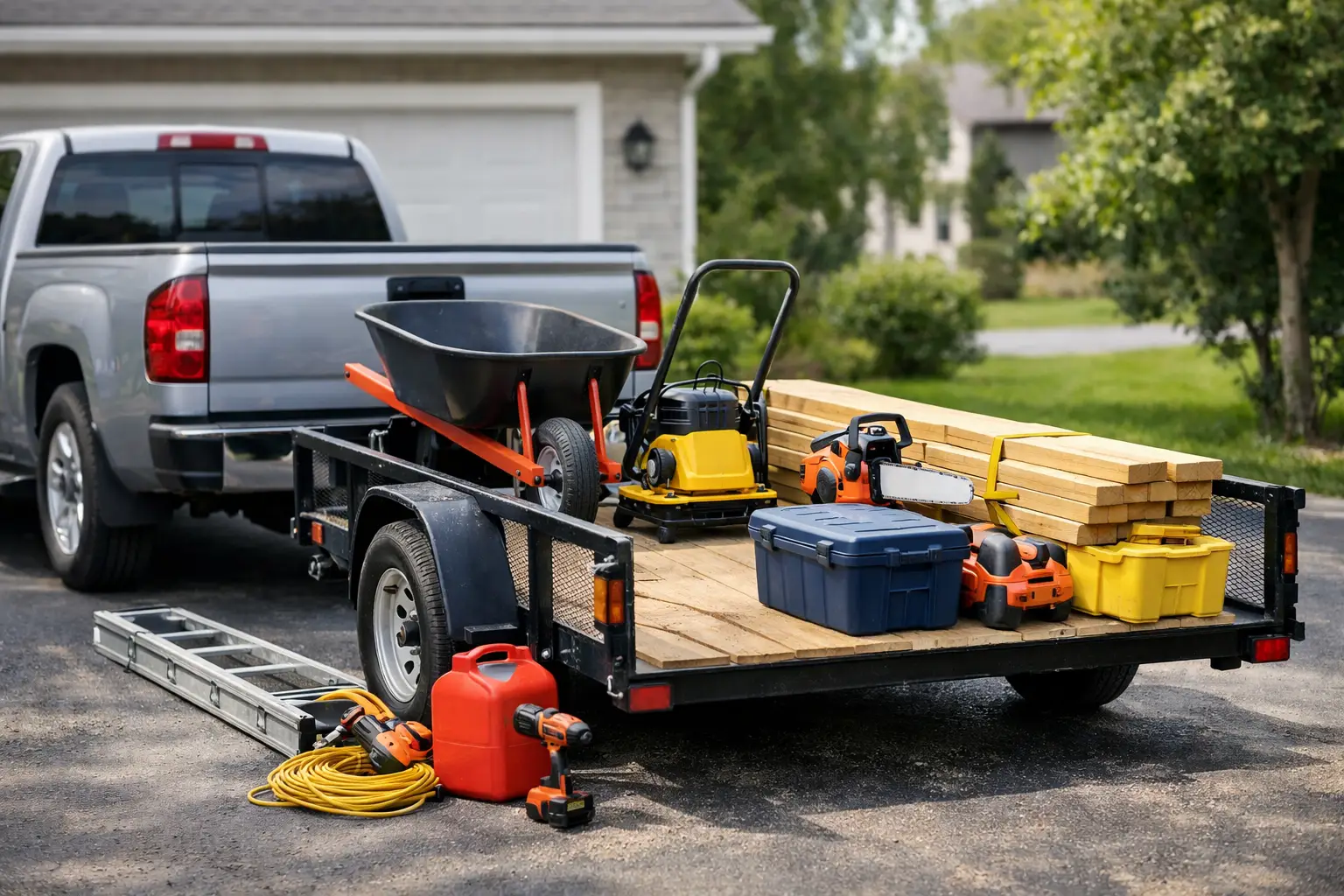

A trailer that looks fine in the driveway can become a problem fast when it is loaded with a skid steer, pallets of block, or a compact excavator. For working crews, the best trailer features for contractors are the ones that save time at the jobsite, keep the load under control, and hold up through regular use. Fancy extras are nice, but the right capacity, ramps, brakes, and tie-down points do the real work.
The right trailer depends on what you haul most often. A landscaper moving mowers has different needs than a remodeler hauling debris or a contractor transporting a machine between Verde Valley jobs. Start with the load, the tow vehicle, and the roads you will travel. Then choose features that make daily hauling easier instead of paying for more trailer than the job requires.
Best Trailer Features for Contractors on Real Jobs
Enough payload capacity with room to spare
Payload capacity should be the first thing on the list. It is not the same as the trailer’s empty weight or its gross vehicle weight rating, also called GVWR. Payload is the amount of cargo the trailer can safely carry after accounting for the trailer itself.
Add up the actual weight of the equipment, materials, fuel, attachments, toolboxes, and anything else that may be loaded. A mini excavator with a bucket is heavier than the number on a sales sheet can make it seem. The same goes for wet landscaping debris, lumber bundles, and construction waste.
A little capacity margin is a good thing. It gives you flexibility when a job adds an attachment or a load of material. That said, bigger is not automatically better. A heavier trailer can reduce what your truck can tow, cost more to rent, and be harder to maneuver in a tight driveway. Match the trailer to the loads you truly haul, not the biggest possible load once every few years.
Electric brakes for heavier loads and Arizona grades
For contractors hauling equipment or loaded materials, trailer brakes are one of the most valuable safety features available. Electric brakes help the trailer slow down with the tow vehicle rather than pushing the truck forward when traffic stops or the road drops away.
This matters on steep or winding routes, especially when traveling around Jerome, Sedona, or other hilly parts of the area. Even on flat roads, brakes reduce strain on the truck and give the driver more control when a load shifts or traffic changes quickly.
Your tow vehicle needs a working brake controller for electric trailer brakes to do their job. Before pickup, confirm that your vehicle’s connector, controller, towing capacity, and hitch setup are ready for the trailer you plan to use. It takes only a few minutes to check, and it is much better than finding out at the edge of a busy road.
Ramps that fit the equipment
Loading ramps are not all the same. The best ramp style depends on the equipment’s ground clearance, tire width, and loading method. A mower, side-by-side, compact tractor, or skid steer may all need a different approach.
A long, gradual ramp angle is easier on low-clearance equipment and helps prevent scraping or sudden jolts as a machine transitions onto the deck. Wide ramps support equipment with wider tires. A full-width mesh gate can be convenient for certain loads, but it may add wind resistance and can limit visibility behind the trailer.
For heavier equipment, look for ramps that are solid, easy to deploy, and rated for the machine being loaded. The ramp must also be secured before travel. A loose ramp is not a minor inconvenience. It can become a road hazard quickly.
A deck size that works without wasted space
Deck length and width determine whether you can place a load correctly. Equipment should sit far enough forward to create proper tongue weight, but not so far forward that it overloads the hitch or crowds the truck on sharp turns. A trailer that is barely long enough often makes this balancing act harder.
For general contractor work, an open utility trailer can be a practical choice for tools, lumber, debris, and light equipment. An equipment trailer may be a better fit for heavier machines because it is built around a stronger frame, a lower deck, and more substantial loading equipment. Car haulers work well for vehicles, but can also be useful for certain wheeled machines when the weight and tie-down points line up.
Extra deck space is useful when it lets you separate materials from equipment or load safely. It is less useful if it creates a trailer that your truck cannot comfortably pull or park. Think about the access at your regular jobsites, including gates, alleys, gravel drives, and crowded supply yards.
Secure, accessible tie-down points
A load is only as safe as the way it is secured. Good tie-down points should be strong, easy to reach, and positioned where they make sense for real equipment. Stake pockets, D-rings, rub rails, and built-in tie points each have their place, but they need to work with your straps, chains, binders, and the load itself.
For wheeled equipment, four-point securement is the standard approach: secure each corner so the machine cannot move forward, backward, or side to side. Use rated equipment that is appropriate for the weight and type of cargo. Do not rely on a single strap over a bucket, a mower deck, or a loose attachment.
Tie-down points also help with everyday materials. A stack of plywood, ladders, or debris bags can catch wind and shift if it is not restrained. Taking a few extra minutes at loading is cheaper than replacing materials or dealing with a damaged trailer on the side of the road.
A solid frame, good tires, and working lights
The features people notice first are often ramps and deck size. The features that keep a haul moving are usually underneath: the frame, axles, tires, bearings, wiring, and lights. Contractors do not need a trailer that looks impressive for one afternoon. They need one that tracks straight, carries weight properly, and is ready to go when the workday starts.
Before towing, walk around the trailer. Check tire condition and inflation, coupler engagement, safety chains, wiring plug, lights, ramp latches, and visible damage. Test the brake lights, turn signals, and running lights. If the trailer has a breakaway system, make sure its battery and cable are in good working order.
A rental trailer should make this easier, not harder. Dependable maintenance and a clear handoff matter because a missed day on a job can cost more than the trailer rental itself.
Features That Make Contractor Hauling Easier
A few practical details can make a noticeable difference over a long day. A tongue jack reduces the effort of lifting and positioning the trailer at the hitch. A treated wood deck provides grip and gives you options for securing odd-shaped materials. A low deck height makes loading easier, while a higher deck may provide more ground clearance on rough access roads.
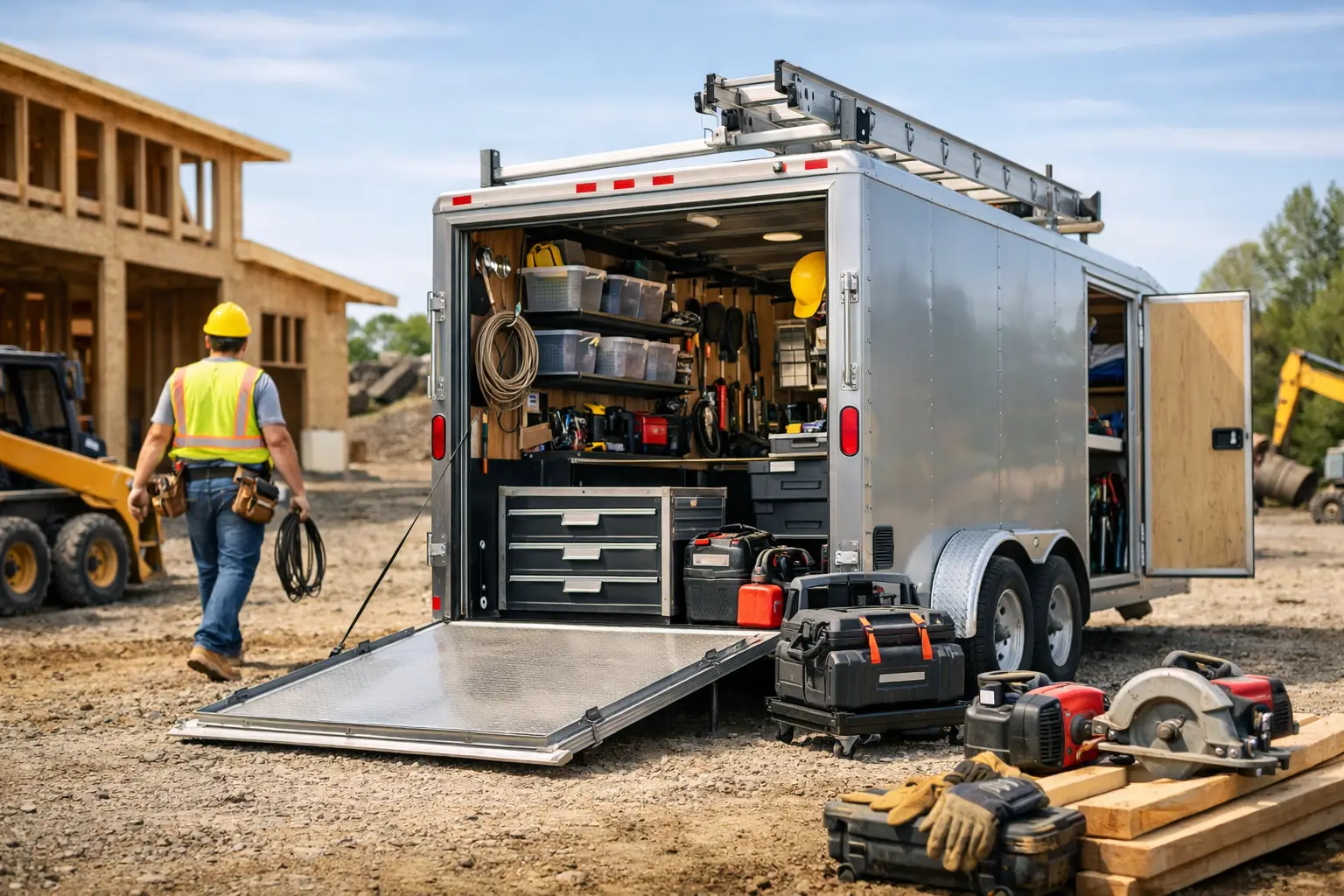
Tool storage can also be useful, but only if it does not eat up needed deck space or add unnecessary weight. For occasional hauling, simple is often better. A clean deck, reliable ramps, good tie-downs, and enough capacity will serve more jobs than a trailer loaded with accessories you rarely use.
Choose Features Around Your Truck, Not Just the Load
The trailer has to match the tow vehicle. Check the truck’s towing rating, payload rating, hitch rating, and receiver size. Do not overlook the weight of passengers, tools, and cargo already in the truck bed. Those all count toward the vehicle’s limits.
Proper tongue weight is another key part of stable towing. Too little weight on the hitch can cause sway. Too much can overload the rear of the truck and affect steering and braking. As a general rule, place the load so roughly 10 to 15 percent of the loaded trailer weight rests on the hitch, then confirm the trailer is level and the load is secured before leaving.
If you are new to towing, give yourself room to practice backing, turning, and braking with an unloaded trailer first. A local rental team that actually picks up the phone can also help you sort out which trailer size and setup fit the job before you book.
For contractors across Clarkdale, Cottonwood, and the wider Verde Valley, the best choice is usually the trailer that handles today’s work safely and can cover the next job without creating a headache. Monsoon Trailer Rental keeps the process straightforward: bring the details of what you need to haul, confirm your tow vehicle, and choose dependable equipment that helps you get loaded, get moving, and get back to work.