
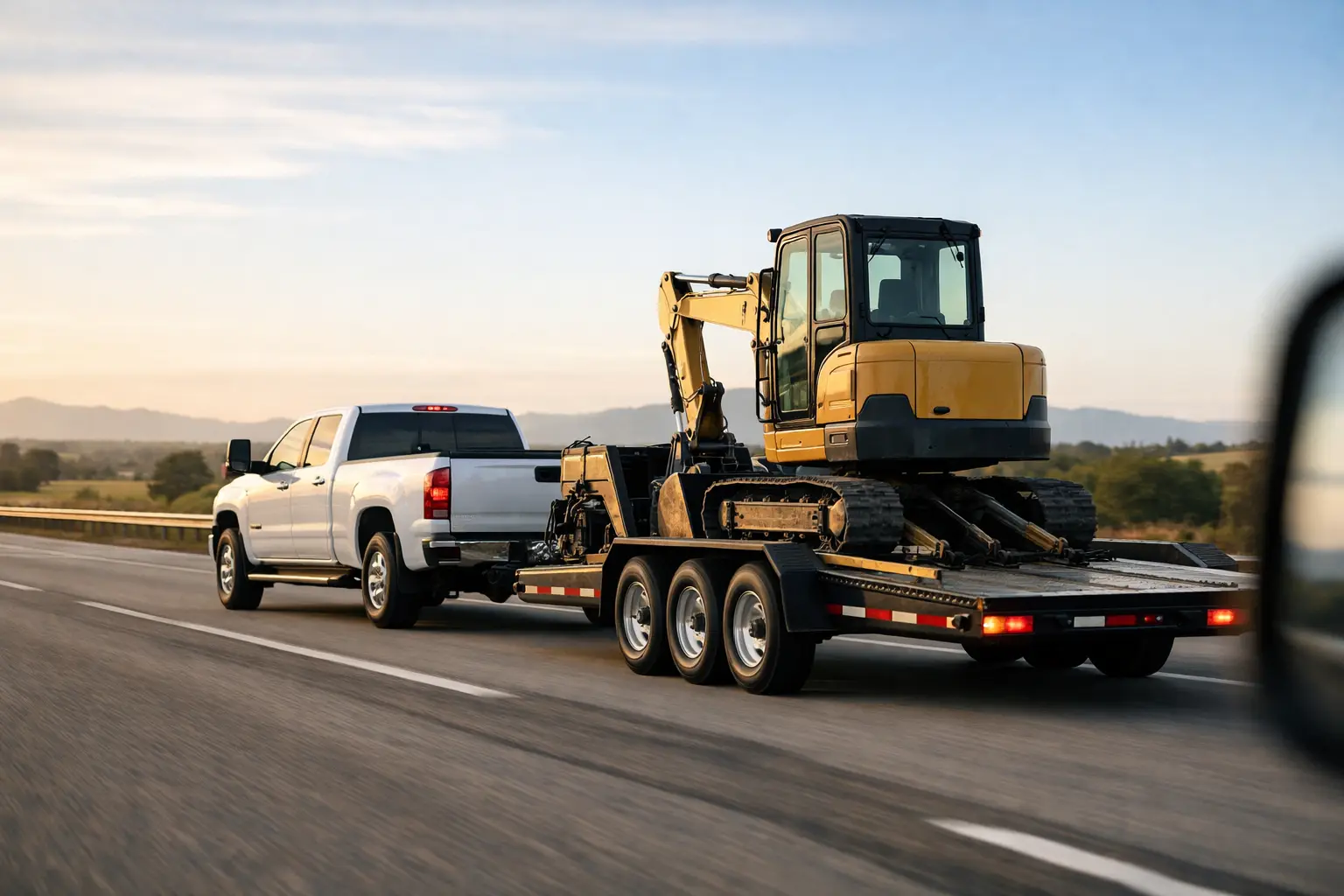
A trailer can look loaded and ready while being one bad turn, one steep grade, or one hard stop away from trouble. When you are moving a vehicle, skid steer, pallet of materials, or a full load of debris, knowing how to tow heavy loads starts before the hitch ever clicks into place.
Heavy towing is not about muscling through the job. It is about matching the truck, trailer, load, and equipment correctly, then leaving yourself enough room to drive without surprises. That matters on every road, but especially around the Verde Valley, where grades, tight turns, wind, and rough jobsite access can expose a bad setup fast.
How to Tow Heavy Loads Starts With Ratings
The first question is not, “Can my truck pull it?” It is, “Can every part of this setup safely handle it?” Your tow vehicle, hitch, ball mount, trailer, tires, coupler, safety chains, and brakes all have ratings. The lowest-rated component is the limit.
Start with the actual weight of what you are hauling. Do not guess based on how big it looks. A compact car, for example, may weigh far more than expected once it has tools, parts, or cargo inside. Equipment weights can change with attachments, fuel, buckets, and loaded tires. Building materials add up quickly too.
You also need to account for the trailer’s empty weight. The combined trailer and cargo weight is called gross trailer weight. Your tow vehicle must be rated to pull that amount, but that is only part of the picture. It also needs enough payload capacity to carry passengers, gear, and the trailer’s tongue weight.
For most properly loaded bumper-pull trailers, tongue weight should generally land around 10% to 15% of the total loaded trailer weight. Too little tongue weight can make the trailer sway. Too much can overload the rear of the tow vehicle, reduce steering control, and push the headlights skyward.
If you are unsure about the weight, get it verified at a certified scale. A few minutes at the scale is cheaper than damaged equipment, a blown tire, or an unsafe tow.
Choose a Trailer That Fits the Job
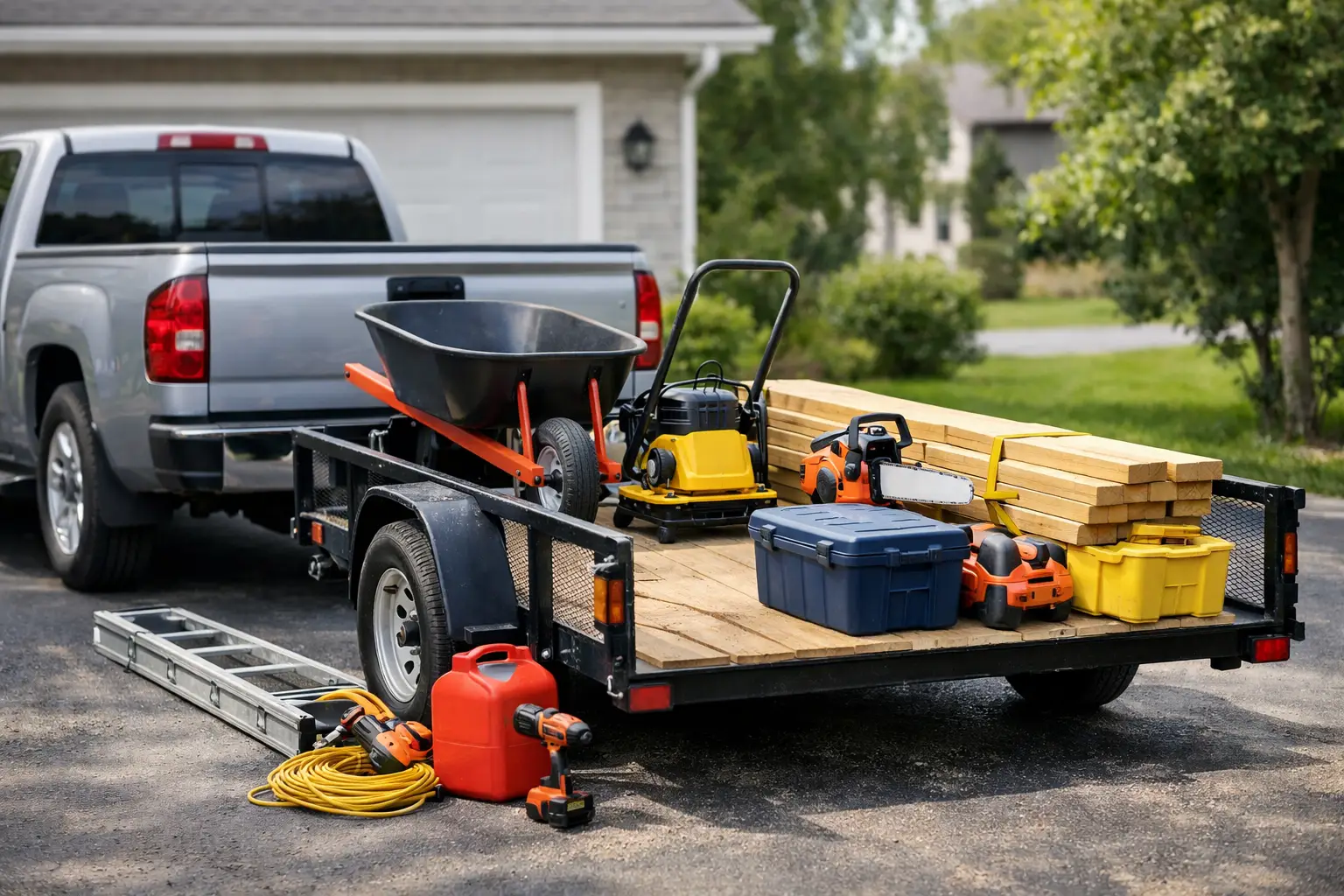
A trailer should fit the load, not just be the first one available. A car hauler is built to carry vehicles securely, with the right deck space, ramps, tie-down points, and braking setup. An open utility trailer may be a better choice for landscaping material, equipment, furniture, or cleanup loads, provided its capacity and dimensions are right.
Length matters. A load hanging too far behind the trailer axle can shift weight off the tongue and make the trailer unstable. Width matters too. Tires, ramps, doors, and vehicle clearance all need to be considered before loading begins.
Trailer brakes are a major safety feature when hauling heavy loads. Arizona rules and equipment requirements can vary by trailer weight and setup, so do not assume your truck alone can stop everything safely. Even when a brake controller is not legally required for a particular load, trailer brakes can make a big difference in control and stopping distance.
A brake controller needs to be adjusted for the trailer and load. Set it too low and the trailer does not contribute enough braking. Set it too high and the trailer tires may lock up. Test it at low speed in a safe, open area before you join traffic.
Load for Balance, Then Secure It for Movement
A heavy load needs to sit slightly forward of the trailer axle, not stacked at the very front and not balanced evenly over the middle. That forward bias creates stable tongue weight. With a vehicle on a car hauler, small adjustments in where the vehicle sits can noticeably change the way the trailer handles.
Load the heaviest items low and centered from side to side. A load that is heavier on one side can cause uneven tire stress, poor handling, and a trailer that leans through corners. Keep loose materials contained. A shovel, cooler, or piece of scrap lumber can become a serious road hazard when it works free.
For equipment and vehicles, use rated tie-down straps or chains made for the load. Do not rely on a parking brake, a transmission in park, or one strap across an axle. Secure the load at proper anchor points, use enough tie-downs for the job, and keep straps away from sharp edges that can cut them under tension.
After driving a few miles, pull over somewhere safe and inspect everything again. Straps can settle, chains can shift, and a vehicle can move slightly as the trailer flexes. Check the coupler, safety chains, breakaway cable, tires, lights, and tie-down tension before continuing.
Do a Real Pre-Trip Check
A quick walk-around is not wasted time. It is where you catch the basic mistakes that can turn a normal rental into a long day on the shoulder.
Before leaving, make sure the coupler is fully seated and latched on the correct size ball. The hitch pin should be installed, safety chains should be crossed under the coupler without dragging, and the breakaway cable should be attached to the tow vehicle separately from the chains. Do not hook the breakaway cable to the chains themselves.
Check that all trailer lights work: running lights, brake lights, turn signals, and hazards. Look at every tire, including the spare if the trailer has one. Tires should be properly inflated, free of visible damage, and rated for the load. A trailer tire failure at highway speed can damage the trailer, the cargo, and nearby vehicles in a hurry.
Also check your mirrors. You need to see down both sides of the trailer and watch for tire trouble, load movement, and traffic around you. If the trailer is wider than your truck or blocks your rearward view, proper towing mirrors are worth having.
Drive Like You Have Extra Weight Behind You
A heavy trailer changes the way your truck accelerates, turns, climbs, and stops. Give yourself more following distance than usual – at least several extra seconds in normal conditions, and more when roads are wet, downhill, or crowded. The extra space is for braking, not for other drivers to fill, so stay alert and ease off the throttle early when traffic begins to slow.
Make wider turns and watch the trailer wheels. Trailers cut corners tighter than the tow vehicle, which can put tires into curbs, rocks, ditches, or parked vehicles. Avoid sudden steering corrections. If the trailer starts to sway, keep the steering wheel steady, ease off the accelerator, and apply the trailer brakes manually if your controller allows it. Do not accelerate through sway, and do not jerk the wheel.
On long downhill grades, shift to a lower gear before speed builds. Riding the truck brakes can overheat them and reduce their effectiveness. A lower gear helps control speed while preserving braking power for when you truly need it.
Watch your speed even if the road feels open. Trailer tires, road conditions, wind, and load balance all play a part. The safe speed may be below the posted limit, particularly on rough roads or through tight curves. Leave more room for lane changes, and avoid passing unless you have plenty of distance and a clear view ahead.
Know When to Ask for Help
There is no prize for forcing the wrong setup to work. If your truck’s ratings are close to the load, if you do not have a brake controller, or if you are not sure where a vehicle should sit on the trailer, stop and get answers before leaving.
A local rental provider should be able to help match the trailer to the job and explain the basic hookup and loading considerations. At Monsoon Trailer Rental, the goal is simple: get you dependable equipment for the haul without soaking you on high rates or leaving you to figure it out alone.
The best heavy tow is usually the boring one. The load stays put, the trailer tracks straight, the brakes work as expected, and you arrive with enough time and control to unload safely.