
A trailer tire can look fine when you hook up, then show cords on one edge a few trips later. That is why trailer tires wear unevenly: the tire is usually reacting to a problem with pressure, load, alignment, or a worn part underneath the trailer. Catching the pattern early can save a tire, prevent a roadside delay, and make the trailer safer to tow.
Trailer tires do not wear exactly like vehicle tires. They are built to carry weight, not to steer or provide ride comfort. When a tire starts wearing on one shoulder, in the center, in patches, or faster than the tire on the other side, it is giving you useful information. The key is knowing what to inspect before the next haul.
Why trailer tires wear unevenly
Uneven wear is rarely just bad luck. In many cases, more than one issue is involved. A tire that was run low on air can get hot and weaken internally. Add a heavy, unevenly loaded trailer or an axle that is slightly out of line, and that tire may wear out much sooner than expected.
The most common causes are incorrect tire pressure, overloaded or poorly balanced cargo, bent or misaligned axles, worn suspension or wheel bearings, and tire damage from age or heat. Arizona roads, summer temperatures, gravel driveways, and frequent short-haul work can make small issues show up faster.
Low or high tire pressure
Low pressure is one of the biggest tire killers on a trailer. An underinflated tire flexes more as it rolls, which builds heat in the sidewall and wears both outer shoulders. It may look slightly rounded at the edges, and it can eventually fail even if the tread still appears usable.
Too much pressure usually wears the center of the tread faster. That said, trailer tires should not be inflated by guessing or by using the pressure listed on the tow vehicle’s door sticker. Check the tire sidewall, trailer placard, and trailer manufacturer’s recommendation. Many trailer tires are designed to run at their rated cold pressure when carrying a normal working load, but the correct pressure still depends on the tire’s load rating and the trailer setup.
Check pressure when the tires are cold, before driving. A quick gauge check before loading takes less time than replacing a damaged tire on the side of the road.
Too much weight or an unbalanced load
Overloading wears tires quickly, especially on a single-axle trailer where each tire carries a major share of the load. It also creates excess heat, strains bearings and suspension parts, and makes a blowout more likely.
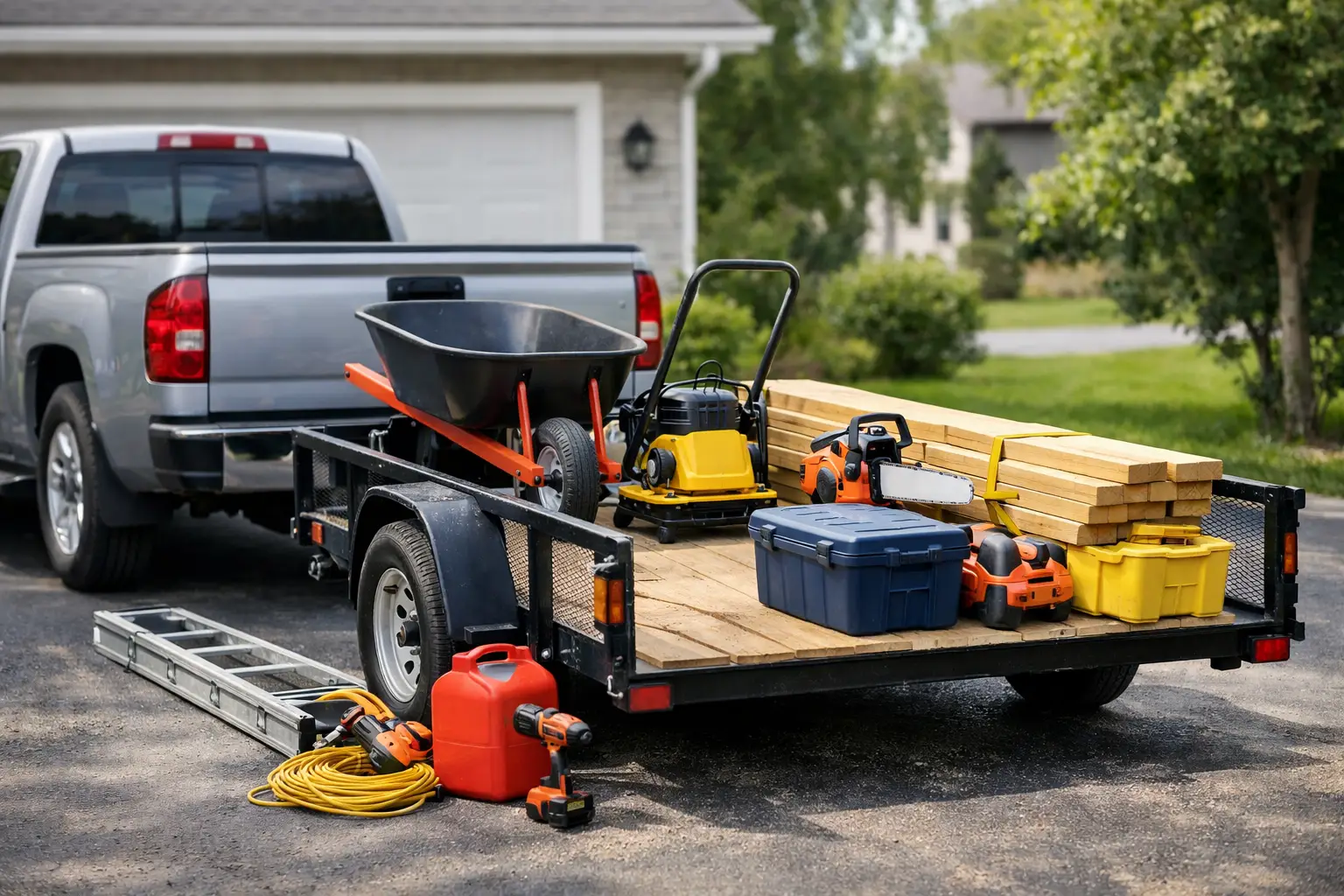
Load placement matters just as much. A load that sits too far to one side can overload the tires on that side. A vehicle loaded crooked on a car hauler, a pallet placed near one fender, or landscaping material piled against one rail can all cause one tire to wear faster than the other.
For most trailers, keep the load centered side to side and place enough weight forward to maintain stable tongue weight. Do not put all the weight at the very front, either. The goal is a level, stable trailer with the load secured and distributed across the deck.
Axle alignment or a bent axle
If one tire is worn heavily on the inside or outside edge, alignment deserves attention. Trailer axles can get knocked out of position by a hard curb strike, pothole, overloaded trip, or backing mishap. On tandem-axle trailers, poor alignment can make the tires scrub sideways as the trailer tracks down the road.
A trailer may still seem to tow normally with a slightly bent axle or misaligned suspension. That is what makes this issue easy to miss. The tire tells the story first. Look for feathering across the tread, where one direction feels smooth and the other feels sharp, or rapid wear on one shoulder.
Do not try to solve alignment wear by simply replacing the tire. The new tire will wear the same way. A trailer shop can measure axle alignment and inspect the axle tube, spring mounts, equalizers, and hangers to find the actual cause.
Worn bearings, hubs, or suspension parts
A loose wheel bearing can let the wheel wobble slightly, causing uneven tread wear and damaging the hub if ignored. Worn bearings may also produce a growl, rumble, or excessive heat at the hub after a drive.
Suspension parts matter too. On leaf-spring trailers, worn bushings, broken springs, damaged equalizers, or loose U-bolts can change how the axle sits under the trailer. That change can shift the tire’s contact patch and lead to edge wear. Torsion-axle trailers have fewer visible moving parts, but a damaged arm or failed internal rubber system can also affect ride height and tire wear.
After towing, carefully compare hub temperatures from side to side without touching a potentially hot hub directly. One hub that is much hotter than the others is a reason to stop and inspect before another trip.
What the tread pattern is telling you
The shape of the wear can point you toward the right repair. It is not a perfect diagnosis, but it helps narrow the search.
- Both outer edges worn: Usually low tire pressure, overloading, or too much heat from long-distance towing.
- Center tread worn: Often overinflation, though it can also happen if the tire is not matched correctly to the trailer’s load.
- Inside or outside edge worn: Commonly an alignment problem, bent axle, worn suspension component, or bearing-related wheel movement.
- Cupping or scalloped patches: Often linked to loose bearings, worn suspension, an out-of-round tire, or an unbalanced wheel.
- One tire wearing much faster than its match: Check load balance, brake drag, alignment, hub condition, and whether both tires are the same size, type, and age.
If the tread is down to the wear bars, the cords are visible, or there are bulges, deep cracks, or separated tread, the tire is done. Do not move it to another position and hope for the best.
Check the basics before every haul
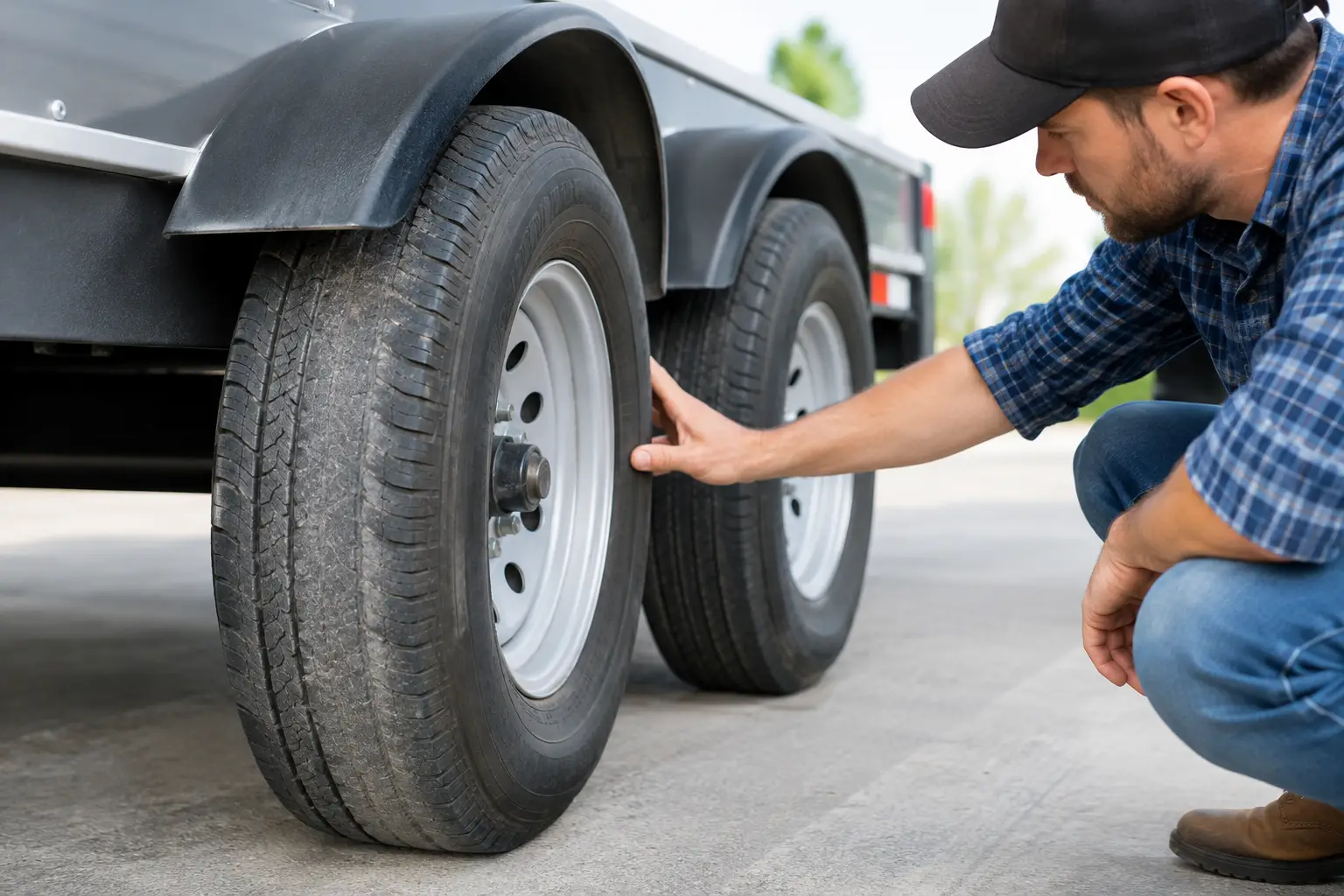
A short walkaround can catch most tire problems before they turn into a trip-ending issue. Start by looking at all tire tread, including the inside edge that is easy to overlook. Check for nails, sidewall damage, cracking, uneven tread depth, and debris wedged between dual trailer tires if applicable.
Then check cold tire pressure with a quality gauge. Confirm that the tires match in size and load range on each axle. Mixed tire sizes or significantly different tread depths can make a tandem trailer track poorly and can put extra stress on one tire.
Before loading, know the trailer’s gross vehicle weight rating and do not exceed it. Estimate the weight of the cargo honestly. Dirt, gravel, lumber, water tanks, and compact equipment can weigh more than they look. Secure the load so it cannot shift, and keep it centered whenever possible.
For renters, this is one reason a quick conversation about the job matters. A trailer that fits a couch cleanup may not be the right setup for a car, mini excavator, or heavily loaded landscaping run. Monsoon Trailer Rental can help match the trailer to the haul so customers are not trying to make the wrong equipment do too much.
When uneven tire wear needs professional attention
Pressure adjustments and better loading habits can prevent many problems, but they will not fix damaged hardware. Have the trailer inspected when wear returns after proper inflation, when the trailer pulls or bounces strangely, when a hub runs hot, or when one tire has clear edge wear or cupping.
A qualified trailer technician can check bearings, brakes, suspension, wheel balance, axle alignment, and frame damage. This is especially worthwhile after striking a pothole, curb, or rock hard enough to feel through the tow vehicle. A small repair now is usually cheaper than a tire failure, damaged fender, or lost day on the job.
Tires are one of the simplest parts of a trailer to inspect and one of the easiest to ignore until they fail. Give them a close look before you load up, keep the weight where it belongs, and treat uneven tread as an early warning instead of a cosmetic issue.