
A truck bed fills up fast when you are clearing a property, moving a vehicle, or hauling materials for a job. When people search for the best trailer options Cottonwood has to offer, the right answer usually comes down to the load, the tow vehicle, and how far it needs to travel. Renting the biggest trailer available is not always the smart move. Renting one that is too small can turn a simple haul into multiple trips or an unsafe setup.
For Verde Valley homeowners, contractors, and vehicle owners, a good rental trailer should make the work easier without adding surprises at pickup. Start with what you are hauling, then match the trailer to the job.
Best Trailer Options in Cottonwood Start With the Load
Before choosing a trailer, get specific about what is going on it. “A load of stuff” is not enough information. Estimate the weight, measure the longest item, and think about how you will load and secure it. A load of brush is bulky but often light. Pavers, dirt, concrete debris, and equipment can get heavy in a hurry.
Your tow vehicle matters just as much. Check its owner’s manual for the towing limit and maximum tongue weight. Those numbers are not suggestions. They account for the vehicle’s engine, brakes, suspension, hitch rating, and ability to stay stable on the road. The trailer’s empty weight counts toward the total, so a trailer that looks manageable may leave less capacity for cargo than expected.
Also consider your route. A short run across Cottonwood is different from a longer haul through Sedona, Camp Verde, or the grades around Jerome. More distance, traffic, and elevation changes make proper loading and working trailer brakes even more important.
Utility Trailers for Home and Property Projects
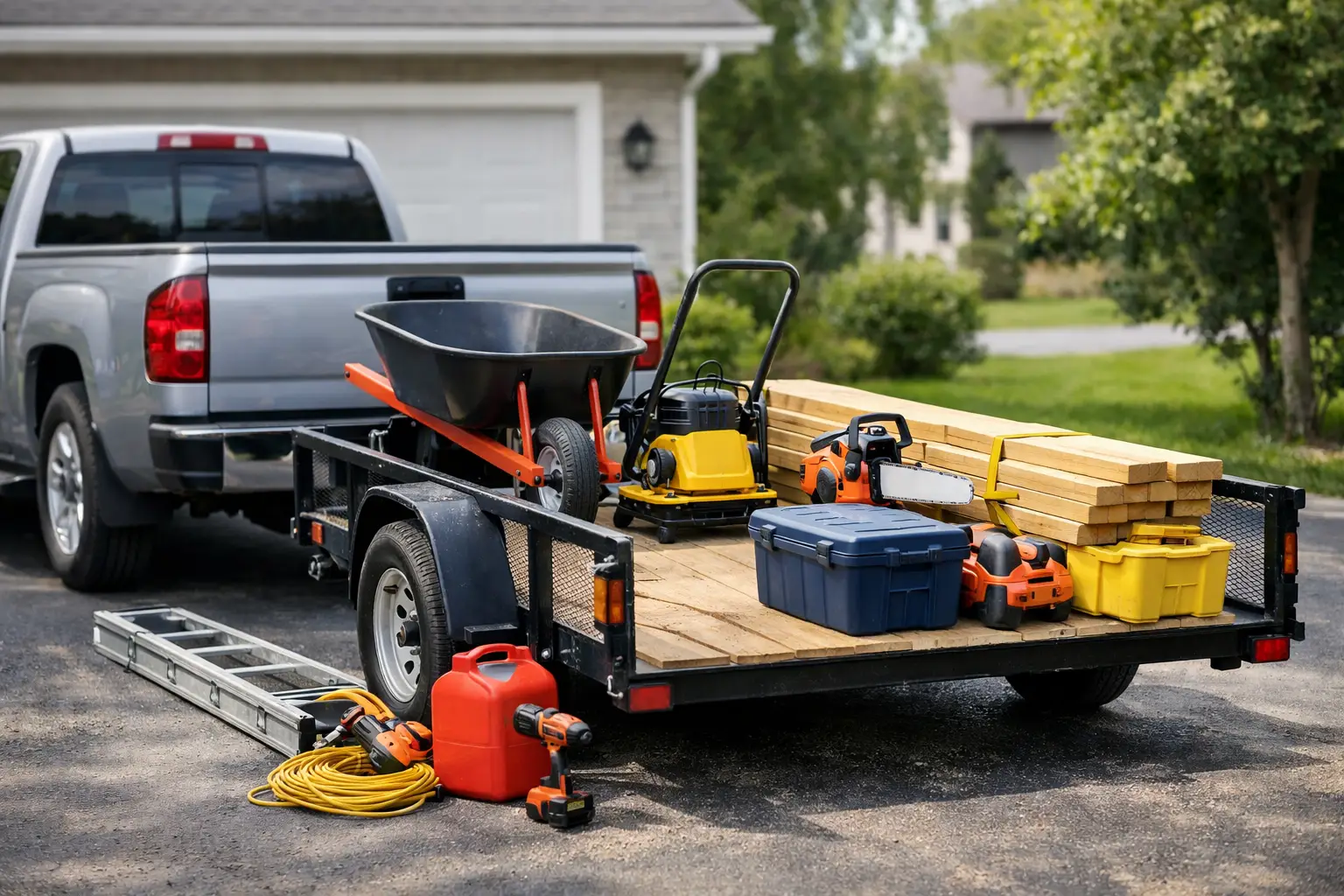
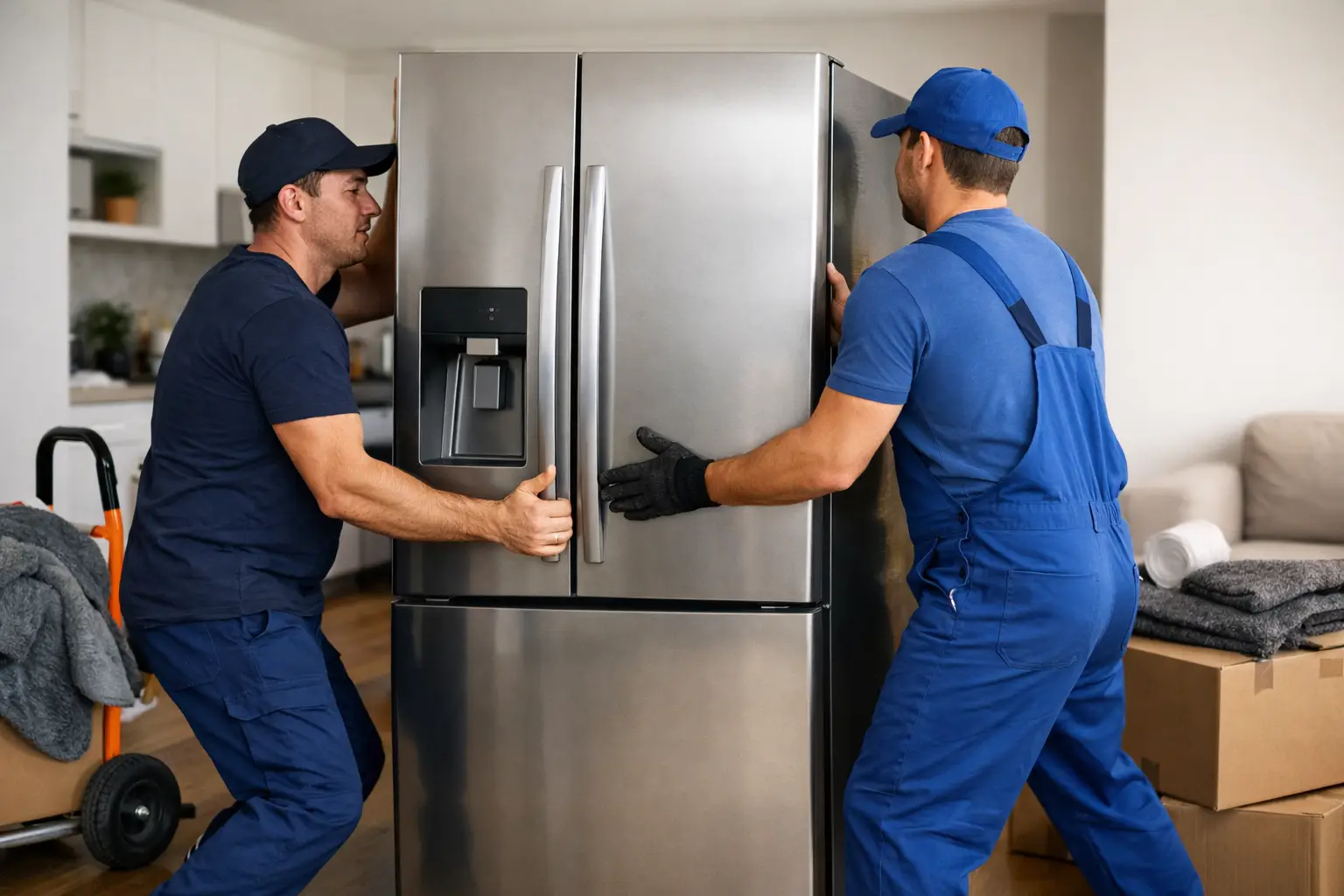
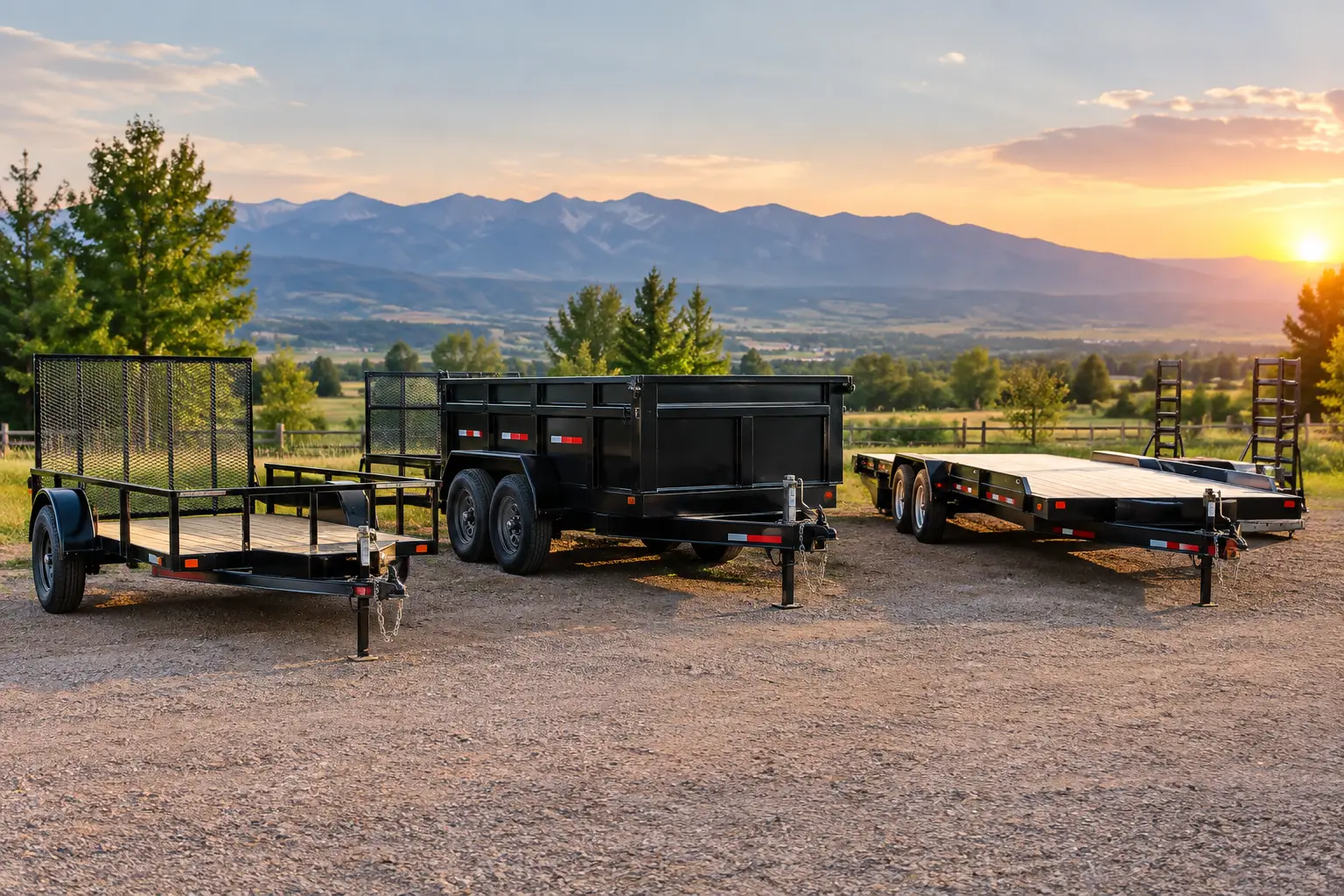
An open utility trailer is often the practical choice for everyday hauling. It works well for furniture, lumber, appliances, yard waste, boxed materials, small equipment, and general cleanup loads. It is easy to load from the rear or sides, and it gives you flexibility when the cargo is not one large, heavy machine.
Utility trailers are especially useful for projects that create more than one type of load. A homeowner replacing a fence may haul new lumber one day and old boards, tools, and debris the next. A landscaper may need room for mowers, trimmers, wheelbarrows, and bagged material. The key is having enough deck space without pulling more trailer than the job requires.
Open trailers do require more attention to securement. Wind can move loose items, and an uneven pile can shift. Bring quality ratchet straps, use the trailer’s tie-down points, and cover light debris with a properly secured tarp when needed. Do not rely on a single rope over a load of loose material.
When a Utility Trailer Is the Better Fit
Choose a utility trailer when your cargo is irregular, you need easy access while loading, or you are making a run to the landfill, supply yard, or storage unit. It is usually a better fit than a car hauler for household goods and yard materials because the usable space is more flexible for mixed loads.
That said, utility trailers have limits. If the cargo is extremely dense or heavy, such as pallets of block or a compact machine, confirm the trailer’s payload rating before booking. Deck size alone does not tell you what a trailer can safely carry.
Car Hauler Rentals for Vehicles and Equipment
A car hauler is designed for a vehicle or wheeled machine that needs a stable, secure platform. It can be the right answer for moving a project car, taking a vehicle to a repair shop, transporting an ATV or side-by-side, or relocating equipment that should not be driven on the road.
The first question is not simply whether the vehicle fits on the deck. You need to know the vehicle’s weight, overall width, wheelbase, and ground clearance. A low car may need careful ramp placement. A longer vehicle needs enough deck length to keep the load properly positioned without hanging too far over the front or back.
Weight distribution is critical with a car hauler. The vehicle should be positioned so there is appropriate tongue weight on the hitch, generally with more of the load weight toward the front half of the trailer. Too little tongue weight can lead to trailer sway. Too much can overload the rear of the tow vehicle, reduce steering control, and make the rig handle poorly.
Use rated tie-downs at the proper attachment points and secure the vehicle according to the trailer provider’s instructions. Parking brakes, wheel chocks, and a transmission in park are not substitutes for properly tied-down wheels or axle straps. Stop after the first few miles to inspect straps and check again during longer trips.
Do Not Guess on a Vehicle Move
If you are not sure whether your truck, SUV, or crossover can tow a loaded car hauler, ask before pickup. A quick conversation can prevent a bad match between the tow vehicle, trailer, and cargo. This is particularly valuable for first-time renters, but experienced haulers benefit too when the load is different from their usual work.
Size, Payload, and Trailer Features That Matter
Trailer selection is about more than length. A trailer needs enough payload capacity for the cargo after accounting for its own weight. It also needs the right deck configuration, ramps, coupler, lighting, safety chains, and brake setup for the intended use.
For a heavy load, trailer brakes can make a real difference in control and stopping distance. Your tow vehicle may also need a compatible brake controller. Confirm that detail before you arrive, not when the trailer is already hooked up.
Pay attention to ramps and loading angle as well. A mower, compact tractor, or low-clearance car may require a different approach than a box of building supplies. Ask how the ramps operate, where the tie-down points are located, and whether your load can be safely loaded and unloaded at both ends of the trip.
A few minutes spent measuring can save an entire afternoon. Measure the cargo’s length, width, and height. Get an accurate weight when possible. Then share that information when you book so the rental team can help narrow down the right option.
Set Up the Tow Vehicle Before Pickup
A dependable trailer still needs a dependable connection to the tow vehicle. Make sure your hitch receiver, ball mount, ball size, wiring connector, and safety chain connection are compatible. The hitch itself must be rated for the loaded trailer weight, not just the empty trailer.
At pickup, test the lights before leaving. Check running lights, brake lights, turn signals, and hazard lights. Cross the safety chains under the tongue so they can help support it if it disconnects. Secure the breakaway cable separately from the safety chains, and make sure it has enough slack for turns without dragging on the ground.
Once loaded, keep the cargo low and balanced from side to side. Avoid placing all the weight at the rear. Confirm that ramps, gates, and loose tools are secured before pulling away. A short walk-around is one of the easiest ways to catch a problem before it becomes a roadside delay.
Why Local Rental Service Makes the Job Easier
A local rental company can be a better fit when you need straight answers about a particular haul. You should be able to explain what you are moving, get practical guidance, and book without dealing with a call center that does not know the area or your timeline.
For customers hauling around Cottonwood and the Verde Valley, convenience matters too. Easy booking, fair rates, dependable equipment, and contactless pickup and dropoff can keep a weekend project or workday moving. You need a trailer that is ready when you are, plus a team that actually picks up the phone if a question comes up.
Monsoon Trailer Rental focuses on the jobs local customers actually need to get done, from property cleanup and material runs to vehicle moves. The best choice is the trailer that matches your load, your truck, and your plan – with no guesswork and no paying for more trailer than you need.
Before you book, write down your cargo dimensions, estimated weight, tow vehicle details, and the date you need the trailer. That small bit of preparation makes it much easier to get on the road safely and finish the haul in one trip.