
A pickup bed can disappear under a few scoops of gravel fast. The same is true for a trailer, which is why the question is not simply, “can trailers haul gravel?” It is whether the specific trailer, tow vehicle, hitch, and load plan can handle it safely.
For a driveway repair, landscape project, or jobsite delivery around the Verde Valley, getting this right matters. Gravel is heavy, it shifts as you drive, and a trailer that looks big enough may run out of legal payload long before it looks full.
Can trailers haul gravel safely?
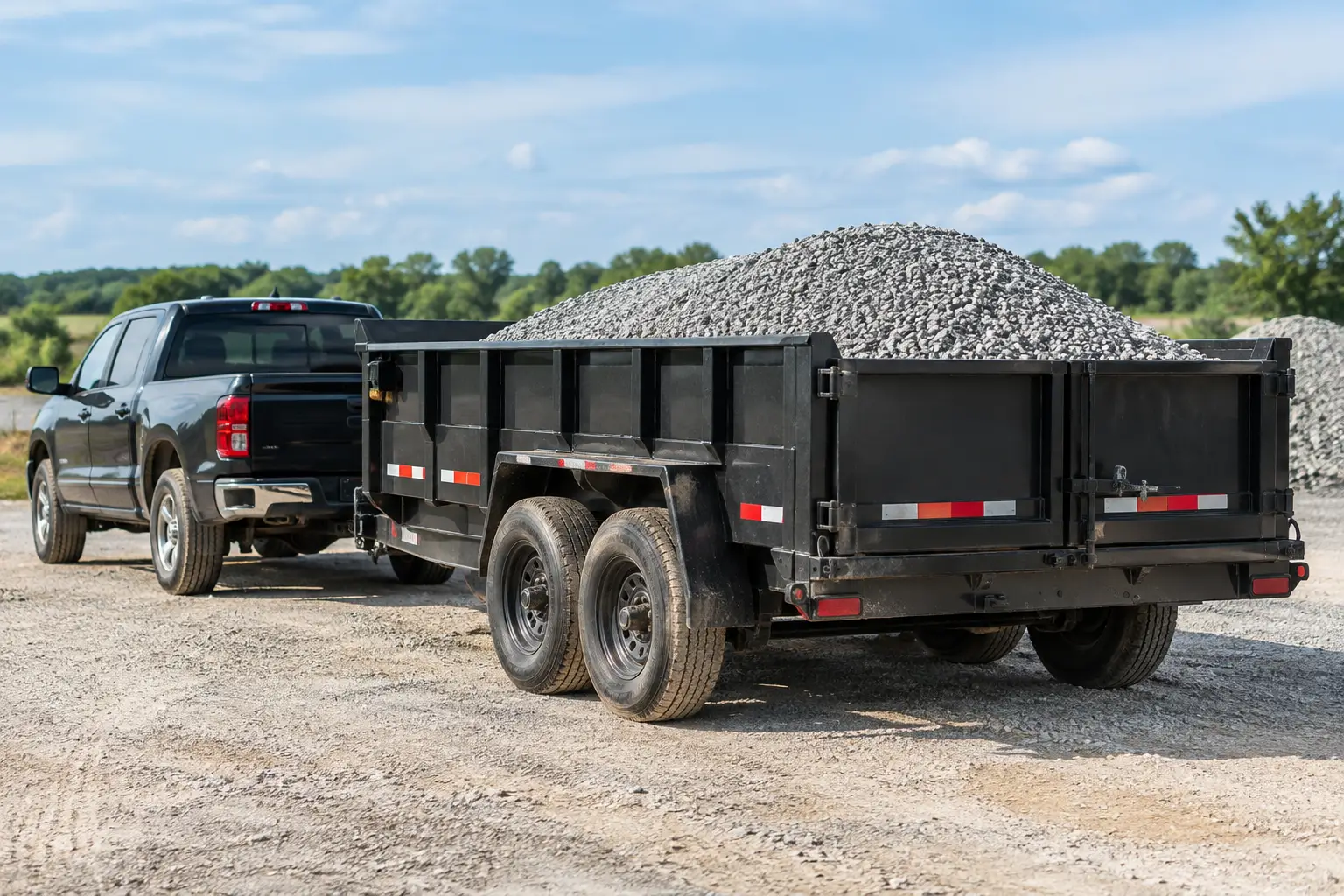
Yes, many trailers can haul gravel safely, but not every trailer should. A dump trailer is generally the best choice because it is built with solid sides and a steel floor, contains loose material, and makes unloading much easier. Some utility trailers and flatbed-style trailers may be rated for the weight, but they may not have the solid floor, sidewalls, or containment needed for loose aggregate.
Car haulers are designed to carry vehicles. Their ramps, open deck design, and low sides make them a poor choice for a loose gravel load unless the trailer has an appropriate solid liner and containment setup and the rental provider approves the use. Do not assume that a trailer’s overall size means it is suited for gravel.
The number that matters most is payload capacity. Payload is the maximum weight of cargo the trailer can carry, after accounting for the trailer’s own empty weight. A trailer’s GVWR, or Gross Vehicle Weight Rating, is the total allowed weight of the trailer plus its cargo. Subtract the empty trailer weight from the GVWR to find the available payload.
For example, a trailer with a 7,000-pound GVWR that weighs 2,000 pounds empty has a 5,000-pound payload. That may sound like plenty until you see how quickly gravel adds up.
Gravel weighs more than most people expect
The exact weight depends on the material and moisture level, but a cubic yard of gravel commonly weighs around 2,500 to 3,000 pounds. Crushed rock, road base, pea gravel, decomposed granite, and wet material can all vary. A supplier may sell by the ton, by the yard, or both, so confirm what you are ordering before you pull under the loader.
As a rough planning number, two cubic yards can weigh 5,000 pounds or more. That can fill a medium trailer only partway while using nearly all of its payload. A heaped load may look manageable, yet it can put the trailer over its rating, overload the tow vehicle, or exceed what the hitch is built to carry.
Do not rely on volume alone. Ask the landscape yard or gravel supplier for the expected weight of the material. Then compare that number to the trailer’s payload, not just its GVWR. Leave room for the tarp, ramps, tools, and any other gear you plan to carry.
Wet gravel changes the math
Rain, rinsed rock, and damp base material weigh more than dry material. In northern Arizona, monsoon weather can turn a load that was close to the limit into one that is over it. If the material is wet or the supplier cannot provide a reliable weight, reduce the load or make two trips.
A second trip is cheaper than damaged brakes, a blown tire, a bent axle, or a roadside stop with an overloaded trailer.
Your tow vehicle has limits too
A properly rated trailer does not solve the problem if the tow vehicle cannot control it. Check your truck or SUV’s towing capacity, payload rating, hitch rating, and tongue-weight limit. These are separate limits, and the lowest one is the limit that counts.
Tongue weight should usually be roughly 10 to 15 percent of the loaded trailer weight. Too little weight on the tongue can lead to dangerous trailer sway. Too much can overload the rear axle, squat the vehicle, reduce steering control, and aim your headlights too high.
Gravel needs to be placed with balance in mind. Keep most of the load low and centered, with enough material forward of the trailer axle to maintain proper tongue weight. Do not pile everything at the very front, and do not load heavily behind the axle just because it is easier for the loader operator.
Before leaving the supplier, look at the setup. The trailer should sit close to level. The tires should not look overloaded, the coupler should be fully latched, and the safety chains and breakaway cable should be properly connected. If the trailer has electric brakes, make sure the brake controller is working before you get onto the road.
Containment is part of hauling gravel
Loose gravel is not like hauling a mower or a stack of lumber. Material can bounce out, especially on washboard roads, potholes, and rough jobsite entrances. A tarp is not optional when there is any risk of material leaving the trailer. It protects drivers behind you and helps keep the load where it belongs.
Use a tarp that fully covers the load and secure it so it cannot flap loose at highway speed. Check that the trailer has solid sides high enough for the amount of material you are taking. If it does not, the safe answer may be a smaller load, added approved sideboards, or a different trailer.
Avoid building a tall mound above the trailer sides. It raises the load’s center of gravity and makes it easier for rock to spill during turns. A lower, level load is easier to control and easier to cover.
Plan for the road, not just the pickup yard
A trailer can feel fine on a flat paved lot and become a different job on a steep driveway or narrow rural road. Verde Valley projects often involve uneven access, loose dirt, sharp turns, and grades that deserve extra caution. The right load on level pavement may still be too much for a steep approach or soft ground at the unloading site.
Drive slower than you would with an empty trailer. Give yourself more following distance, brake early, and take corners wide and smooth. Sudden steering, sudden braking, and downhill speed are where heavy loose loads become difficult to manage.
Choose your unloading spot before you leave. Make sure there is room to back in, the ground is firm, and no one will be standing behind or beside the trailer. If you are using a dump trailer, keep the vehicle and trailer as level as possible before raising the bed. Gravel can shift hard to one side during dumping, especially on a slope.
What to confirm before renting a trailer for gravel
The fastest way to avoid a bad match is to tell the rental provider exactly what you are hauling. Share the material, estimated amount, tow vehicle, hitch setup, and where you will be driving. A team that actually picks up the phone can help you match the job to the right equipment instead of guessing from trailer photos.
Before booking, confirm the trailer’s payload rating, whether loose aggregate is allowed, the tire and brake condition, and whether it includes a tarp or requires you to bring one. Also verify your vehicle has the correct hitch ball size, electrical connector, and brake controller when trailer brakes are required.
Monsoon Trailer Rental serves customers across the Verde Valley with dependable equipment and straightforward help for real hauling jobs. If gravel is on your project list, ask about the load before you book. The right trailer and a conservative load will get the material where it needs to go without getting soaked by high rates or avoidable problems.