

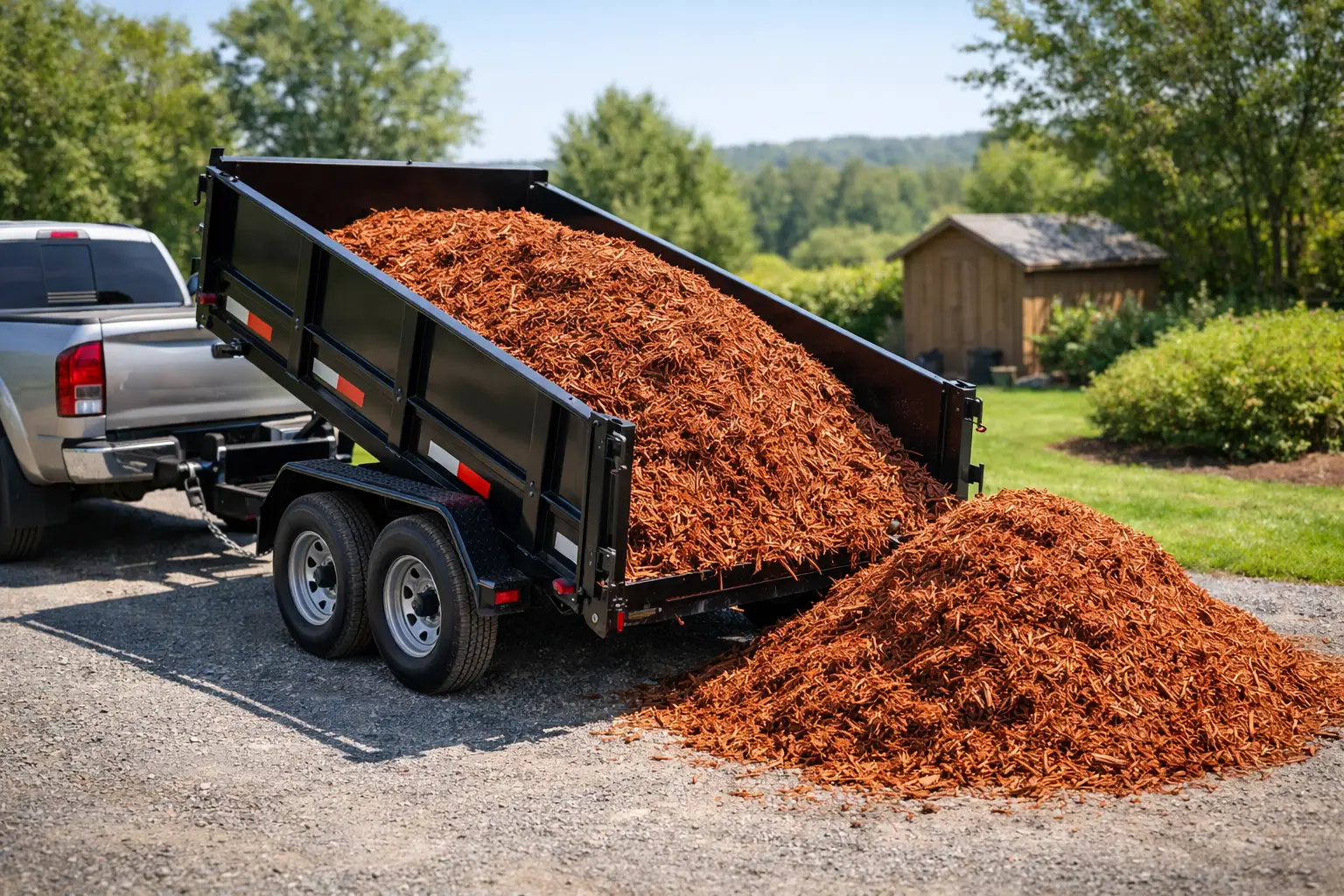
A few yards of mulch can look harmless when it is piled at the landscape supply yard. Once it is loaded, though, that pile becomes a real hauling job. A trailer rental for mulch delivery gives you room to move the material on your schedule, but only if the trailer, tow vehicle, and load are matched correctly.
For homeowners, landscapers, and small crews around the Verde Valley, renting a trailer can make more sense than paying separate delivery charges or making multiple trips in a pickup bed. The key is knowing how much mulch you are moving and how you plan to unload it when you get home.
Start With the Amount of Mulch, Not the Trailer
Mulch is commonly sold by the cubic yard. One cubic yard is 27 cubic feet, roughly enough to cover 100 square feet at a little over 3 inches deep. That sounds simple, but mulch volume adds up fast when you are covering several beds, trees, or a long fence line.
Before reserving anything, calculate the area you want to cover. Multiply the length by the width of each bed, add the areas together, then choose the depth you need. Most decorative mulch is spread 2 to 4 inches deep. Your landscape supplier can help convert that number into cubic yards if needed.
Weight matters as much as volume. Dry shredded bark is much lighter than wet wood chips or compost-heavy mulch. Moist material can be surprisingly heavy, especially after rain or irrigation. Ask the supplier for an estimated weight per yard and do not assume the trailer can carry a full load just because it has enough floor space.
Your tow vehicle’s towing capacity, hitch rating, and trailer’s payload rating all need to exceed the loaded weight. Payload is the amount a trailer can safely carry after accounting for the trailer itself. If you are near the limit, make two trips or order less at a time. Saving one trip is not worth overloading your equipment.
Choosing a Trailer Rental for Mulch Delivery
An open utility trailer is often the practical choice for bagged mulch, small loose loads, and typical home landscape projects. It is easy for the supplier to load, easy to inspect, and flexible enough for tools, edging, or extra bags on the return trip.
The right trailer size depends on the amount and type of material. A smaller trailer may be ideal for a few bags or a modest yard refresh. A larger trailer gives you more room for several cubic yards, but it also requires a tow vehicle that can safely handle the weight. Bigger is not automatically better if your driveway is tight, your route includes steep grades, or your vehicle is lightly rated.
Side height deserves attention. Low sides make it easier to shovel mulch out, while taller sides hold loose material more securely. If the trailer has low sides and you are hauling a light, fluffy mulch, a properly secured tarp helps keep material from blowing out. Never heap loose mulch above the trailer sides and hope it stays put.
If your project involves a large volume of loose mulch, ask about the best unloading plan before booking. A standard utility trailer can haul the material, but it will still need to be shoveled out. That is fine for a manageable load and a convenient dumping area. For a large landscaping job, delivery from the supplier or a dump-style option, if available, may be the smarter choice.
Match the Load to Your Tow Vehicle
A safe haul starts before the trailer is attached. Check your vehicle owner’s manual for its towing capacity and tongue-weight limit. Also confirm that you have the correct hitch receiver, ball size, electrical connection, and safety chains.
Mulch should be loaded with most of its weight slightly ahead of the trailer axle. This creates proper tongue weight and helps the trailer track behind your vehicle. A load placed too far back can cause sway, which can become dangerous quickly at road speed.
Do not try to fix an overloaded trailer by shifting the pile around. Load placement can improve balance, but it cannot make a load lighter. If your numbers are close, reduce the load. It is the simple answer, and it is usually the safe one.
Before leaving the pickup location, take a minute to check these basics:
- The coupler is fully seated and locked on the hitch ball.
- Safety chains are connected correctly and the breakaway equipment is in place when applicable.
- Trailer lights, brake lights, and turn signals work.
- Tires look properly inflated and the load is contained and secured.
These checks take only a few minutes. They can prevent a bad start to an otherwise straightforward Saturday project.
Loading Mulch Without Making a Mess
Tell the landscape supplier how much material you want and what type of trailer you have. If they are loading loose mulch with a skid steer or bucket, ask the operator to place the load low and centered, with a little more material toward the front of the trailer. A tall mound may look efficient, but it is harder to cover and more likely to shift.
Bagged mulch is easier to stack, but it can still move around. Keep the heaviest part of the load forward of the axle and stack bags evenly from side to side. Avoid building a tall, unstable stack that blocks rear visibility or puts too much weight high above the trailer deck.
Cover loose material with a tarp when needed. The tarp should be large enough to cover the entire load and should be secured to solid tie-down points, not loosely hooked to a rail where it can flap free. A tarp is not just about keeping the road clean. It helps protect other drivers from debris and keeps your mulch from becoming somebody else’s problem.
Drive Differently With a Loaded Trailer
A loaded trailer changes how your vehicle accelerates, turns, stops, and handles rough pavement. Leave more following distance than usual and brake early. Avoid sudden lane changes, hard turns, and quick steering corrections.
Keep your speed reasonable, especially on windy roads or routes with grades. Trailer sway often starts with a small movement and gets worse when the driver tries to accelerate through it. If you feel sway, ease off the accelerator gradually, keep the steering wheel steady, and slow down in a controlled way. Do not slam on the brakes or jerk the wheel.
Plan your route before you leave the supplier. A slightly longer route with wider turns, fewer steep driveways, and less traffic may be easier than the shortest route. This is especially useful when hauling through Cottonwood, Clarkdale, Sedona, or other areas where parking, traffic, and turns can be tight.
When backing into your driveway, go slowly and use a spotter if you have one. Make sure the spotter stays visible in your mirror and agrees on simple hand signals before you start. If you lose sight of them, stop.
Make Unloading Part of the Plan
Many mulch jobs go smoothly until the trailer reaches the driveway. Think about where you want the mulch pile before loading it. Ideally, park on level, firm ground near the work area without blocking the garage, street, or access for other vehicles.
Set the tow vehicle in park, apply the parking brake, and keep the trailer hitched while unloading unless you have a safe, level reason to detach it. Shovel loose mulch from the back and work forward gradually. Pulling too much material from one side at once can make the trailer unstable or create a bigger cleanup job than necessary.
A tarp laid on the driveway before unloading can help contain loose mulch and make the last bit easier to gather. If you are spreading mulch over a large property, use a wheelbarrow or garden cart to move it in smaller loads. It is slower than trying to drag a huge pile across the yard, but it is easier on your lawn and your back.
Rent for the Job You Actually Have
The best rental is not necessarily the largest trailer or the cheapest option on paper. It is the one that fits the material, your tow vehicle, your driveway, and your unloading plan. A quick conversation before you book can save you from showing up with the wrong setup.
Monsoon Trailer Rental helps local customers get dependable equipment without getting soaked by high rates, with contactless pickup and dropoff and a team that actually picks up the phone. If you are a first-time renter, ask questions about trailer size, hitch setup, and the weight you expect to haul. Clear answers before pickup make the rest of the job easier.
A fresh layer of mulch is one of the fastest ways to clean up a property. Give the hauling part the same attention you give the landscaping, and you can spend the day improving the yard instead of dealing with an overloaded trailer or a pile of mulch on the roadside.

